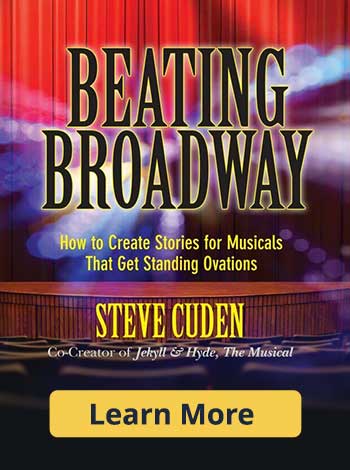
In a Screen Perspectives interview, Steve Cuden offers a precise breakdown of how story structure functions across film, television, and musical theater—and why momentum is essential in all three.
According to Cuden, screen storytelling must always move forward. Film and television, he notes, operate on a simple but unforgiving principle: if the story stops advancing, the audience disengages. This requirement, he argues, applies just as strongly to musicals as it does to movies.
Musicals Are Structured Like Movies—Not Plays
Although musicals are traditionally presented in two acts, Cuden explains that their underlying narrative structure is almost always three acts, rooted in classical storytelling principles that stretch back to Aristotle’s beginning-middle-end framework.
This is where musicals diverge from straight plays. While a play like Waiting for Godot can deliberately go nowhere, musicals—like movies—must continue driving the story forward.
Song Spotting and Emotional Access
What makes musicals unique is not spectacle, but access to a character’s internal life. Through song, writers can enter a character’s thoughts and emotions in a way that screen storytelling cannot.
Cuden emphasizes the importance of song spotting—identifying moments where emotion demands expression. In a traditional book musical, the book must carry the plot, while songs reveal emotional truth and continue advancing the story. When songs are used to explain plot mechanics instead of emotion, the musical loses momentum.
This balance, he notes, is one of the most difficult aspects of musical theater writing—and one reason so few musicals achieve lasting success.
Catharsis Is the Real Marketing
Cuden also addresses why advertising alone cannot sustain a show. Audiences spread stories through word of mouth only after experiencing catharsis—a genuine emotional release that stays with them beyond the performance.
Using Jekyll & Hyde as an example, Cuden illustrates how structure and emotional payoff can allow a story to outlast early criticism and evolve over time.
For storytellers working in any medium, the takeaway is clear: structure creates momentum, emotion creates memory, and catharsis creates longevity.
Listen on Apple Podcasts below or click here for more listening options for Screen Perspectives.