
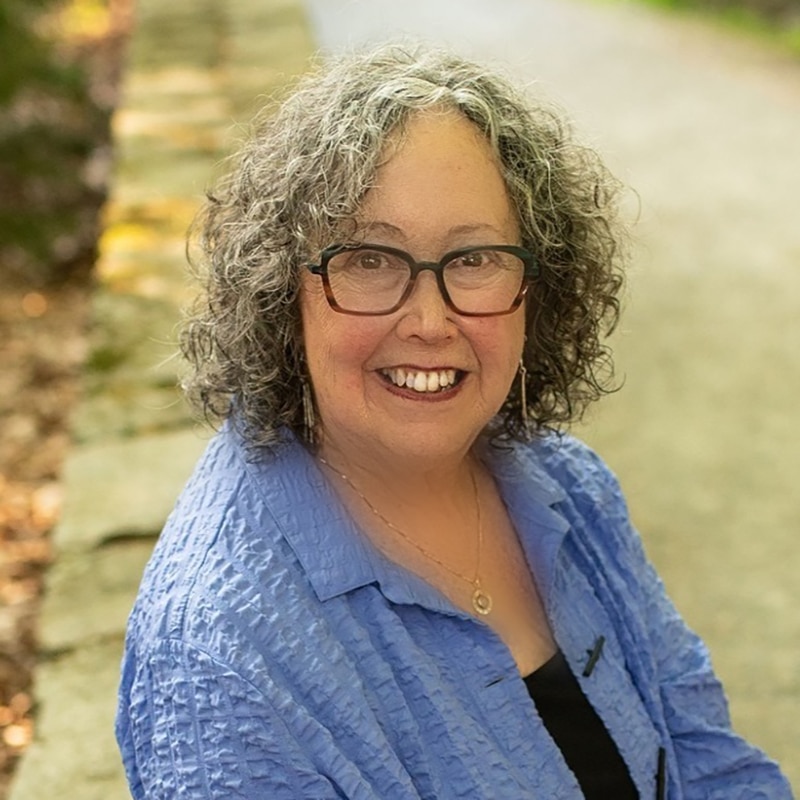
“I really do believe that people should engage in a writing workshop or a class or something like that because I do think having feedback about how people are responding, it doesn’t mean you have to use it or agree with what they say. But it’s very important, I think, to have that.”
~ Virginia DeLuca
Virginia DeLuca is a writer and psychotherapist. She’s the author of the award-winning novel, As If Women Mattered. Her work has appeared in The New York Times, Modern Love, The Boston Globe, Vulture, The Huffington Post, the Iowa Review, and The Writer.
Virginia’s also a graduate of GrubStreet’s 2020 Memoir Incubator.
Her most recent book is If You Must Go, I Wish You Triplets, a candid, funny, and emotionally rich memoir about her divorce and reinvention in her 60s. She published this debut memoir at 72, proving it’s never too late to tell your story. I’ve read If You Must Go, I Wish You Triplets, and found it to be inspiring, particularly regarding not giving up despite numerous challenges in your personal life. Virginia’s book will resonate with readers who may be navigating heartbreak, identity shifts, and the complicated freedom that comes with starting over. Virginia believes emotional resilience is built through humor and friendship, both of which are well expressed in her book.
WEBSITES:
IF YOU LIKE THIS EPISODE, YOU MIGHT ALSO ENJOY:
- Paul Chitlik, Screenwriter, Novelist, & Director—Episode #373
- Kit Karson, Novelist—Episode #366
- Tim Quinn, Writer, Editor, & Illustrator—Episode #362
- Ed Driscoll, Emmy Winning Writer-Comedian—Episode #355
- Max Kinnings, Novelist, Screenwriter, & Playwright—Episode #308
- Stephen Games, Author-Publisher-Episode #275
- John Vorhaus, Author-Teacher-Episode #21
- David Silverman, Writer-Therapist-Episode #6
- Peter Desberg, Author-Psychologist-Episode #25
Steve Cuden: On today’s Story Beat.
Virginia DeLuca: I really do believe that people should engage in a writing workshop or a class or something like that because I do think having feedback about how people are responding, it doesn’t mean you have to use it or agree with what they say. But it’s very important, I think, to have that.
Announcer: This is Story Beat with Steve Cuden. A podcast for the creative mind. Storybeat explores how masters of creativity develop and produce brilliant works that people everywhere love and admire. So join us as we discover how talented creators find success in the worlds of imagination and entertainment. Here now is your host, Steve Cuden.
Steve Cuden: Thanks for joining us on Story Beat. We’re coming to you from the steel City, Pittsburgh, Pennsylvania. My guest today, Virginia DeLuca is a writer and psychotherapist. She’s the author of the award winning novel as if Women Mattered. Her work has appeared in the New York Times, Modern Love, the Boston Globe, Vulture, the Huffington Post, the Iowa Review, and the Writer. Virginia is also a graduate of Grub Street’s 2020 memoir incubator. Her most recent book, if youf Must Go, I Wish youh Triplets, is a, candid, funny and emotionally rich memoir about her divorce and reinvention in her 60s. She published this debut memoir at 72, proving it’s never Too Late to Tell youl Story. I’ve read if youf Must Go, I Wish youh Triplets and found it to be inspiring, particularly regarding not giving Up. Despite Numerous Challenges in youn Personal Life, Virginia’s book will resonate with readers who may be navigating heartbreak, identity shifts, and the complicated freedom that comes with starting over. Virginia believes emotional resilience is built through humor and friendship, both of which are well expressed in her book. So for all those reasons and many more, it’s a great privilege for me to welcome the insightful writer Virginia DeLuca to story be today. Ginny, thanks so much for joining me.
Virginia DeLuca: Thank you so much for having me.
Steve Cuden: Oh, it’s a great pleasure to have you believe that. so let’s go back in time just a little, little bit. How old were you when you first started thinking about words and writing?
Virginia DeLuca: I think I was probably six or seven. Yeah. I mean, I was very into. I love desks, I love notebooks, and I loved pens. And so I loved sitting at my desk and sort of talking about things.
Steve Cuden: So you, you have a good time at Office Depot, don’t you?
Virginia DeLuca: Yes, it was one of my favorite things. That’s right.
Steve Cuden: So what started you thinking about being a writer? Was it books that started You.
Virginia DeLuca: You know, I’ve. I’ve thought about this a lot recently, and I talked a little bit about it. It’s really probably my mother. I had always described my mother as sort of difficult. She’s a difficult woman. Right. You know, I’m 72, so, you know, that. That’s been my story all along. And as I wrote this, I realized, wow, she was the one. For all of her difficulty, she would just hand me books. She would just. She didn’t do the library, but she would just bring home books. And I was allowed to read any book that was on the shelf. She never said, oh, you should. That you’re too young, or whatever.
Steve Cuden: Did you wind up reading. Did you wind up reading books that were above your pay grade?
Virginia DeLuca: Yeah, I’m sure I did. Absolutely. There was just absolutely no, you know, question about that. We belonged to the Unitarian Church back then, and there were some, people there who wrote. And there was Nancy Drew stories. Somebody wrote something that was similar called the Judy Bolton stories. And I don’t remember the name of that author. I didn’t look it up, but I don’t remember. And she introduced me to that woman, and I thought, oh, she. So people actually, like regular people can become a writer?
Steve Cuden: Regular people, as opposed to some kind of great God up on a pedestal?
Virginia DeLuca: Exactly.
Steve Cuden: And so then how did you then wind up in psychotherapy? Was it because you had a difficult mom or what brought you there?
Virginia DeLuca: Yeah, that’s a very long story. But yes, I mean, I think it has to do with that. It has to do with, you know, some family history that had, you know, started to happen. And also, I think I was a little afraid of being a writer. At a certain point, I had a choice. I had three kids. I had gone to, you know, college, but had kids very young at, like, 21. And then. And I was getting my first divorce, and I was sort of thinking, like, how am I going to, you know, manage all of this? And I had an option to go to my MSW or get my master’s of arts. So I applied to Boston University, and I got accepted in both programs.
Steve Cuden: And you chose psychotherapy as opposed to the arts?
Virginia DeLuca: I think, because I was afraid that I would not be able to support myself.
Steve Cuden: Well, I think that a lot of people think that. And in fact, that’s really true. It’s very difficult to support yourself as a writer in the arts. and so I think probably a wise choice. How much do you think your psychotherapy training and then your subsequent practice influences the way you think? About characters and how you write.
Virginia DeLuca: I actually think it’s an interesting question to go the other way around. I think all the reading that I’ve done has had major influence of, how I do psychotherapy.
Steve Cuden: All the. You’ve used the observations of great writers over time to help your thinking about how you look at humans. Yeah, I think that that’s a really interesting reverse of what we would ordinarily consider it. You write in your book that reading has saved my life. That’s a quote. and how has it saved your life?
Virginia DeLuca: Well, I use reading. I think as many use substances. And I, I’ll read anything. You know, it doesn’t have to be. I’m not necessarily literary. You know, I love a gripping story, but, you know, so I, you know, I use reading as a way of sort of getting involved in other lives, though.
Steve Cuden: Certainly in literature, pure literature. there are lots of truly tremendous stories and great characters. But that’s also true in pop fiction and, and in other kinds of storytelling. there’s lots of good ways to lear about characters just by studying them in the arts itself. So. All right, so when did you actually start writing? Seriously? I know you were writing as a kid, but when were you serious about it, where you thought, this is something I can do or try to do?
Virginia DeLuca: So as I said, I was, I had, I was a young mother and most of my peers were feminists and they were going off to do exciting, wonderful things. I met a very close friend and we were helping with Postpartum Pregnant and Postpartum Women was, an agency that was. And we became very close and we became good friends and stayed good friends. And at a certain point we said, you know, we should write a book about this. Went to the library and there was a book called how to be Happily Published. Again, an author I probably should have looked up for this, but I didn’t. And we followed the actual thing. You know, it’s like, this is how you write a query, query letter. This is how you do this. And we just followed it step by step by step. And we went again to the library and we went to, you know, publishers, and we just went through, the Alphabet and a publisher that was very small called Demner Publishing published it. I mean, it was a nonfiction book.
Steve Cuden: So you were already in practice as a psychotherapist when this was going on?
Virginia DeLuca: No, we were just working as an agency, not, you know, sort of a support group.
Steve Cuden: Okay.
Virginia DeLuca: You know, constant support groups.
Steve Cuden: So this is before your practice then?
Virginia DeLuca: So.
Steve Cuden: So, so did did you know at that time, did you think to yourself, I am good enough to be a published author? Did that go through your head? When did you come to that decision or that, that understanding that, yeah, you know what, I know how to write. I’m good enough to be published.
Virginia DeLuca: I think we like, we literally wrote like two or three chapters and sent it off. We, you know, we had an outline. So it wasn’t like a question of, oh, am I a good enough writer? It was like, no, we know stuff about all this stuff. Yeah, again, you know, friend, I believe in friendship. So, you know, we would sort of go off each other around that stuff.
Steve Cuden: Yeah, I see. It was helpful. I assume, and correct me if I’m wrong, that having another person to bounce things off of and to get feedback from was helpful in that case, wasn’t it?
Virginia DeLuca: Yes. And accountability. I have to write a chapter. We did it like that. I mean, when I think about this, it’s very funny. You know, when we cut and paste, we were literally cutting and pasting.
Steve Cuden: Oh sure.
Virginia DeLuca: So, you know, you have to write a chapter and then I have to hand it to her. And then Randy had to hand hers back and then we rewrote those chapters and we weren’t allowed to reject the other person’s corrections.
Steve Cuden: M that in and of itself, it’s a little bit like that. In the entertainment industry too. There are many well known teams of writers, usually, duos, and they then are sort of forced to bring each other to the table. And I think that there is some kind of, as you say, accountability. It helps to have that versus writing on your own where you’re not on anybody’s dime or deadline and that then you have to be self disciplined, which is a whole different thing.
Virginia DeLuca: The whole different thing. And also you really can’t, you know, you can’t dither around going, oh, I don’t know how to do this. You just do it.
Steve Cuden: You know, that’s, that’s a good lesson for people to pay attention to. That is the way to do it. Even if you’re on your own, you just do it. Because guess what? Nobody else is going to do it for you. So if you want it done, you need to just do it. And it’s a little bit like, like Nike, you just do it. And, and so anybody, that wants to be in the arts of any kind, but especially the lonesome arts, like being a writer, just needs to dig in. It’s hard. It’s really hard. Do you now, you now write on your Own, obviously. do you find yourself, being fairly self disciplined at this point in your life?
Virginia DeLuca: Yes, at this point. But it took a lot of time because after that I really, you know, we sort of, we didn’t, we didn’t try to write together because of life. You know, life got busy in different directions and then, you know, self doubt came in a lot.
Steve Cuden: Yeah, get in line.
Virginia DeLuca: That’s right. So, you know, so I think you know Anne Lamott who basically, you know, bird by bird. Shitty first draft.
Steve Cuden: Shitty. Thank you. I’ve said that many times on this show.
Virginia DeLuca: Yeah. And that’s really. And I do that all the time. That’s how I do it. That’s how. And that’s how I taught my kids how to do homework. Shitty first draft.
Steve Cuden: So there’s truth in. From my way of thinking, there’s truth in the fact that your first draft is just a molding draft and everything else is crafting and taking it from there into the art form of writing by rewriting and revising and sculpting. And it’s very difficult for first time writers to understand that because they all think their first draft is precious. They got through it.
Virginia DeLuca: That’s right. That’s right.
Steve Cuden: That’s not it. The first draft is not precious.
Virginia DeLuca: And you know, and people write in different ways. So my friend Randy, Susan Myers has published, you know, five or six novels and she’s, she writes with a lot of outline and you know, character things all over the place. And I, I’ve never written like that. It’s that shitty first draft. It really is.
Steve Cuden: Well, but you can have a shitty first draft of an album and it’s sort.
Virginia DeLuca: And then I begin to pull it out, sort of like, what is it that I’m actually really trying to say? What’s really happening here?
Steve Cuden: Well, I was taught in school that you don’t worry about the theme of your story until after you’ve written a draft at least. I think this is very valuable. You just purge it out, what we call purge drafts or puke drafts or whatever you want to call it. And then you start worrying about all the other, truly refinement parts of it.
Virginia DeLuca: That’s right.
Steve Cuden: I’m glad to hear that you do that. I find it by the way, in my life very challenging to not outline.
Virginia DeLuca: Oh, interesting. Yes. Yeah.
Steve Cuden: So I’m an outliner. I have to know sort of in advance where I’m going and ah, then I can make changes as I’m going. I’m not stuck.
Virginia DeLuca: Right.
Steve Cuden: But I have to think my way through before I start or I feel like I’m going to get lost. You’re not afraid of that at all? You just go, yeah.
Virginia DeLuca: I think in some ways it came from. Because I also use writing as a way of dealing with whatever emotions were going on in my life. You know, I’m roiling around in all sorts of emotion, whatever it is, and I start to write it down, which I’m beginning then, to articulate and putting words into something that’s sort of incoherent.
Steve Cuden: Do you find that, that doing that is cathartic for you?
Virginia DeLuca: I think it’s the only thing that has kept me going. You know, it really is like, oh my God, all sorts of stuff is falling around I can’t figure out. And then I start writing and then it make, you know, begins to make sense and then I can pull out. Oh, yeah, that’s clear.
Steve Cuden: And thus how writing has, Writing and reading, I guess, have saved your life.
Virginia DeLuca: Right?
Steve Cuden: That’s very, very good. are you still in practice as a psychotherapist?
Virginia DeLuca: Yeah, I have a small private practice, yeah.
Steve Cuden: Okay, so how do you find the time to do both?
Virginia DeLuca: Well, as I said, a small private practice, I did a lot of writing and when I was working full time or extra full time, I have always been a very early riser. I mean, since I’ve been like a kid. You know, when I was a young woman girl, on sleepovers, I would fall asleep. I do a lot of my writing in the dark. So it’s like, you know, four o’ clock in the morning and nobody’s there to talk to me. There’s no phone calls, there’s no, you know, none of that. And that’s when I do a lot of writing.
Steve Cuden: And that’s your habit and practice in terms of being a writer?
Virginia DeLuca: Yes. Yeah.
Steve Cuden: And, and that therefore you’re able to find the time quite easily because it’s. You’re not impinging on any part of the rest of your day.
Virginia DeLuca: Exactly.
Steve Cuden: Interesting, interesting. So tell the listeners about your first book. As if Women Mattered, which I’ve not read, but I’m curious, what’s that about?
Virginia DeLuca: So there were four women. It’s an autobiographical novel. But the idea isn’t. It’s not the actual details of it, but there were four women and we formed a, women’s group and we all were young mothers. And so this is the story of the women’s movement, basically in the, in the women’s group, you know, consciousness raising group. You probably remember, have Heard.
Steve Cuden: I certainly do.
Virginia DeLuca: Yeah. And I think, it was really written with the idea of, like, this is such an amazing time to have been alive in a. As a woman. So.
Steve Cuden: So this was fictionalized version of your experience.
Virginia DeLuca: Yeah. So there were four women, but yet the actual. Actually, I joke about. It’s not the four women that were actually in the women’s group. It’s all of me. It’s basically. This is one part of me. This is another part of me. This another part of me.
Steve Cuden: And so then, of course, now you’ve published a memoir which is based totally on reality. I assume I said you didn’t make anything up. which do you prefer to write? Do you have a preference between writing things that are fictional and non.
Virginia DeLuca: It’s interesting. So that. So that novel probably took about 20 years to write. And just because I was busy doing all this other stuff. Right. And. And I always thought that I would only write novels. And I have written a lot of novels. Not a lot. I’ve written a bunch, like maybe four, but they’re in the draw, you know, they’re not. They have never. Now I am finding. Doing sort of personal essays to be. I love it. I’ve been really having a good time. I had never really written essays before I did this book.
Steve Cuden: And those are truly personal about you?
Virginia DeLuca: Yes, they’re, all. Yeah.
Steve Cuden: Do you think of yourself as you’re writing these personal stories, as you’re telling a story? Are you a storyteller in writing these?
Virginia DeLuca: Yeah, I think so. I mean, it’s sort of like, you know, yes, this happened, and this is why it might be. It’s a personal story that I’m pretty sure other people would relate to, but they might not want to be talking about it.
Steve Cuden: Well, the nightly news is filled with stories, and they’re real. So storytelling does not necessarily imply fiction. we each tell ourselves stories about our day to one another, and that’s how we communicate, and it’s still storytelling. So. So that’s why I was curious if you think of yourself as I’m telling stories about myself.
Virginia DeLuca: Yes. And I. I mean, I think about this a lot. And it’s a mix of. That I talk about in terms of therapy, is that we all tell stories about our life, as you just said, and sometimes we get very stuck in a story and we have to sort of maybe revise a little bit or we have to sort of really reframe it a little bit.
Steve Cuden: So what do you think then? Makes a good story? Good? Why. Why write about it? Why Read it. What makes a good story attractive?
Virginia DeLuca: I, think for me reading a story is my connection to those characters or to that, to that writer. In some ways it feels. It feels to me like a mind melding sometimes, you know, like, oh, right, this person is actually articulating exactly, exactly what I have felt or known or. And have never articulated myself. Something like that.
Steve Cuden: Do you ever write stuff that’s so personal you just don’t show it to.
Virginia DeLuca: Anybody in terms of, like, journaling and stuff? Yes. Yeah. I mean, sometimes my writing or journaling or that kind of stuff is just raw emotion. And I, really wouldn’t want people to read it because it might not be nice.
Steve Cuden: So let’s talk for a moment about if you must go, I wish you triplets, which I was fascinated in reading. it’s kind of what you just described, but refined. Well refined and well written. it’s not just you just purging anything out. Although there’s a lot there that’s clearly from your emotional life and from your challenging experiences. So tell the listeners a little bit more about what that book is about.
Virginia DeLuca: So this is the story that happened. I was married with my second marriage, and I was happily, happily. I believed I was totally happily in love. And I love it. Kept talking about, oh, second marriages, later in life. Love is the best, is the best. And then he came home and said, I don’t want to be married anymore, I don’t find you attractive, and I want to have a baby. And I was, just. I mean, I was totally shocked. I’m also a therapist. It was like, how could I be shocked? How could the, how could I have missed that? So there was all those kinds of things. I basically waved him goodbye. said, okay, you know, I, I just am, like, totally stunned. And I was probably a little bit in shock, actually. I mean, you know, sort of. and I basically opened the computer and I started writing. Titled it, you know, this, you know, Perry’s leaving. And I said, you know, here’s the. Says middle aged older woman basically getting dumped for a younger person. though I didn’t know what the story was at the time, but it’s so trite, whatever. But I needed to write it down. And I just did pages and pages. I treated it as I was doing film, like shooting film. Every, every text, every email, you know, I, you know, wrote down all the, you know, all the conversations that we had, said, I can’t make any sense of this, but I’m going to look at it at some Point.
Steve Cuden: So did you find, obviously you were using it as to get at your own, problems with it, with your own issues with it? how hard did you find it to dig into that sort of challenging life experience?
Virginia DeLuca: Was it hard to go back to it or just to. I was literally just writing it down. I was literally. As it was happening, were you.
Steve Cuden: Were you reliving it in your mind’s eye as you were writing it down?
Virginia DeLuca: I really, I mean, I really kept thinking about it as shooting. You know, I’m. I’m shooting film. I’ll edit it when I figure it out what’s happening.
Steve Cuden: So you were being like a reporter from the field. You were reporting on your life as if you were a little disappointed, passionate about.
Virginia DeLuca: Right. You know, what people told me, what people said to me, all those kinds of things. When. So I had all those pages. Now I’m getting, you know, it’s like, you know, 67, I’m about to leave my therapy agency practice. I applied to be the memoir in the, memoir incubator at Grub street, and I got accepted. I had taken, I think it was like 50 pages from that journal. Then I had to look at it and then sort of say, what’s the story? What is the story? You know, I started out it being like, oh, boy, you know, somebody done something wrong and to try to really shit, you know, to really, what is the story? Is it the story of being, you know, the saddest woman in the world or what? And that was a phenomenal program.
Steve Cuden: So we’re back to this notion of you’ve purged this information out, and it’s personal information, but nevertheless it’s information. And now you take this, for lack of a better word, lumpy bunch of clay, and now you’re gonna sculpt it into something beautiful to look at and consider.
Virginia DeLuca: And then also I took it and sort of said, okay, so how is this related to the rest of my life? That’s probably the psychotherapy part of me that’s, you know, oh, this story. Oh, how is that story fit to this, to this current story?
Steve Cuden: So you were able to step back from all of it in the writing of it and then in the analysis of it, you were able to sort of take, an outer view perspective and look at it analytically.
Virginia DeLuca: Yeah.
Steve Cuden: And did you find that fun to do or hard to do, or was it just, an exercise that was just interesting, to do?
Virginia DeLuca: How did you look at, was fascinating to do this? Because ever do this? I’m, just sort of re going through some of the. My most painful parts of my life. And what was also interesting is it’s being read in the class and it turned out to be somewhat funny. And I was thinking, okay, that’s very interesting. This is the hardest part of my life, and yet it’s funny.
Steve Cuden: Doesn’t that make it better?
Virginia DeLuca: Yeah, I mean, it was. It sort of gave that sort of. Then it became sort of. Then it. It felt like craft. Now I was crafting.
Steve Cuden: So there’s no question, when you read the book, at least from my perspective, there was no question that I was reading something that was painful. It was painful for you to go through. It’s clearly, Couldn’t have been any fun for you to go through. And yet the perspective that you take when you wrote it is, is this. I don’t want to say humorous. It’s not really a humor book, but it’s lighthearted in the way that you look at it. And that even through all these difficulties and some of it’s like, oh, my goodness, this could not have been good. and yet you took that perspective. Was there anything that you did to get to that tone, or did you just discover it in the workshop?
Virginia DeLuca: Well, it felt a little. I mean, some of it was a little absurd. There’s literally. There’s a section probably really at the very beginning, where I call up and I call all the people that I know, and I say, you know, my husband has just. Perry just left, and he. Because he wants to have a baby. And he’s 60s, you know, he’s 60s year old, and people are giving me things back. Oh, maybe he has dementia. Oh, maybe he’s already, you know, maybe he had a uti, you know, a urinary tract. In fact, even as I wrote that down the next day, and I wrote it down the next day, just literally what. You know, it was funny. Even at that moment, I’m weeping, you know, I’m, sniveling, and I’m. And it’s funny.
Steve Cuden: So that’s the old adage of, if I don’t laugh, I’ll cry. But you were doing a little of.
Virginia DeLuca: Both, right in the.
Steve Cuden: In your author’s note at the beginning of the book. You write, and I quote, writing a memoir involves assembling imperfect and subjective memories. Okay, I think I know what that means. What do you think that means?
Virginia DeLuca: Well, this is my story, right? So I had. I would guess that Perry, my ex husband, had a very different story.
Steve Cuden: No doubt.
Virginia DeLuca: And that’s the imperfect memory, right? That’s. It’s very subjective. I was having my experiences, and I’m talking about it. And as much as I was aligned with what I had written down and the emails that are actual, very real, I’m still shifting a story.
Steve Cuden: It’s the reason why eyewitness testimony in court can sometimes be very faulty, because you can get three eyewitnesses to give you three different perspectives entirely. And that’s what you’re saying is. So. All right, so while you’re dealing with the imperfect and subjective memories that are, from your story as a memoirist, how do you deal with it? Do you just plow through it? Like, as you say, you just purge it out? Or do you have ways of thinking about being less subjective?
Virginia DeLuca: Again? This is from the. The class, actually. There’s the I narrator and the. The I character, and we were really talking about that all the time. So the I character is what’s happening on the page. You know, oh, my God, he left. And I’m weeping and I’m crying, and I’m doing this. And the I narrator has now taken a step out and is going to comment about that. And that, I think, was exceptionally useful to do.
Steve Cuden: M. Did you do anything beyond that to develop the whole story? How long did it take you to take this material and mold it into pretty much a chronological story?
Virginia DeLuca: What was amazing about this program is we got in this program and we had one year, and we had to write two full drafts within one year. That was probably the hardest thing I’ve ever done through all of master’s degrees, all of it. And we were reading. Right. We were reading all the material for all the other people in the class. Nine of us took that class, and four of us published.
Steve Cuden: That’s substantial. Four out of nine.
Virginia DeLuca: and we really worked hard at that. And. And we ended right at the end of COVID We decided. So the class, basically the last two classes were, you know, on Zoom. And we decided to keep meeting every weekday morning from 9 to 12, and we would sit and write in front of the other people on the little squares. and as we were doing on the computer.
Steve Cuden: So this class was a Zoom class.
Virginia DeLuca: This was after the. Right after the Grub street class. And Covid came then the rest of the year. So that was all for rewriting.
Steve Cuden: Was the class in person, or was that also on Zoom?
Virginia DeLuca: Yeah, the class was in person.
Steve Cuden: The class was in person prior to the pandemic, so you could actually get together without any kind of problem. did you also then, as you were working this story. Did you then go and research anything, like go back or interview people or, find other information you needed, or was it completely out of your mind’s eye?
Virginia DeLuca: It was completely. What was in my. In that. In the journal, you.
Steve Cuden: During the course of the story, you write that you wound up wondering if you would be homeless at one point, and that once you had sold your house, you weren’t sure. How did you overcome that while being in the middle of life? I have. What did you do?
Virginia DeLuca: Well, I was exaggerating. I mean, I think I was really. I was afraid of. That it wasn’t going to happen. You know, I had, you know, I had to sell the house, you know, and so. And I got a lot of help. People were remarkable. I really learned an enormous amount about, about. Of love, really. You know, so here I lost this love and, you know, and then I really was. Felt like I was surrounded by love and people, you know, sort of helping to sort of pull that all, you know, to put me together. I went from New Hampshire, I moved, I came to Boston, all that kind of stuff.
Steve Cuden: Well, you know, the cliche is that love is infinite. And so you have it in little pieces in your existence, but it’s also everywhere at the same time. And sometimes it’s hard to see it or find it, but it’s there. You just have to seek it out, I guess is the best way to say it. You said that when you were going through this, where nothing made sense to you, and again, this is your practice and habit is when nothing makes sense to you to sit down and journal. Is that right?
Virginia DeLuca: You know, you’ve probably,
Steve Cuden: Julia Cameron, Art the Artist’s Way.
Virginia DeLuca: I probably read that book around the time she published it, and I took it to heart. And, you know, you write three pages every single day. Now, obviously, people don’t actually write three pages every single day for 50 years. But whenever things were really difficult for my life, I would say, okay, it’s morning pages. And I would literally go on to, you know, these big black notebooks, sketchbooks, and do three pages, you know, for. And I would do that.
Steve Cuden: And what would happen to you on days when you weren’t doing that or couldn’t do it for some reason? Would you feel it?
Virginia DeLuca: Oh, yes. It alters my whole sense of intense emotional trauma type stuff. Right. Is in our bodies. And I think it helps sort of settle it down. So now I could, you know, go off to work. I knew who I was doing. I was driving, you know, all those Kinds of things. So yeah, correct me if I’m wrong.
Steve Cuden: I think it gives you two things. I think it does purge those things out so you can get it off your chest and it’s not sitting on your, sitting on your consciousness. And it also then helps you to have perspective on the whole thing.
Virginia DeLuca: Right.
Steve Cuden: I think that’s really excellent. You do have in the book of Julia Cameron a Julia Cameron quote which you say you put over your desk. And I’ll quote it because I thought it was fabulous. do you know how old I’ll be when I finally finish this thing? The answer is yes. The same age you’ll be if you don’t.
Virginia DeLuca: Right. Isn’t that wonderful?
Steve Cuden: Exquisite advice. so that’s the old thing about, you know, whichever way you say it, it’ll be true. you know what, however you work on this project, whichever way you go, it will be true either way, whether you do it or don’t do it, whether you say you’re going to do it, whether you say you won’t do it, whatever it is. so at the time that you were ah, going through this, you were on the verge of publishing your first book. And so what did that do to you and how did you work your way through it?
Virginia DeLuca: So he left on May 15th and my launch was July, I mean June 17th or something like that. So the launch was already set. We had a party, you know, scheduled there. It was a contest that involved two other. So I won first prize. The, the second and third prize were, were all going to be there. And so I had to do it, I had to launch, I had to figure out what I was going to read and I had to launch and then I did nothing after that. Then that was, it said goodbye. It was an out of body experience. Life is really great. Now I have to sell this book house and I have to move and I never did one thing for that book at all. And fast forward many years later I write the book, the memoir that talks about what was happening, about why I could not do that. And now my novel is, is selling. And I find that extraordinarily ironic because.
Steve Cuden: Because of the memoir?
Virginia DeLuca: Yes.
Steve Cuden: So people are reading about it in the memoir, then they get interested in finding out the the first book.
Virginia DeLuca: Right.
Steve Cuden: That is very interesting. Well, that’s sometimes true for all kinds of art. You know, if you people. By the way, it’s not uncommon, there’s a double negative, but it’s not uncommon for an artist to create and create and create and create and not really catch fire for a long time. And then once they cat, then all the earlier stuff starts to catch fire too. That’s not unusual to have happened. And that’s what you’re talking about, is that people like something deeper in and then go back and explore the earlier work.
Virginia DeLuca: And the thing is that it was a very tiny, you know, it was a very tiny publisher. It was a, you know, a books owner who decided to put a contest up and then published a book. So it was very tiny.
Steve Cuden: I’m curious, the publisher still had it in print or did they reprint? What did they do?
Virginia DeLuca: It’s still in print. I mean, it’s still. It’s in print in the sense that it’s on Amazon.
Steve Cuden: You also write that just because one bad thing happens doesn’t mean others won’t. That is the essence of storytelling, I think. Is it not?
Virginia DeLuca: Right. That’s right.
Steve Cuden: I don’t want to go too deep into it because I don’t know whether it’s painful for you or not. But in the middle of all this, you had a cancer diagnosis. Yes.
Virginia DeLuca: Yeah. So that’s another one of those things that, you know, like, just because one bad thing happens, you don’t get, So there, you know, there it is. I, I had just moved to Boston maybe, you know, maybe a month or so, and I didn’t feel well and I didn’t have a doctor and I, blah, blah. And I went to an urgent care, and they said, oh, you have appendicitis. And I said, oh, okay, dealing with that. And then it was like, oh, now that they, you know, they see another little weird thing on your bladder and you need to go check it out. And it’s like, yeah, well, that’s not going to happen. Goodbye, everybody. I’m done here. And then, you know, then it became. Then it was a little touch of cancer, of bladder cancer, but it became again, it was so absurd, like, really? Is that really gonna happen? And then that became funny.
Steve Cuden: So I love that you have, for lack of a better term, gallows humor about all these sort of very difficult, dark, potentially dark and devastating things that happen to you. But you, if you don’t look at it, is. If you don’t laugh, you’ll cry. So why not laugh? I have the same way of looking at things. I get upset about what things that happen, but I always try to step back and have some kind of a sense of humor about it. And I think as an artist, if you don’t, you’re really not going to create much art.
Virginia DeLuca: Yeah. Well, it will be very depressing.
Steve Cuden: That’s it. That’s the problem. It’s depressing you also, to quote you again in the book, you say there is no right way to age, which is true. If we’re lucky, we all get to age for a good, long, healthy time, and then things start to happen, because that’s what happens in age. how do you think we should look at aging? How do you think that the art artist should look at aging?
Virginia DeLuca: I often say this. We are very lucky to get old. Most creatures don’t get to be old. They get eaten. People really hate when I say that, especially peers who are complaining about their aches and their pains. It’s like, well, so that’s kind of how I feel. And I feel like I’m having a really good time. I’m sort of, you know, here. I wanted to be a writer since I was like, you know, whatever, you know, at that desk. And now I’m in my 70s, and I’m having a good time. I’m, on a pet, a podcast. Publish the Modern Love. It’s like, I’m doing this in my 70s. That’s kind of fun.
Steve Cuden: Sure, Absolutely. Well, you know, clearly you’re not sitting around twiddling your thumbs, waiting for some inevitability to happen. You’re out there making things happen and living your life. And I think that that’s. That’s where the ideas for the next book come from.
Virginia DeLuca: Right.
Steve Cuden: So I do think that this particular book, even though it’s obviously a memoir, it reads a little bit novelesque. And I’m assuming that was an intention on your part as you were writing it, that it felt pictorial as you were writing it.
Virginia DeLuca: Well, it’s very interesting because when we were in class, right, you know, I had written a novel. I had written a lot of novels. Not that I had published, but I had done a lot of fiction. And, you know, a lot of people in the class had not necessarily done that. And so we were learning all sorts of things about creating worlds and characters and how to sort of use those that craft. What I really wanted was to have a book that kind of pulled somebody, a reader along.
Steve Cuden: That way they’ll keep reading and maybe tell others to also read.
Virginia DeLuca: Yeah. And also it felt there was a. Something very. I didn’t know what was happening. And. And Perry for. Actually gave me a mystery. You know, he was basically. He kept changing a story. And I realized, oh, let’s lean into that mystery, because we wanted to Know what happened.
Steve Cuden: I think that, there’s a potential here, if you could get it to the right people, that it could be turned into some kind of a movie or a short miniseries. Is that something that you’re considering doing?
Virginia DeLuca: Well, if you hear anybody who might be interested or. I would consider that those are.
Steve Cuden: Those are long shots in any and all cases. but you never know. You know, if it gets out there in the world. This has that kind of feel to it where it. You do. You are smart in writing it like a mystery in many ways. So that. How does this thing. How does this onion peel back and the layer after layer that you’re trying to figure out why and how and what’s going on. And as you say, the story keeps changing, so you don’t know what’s going on. Now, there were. There’s nothing, traditionally murder mystery esque about it or, you know, those kinds of mysteries, but it is a mystery. And I think the.
Virginia DeLuca: That.
Steve Cuden: That was a very, very smart way for you to play it. So. All right. How important do you think, writing your own story. You already alluded to it a little bit. How important do you think your psychotherapy work impacted your memoir, where you’re thinking about your own story? Did it. Did you use that. Your knowledge and education and experience in that to. To dig in?
Virginia DeLuca: Yeah. I mean, what I try to think about a lot was, how could I have not known? How did I not know this man was in so much pain? How did I not know that he really was so deceptive? How could I not know? So then I had to go back, you know, as we’re talking about therapy, then we sort of always go back, you know, to the origins. Right. And sort of like, well, what was happening? What was happening, happening. And then. So that sort of helped me to sort of say, okay, what was really happening with my father? What was really happening with my brother? and so that’s when I began to sort of really sort of weave that in.
Steve Cuden: So. So wait a second. Let’s talk about that for a second. I find that really interesting. You were looking at it from what. What was happening in your personal world and how that reflected in the marriage where you weren’t seeing something. Am I getting that right?
Virginia DeLuca: Yeah. In other words, there’s that piece. There’s also. Here I am in a situation where I have supposedly. I mean, not supposedly, I was totally in love with somebody who turned out to be very deceptive. If I really examine the past, there are a lot of deceptive people who I Was majorly in love with, like, my father, my brother, you know. In other words, these were important people in my lives. And they also, if, were very deceptive.
Steve Cuden: Do you think that you were blinded by that? Is that a good way to say it?
Virginia DeLuca: I think that might be a little simplistic, maybe. It’s sort of more like, I think.
Steve Cuden: Did you want to believe them? It was just your desire to believe them was so strong.
Virginia DeLuca: I mean, I didn’t find out about the stuff about my father until way after. Right, right. He was just my father. He was just my father who did all these things. And da, da, da, da, da, da. And I realized, when I look back, I realized, oh, so he was somebody who clearly was having a whole other life. So there’s a mix of denial.
Steve Cuden: There’s a strong theme in your life about this, isn’t there?
Virginia DeLuca: Yeah. Right. So I had to sort of look at those themes and sort of say, what does that mean?
Steve Cuden: you know what? I think you’ve got many more books if you want to keep exploring that theme. because I think that’s a very big theme in a lot of people’s lives. And I think people relate to that because. And you know this way better than I do because it’s your business to know it. You can. No matter how close you are to someone, you can never actually know them wholly. And I think even we have a hard time wholly understanding our own selves. So how can you understand something I don’t understand?
Virginia DeLuca: Right, Exactly. And we all are deceptive to some extent.
Steve Cuden: Oh, I don’t think it’s possible to be human and not be deceptive, which is pretty fascinating. I think it’s extremely fascinating. And it’s a true, truly human element. Because I don’t think we have too many other creatures that we know of, at least, who are deceptive in that way. It’s just humans. And. And why. I mean, why are we deceptive in that way? But I think we. We lie to ourselves, we lie to others, even if it’s little white lies. We do it all day long. You know, whatever it is. People tell little white lies all day long. And then some people tell great big lies. That’s then a whole other story. So I’m curious. I ask these kinds of questions a lot. I’m sure during the course of your putting the book out, you certainly went through some kind of editorial process.
Virginia DeLuca: Yes. So, there was, a whole. As I told you, we went into the. We had all this editing happening in class from the other writers in that class, we always had, we had what they call an external writer, so a published writer who would then look at the whole rough draft. And then we did that a few times actually. And then when I got, when this, this particular publisher is a student run press, so I hired an editor to do it, to really carefully do all the editing. Because this was, you know, this was a small university press that basically has a four semester class to go from acquisition editor all the way to the end. And it was really fun to work with the students. It was really great. All.
Steve Cuden: Ah, right. So between them and your professional editor that you hired, you certainly got back notes and thoughts and considerations and you then as the author, you have the right to accept, or reject. And I’m just curious, how did you handle notes? How do you think about note taking?
Virginia DeLuca: I think feedback is extraordinarily important. Obviously we have to know how people, how people are responding to what we’re writing. We don’t know how it lands unless we have somebody who’s going to give us feedback. Now if you have a bunch of feedback, you can sort of reject the ones that are outliers. But if everybody’s saying, you know, that doesn’t make any sense. And you know that it’s so, it’s so confusing, it’s ridiculous, whatever, then you have to fix it.
Steve Cuden: Did you go through anything where somebody gave you a note and they were confused but you realized that there was nothing confusing about it. Did you go through anything like that where you just rejected the note entire?
Virginia DeLuca: Yeah, I mean sometimes people give opinion, opinions instead of critique. Like I don’t, I think I say something like I basically make it sound as if 60 years old is old, not anymore. And people were like, you know, and I was sort of saying, you know, my later in life love, you know, was, had an end date and people, a number of people didn’t like that. It was like, come on, you got it. You know that’s not true. It’s like, no, I like that. That’s true. That was true.
Steve Cuden: That there is an end date, Is that what you’re saying?
Virginia DeLuca: You know, like it’s opposed to like if you fall in love with somebody at 20, you, you might imagine living for a very, very long time. If you fall in love at 50, it has a natural end date.
Steve Cuden: Oh, oh, sure. That there’s no doubt about that. You’re not going to live to be a thousand years old. No one that I’m aware of ever has. So, yeah, there’s going to be a sell by date at some point. on the whole thing. I’m having just the most fascinating conversation with Ginny DeLuca and we’re going to wind the show down just a little bit. Now you’ve already told us a story that you, that I assume was the weird, quirky, offbeat stranger, just plain funny story. So we’ll just leave that as is. And then want to ask you in your experiences, do you have folks that come up to you and ask you for advice on how to write? And then what kind of advice do you, do you give someone who is maybe just starting out as a writer or maybe they’re in a little bit trying to get to the next level?
Virginia DeLuca: I really do believe that people should engage in a writing workshop or a class or something like that because I do think m having feedback about how people are responding. It doesn’t mean you have to use it necessarily all the time or agree with what they say, but it’s very important, I think, to have that. And you learn a lot, also especially learning other people’s drafts. It’s, you really learn a lot.
Steve Cuden: You learn from their, from their mistakes.
Virginia DeLuca: From their mistakes or where you’re noticing, oh, they’re, they’re not making, you know, I don’t like that part, you know, and you, you can, you have to try to articulate to the writer about why you don’t like that. That’s very useful. I also believe that having other people who, who you’re working with help you, helps you have more confidence. You get some, you get some positive mirrors, you know. Oh, yes, that’s funny. Oh yes, I really like that line. That’s a hard thing to do all by yourself sitting in a room. So it helps with the self doubt, I think.
Steve Cuden: Well, you just said it. It’s as we talked about earlier, whether you’re partnered with someone, a collaborator, that makes things a little easier because you are getting that feedback. But if you are writing alone, which most writers do, then that feedback loop isn’t there at all except for yourself. And prior to you putting it out into the world where it can fall flat on its face, it’s good to have a little feedback ahead of time. And yeah, that’s really helpful to go into a workshop or to give it to friends who may be willing to read something and give you their thoughts. That’s, I think, very, very valuable advice. And I, you know, it’s interesting in the, world of motion pictures and tv, you’re constantly getting that feedback, because you’re always working in collaboration with all kinds of people, whether they’re designers or directors or producers or whatever, marketing people, you’re always getting feedback. But in the world of writing books, not so much until you get toward the end of your project, unless you’re in a workshop. So I think that’s very, very wise and valuable advice.
Virginia DeLuca: I also believe that we should do. People should not be so snobby.
Steve Cuden: What does that mean? What do you mean?
Virginia DeLuca: I mean, like, you know, when people are, you know, they’ve written up a project, they’re ready to send it out, they feel it’s really good, but they only want the big five, publishers or they want only the best agent. And sometimes there’s. There, you know, I could not get. I got an agent finally for this. She went through 12 submissions and could not sell it at all. I was ready to put it up on the, you know, on the shelf and sort of, you know, I’ll just, I’ll print it and the grandkids can look at it someday. And then I took this. Then I got this, this apprentice press. You know, it’s an unagented. No money, nothing. It’s been wonderful.
Steve Cuden: Well, that’s. It’s. The key is to get it out in the world and let people have their. Their say with it. and without that, it is on the shelf and nobody sees it except perhaps your children or your relatives. yeah, I agree with that. What people don’t realize is those big five publishers or the big ten publishers, whatever they are, they’re actually looking for people that are already successful so that they can capitalize on their success. So you have to do something to become successful in order to attract the big publishers. Unless you’re somehow well connected. otherwise, good luck. And so you went through an agent who tried 12 places. And I know of writers who have gone out to 100 plus places.
Virginia DeLuca: Right. When I say 12, she did 12 levels of submissions.
Steve Cuden: I see. So it was 12 rounds.
Virginia DeLuca: It was a lot of rejections. and that’s. And that’s the other thing that has to happen with, you know, especially with writing, you know, I’m sure with any creative. Right. It’s. You gotta tolerate rejection.
Steve Cuden: If you, if you aren’t able to tolerate rejection, you are in big trouble right there. And it is hard for novice writers, novice artists really, because they don’t know how to deal with rejection because here’s my beautiful baby and you didn’t like it. Why didn’t you like my beautiful baby? Well, guess what? Your beautiful baby may not be that beautiful to that many people until you do something else or someone else says it’s beautiful. So, yeah, it’s hard. It’s just a hard business. But you’re correct. You have to stick to it, you have to stay with it, or you, won’t succeed. as they used to teach us at UCLA in, screenwriting school, the only people who don’t succeed are the people who give up. So there’s a lot of truth to that. Ginny DeLuca, this has been an absolutely fabulous hour plus on story beat today, and I can’t thank you enough for your time, your energy, and for your wisdom in all this. This is absolutely terrific stuff that you’re doing, and I hope you do more.
Virginia DeLuca: Yeah. Great. Thank you so much.
Steve Cuden: And so we’ve come to the end of today’s Story Beat. If you like this episode, won’t you please take a moment to give us a comment, rating, or review on whatever app or platform you’re listening to? Your support helps us bring more great Story Beat episodes to you. Story Beat is available on all major podcast apps and platforms, including Apple Podcasts, YouTube, Spotify, iHeartRadio, TuneIn, and many others. Until next time, I’m Steve Cuden and may all your stories stories be unforgettable.








0 Comments