
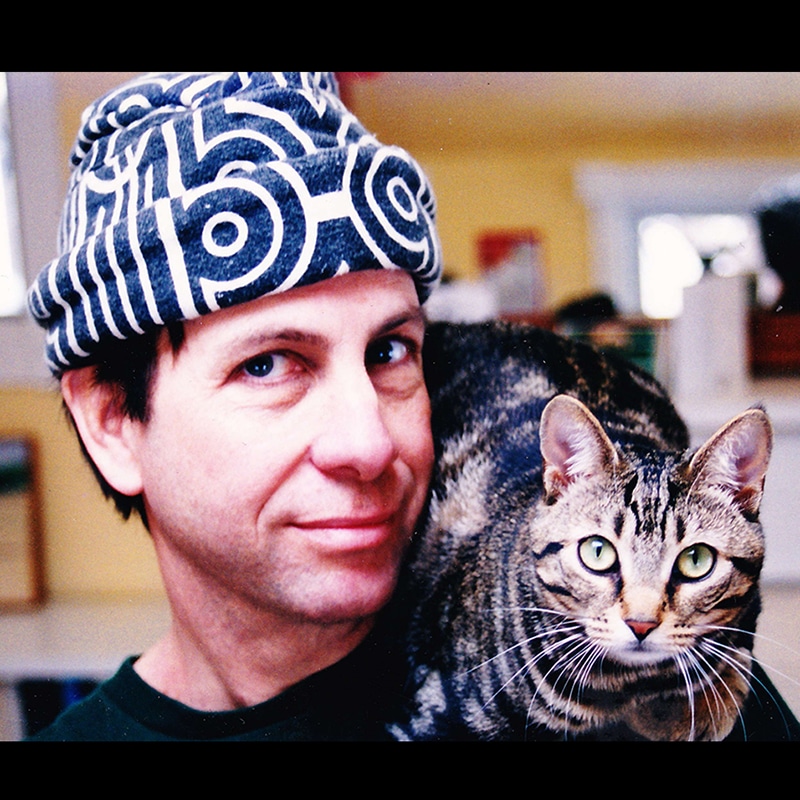
“And he dials the number and Jack Nicholson answers the phone. Hello. I mean, you know, it’s Jack. He just launches into the spiel that we’d rehearsed a half a dozen times that were a couple film students. We’re doing this project. We’d like to interview you. He said, well, yeah, I’ll do it, but, you know, I’m getting ready to leave to go do this film in New Jersey and can’t do it for a month or two. And we said, no, that’s fine. Whenever you can do it, we’re happy to wait. You know, he went off to do the King of Marvin Gardens, and when he came back, called him and he said, all right, come on up. and he gave us his address. And that’s how it happened.”
~ Christopher Fryer
Christopher Fryer is the co-author of the books Jack Nicholson: The Early Years; Bruce Dern: Things I Said, but Probably Shouldn’t Have, and Crane: Sex, Celebrity, and My Father’s Unsolved Murder.
Chris’s non-fiction work has also appeared in Conde-Nast Traveler, Playboy, and the New York Times.
I’ve read Crane: Sex, Celebrity, and My Father’s Unsolved Murder, and have chatted about it once before on StoryBeat with Chris’s writing partner, the outstanding author, Robert Crane. I’ve also read Chris’s short story, Hunting License, which is a very entertaining tale about a hunter who doesn’t like to kill. You’ll need to read it to see how it twists in an unexpected way. Hunting License is the first tale in the wonderful short story collection, Beyond Where the Buses Run, which was edited by another terrific StoryBeat guest, Theresa Griffin Kennedy.
WEBSITES:
Crane: Sex, Celebrity, and My Father’s Unsolved Murder
Jack Nicholson: The Early Years
Bruce Dern: Things I Said, but Probably Shouldn’t Have
IF YOU LIKE THIS EPISODE, YOU MAY ALSO ENJOY:
- Anthony Swofford, Writer-Memoirist-Professor – Episode #371
- L.A. Starks, Author – Episode #334
- Theresa Griffin Kennedy, Writer-Editor-Episode #331
- Martin Dugard, Author – Episode #328
- Richard Walter, Author-Legendary Teacher – Episode #323 (Session 2)
- John David Bethel, Novelist – Episode #316
- Joseph B. Atkins, Author and Teacher – Episode #311
- Robert Crane, Author-Episode #252
- Andrew Conte, Journalist-Author – Episode #247
- Hilary Sloane, Journalist-Documentary Photographer – Episode #236
Steve Cuden: On today’s Story Beat.
Christopher Fryer: And he dials the number and Jack Nicholson answers the phone. Hello. I mean, you know, it’s Jack. He just launches into the spiel that we’d rehearsed a half a dozen times that were a couple film students. We’re doing this project. We’d like to interview you. He said, well, yeah, I’ll do it, but, you know, I’m getting ready to leave to go do this film in New Jersey and can’t do it for a month or two. And we said, no, that’s fine. Whenever you can do it, we’re happy to wait. You know, he went off to do the King of Marvin Gardens, and when he came back, called him and he said, all right, come on up. and he gave us his address. And that’s how it happened.
ANNOUNCER: This is Story Beat with Steve Cuden, a podcast for the creative mind. Storybeat explores how masters of creativity develop and produce brilliant works that people everywhere love and admire. So join us as we discover how talented creators find success in the worlds of imagination and entertainment. Here now is your host, Steve Cuden.
Steve Cuden: Thanks for joining us on Story Beat. We’re coming to you from the Steel City, Pittsburgh, Pennsylvania. My guest today, Christopher Fryer, is the co author of the books Jack Nicholson, the Early Years, Bruce Things I Said But probably shouldn’t have and Sex Celebrity and My Father’s Unsolved Murder. I’ve read Sex Celebrity and My Father’s Unsolved Murder and have chatted about it once before on Story Beat with Chris’s writing partner, the outstanding author, Robert Crane. I’ve also read Kris’s short story Hunting License, which is a very entertaining tale about a hunter who doesn’t like to kill. You’ll need to read it to see how it twists in an unexpected way. Hunting License is the first tale in the wonderful short story collection beyond where the Buses Run, which was edited by another terrific story, beast guest, Teresa Griffin Kennedy. So for all those reasons and many more, it’s my great privilege to welcome the author Christopher Fryer to Story Beat today. Chris, welcome to the show.
Christopher Fryer: Well, thanks, Steve. It’s a real pleasure to be on with you.
Steve Cuden: Well, the pleasure and privilege is mine. So let’s go back in time just a little bit. At what point in your life did you first start noticing writing and writers and books and that sort of thing?
Christopher Fryer: Early on, I couldn’t even pinpoint a time. I’ve always love books. I’ve always liked putting pen to paper. Just the physical act of putting ink on paper gives Me pleasure and always has. And from early on reading the Hardy Boys, then moving on to Edgar Allan Poe and Rod Serling and things like that, I’ve always been interested in writing and reading.
Steve Cuden: So I’m interested that you say that the act of putting pen to paper makes you feel good or you like it. does the same feeling for you when you type in a. On a typewriter or a computer?
Christopher Fryer: Oh, absolutely not. No, I’m. I’m basically a Luddite, and I use technology minimally, but the. The actual physical writing for me helps with getting ideas out. In a weird twist, I’m a very good speller and always have been, but. But I can’t spell when I’m typing for some reason. If I’m actually writing words for the first time on the typewriter, I have a very difficult time spelling.
Steve Cuden: That’s interesting. So do you write everything longhand first?
Christopher Fryer: Absolutely everything is written longhand. Then it gets typed, and I enjoy the process. So I write it out longhand and then type it. And as I type it, I edit it. I rewrite when I type, and then I’ll print that out and then take that printed page and then go through it and write corrections, edits, changes on the typescript, and then go back and type it again. So essentially, when I. When I get to the point where I have a manuscript, from page one to the end, it’s done. I don’t. I don’t try to go back and rewrite after that point.
Steve Cuden: So your drafts tend to be two drafts, your initial hand draft, and then whatever you’ve typed?
Christopher Fryer: Well, yes, that could actually be four, five, six times. I will write it out, type it, then rewrite it on the typescript, retype it back and forth until it has the right pace, music, whatever you want to call it.
Steve Cuden: Well, Rod Serling’s a pretty good influence. And in fact, I think, as you say it, I now can see a little bit of the Rod Serling influence in. In Hunting License, which we’ll talk about a little. A little way down the road, because it’s a little bit in there. It’s a little bit, offbeat, which I think is what Serling was very good at, writing. did you get formal training as a writer?
Christopher Fryer: Anyway, I took a lot of writing courses in college. my mom wanted me to go to a creative writing course one summer when I was maybe 10 or 11. And I went to this place in Encino, which you probably know, on Ventura Boulevard. And I got there and, turned out it was A tap dance class. I don’t know. Somewhere in the transmission of what was going to happen. Didn’t. Didn’t get the right connection with my mom. Anyway, so I had one tap dance class, but it was supposed to be a writing. It was supposed to be a creative writing class. But, in college I had a mentor of sorts of a professor named Patrick Morrow, who, encouraged me a lot. And he was. He was really, very, influential for both Bob and I, because he was the guy who went through our manuscript for Jack Nicholson Face to Face, as it was called in the first go around. He gave us suggestions. He read the manuscript before we submitted it to try and sell it. And he was very influential as far as I was concerned. And I had him for several different courses, both literature courses and creative writing courses.
Steve Cuden: So we’ll get back to Nicholson in a bit. I want to cover a couple other things first. But you, know, that’s really good to know that you had not just a mentor early on, but someone who you could trust to look at your work and help you form, it. Which is, I think, really important for a lot of newer writers, sometimes even for more mature writers. And by the way, in my years as a writer in Hollywood, I did a lot of tap dancing, so I get that connection quite a bit. So you’ve written quite a bit of nonfiction, biography and so on, but you’ve also written fiction as well. Do you think of yourself when you’re writing nonfiction as a storyteller?
Christopher Fryer: No, I think of myself as a conduit. A conduit for the storyteller because of the work that I’ve had published, which are essentially other people’s memoirs, whether it’s Bruce Dern or Jack Nicholson or Before, when I was writing for WE and Playboy, Bob and I were interviewing people and we were. They were telling their story. And my job, I always felt, was to be invisible. Which is maybe why we had the success we did and have the relationships with the people that we’ve interviewed is that they trusted us because we felt that their words were their words and it wasn’t up to us to correct them, to change them. Yes, we could do some editing for clarification, but we essentially wanted them to be them and to sound like them.
Steve Cuden: Correct me if I’m wrong, but you were kind of being a journalist who does not editorial.
Christopher Fryer: Exactly. That would be exactly right.
Steve Cuden: You’re reporting what you actually see and hear, and you don’t try to put a slant on it of any kind.
Christopher Fryer: No, and even early on, when we put the Nicholson book together, which was collection of interviews with Jack and with people that he worked with, up until, say, 1976, it was. It was to make all of them individuals talking about Jack Nicholson, but to give them their own space, whether it’s Karen Black or Bruce Dern or Dennis Hopper, it was always to let them sound like them. So we didn’t editorialize at all. And even in our introductions to the interviews in that book, we just kind of laid it out. I know one review of the book said that it sounded like the introductions in a playbill that you’d get, assuming that was a dig, that it was just kind of dry and matter of fact. But that’s what we wanted to do.
Steve Cuden: It’s a bi. It’s like a bio. You’re telling information.
Christopher Fryer: Yeah. I mean, we said where it happened, how it happened, how we got to these people, and that was. That was the reporting.
Steve Cuden: Well, okay, so I know from doing these many interviews on Story Beat, and you’ve done a lot of interviews, obviously, that you can slant the way that a story comes out or your, reportage comes out by the way that you ask a question, by how you couch the questions. Were you very careful in the way that you prepared your questions?
Christopher Fryer: no, to be perfectly honest, no. We were too young, too enthusiastic, and too naive probably to even think thoughts like that.
Steve Cuden: So. So when you would ask a question of any of these people, how did you know that the question was not going to then get a negative, nasty, get away from me, kid response? How did you know that?
Christopher Fryer: We didn’t. And. And that negative, nasty response would have been part of what we were after.
Steve Cuden: It actually would have been gold.
Christopher Fryer: Yeah, in a sense. And we were 20 when we started it. I was 19. In fact, when we started the Nicholson book. We’re film fans, and the people we interviewed were people that we were interested in. In fact, from my point of view, every interview I’ve ever done is because I was interested in that person. So I wasn’t interested in talking to people that didn’t. Didn’t hold my interest. So when we talked to Jack Nicholson and we decided we were going to do a book, and he okayed it and gave it his blessing, the first thing Bob and I did was to make a list of everybody that Jack had worked with to that point and who we were interested in talking to. And then we just started making thousands of telephone calls.
Steve Cuden: So that was your standard. Your standard was if you’re not interested, you’re not doing the interview.
Christopher Fryer: Yeah. Which is why I didn’t have a Playboy career like Bob did. Bob had worked for Playboy for 20 plus years, interviewing people from Coco the Gorilla to, you know, professional golfers and people like that. And I would have loved to have interviewed Coco the Gorilla, but some of the other folks, you know, I would not have been that keen to do so.
Steve Cuden: I see. So I find that interesting because again, this is what I’ve done for a number of years now as well. And I’ve talked to any number of people that have been, brought to me by folks and I didn’t know of them, so I didn’t have an interest in them to start. I found an interest in them by researching who they are and what they’ve done. Then I became interested in them. But I’ve had any number of guests on the show who I, frankly you and I had never met before. but now that I.
Christopher Fryer: And I may be one of those guests who you wish you never had met.
Steve Cuden: Oh, no, no, no. We’re already having a good time, so I know that we’re in good shape. The point being that it’s interesting to me that you managed to have a career in which you were able to only go to people that you knew about and liked or wanted to talk to.
Christopher Fryer: Well, I should say that I didn’t make a living as a writer for past 40 years. It was not a sustainable living. What I did, Bob did working for Playboy, I didn’t. So I have come along and a few projects that I’ve been interested in and I’ve been lucky enough to be able to do them and the royalties from the books that I’ve done are not going to support anybody.
Steve Cuden: That’s so true for so many writers. You’re not unique in that way. But yes, I understand real, it’s a real issue. Clearly we know that the criterion is you have an interest in the, the subject that you’re going to interview. But what makes a subject interesting to you is it just simply that they’ve had a big movie career or is there something about that person that draws you to them?
Christopher Fryer: With regard to the, the books, it was the, the, they were the people. Jack Nicholson to begin with in the late 60s, early 70s. We kind of have to set this in context. No Internet, you know, none of this modern stuff, no cell phones, nothing like that. And what there was, was film and there was this wave of new American cinema on the heels of the Nouvelle Vague, as it’s called, in which there’s a new film out now, kind of glory, glorifying that period of French cinema from the late 50s. But American cinema from the late 60s through the end of the 70s to me is unsurpassed in filmmaking.
Steve Cuden: I agree.
Christopher Fryer: Just so many films. And, my wife and I go, we just went the other night to a 50th anniversary screening of all the President’s Men. It’s a brilliant, brilliant movie. There’s five minutes in the middle of the film. No music, just a, close up, basically, of Robert Redford typing in a newsroom. And it’s the most suspenseful five minutes you’ve ever had.
Steve Cuden: I have, in my classes, when I’ve taught, I have used that as an example of action does not have to actually be people running or cars being driven fast or bombs blowing up. Action can be somebody typing in a room and you’re giving the perfect example of it. And how is. It’s a miracle when you see that, you know, that shouldn’t work, but it works incredibly well in that particular movie. So, all right. So you find that, something has to bring you to it. Something has to compel you to that.
Christopher Fryer: Right. And in Those days, in 1970, 71, that thing was Jack Nicholson. When Easy rider debuted in 1969, nobody had heard of Jack Nicholson for the most part. Even though he’d done 25 films, he’d produced five films, he’d written several films, nobody knew who he was. Easy Rider opened at the Fox Village Theater in Westwood, which was one of the premier movie palaces in the world at the time. And the line went around the block and you went in and you watched this movie. And everybody that came out of that film had one thing on their mind and that was, who was that guy? And they weren’t talking about Peter Fonda or Dennis Hopper. They were talking about this crazy guy that played the Southern lawyer. So that’s what put him on my radar. And then, you know, Five Easy Pieces came out. Carnal Knowledge came out. Drive, he said, and these were films that were just unique and grabbed you and were about things. And I still look for films that are about things, about people.
Steve Cuden: And where do you find those these days?
Christopher Fryer: We are blessed in Hudson Valley to have several independent cinemas. They’re, they’re mostly, non profits and they’re supported by the community memberships. And they’re just. There’s one called Upstate Films which we go to all the time. We saw, we were there a week ago to see a preview of Anemone, the new Daniel Day Lewis film. And Daniel Day Lewis was there with his son Ronan, who. And this is a 115 seat theater in the, in Saugerties, New York. And the fact that they get somebody like Daniel Day Lewis to come and talk and do a Q and A after the film is extraordinary. And we’re really, really lucky to have that. So that’s, that’s where we see films and, and they get films that you don’t, you know, see at the multiplex. I haven’t been in a multiplex in years.
Steve Cuden: Yeah, I’ve stopped more or less going to movies with people in the audience. and I used to love it. It was a great thrill for me. And now I find it kind of demoralizing actually. And I’d prefer to watch them in my home on a nice big screen where I can stop it when I want to stop it. But yeah, that experience, what you’re talking about, in a small space showing a unique movie, there’s nothing like it.
Christopher Fryer: I love that experience. I like seeing films on a big screen. We often go at odd times, say four in the afternoon, so that there aren’t a lot of people there because I get annoyed by people who are looking at their phones, or crinkling, you know, candy wrappers or crunching popcorn.
Steve Cuden: Absolutely. So let’s talk about Nicholson. The early years. We were talking about him a bit. he has inevitably what is called the it factor. There’s something about him when he’s on the screen.
Christopher Fryer: You’re.
Steve Cuden: You can’t watch anything else but him or if there’s someone else you can watch. He’s a very big factor in your watching them. And so what do you think it is about Jack Nicholson or Bruce Dern or any big star that makes, gives them that it factor. Can you figure that out?
Christopher Fryer: Well, for me, it’s the fact that they’re, they’re thinking, the characters are thinking. They’re not just quoting lines that were written on a script page. And with Nicholson and with Dern, both, there’s this sense of unpredictability that at any moment they’re either going to go off the rails or they’re going to say something. Especially with Bruce, they’re going to say something just completely unexpected or do something that’s unexpected. Bruce has this saying that he likes to. It’s, actually his philosophy is that every day he goes to the set, he wants to do something that’s never been done before. And you get that feeling when you’re watching Bruce Dern in a film is that something might happen that you’ve never seen before. And the same is true with Nicholson. And it’s, it’s what makes them interesting as actors. And there’s a certain edginess to them that gives them a little bit of, dangerous qualities, especially with Dern, because he played so many psychos. I mean, nobody, nobody plays a, character on the edge of the abyss better than Bruce. It’s, It’s. It’s a marvel to watch. I’ll tell you a story about actors. And one of the things about actors that I find fascinating is how they. How they kindle this. This emotion that we get through the screen. It comes from some inner furnace that most of us don’t have. And I was on the set of the Great Gatsby when Bruce was filming Gatsby in England, with Robert Redford and Mia Farrow. And they were doing a scene that took place in the Plaza Hotel. The scene essentially has Daisy coming in. She’s all bubbly and cheery, and over the course of about five or six minutes, it seemed she goes from that bubbly, effervescent character to breaking down in tears and being distraught and destroyed by what’s going on amongst these characters. I watched her do this, and at the end of the scene with the tears running down her face and the makeup running and everything else, and she did it. And Jack Clayton, the director, would yell, cut. And they’d say, okay, we’re going to go again. And eight takes, which she’d have to have her makeup all redone. And each time she. She brought up that furnace again to kindle those emotions. And it was the most extraordinary feat of both acting and stamina and emotion. I’ve never really seen anyone else do something quite like that. It really was extraordinary.
Steve Cuden: So. All right, so let’s go to. Or talk about for a moment about how in the world you ever got. You and Bob ever got Jack Nicholson to talk to you in the first place?
Christopher Fryer: Again, luck, naivete and just perseverance and not understanding what the word no means.
Steve Cuden: Did. How many times did he say no to you?
Christopher Fryer: He never did. But, Bob and I had a class at USC where we were in a film school. He was in a film school. I was an English major, but I took a lot of film courses. And we had this class called the Film heroes of the 30s and 60s. It was taught by Stephen Karpf, who, with his wife Eleanor, had written. Just written a film called Adam at 6:00am which was a, ah, pretty big hit. It was Michael Douglas’s first big film. So for my thesis for the, the class, I had just seen Easy Rider a couple of years before, but, ah, Five Easy Pieces had just come out and that movie just blew me away. 1971. And I said, I went to the professor, Stephen Karp, and I said, listen, I want to do my thesis paper about antiheroes, not film heroes, but anti heroes. And I want to do it about Jack Nicholson and I’m going to interview him as part of this paper. And he looked at me because he knew way better than I did that that’s not going to happen. And at that point Bob had transferred into this class. We said, well, we’ll do it together because that’ll help. And he said, go to it. So we said, well, how are we going to do this? And, my sister in law, her father was this wonderful gentleman named John Strauss, who’s a partner of McFadden, Strauss & Irwin, which was one of the two or three biggest PR firms, publicity firms in Hollywood. And I called John and I said, john, do you have any kind of a contact for Jack Nicholson, Anybody we could call to see if he would do an interview with us? And he said, I don’t know. And he gets out his Rolodex and he’s flipping through his Rolodex and he goes, I’ve got a number here, I don’t know what it is. He said, you can call it. Might be his publicist, might be his manager. He said, I don’t know, I’ve never spoken to him. I don’t have anything to do with him. His client list was Lucille Ball, Bob Hope, Jimmy Stewart, people like that. Real, you know, a list type people. Jack Nicholson was not on John Strauss’s radar in 1971. So I took the number. Bob and I, we went to Bob’s house out in Tarzana. I said, well, you call it. I’m not going to call. You know, you call it. So he’s standing with the phone like this, between us, you know, it’s a wall phone, not on a cord. And he dials the number and Jack Nicholson answers the phone, you know, it’s Jake. Hello. I mean, you know, it’s Jack. And Bob says, yeah, can I speak to Jack Nicholson? And he says, yeah, who’s calling? And he just launches into the spiel that we’d rehearsed a half a dozen times that were a couple of film students. We’re doing this project, we’d like to interview you. He said, well, yeah, I’ll do it. But, you know, I’m getting ready to leave to go do this film in New Jersey and can’t do it for a month or too. And we said, no, that’s fine. Whenever you can do it, we’re happy to wait. And that’s. That’s when he went off to do the King of Marvin Gardens, Bob Raphaelson’s film that he did with Bruce Dern and Ellen Burstyn. And when he came back, that was like November of, I’m gonna say 71. And, we called him and he said, all right, come on up. And he gave us his address, and that’s how it happened. So it’s. It was luck, you know, I’ll do this, but I don’t want you to publish it because you then as now, he doesn’t do interviews very often. He’s. He’s, He thinks doing interviews destroys the ability for an audience to accept him as a character, which I think is pretty true. Because if you’ve just seen somebody on Johnny Carson or, you know, now Colbert or Jimmy Fallon or Jimmy Kimmel, and you see them the next night in a movie, you say, oh, that’s. Yeah, I get it. Okay. That’s the guy I saw last night. And.
Steve Cuden: He. It’s an act. They see the.
Christopher Fryer: Act. And. And they. And Jack never wanted that. So we said, no, this is for our paper. And, But then here’s where the serendipity and the luck kind of comes into it is we started bumping into him around town. Bob bumped into him at a Rolling Stones concert, and I ran into him at an anti Vietnam war protest at UC UCLA. We saw him at a McGovern rally. And, you know. And meanwhile, his career is moving along a pace. We said to him one day, you know, we’d like to do a book about you. What do you think? Just about your films. Not about, you know, your personal life or anything, just about your movies. And he said, all right. He said, but I’m not gonna help you. And we said, no, it’s fine, as long as you don’t say no. And M. Stand in our way. And, everybody we called that goes back to that list we made. The first question everyone asked us was, does Jack know about this? And when we said, yeah, he gave us his blessing. Doors opened. We were given the keys to the kingdom.
Steve Cuden: Wow. Yeah, well, that’s what it would take with a guy like him. So he’s notorious for being a bit aloof or keeping people at bay. and obviously he let you into The Castle. at least for a short period of time. Did you find him to be difficult to talk to when you were.
Christopher Fryer: Interviewing? Oh, not at all. No. It was great. I mean, he. After three hours, he got a little fed up, you know, and. But as everybody would. But he, He. He was very open and good with us. But again, our interest was filmmaking in. In the book Face to Face, or the Early Years, as it’s called now. We thought the first question that we had to, Which says maybe more about us. But the question that was burning in our minds that we asked first and foremost was who edited Easy Writer? Because Easy Writer was this big hit and everybody talked about how brilliantly it was edited, and there was all this talk about, well, Hopper edited it. Then he brought somebody else in and Peter Fond did some editing, and Jack claimed he did some editing. So our mindset was, well, we have to resolve this issue of, the editing of Easy Rider. And it seems pretty silly now, but at the time that’s what we were really interested.
Steve Cuden: In. What did he.
Christopher Fryer: Say? He said that a lot of people worked on it. He worked on it. You know, Dennis did the first cut. Henry Jaglum did some editing on it. There were quite a few people that had a hand in the editing of.
Steve Cuden: It. M. Were there any other challenges that you faced in putting that book together? Was it getting to any of these other people? Just getting them to talk to you.
Christopher Fryer: Period? there were some. Bob Rafelson, the aforementioned Bob Raphaelson, who directed Jack in several films in Five Easy Pieces, and the Fortune. We called him, and he was, one of the, three heads of BBS Productions in Hollywood. And we called him. He said, does Jack know about this? We said, yes. And he said, I won’t do an interview, but I will help you in any other way I can. He let us use offices at BBS to do interviews. He did screenings for us. We saw a screening of the King of Marvin Gardens. Not a rough cut, but not the final cut. He invited us to come see it. he gave us 16 millimeter prints of Head, a film that he and Jack did with the Monkeys to screen for ourselves. He loaned that. That to us. He was incredibly generous. He just didn’t want to do an interview. So we didn’t, you know, and we took. We. We. We didn’t press him. We didn’t. We didn’t want to wreck our relationship with him. So we said, okay, fine, you know, and we just took the help we could.
Steve Cuden: Get. Well, that’s. That seems to be your thing, by the way, that you’re not salacious in any real mean spirited way like some authors are. You want to get to the bottom of the truth of whatever they’re.
Christopher Fryer: Saying. No. And, and I guess the primary exemplar of that is, and I’m sure you know Jack’s family history. Everybody seems to know now. He was raised by his grandmother who he thought was his mother. And he lived with his sisters who were actually one. June was, was actually his mother and the other sister was Lorraine and she was actually his aunt. Well, Jack didn’t know that in 1971, 72, 73. And it only came to light when a Newsweek reporter brought it up in 1974. Bob and I knew about it in 1973 when we sold the manuscript for the book. There, was some pre publication publicity, I forget where, but I got a letter in the mail from a woman who was married to Jack’s biological father. And she said that he was always portrayed in the press as a deadbeat and a drunk and he was nothing like that. And he was a very decent man. And would we please not do that in our book if we brought it up? And this was all news to us, by the way. So we had, Bob and I had a conference and we said, what do we do with this information? It’s 1973. Jack has never spoken about this publicly. We didn’t even know if he knew that his grandmother was not his mother. And we decided that it was not our place to bring it up. It wasn’t our story to tell, it wasn’t our information to ask him about because he’s a private person and he obviously didn’t talk about it if he knew about it because he didn’t want to talk about it. So we didn’t bring it up to this day. I think that was the right.
Steve Cuden: Decision. Well, I think the listeners should pay attention to what Chris just said because it demonstrates this little funny thing called scruples or Morals and that you, there are lines that you can cross and they can be crossed, but that doesn’t make them right to cross.
Christopher Fryer: No. And yes, we could have scooped Time magazine and you know, it might have made our book a best seller, you know, but that wasn’t the point. Our book was about Jack and his films. It wasn’t about Jack’s family and what happened to him. You know, the serendipity that brought him into the world. That wasn’t our focus. We weren’t after that and we didn’t do that. With anybody that we spoke.
Steve Cuden: To. So did you do a bunch of research, on his early career where there were all those things that he did where he was completely unknown when he was working for Hanna Barbera, for instance. Did you go back that.
Christopher Fryer: Far? Well, we knew that he had started in the mailroom at Hanna Barbera. but we did go back and see. I think we saw all of his early films, from the Crybaby Killer to the Monty Hellman. Existential westerns, you know, Riding the Whirlwind. And.
Steve Cuden: Did you. Did you get in there? Little Shop of Horror.
Christopher Fryer: Yeah. Little Shop of Horrors. I loved it. I love Nicholson. And Little Shop of Horrors. He was doing Peter Lorre, which. I don’t know whether people knew it or no. Novocaine, please. You know, he’s. He. He, He was hilarious in the role. It was. It.
Steve Cuden: Was. He was hilarious in the role and over the top. And it was. And that was a precursor to everything else that he did, more or less, because his performances are very real while being over the top. It’s almost, I don’t know how you achieve that, but. Because if you’re that over the top, in some cases, it’s not watchable. But he makes it very.
Christopher Fryer: Compelling. It’s like his role as the Joker in the Batman film. exactly. He’s been quoted as saying that he looks at that performance as a piece of pop art, and it is. It’s brilliant. But sadly, in my estimation, it was the beginning of the end as far as his acting goes, because he kind of became a caricature of himself, I think, from then.
Steve Cuden: On. But he’s still. He’s still pretty good at doing all of that. I mean, you can go all the way up to the Departed and then the Departed. He’s still over the top, but yet it’s pretty amazing. The Shining. He’s completely over the.
Christopher Fryer: Top. I look at the Shining as a comedy. I think it’s.
Steve Cuden: Hilarious. Was there anything that you were trying to get during the course of your creating that book, writing that book that you wish you had gotten but were completely unable to get anywhere.
Christopher Fryer: Near? We wanted very badly. We wanted to interview Mike Nichols, and he was shooting Day of the Dolphin at the time. And, we had correspondence with him, and he had agreed to do it, but there was just not a. Not a time. Because we had come to give. We had given ourselves a deadline. We had been working on it for three years, and we said, we’ve got to. We gotta wrap this baby up. And we just ran out of time, couldn’t wait any longer. But we did get. We wrote him a letter. We got a very nice letter back from Mike Nichols. if you remember in the Graduate, in the opening scene, the party scene, when Benjamin is at home and his parents are having a party for him, his mom says to him, oh, you’ve got to go over and say hello to so and so. They’ve come all the way from Tarzana because our envelope to Mike Nichols had a return address of Tarzana. He wrote back and he said, I’m so happy. I’ve never actually spoken to anybody from.
Steve Cuden: Tarzana. Well, that you had no idea that you were using an.
Christopher Fryer: In. No, no, no. But it would have been great. We would have loved to have had an hour or so with Mike Nichols. That would have been wonderful. And the only other, really, that I wish we’d had was, Normally when we’d sit down with someone for an interview, we would have them sign a release before we did the interview, or at least at the end of the interview when they knew we weren’t out to get them. We just have them sign a release saying we could use a photo, an image of them, and the contents of the interview that we had just recorded. And, we forgot to do that with Sally Struthers, who was in Five Easy Pieces with Jack. And, she was quite famous for being on all in the Family and as the meathead’s wife. And, when I called her, she lived actually down the block from me in, in Westwood. When I called her to say, oh, we forgot to get you to sign a release. It’s just a formality that we’re. That we can use the information that we taped. And she said, well, I want to read it first. We said, well, we don’t normally let anybody read, you know, the final version. I said, it’s okay. We’re not out to get you. And we gave her a copy of the finished interview. And in the interview, she’d been in a film called the getaway with Steve McQueen. And evidently, Steve McQueen was not a very pleasant person. not a. Not a helpful partner as an actor. And she. And she kind of ripped him while in the interview when I went to pick up the release, she said, you have to take this out or I’ll never work again in Hollywood. And I, you know, I cajoled. And I said, oh, Sally, come on, you know, I said, nobody’s gonna see this, you know, and. And she. She said, She said, I Can’t. And so I agreed to take it out. And I’m sorry that that happened. I would have liked to have had that in.
Steve Cuden: There. But I’m sure it didn’t help on the set of the Getaway that it was being directed by Sam Peckinpah, who I think is one of the great, but allegedly an impossible man to work.
Christopher Fryer: With. Yeah. And the two of them, I, mean, McQueen evidently had quite an ego and would his. From what I understand, and I don’t. I never met him. I, you know, I don’t really know anything about him on a level, but the stories I’ve heard is that his way of working was attack before you get.
Steve Cuden: Attacked. So let’s talk for a moment about Crane. Sex, celebrity, and my father’s unsolved, obviously. You’ve written several books with Bob, Crane. And this is. Bob Crane is Robert Crane’s father. And the book is a very intense telling of this untimely and, well, the life of. And then the untimely notorious murder of Bob Crane from Hogan’s Heroes fame. I’m just curious. Bob was your friend for a long time. At the point that you sat down to work on that book with him. How challenging was it for you to deal with clearly what has to have been a very deeply personal issue for Bob while writing together on that.
Christopher Fryer: Book. It might have been difficult. You have to get it from him. It wasn’t difficult for me, my job on that. And I had been encouraging him to do that book for years. We had talked for many, many years about doing some kind of book about his dad’s murder. it’s more than just his dad’s murder. It’s about his relationship with John Candy and John Candy’s death. It’s about his first wife, Kari, and Kari’s early demise from breast cancer. It’s a book about life and tragedy and renewal and just getting through it. I thought it was a great story. And Bob, as you may or may not know, having spoken to him, he, like Nicholson, is a really private person, and he always has been. And part of what makes our friendship work is that we respect that, privacy of the other person, but we understand that we’ve been let in to that inner room. So my job, as I saw it on the book, was to kind of open that door a crack and get Bob to talk about his feelings about what had happened. Because the real impact of the book is that in the course of the book, he loses his father, he loses his wife, he loses his job. And his employer and his friend in relatively short span of time. So it’s a roller coaster ride of both highs and lows, in a lifetime and maybe in more than one.
Steve Cuden: Lifetime. Well, it’s a testament to his, the strength of his personal.
Christopher Fryer: Character.
Steve Cuden: Exactly. Because he survives quite a bit, as you say, a very short period of time. And, a bunch of it is with people that are famed with celebrity. You’ve got celebrity right there in the title. And so it’s not in, it’s not in the background. It’s not, you know, unknown. It’s unknown. So that’s why I wondered how challenging it was for you. But you’re saying that it was relatively easy for.
Christopher Fryer: You. You will know this because you do your research before you interview somebody. But for me, I was there for most of it. I was there when his dad was murdered. I wasn’t in Phoenix obviously, but I was with him the next day. I was, we. I was with him when his parents were getting divorced. I was, which was pretty traumatic for him and his family. I, you know, we have a shared history. and likewise, he’s been with me through some trials and tribulations and so we have that shared history, which makes it easy, made it easy for me to say, here’s what we’re going to talk about. And I would just have to like a jockey. He was the horse and I was the jockey. And I had to know when to give him the whip and, you know, when to give him his head, when to pull him up. Pulling, him up was not never an issue, but it was the goading to get him to go, which was the hard.
Steve Cuden: Part. What was your process in putting it together? Did you sit down and decide you’re going to do it in this particular order? We’re going to do it chronologically. We’re not going to do it chronologically. How did you make those.
Christopher Fryer: Decisions? we had kind of a rough outline to go chronologically, but when we got, when we finished and we, we then had all the, we taped everything and then had the transcripts done and then we worked from paper as, as we’re want to do. We had, you know, maybe a thousand pages of transcript and, and cut the sections together and then we structured the book and the book is kind of, you know, up to date moment, then a flashback up to date or it starts with a flashback at the, the murder of his father. And then we come up, to date and then back and forth and back and forth. And we like that process so that was. That was more of an editing thing. And Bob’s a terrific editor when it comes to putting the collage together that will become a book. We work really well that way together because I’m more concerned about the pace and the language and the momentum of the sentences. And he’s very good about putting the structure of the. The outside architecture of it.
Steve Cuden: Together. Did you have to obtain any, clearances or rights to. To include.
Christopher Fryer: Things? No, because, it was. It’s Bob’s story. He’s telling it from his perspective. It’s in the first person. And the people that would have sued us were dead. And, so we were free to, you know, badmouth them if we wanted.
Steve Cuden: To. I think the listeners need to pay attention to this. I get asked this question frequently by writers and other people in the arts. And that is a rights issue, which can be very, very difficult if you don’t have rights to something, but you’re saying something that’s very truthful. If it’s your story that you’re writing. And as long as I think, and you correct me if you think I’m wrong, as long as you’re not slandering someone or defaming them in some way, it’s your story. So you can tell that story and not worry about whether or not you need to obtain rights to tell.
Christopher Fryer: It. Well, exactly. I’m not well versed about the slander laws or libel laws, but if you’re expressing an opinion, you’re perfectly within your rights to do that. And if you’re telling your story, you know, you are perfectly allowed to say, wow, I interviewed Chris Fryer. What a jackass. You know, that’s within your rights to do that.
Steve Cuden: Now. If I did that, it wouldn’t be my.
Christopher Fryer: Show.
Steve Cuden: Chris, no matter what I’m thinking, what was your favorite moment from the book? What stands out for you from that book? That was like, wow. That’s a wow.
Christopher Fryer: Moment. Oh, I don’t think I could pinpoint one. For me, the wow was the process of doing it. It was just like everything Bob and I have done. It was. The process is fun. We. We have just an incredibly great time when we’re together, whether we’re on the phone or we’re in the same room. If we go out to eat, we laugh a tremendous amount, we entertain each other. Everybody else might think we’re just idiots, but we. We just get a big kick out of each other and we. We have a great time. So doing the book, to me, was the highlight that it’s not the content. It was the.
Steve Cuden: Process. Got it. Well, that’s, you know, that’s a wonderful thing, when the work itself is at least equally, if not more so fun and enjoyable than the finished.
Christopher Fryer: Product. It goes back to what I was saying about only wanting to interview people I was interested in. I’m very much a. I’m not that ambitious, and I’m very much interested in the things I’m interested in. So that’s my.
Steve Cuden: Impetus. So you write this great title of a book, Bruce Things I’ve Said but Probably shouldn’t have. I’m guessing that’s a quote of.
Christopher Fryer: His. Yes, that is a quote of his. And in all fairness, we didn’t decide on that as the title. As with many great titles, that was the editor, Eric Nelson, at John Wiley and Sons, who said, oh, this is the.
Steve Cuden: Title. It’s catchy. It’s a good title. It’s a. It grabs your eye. Give us an example of something that Bruce Dern said that he shouldn’t.
Christopher Fryer: Have. He says a lot of things that he might not or shouldn’t have said, about people. Bruce is very forthcoming. Bruce will tell you one of the things that makes him so great is an interview. He’ll tell you how much he made on a film. He’ll tell you what his salary was. He’ll tell you what the other people were making. He’ll tell you whether or not he actually had sex with Maude Adams during the sex scene on Tattoo. He doesn’t have a governor on the motor there, between his ears for most of the time. But having said that, I wouldn’t like to say what he said that he shouldn’t have said. That would be more something that he would have to be the.
Steve Cuden: One. Well, give us an example of something that he said that you found truly remarkable. Was it the. The idea of sex with Mod Adams or.
Christopher Fryer: Not? Again, with Bruce Stern stories, there could be a little bit of exaggeration going on there. There’s a little bit of. There’s a little embroidery going on. You never know. And if Bruce tells you the story, it’s a. It’s a sure bet that you’re going to hear the same story again maybe the next day or three days later. I mean, we. Bob and I spent 88 hours with Bruce Dern.
Steve Cuden: And.
Christopher Fryer: Wow. And we. We heard many stories multiple times, and they always had a little different twist on them. well, there’s always that little embroidery that goes on, and that’s part of what makes Bruce Dern an unforgettable actor is. You.
Steve Cuden: Get. Do you think he knows he’s doing that, or is he just. Is that just.
Christopher Fryer: Happening? Yeah, I think he does. One of the stories that he told us was he was doing a film called Middle Aged Crazy with Ann Margret. It’s about, you know, a guy going off the rails when he hits, I don’t know, 40, which seems laughable to me now, but, he, you know, buys a Porsche. You know, he goes through the midlife crisis. Anyway, he’s got this sex scene with Ann Margaret, and when they’re. They get into the bed and he’s wearing his underwear, and she gets into the bed, and of course, she’s naked, and she says to him, get those off. What are you doing? And so he says, you know, I’ll. I’ll take them off. But he says, I’m going to apologize beforehand if I get hard or if I don’t get hard, you know, so it’s. Things like that. I don’t know if he should have said that, but it’s in.
Steve Cuden: There. That’s a great line. I apologize in advance.
Christopher Fryer: Right. All.
Steve Cuden: Right. So I have to ask you about your. Your fictional work, your short story that I’ve read, Hunting License, I thoroughly enjoyed reading. You’ve not written a ton of. Of fiction, have.
Christopher Fryer: You? Well, I have written a.
Steve Cuden: Ton.
Christopher Fryer: Just. It’s never seen the light of.
Steve Cuden: Day. It’s.
Christopher Fryer: Unpublished. It’s unpublished work for the most part. Although I do have a pretty impressive stack of New Yorker.
Steve Cuden: Rejections. You could publish.
Christopher Fryer: Those. Yeah, I joke with Bob. I said, I’ve got a story I’m gonna. I was gonna send to the New Yorker, but I got the rejection before I put it in the mail, saying, please don’t send.
Steve Cuden: This. So which do you. Which do you prefer, writing fiction or not.
Christopher Fryer: Fiction? I do that. For me. It’s. It’s. It goes back to what I was saying about just the physical act of writing, the just putting the pen on the paper and using words in what, like Bruce Dern says, maybe in a way that’s never quite been done before, although I think everything’s been done before. But to get a metaphor or a simile, that is perfect, that sounds good, that has the right rhythm or to. It is just. There’s something just, heartwarming about it to me. And I’ll tell you an interesting thing that I learned when I Hunting License was published. I’ve gone back over the years, and I have a stack of short stories quite A quite a pile. And I go back periodically and, well, I’ll pull one out and read it and I’ll make a few little corrections or I’ll change something, rewrite something because it doesn’t work or I find that I can do it better or more succinctly. Usually is the case, I enjoy them. I go back and I read them again and I still get, get a certain pleasure out of reading it. But once Hunting License was published, it’s like it wasn’t mine anymore. It was gone. And I don’t get the same pleasure. I read it once in the book itself and I thought, nah, I’m not going to read this.
Steve Cuden: Anymore. Well, it’s the only fiction of yours that I’ve read. I found it to be very poetic and in a very interesting way with characters that are very fascinating and compelling. I’m just wondering, where did the story come from? It’s not from your real life, is.
Christopher Fryer: It? Well, it is and it isn’t. we live in the woods. we have bears regularly out, outside the house trying to take down our bird feeders. And we spend a lot of time hiking in this reserve that’s just down the road from us called the Black Rock Forest. The essence of that story, which is the nature of the world, the wild world, that part of it is, true. That part of it is my experience of the world. It’s the way I feel about the world, the natural world. And I’m much more at home amongst the trees than I am amongst.
Steve Cuden: People. The concrete.
Christopher Fryer: Giant. Yes. As the character Purdy is. He seems to be able to read the signposts in the forest, but when he gets back to town, he’s kind of lost. And I can understand that.
Steve Cuden: Sensibility. Well, I can understand that sensibility too. did you. So in other words. But the underlying plot, which I don’t want to give away, that was not anything that happened to.
Christopher Fryer: You. No. You mean, you know, bears packing.
Steve Cuden: Heat?
Christopher Fryer: No, no, no. That, that, that’s never happened. But the whole idea of that has kind of fascinated me. I mean I’ve always. I think there’s even a line in the story, when, when the character puts on his, his vest, his high visibility vest, with the hunting license pinned to the back of it, which you see a lot of guys dressed like that around where we live. And coming up, actually hunting season starts in a couple of weeks. We’ll see a lot of guys dressed like that. And I’ve Always thought, oh, that’s a perfect bullseye if the animals could shoot.
Steve Cuden: Back. So that’s where. Is that where the idea came.
Christopher Fryer: From? Yeah, basically I was in a little, decicco supermarket, and there was a guy in front of me waiting to check out, and he had his. All his hunting gear on and his. His numbered, hunting license on his back. And I thought, that’s a bullseye for.
Steve Cuden: Somebody. Is your process in writing fiction similar to your process in non writing, nonfiction? That is to say, you sit down, you write it out longhand, you type it, you revise it once or twice, and it’s good to go. Is that your.
Christopher Fryer: Process? That is absolutely the process. Only there are probably six or seven, eight or nine rewrites along the way before it goes on the.
Steve Cuden: Stack. Do you tend to outline your work before you start to write it.
Christopher Fryer: Or do you just write? No, I just write it. I have a good, idea of the story and where it goes. But part of what’s fun for me in the writing is not knowing everything, not knowing where it’s going to go and letting the story and the characters kind of tell you or lead you in that direction. And that’s the interesting part. Things will come up in the course of the writing that, that you had no idea about. So I’m not, I’m not a big outliner. I just kind of have an idea about it. And I do a lot of work in my head, in the forest, when I’m.
Steve Cuden: Walking. And so you actually are trying to be surprised as a, As the reader might be.
Christopher Fryer: Surprised. Exactly. Yeah. It is a discovery. It’s a voyage of.
Steve Cuden: Discovery. And how often have, in your writing fiction have you come to this discovery, you’ve written it and then realized it didn’t work at all, and I’ve got to change it totally. Has that happened for.
Christopher Fryer: You? If I believe in the story, which is the most important, if the through line of the story or where I think it’s going to go, if that works, then somehow make it work. And that might take ages. I have a story that I’ve been working on, a novel, in fact, although I hate to even talk about it. But, it started as a contemporary piece and it’s now historical fiction. To give you an idea, I mean, I. I literally started writing it in the early 1980s, and I am still working on it. There was a long period of time where I just stopped because I couldn’t make it work in my head. Recently I kind of worked it out and I’VE been moving along for me at a fairly good pace and hope to have it done in the next 40.
Steve Cuden: Years. Well, I. I certainly hope you get it done the next 40 years too. and. And by the way, today, I. It’s quite obvious today, one doesn’t really need a publisher anymore to get it out in the world. You can do it.
Christopher Fryer: Yourself. For me, it doesn’t count if you throw it up on Amazon. It doesn’t count. Somebody said once you might call yourself a writer, but you’re never really a writer until somebody else calls you a.
Steve Cuden: Writer. Well, until someone else pays you for.
Christopher Fryer: It. Exactly. To me, the legitimization of this thing that I’m working on would be a legitimate publishing house saying, yes, we will pay you for this, because this is valuable for me. To put that out on Amazon doesn’t do anything for me, and I don’t care whether anybody reads it or not. So that isn’t why I write. I write for.
Steve Cuden: Me. because it has not been. This is interesting to me. It has not been your main source of income for your.
Christopher Fryer: Life.
Steve Cuden: No. So the writing has never been driving you to write it, to get it out, to make money with it. You write because it does something for your.
Christopher Fryer: Soul.
Steve Cuden: Exactly. Well, I think that’s fascinating. I’ve been having so much fun having this tremendous conversation that we could go on for hours, with Chris Fryer about his writing and his process and all the things that he’s done and people that he’s met. I think it’s fascinating the people you’ve met as well. We’re gonna wind the show down a little bit. I’m just wondering in what all of your experiences. You’ve told us a lot of very funny stories already and a lot of, kind, of quirky stories too. I’m wondering, do you have a story you can share with us that’s either weird, quirky, offbeat, strange, or just plain.
Christopher Fryer: Funny? Well, there is a story. There’s a story from the Nicholson book going back to that early era. And again, I would remind your listeners that, we’re talking about the early 1970s, so no Internet. If you wanted to do research about Jack Nicholson or a film that he did, you had to really hustle. We spent hours at the Margaret Herrick Library at the Academy going through old information, old magazines, old Hollywood reporters to get background or, information about early films of Jack Nicholson’s. There was no Internet to dial up Crybaby Killer and see who the cast was. We had to track down lobby cards, we had to track down stuff like that. We went, we spent untold hours at Larry Edmonds Cinema Bookshop. I think it was on the Sunset Strip, going to Hollywood Boulevard. Hollywood Boulevard, Yeah, yeah. Going through these bins of old, you know, publicity photos and things like that. So that was the era we were in. And we tracked down these photos and we were really lucky. As I mentioned earlier on, Bob Raphaelson was really helpful getting us, you know, just what one would call merch now, but you know, one sheets posters from the films, lobby cards. Henry Jaglum, who directed Jack in a film called A Safe Place with Orson.
Steve Cuden: Wellesley.
Christopher Fryer: he took us to his house and showed us home movies that he’d made with Jack Nicholson. He gave us photos that we could use in the book that were his photos that he had taken. And he said, no, you can use them, go ahead. And so it was this, you know, scavenger hunt of collecting material. And we got somewhere, a photo. I’m going to show you the.
Steve Cuden: Photo. Of course our listeners won’t be.
Christopher Fryer: Able to see it, but they won’t be able to see it. But if they go out and buy Jack Nicholson the Early Years from the University Press of Kentucky, available online or wherever you get your books, it’s on page, it’s in the photo group in the middle. But I’m going to show it to you, Steven, if you can see. I can’t really see, but that See that photo? It’s Roman Polanski. I’ll describe it. It’s Roman Polanski, Bob Evans who produced Chinatown, and a woman holding a cigar who looks incredibly like Faye Dunaway, who was the co star of Chinatown. And we came across this photo and we loved this photo. It’s just a great photo of Bob Evans and, and Roman Polanski. And we wanted to use it and we said, well, what are we going to do? Is that Faye Dunaway? Is that not Faye Dunaway? And I was in it’s the Faye Dunaway Camp. And Bob said, I don’t think that’s Faye Dunaway. And I said, I think it is. and we argued, we literally argued for three years before the book was published, up to and including the final edit with m. Evans & Co. Who published it in New York when they wanted the captions for the films. And we argued about that photo. And I said, look, here’s the bottom line. Either we identify the woman as Faye Dunaway or we have to say Bob Evans, Roman Polanski and a Woman who looks incredibly like Faye Dunaway in the caption. And we can’t cut her out. There was no Photoshop in those days. We can’t cut her out because her hand’s in the way with this cigar. And so we’d have to explain why there’s a hand there. Anyway, we decided to go with Faye Dunaway, and we identified it, and that’s the way it’s in the. In the book, in the original book. Anyway, cut to. The book’s been published. We call Jack, and at this point, Jack hasn’t seen us in a. In a year or year and a half, something like that. And we call him up and we go, jack, we’ve got the book. It’s coming out next week. We want to bring you a copy. And yeah, Chris, what is this book? He says to me, you know, the book we were working on with you and all the people that you worked with? It’s finally been published. It’s coming out. We go up to the house. All right, come on up. we race up to his house, and it’s like we’re presenting our firstborn, which in a way we were. And we give it to him and he. And he opens it up. We’re standing in his living room and he’s. You know, he was pretty. I think he was impressed. He was flattered, just pretty impressed that these two 20 year olds managed to do this. Or as Bruce Dern always referred to us, the two guys from the Texaco station managed to do this. And he’s looking through the book, and literally within, I’m going to say 30 seconds, he stops, he looks, he goes, yeah, that isn’t Faye Dunaway. And Bob just gives me one of these looks and shakes his.
Steve Cuden: Head and do we know who.
Christopher Fryer: It was? No, no, it’s not Faye Dunaway. It’s not.
Steve Cuden: Faye Dunaway.
Christopher Fryer: That’s hilarious. You know, ever since then. So going on, what, 50 plus years, I’ll say to Bob, oh, I saw, you know, I saw Daniel Day Lewis the other night. Yeah, and you probably saw Faye Dunaway too, right? I’m notorious for, you know, seeing people that aren’t there. It’s. It’s a.
Steve Cuden: Celebrity hallucination. that’s hilarious. All right, so last question for you today, Chris. You’ve given us a huge amount of advice all along the way in this show, and I’m wondering if you have a single solid piece of advice that you like to give to those who are just starting out or maybe they’re in a little bit and trying to get to the next level as a writer.
Christopher Fryer: Or whatever. My advice, is to practice the craft. Just put words on paper, read things. It doesn’t have to be fiction, doesn’t have to be non fiction. Just read the New York Times every day. It’s, it’s amazing what information I get every day from the New York Times. And the writing is brilliant for the most part. and it is a craft. It’s a craft of putting one word after another. The other thing I would say is get the hell out of the house. If it’s just go walk in the woods or get on a plane, go somewhere. To me the greatest thing you can do is to travel and to get a sense of the world and to see the world and people from different perspectives. Because Americans in particular are unbelievably blinkered in their view of the world. And I’m fortunate that, ah, my wife and I have had years of traveling around the globe. But that perspective allows you to let your mind expand. Literally. I mean, even being a child of the 60s, I wasn’t into mind expansion of the chemical kind. But that kind of mind expansion is invaluable if what you want to do.
Steve Cuden: Is right. I agree, I totally agree. I think that’s two truly valuable pieces of advice. One is there’s only one way to get to be a, writer of substance and that’s to write. That’s the first piece. And the second piece is if you don’t go find the world, go look at the world and experience it, how are you supposed to then, translate anything.
Christopher Fryer: Onto paper? There’s an old cliche that you hear in every writing class that you should write what.
Steve Cuden: You.
Christopher Fryer: Know. But if you don’t know anything because you haven’t been anywhere and you haven’t done anything, then that’s not going to make for very interesting writing. And that’s not to say that you should write your own experience and let that pose as fiction. I have a real pet peeve about reading about novels that are about, oh, a young woman who’s a daughter of a diplomat who, you know, grows up in an embassy on another part of the world. And then the author’s bio is, you know, so and so is the daughter of a diplomat and grew up in, you know, an Addis Ababa. That, that doesn’t cut it for me. it’s not so much write what you know as it is write what you’re feeling. And that feeling only gets expanded because of what you know and where you’ve been and what.
Steve Cuden: You’Ve seen. I tell people to write what they know in.
Christopher Fryer: Their heart. Exactly. Exactly. Right. That’s that it sit in.
Steve Cuden: A nutshell.
Christopher Fryer: There’s a. There’s a wonderful book, one of my favorite books. It is called west with the Night. And it was. Oh, do you.
Steve Cuden: Know it? I. I’ve read.
Christopher Fryer: It, yeah.
Steve Cuden: Barrel Markham.
Christopher Fryer: Barrel Markham. Nobody knows Beryl Markham, but Beryl Markham was the first woman to fly solo from east to west across the. The Atlantic. Everybody knows Lindbergh did it going from west to east, and Amelia Earhart was the first woman to do it in the same direction. But Beryl Markham did it against the wind coming the other direction. And she had this extraordinary life growing up, in Kenya. And I was in Kenya in 1985, and she was still alive and managed through, again, this silly combination of perseverance and luck to find out, where she lived, get in touch with her people, and go out and talk to Beryl Markham, who was in her 80s at the time. And it. Was amazing.
Steve Cuden: Chris Fryer, this has been a tremendous almost an hour and a half on Story Beat today. I can’t thank you enough for your time, your energy, and your wisdom, and for sharing all these great stories. I thank you kindly.
Christopher Fryer: Well, it’s been my pleasure, Steve.
Steve Cuden: And so we’ve come to the end of today’s Story Beat. If you like this episode, won’t you please take a moment to give us a comment, rating, or review on whatever app or platform you’re listening to? Your support helps us bring more great Story Beat episodes to you. Story Beat is available on all major podcast apps and platforms, including Apple Podcasts, YouTube, Spotify, iHeartRadio, TuneIn, and many others. Until next time, I’m Steve Cuden and may all your stories be unforgettable.











This was such a great episode. Christopher Fryer is such a smart, insightful guy. He’s led a really interesting life, much like Robert Crane, his good friend. His story “Hunting License,” is simply such a lovely story. This was so fun to listen to. I learned a lot…
Thanks so very much, Theresa, for your wonderful thoughts! I agree re: Chris and his work. And thanks again for your memorable StoryBeat Episode!
Very entertaining interview. You’re so good, Steve, at steering the ship and getting to the heart of the matter, but Chris made your life easy here by making every subject matter interesting. There’s a purity about his thoughts on writing because he isn’t driven by money, and you gotta love a guy who writes it all out in longhand.
Thanks for your ever so kind words, John! I agree re: Chris. Lots of great info. And your episode still reverberates for me, too!