
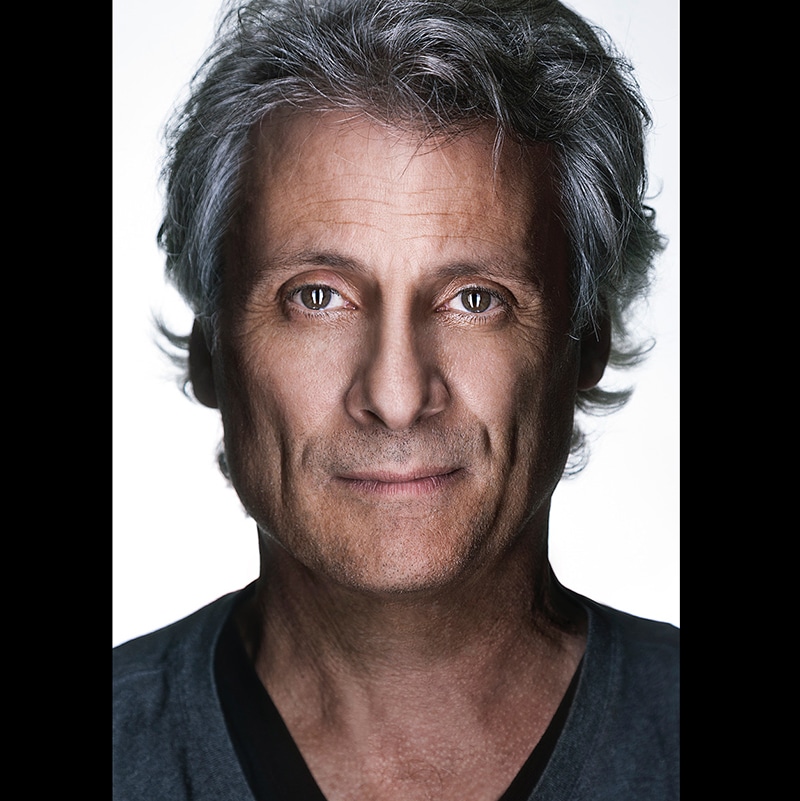
“On Dune Part 1 We were designing sound as the movie was shot and shot number 875 was a shot of a worm breaching in the sand. Visual effects had timed it out as 21 seconds. So Denis said make some sound for this because it’s pretty dead with this storyboard. No matter how much we tried to make that 21 seconds long, it didn’t work. Our sound we felt was compelling at 17 seconds. So they put in the sound to the shot, cut out four seconds. Guess how much they saved? It paid for the entire cost of sound during production.”
~ Mark Mangini
Mark Mangini is a six-time Oscar-nominated, two-time Oscar-winning Sound Designer. He won his Oscars for Dune and Mad Max Fury Road. Mark’s also well known for designing sound for numerous films, including: Blade Runner 2049, Star Treks I, IV and V, Beauty and the Beast, TheFifthElement, Space Jam, Poltergeist,Gremlins, Aladdin, and Raiders of the Lost Ark, among many more.
Mark has spent his 49-year career in Hollywood imagining and composing altered sonic realities for motion pictures. He’s a frequent lecturer, an outspoken proponent for sound as art, and a guitarist/songwriter with compositions that can be heard in sex, lies and videotape, Star Trek IV, and more.
Mark believes that all organized sound is music. He sees his work in movies as every bit a composition as those of Beethoven and the Beatles. He just happens to use dissonance, melodic content and arrhythmia to its fullest advantage. His work is no less considered, designed, created or manipulated. It just isn’t usually what we think of as hummable.
His first job in the entertainment industry was at the age of 19 in the sound department of Hanna Barbera Studios making funny noises for children’s cartoons. His ears have been keenly trained by years of language study and playing guitar, which suited him well for a career of critical listening and creating unimagined aural worlds and fabricating sonic realities for motion pictures.
Mark founded and ran the successful post-production sound company, Weddington Productions, for 25 years. Today he works at Formosa Group in Hollywood, continuing his work as a Supervising Sound Editor, Sound Designer and Re-recording mixer.
WEBSITES:
Mark’s Website – tons of advice for aspiring sound artists
Follow Mark on Instagram: @markmanginisound
IF YOU LIKE THIS EPISODE, YOU MAY ALSO ENJOY:
- Doug Besterman, Tony-Winning Orchestrator, Arranger, and Composer – Episode #363
- Marcia Peck, Writer-Musician – Episode #352
- David Shire, Oscar and GRAMMY Winning Composer – Episode #165
- Lindsay Jones, Tony-Nominated Composer & Sound Designer for Theatre & Film – Episode #163
- Steve Bramson, Emmy™ Award Winning Composer – Episode #150
- Jonathan Deans, Renowned Theatrical Sound Designer – Episode #141
- Yuval Shrem, Director-Screenwriter-Composer – Episode #98
Steve Cuden: On today’s Story Beat
Mark Mangini: On Dune Part 1, we were designing sound as the movie was shot and shot number 875 was a shot of a worm breaching in the sand. Visual effects had timed it out as 21 seconds. So Denis said make some sound for this because it’s pretty dead with this storyboard. No matter how much we tried to make that 21 seconds long, it didn’t work. Our sound we felt was compelling at 17 seconds. So they put in the sound to the shot, cut out four seconds. Guess how much they saved? It paid for the entire cost of sound during production.
Announcer: This is Story Beat with Steve Cuden. A podcast for the creative mind. Story Beat explores how masters of creativity develop and produce brilliant works that people. Everywhere love and admire. So join us as we discuss discover how talented creators find success in the. Worlds of imagination and entertainment. Here now is your host, Steve Cuden.
Steve Cuden: Thanks for joining us on Story Beat. We’re coming to you from the Steel City, Pittsburgh, Pennsylvania. My guest today, Mark Mangini is a six time Oscar nominated, two time Oscar winning sound designer. He won his Oscars for Dune and Mad Fury Road. Mark’s also well known for designing sound for numerous films including Blade Runner, 2049, Star Treks 1, 4 and 5, Beauty and the Beast, the Fifth Element, Space Jam, Poltergeist, Gremlins, Aladdin and Raiders of the Lost Ark, among many more. Mark has spent his 49 year career in Hollywood imagining and composing altered sonic realities for motion pictures. He’s a frequent lecturer, an outspoken proponent for sound as art and a guitarist songwriter with compositions that can be heard in sex, lies and videotape, Star Trek IV and many more. Mark believes that all organized sound is music. He sees his work in movies as every bit a composition as those of Beethoven and the Beatles. He just happens to use dissonance, melodic content and arrhythmia to its fullest advantage. His work is no less considered designed, created or manipulated. It just isn’t usually what we think of as hummable. His first job in the entertainment industry was at the age of 19 in the sound department of Hanna Barbera Studios making funny noises for children’s cartoons. His ears have been keenly trained by years of language study and playing guitar which suited him well for a career of critical listening and creating unimagined aural worlds and and fabricating sonic realities for motion pictures. Mark founded and ran the successful post production sound company Weddington Productions for 25 years. Today he works at Formosa Group in Hollywood continuing his work as a supervising Sound editor, sound designer and re recording mixer. So for all those reasons and many more, I’m truly thrilled to have the extraordinarily gifted motion picture sound designer Mark Mangini joined me today. Mark, welcome to Story Beat.
Mark Mangini: Wow, Steve, thank you for having me. can I copy word for word what you just said? And that’s my new bio. It’s so beautifully put.
Steve Cuden: Have at it. You’re more than welcome to it. Well done. Well, it’s yours. It’s all yours. All right, so let’s go back, in time just a little bit and figure out where all this began. How old were you when you first started paying attention to movies and sound?
Mark Mangini: Well, I started paying attention to movies very early. I have distinct memories of my mom and dad taking us to the drive in and loving movies. And they had always been a passion of mine. So much so that my dad went on a business trip to Japan and was gifted a Minolta 8 millimeter home movie camera. And this was a very novel item. It was a state of the art home movie, you know, on film, home movie camera. And he gave it to me because he knew I loved movies. And that was probably at 8 years old. And I began immediately being a fan of Monty Python and Terry Gilliam. I began making my own stop motion and claymation, if you will. And I even attempted hand drawn from frame by frame animation. And wow, that’s kind of the seed of it all is my dad taking us to the movies and me realizing that looks like a lot of fun. How do I do this all? And I taught myself animation.
Steve Cuden: How old were you at that time?
Mark Mangini: Eight, I think eight.
Steve Cuden: Eight years old. That’s young.
Mark Mangini: Yeah, but the sound part of it. We’re gonna have to jump ahead in your interview questions because, ah, at eight years old, all I was interested in was making little movies and, and I struggled with sound. I don’t know if you ever played with film, but there’s 8 millimeter does not allow synchronous sound. And I wanted to add music and sound effects and it was impossible. So I struggled with my high school, movie classes. I took courses to learn how to be a filmmaker. And I would, the only solution was to put timing marks on the 8 millimeter film. It would be like a flash and that would trigger me to press play on a cassette recorder, a non synchronous device. And I would attempt to play back a cassette tape with sunk sound that would never, of course, never sank with the film itself.
Steve Cuden: So I did the exact same Thing when I was that age, not quite that young, but as a teen I did the exact same syncing up, trying to press go on a cassette. Super 8 film didn’t have that structure stripe on the side.
Mark Mangini: No, it wouldn’t. There was some very rare double system versions with Super 8. I was working Regular 8, the predecessor to Super 8, and you could buy a double system magnetic version. But I never had that. You know, when I think about sound, I wasn’t thinking about sound. Came as an accident, and we’ll get to that as I get to Hollywood. But I think because of. I was also playing in bands all through, through my childhood and high school and college. And so I had a really good ear and that’s a big setup for my oral acuity.
Steve Cuden: You already had going into the sound world, a sense of sonic walls and all that sort of thing from your music experience?
Mark Mangini: Well, yeah, as a composer, you know, as a writer, a music, you know, I was playing in a rock band and I knew how to write lyrics. I knew how to write chords and melodies and so I understood the mechanics of sound and I knew how to listen critically because as a guitar I was a lead guitarist and so I always wanted to be able to do solos like Eric Clapton or Jeff Beck or Jimmy Page. And that required me to record the songs and be able to slow them down somehow enough that I could pick out the individual notes, the components of a, guitar solo so that I could imitate it in one of my performances.
Steve Cuden: You were attracted to sound early on, obviously that’s what it was. You just didn’t know it, that it had a function in the world that you could take advantage of.
Mark Mangini: Oh, I didn’t know people do what I do for a living till I got to Hollywood.
Steve Cuden: Sorry. So let’s go there. What, how did you get started in the business?
Mark Mangini: I wasn’t a very, career oriented kid. And so even though I loved film, it was what, what made the world go away when I was in the middle of it doing it. I never thought, well, film could be my career. So I went to college as a foreign language major and I was very good with foreign languages. And I thought, well, well, let’s make the best of that because I could be an interpreter at the un. So that’s where I thought I was going until my sophomore year of college when I realized I’m no good at this. And I got to think of a new direction for myself. And that’s when I realized, why can’t I follow film? That spring, I saw the Academy Awards on television and that was the light bulb moment. Like, oh, wait a minute, I want to be there, I want to do that. I want to win one of those. And I know that sounds really crass, but. But I just want. I just realized that’s my calling. I’m going to la. Dropped out of college, told my mom and dad, I’m leaving, I’m getting in the car, and I drove to la.
Steve Cuden: And they didn’t try to, they didn’t try to talk you out of it?
Mark Mangini: No, my parents are. I have one of the great upbringings of all time. I, had beautiful, thoughtful parents who always supported me in everything that. And I know they’re deceased, sadly. And I never got to ask my mom and dad if. When I made this announcement, they were thinking without saying, he’ll be back in six months or something.
Steve Cuden: They probably were thinking that as most parents do. Yeah, you know, it’s not, it’s not a business that most parents think, yeah, go into it because it’s insecure and you can’t make any money at it, Go for it. No, most parents would never say that.
Mark Mangini: Well, yeah, they didn’t. And so off I went with $500 and the promise that I could stay in the guest house of a friend of my dad’s in la. So drove across country, landed in his guest house, floated around for months, actually hanging out at guitar center and, you know, guitar shops. Because I went to LA with a goal but without any plan to try to achieve it, I landed here. I didn’t call anybody at a studio. I didn’t make any friends. Until one day when the, friend of my dad’s came. He was always on business trips, so I never saw him. And he came home one day and we crossed paths and he said, how’s it going? Not good. Well, what do you want? What do you like to do? And I said, well, I used to make animated movies at home. And he said, okay. And that was that. The next day, I have a phone number to speak with Art Scott at Hanna Barbera Studios for a meeting. And I went to meet Art and I panicked because I thought he wanted to hire me or offer me something in animation. And I’m awful artist. I was only stop motion. And he said that it was just a general meeting, but if something come up, he’d call me. Sure enough, that spring, the networks, ABC, NBC, CBS ordered five and a half hours of cartoons. 1976. And I got a call saying, would you like to get into a training program in the sound department at our studio. So off I went. The next week I got into the training program, I graduated at the top of the class, and they offered me a job. And I started life as an apprentice sound editor doing what they call track reading.
Steve Cuden: What is track reading? For those that don’t know.
Mark Mangini: For cartoons, in case your audience doesn’t know the sound comes first, imagine that you record the voices in the studio.
Steve Cuden: Well, wait, wait, Mark. What comes first is the script.
Mark Mangini: Oh, sorry. Busted. Totally right. There is a script.
Steve Cuden: You can’t get to the sound of voices until you have a script. Hey, Steve.
Mark Mangini: First there’s the script, but the next thing they have to do is record the voices so that the animators know how to draw the characters and when to open and close the mouths. So that’s the timing of the mouth. So they record the voices, they send it to the track reader who transcribes the literal syllables, phonemes of everything that is said. And the track reader transcribes it on a grid sheet that details every single frame from 1 to 24,000 in a 30 or 27 minute cartoon. So it’s a painstaking process of critical listening and finding out when Yogi says the H of hey and the B of boo boo and the ooh of boo boo and. And you’re writing that in these little boxes. And those are the very sheets, they’re called exposure sheets, that went to the animators and they would do their animation timings to the voice timings. So that was my first job.
Steve Cuden: And this did not bore you?
Mark Mangini: I was in Holly, my friend, I was in Hollywood, California, at 19 years old, working on cartoons I had been watching three years prior. I was giddy with excitement. The whole thing was an, exotic adventure for me.
Steve Cuden: Well, that’s good to know. And by the way, I find it interesting that you went to school for languages, because, correct me if I’m wrong, sound is a form of language all of its own.
Mark Mangini: Sound is what I like to call the silent narrative of a movie. Think about that for a second. It speaks without words.
Steve Cuden: So you use the word silent. It’s not really silent, is it?
Mark Mangini: Well, it’s be silent in that there are no words spoken. Narrative implies a, communication through verbiage. I think sound is the silent narrative, but it is, in fact, sounded.
Steve Cuden: Yes, it is. In my experience, it is. The hallmark of lousy film festival movies is poor sound because people think it’s an afterthought, but it isn’t. It should be a forethought Correct.
Mark Mangini: Oh, boy, we’re gonna get there. We’re gonna really go deep dive on that. But yes, in low budget films and of sp, especially student filmmaking, sound is the dead giveaway because there’s a microphone on, the camera and it’s 30ft from the actors and they feel like they’re in another room. And it’s the first giveaway of something done very cheaply.
Steve Cuden: Absolutely, it is. Did you. So you didn’t go to school to learn sound, you learned sound by doing it?
Mark Mangini: I learned it, through apprenticeships with masters at Hanna Barbera.
Steve Cuden: Who, who did you learn from?
Mark Mangini: I learned from. My first mentor was Greg Watson, who came from MGM with Bill Hannah Barbera. And he started in their careers doing the Tom and Jerry’s at mgm. And he was one of those early pioneers like Earl Bennett and Spike Jones, who were using sound usually created through the manipulation of live props, like, like vaudeville radio, the manipulation of live objects to generate sounds to augment a production. And I learned through Greg, the techniques of, you know, boy, if you need the sound of a hit on the head, well, here’s how we would record that in vaudeville. It’ll probably be a slapstick because it’s funny, but what about a frying pan? Klang. And, you know, if people fall over, you don’t hear body falls, you hear bowling pins. And so he taught me this critical tool of how to use metaphor. How do you sound as a metaphor for what you’re seeing and not be literal? And that’s been a godsend. I’ve kept those, those skills with me to this day.
Steve Cuden: Well, that was a question I was about to ask and you’ve just answered it, which is how. What have you brought forward from those days? And that’s it.
Mark Mangini: I continue to this day to function as a high level vaudevillian radio sound guy.
Steve Cuden: What a great way to look at it. Wow, that’s fantastic.
Mark Mangini: Well, because my day is filled with, you’d think with digital this and AI that I’d be that guy, but I am. I believe in acoustic sound and real sound, natural sound. And that’s the source of almost everything that I do. So, for example, on a movie like Blade Runner or Dune, both of which I created on the order of 3,000 bespoke sounds, sounds no one’s ever heard before. Of the 3,000, only about four or five were made electronically or with a synthesizer.
Steve Cuden: Are you modifying those sounds or are they the natural sounds?
Mark Mangini: Well, sometimes if you’re really good, when you’ve learned how to Use a microphone and put the right microphone and put it in the right place with the right thing. If you’re thinking metaphorically and abstracting a sound from its source, if the audience doesn’t see what it is, you can pull the wool over their eyes by recontextualizing it with the new image. And so that’s what I do. I’m just a radio guy. I’m out with a mic every day recording something in the studio or out in the field. Field. And I’m tricking you into thinking you’re hearing something that you’ve never seen before.
Steve Cuden: Were you a fan of Fire Sign Theater?
Mark Mangini: Loved. Oh, how he read My mind.
Steve Cuden: So Phil Proctor has been on this show twice. He’s a friend. So I just immediately thought, you must know Fire Sign Theater because of all the. What they did with sound.
Mark Mangini: You just triggered a memory that hasn’t occurred to me in 50 years. All through my teens, my bandmates and I listened to Fireside Theater religiously over and wearing out the grooves in the record.
Steve Cuden: Well, that’s exactly what you would do. We were wearing out the grooves in a record. There was no electronic sound. So how long do you think you worked at this in the business before you thought to yourself, you know what? Well, first of all, you went from doing what you were doing in the beginning at Hammer Bear, and eventually you got into sound design. And how long were you at sound design, working at it before you thought to yourself, I am actually pretty good at this. How long did it take that to happen?
Mark Mangini: It, took about three years for that to happen. And it was triggered by that. That revelation or that epiphany happened moments after I saw the first Star wars film. And that’s when I got another light bulb moment. As I said earlier, I’m not a hugely motivated human being. I just. I like to just sort of trot along and do well and have fun. But that was the trigger that got me out of Hanna Barbera. I saw, I heard sound used creative, you know, Hanna Barbera, for all that I learned, was a bit of a sausage factory. You know, you got your 22 minutes a week, and you. You put in the boinks and the zips and the whistles, and it was kind of the same sounds over and over and over again. And I was getting kind of tired of that. And then I saw Star wars and I saw Ben Burtt’s credit, and I thought, I do that for a living. I’m not good at it yet, but I want to do That I want to make a difference in a movie where sound is a big part of the storytelling. And within weeks, I had given my notice to move on to the next step for me.
Steve Cuden: All right, so aside from the obvious, and we’ve touched on this already a little bit in movies and TV or motion pictures, I guess, is the best way to say it. It’s not just having cool sounds and effects. It’s not just the dialogue and the music. It’s what it does for the viewer, the audience. It’s how it impacts them. What do you think it is about having great sound that is so vital to a movie and TV show? To give the viewer some kind of, an insight into what’s going on, probably without them knowing it?
Mark Mangini: Well, that’s. We’re back to this whole idea of sort of the silent storytelling or the silent narrative. And anytime sound can work on something that is not. And I’m going to use a big fancy word, and then you can slap me in the face anytime. You can use sound non diegetically, which means. Diegetic is a fancy cinema term that means relating to something you see on screen. So if you see a character with a gun and they shoot the gun, that’s a diegetic sound. And that’s. That’s like. That’s what computers do now. We don’t need human beings to do mechanized work like that. But when sound can be functioning on another level, where you’re getting some story information from something you hear that isn’t the text, that isn’t the words, that isn’t the dialogue, that isn’t the script, then sound is working on a much higher level and often can be an extraordinarily efficient way of communicating in cinema. Here’s a really dumb, simple example. Imagine a scene where a character walks into a room and you’re not really sure where you are. and you. I can’t do this. This is a more of a visual gag than a sight gag. Well, here’s a better way to describe it. Imagine they walk in, walk into camera, and you hear their shoes squeaking. You look, maybe the camera cuts to their shoes, and you see they have some leather loafers on that. That’s a tell. That’s a. That’s a Las Vegas tell. If people with squeaky leather shoes usually aren’t very well to do. And you can make an immediate assumption about their. Their. Their economic status through the use of a sound. Even if on the set they didn’t have squeaky shoes or creaky shoes, you can imply that you can add that, and that tells something about the character. That character now sits down at the bank loan officer’s desk, and you hear them fidgeting with their car keys in their pocket. There’s another tell. They’re nervous, because that’s what people do. They fidget when they’re nervous.
Steve Cuden: Do you need to have the image to go along with that sound, or can you put that sound in without us seeing the guy jiggling the keys?
Mark Mangini: Absolutely, because we all live in a world where we recognize those sounds. And what’s interesting is that there are universes opposed to each other, depending on our experience. I’ll give you another example. I did a movie called, Black Mass, about the famous criminal in Boston, Whitey Bulger, and the, Italian, Irish, you know, turf wars in Boston in the 70s and 80s. And Whitey was always running from the law. So I thought one way to amp up his paranoia is that no matter where we were with Whitey, we would always hear a police siren somewhere off in the distance. And that that amps up the kind of level of his nervousness and on edgeness that, like, he can’t sit still for very long and he’s got to go somewhere else right away, which was part of the character development. Now let’s leverage that idea a little further. My wife grew up in downtown Los Angeles. I grew up in the suburbs with blue, jays and lawnmowers. And so we both have differing experiences of how sound tells a story to us. When she moved into my Bel Air home at the top of a hill where the birds chirped all day long, she was terrified because she had acclimated. She thought those were the sounds that indicated that the Hillside strangler was imminent. He was crawling up the canyons. And yet, when I went downtown to state, this is before we got married, all I was subjected to was sirens and jackhammers and jet. And both of those, believe it or not, were levels of comfort for us. The sound spoke to us and put us in an emotional state. And so it’s the sound designer’s job to leverage all those kinds of ideas to put the audience in a place the filmmaker wants them to be.
Steve Cuden: Well, I love this because, it enhances the notion that screenwriters, I teach screenwriters, that you want to write in subtext. You’re going to write a text, but there should be a meaning beneath it. And you’re then saying, this gets enhanced further by the audio portion of the. Of the movie. Yeah.
Mark Mangini: Let me give you another Good example. Here’s a. Here’s a simple one along those lines of how atmospheres affect us. I, did a movie about a woman who goes into menopause and she. To. To sort of escape her local existence, she moves to Italy and buys a villa and tries to run away from, a life she can’t escape, which is her body is changing. And so visually, the filmmakers established a gorgeous pastoral environment in this villa out in the countryside. But we leeched every scene with her. We leeched all the life. You never heard birds when you’re with her or in her pov, you never heard the life we would expect. That is the comfort to us. We took it out and that created an environment that reflected her inner emotional state. When you’re with other characters, you heard Tuscany as you would normally hear it. And so we’re subtly creating these contrast in ways that support what the filmmaker is trying to do with the character.
Steve Cuden: And this is in concert with the filmmaker. You’re not doing this. Yeah, so. So it’s a joint decision. It’s not unilateral.
Mark Mangini: As you know, filmmaking is a collaborative medium. Nothing is unilateral other than they’ll let me go off and experiment. I can come with a new idea and say, hey, what if we take out all the birds whenever we’re with so and so. And they might say, great idea or no, that’s not where I want to go with this character. So often I’m given permission to work unilaterally. But of course there is always the moment of reckoning where we have to submit the script or the sound and get. And take notes. The worst part of our job, you.
Steve Cuden: Have to go through an approval process just like everybody else. Do you think of yourself in general as an artist, a craftsman, a technician, a, combination? How do you think of yourself?
Mark Mangini: All of them? All of them. I think of myself as much as anything. As a composer. I like to lecture about this a lot. One of my soapboxes is that there is very little difference. And you, you, you touched on it in your introduction of me that all sound is music, all sound is organized. I am a musician, and if you looked at my work, when it goes to the final mix, just like a composer writes all the notes and records all the instruments and they bring their work to the final mix. There’s no differentiation between. Our work is methodical, considered creative, unpredictable. We use a variety of timbres and tonalities. We use meter and rhythm. The difference is that, ah, a composer usually has to live within some very strict confinements of 12 tone scales. 4, 4, time. 6, 4, time, 3, 4, time. I have the universe at my disposal. My work is no less composed. If you ever stopped and looked at my work on a granular level and asked me, what about that sound? I could tell you exactly why it’s there and what purpose it serves. Just as you would with a composer, ask, why did the flutes play that, that triplet figure there? Well, this is a signature I’m using for this character’s loneliness. I can give you those same stories, but we don’t get the credit for being the creatives that composers are. Because music is understood, sound is not. We don’t develop an education in sound.
Steve Cuden: Well, correct me if I’m wrong. Most of the time your work is not only not understood, but in fact, it’s invisible. People don’t know that they’re getting something thrown at them. It just is part of the wallpaper, so to speak.
Mark Mangini: yeah. Unless in the audience are people in the sound community.
Steve Cuden: Well, obviously, if they’re sure. But I’m talking about. The general public doesn’t have any idea. They’re just getting this wonderful music, dialogue, effects, et cetera, thrown at them, but they don’t have the capacity to break it down and understand what’s actually happening.
Mark Mangini: That’s the joy. Part of the joy of what I do is it’s such a backdoor medium. It’s so on such a liminal or subliminal or subconscious level that we get to come in the back door and manipulate you without you even knowing it.
Steve Cuden: But does that ever frustrate you because they don’t recognize what you’re doing?
Mark Mangini: Massively good filmmakers do, but the public generally doesn’t. And that’s a function of a thousand years of musical literacy. I mean, remember, music has been played since the dawn of time. I mean, wooden flutes, we know, go back 100,000 years, but sound and the ability to record it and reproduce it is only 130, 140 years old. So the literacy in music is so much richer and deeper because it’s taught and we understand the strictures of music. We know what the forms are, but nobody understands the forms of what I do. And so it’s harder to relate.
Steve Cuden: Sure, it’s really hard to relate because. And again, it’s attached to something else. If you go to the symphony, you’re getting the symphony. If you go to a Paul Simon concert, you’re getting Paul Simon. That’s why you’re there. But when you go To a movie, you’re usually not there to listen to the audio track. You’re there for everything else.
Mark Mangini: You’re there to listen to everything in, in its totality. And that’s where we have to be magicians so that you never at any moment allow the audience the, the beat to think some subconsciously, oh, that was a good sound effect. Worse. Oh, that was really good score. And I think that’s incumbent upon filmmakers to make sure that doesn’t happen in their mixes. Because the moment you allow the audience the luxury to step out of the conceit, you know, the trick of cinema, you’ve lost them. You’ve lost them in your story for a beat. So we have to always be vigilant about how obvious we are with what we’re doing.
Steve Cuden: Right? It’s the equivalent of seeing a mic drop into frame. It takes you out of that moment and you go, wait a minute, we’re watching a movie. And you need to have the audience willingly suspend their disbelief.
Mark Mangini: Suspension of disbelief. That’s what it’s all about.
Steve Cuden: And so that’s why I say, and, I’m glad you said you were honest and said you’re massively disappointed or frustrated when they don’t recognize your work. But they’re not supposed to recognize your work. That’s the problem. That’s a little bit of a catch 22.
Mark Mangini: Well, I would love to be recognized in the pecuniary sense, which is to say film composers make a lot more money than I do when I think we’re doing the exact same work.
Steve Cuden: That’s so interesting. And that, that then does go back thousands of years, in terms of the way humans think about sound. Because motion picture sound, the stuff that you do, is really recent in human history. It’s really recent. But you can go back, you can find Bach and Beethoven and way back before then with music.
Mark Mangini: There’s some interesting psychological research on this in a slightly different vein, which is that we have been teaching visual acuity for thousands of years. And if you look in the dictionary, for example, there are more words that define how we see things than how we hear things. It’s a, it’s a nascent sense. It’s sort of a. A second class citizen in terms of our senses. And yet, oddly. And when you look at the. The biological mechanisms, cite the visual cortex is sending magnitudes, higher streams of data. If you want to reduce how we take in sensory information. The visual Cortex is sending 10 times more information to the brain than the oral functioning. And so it is Dominant. Because that’s just the way human beings are built.
Steve Cuden: Sure. Absolutely. Well, you know, when we teach. Again, I’m relating this to writing a script, which is when we teach screenwriting, there are only two senses that we’re concerned about in a story. Sight and sight and sound.
Mark Mangini: Really?
Steve Cuden: Because an audience is only going to get sight and sound. They only get two of the five senses.
Mark Mangini: Hold on a second. There’s a bonus there. And now you have to think about this. When you hear, you’re actually getting two senses. What’s the second you hear because the waves tickle the, cilia in the inner ear.
Steve Cuden: Oh, sure.
Mark Mangini: It’s also tactile because waves are physical waves, and you feel them on your skin, however grossly or imperceptibly. So it’s a bonus sense. And you’re getting a lot more for your money.
Steve Cuden: Well, and sometimes, and we’re going to talk about this is that m movie theaters, I think, play the sound too loud, and then you’re feeling it, not hearing it. Would you say that there is an identifiable style to a Mark Mangini track? Can people recognize your work in the business and say, hey, that’s Mark Mangini’s work?
Mark Mangini: I’ve had producers and directors tell me they went to a movie and knew it was a job that I had done. I don’t think I have a signature, per se, other than. And this is really oblique. I feel as though my soundtracks are always honest. In fact, when I’m in a prepping sound and I’m in a mix and I’m control of a mix, I always defer to what’s on the screen. I have developed a very powerful muscle that even though if it’s a sound that I worked on for months, if the director says, no, that’s not working, it doesn’t work, and it comes out. And so in that regard, my soundtracks are very honest. You’ll never hear, hey, look at a, look at me kind of sound in one of my movies. And you’ll always feel as though there’s some moments in all of my movies where sound went in a direction that you as a. Even you as a filmmaker or writer might not have thought of. You’d think, oh, my God, that sound told me something. Not the dialogue, not the music, but sound just told me a little piece of the story. I’d like to think that’s part of my signature.
Steve Cuden: Well, clearly you think of yourself, and you are a highly creative person. Not. You’re not just filling in the blanks. Of sound to make something the way people think it is.
Mark Mangini: Right. But if I wanted that, I could be an accountant.
Steve Cuden: Well, as long as you’re not accounting for sound, you’re good. So let’s talk about designing. Where does it begin? Does it begin at the script level? Do you read a script and know what you’re thinking about doing before you even have a conversation with the, director and producers?
Mark Mangini: everything starts with a script. And oddly, and maybe in a very bizarre way for your audience, especially if it’s mostly writers. I advocate for sound starting as early as the script phase, because I have directors who recognize that even in the writer’s room or when you’re with your writing partner and you’ve come across a, challenge that you can’t solve, with words, I get a call. You know, if they’re writing for six months, I get a couple of calls. Hey, Mark, we have this conundrum. We don’t know how to get from point A to point B. Can sound solve this problem? And sometimes it does, and it gets written into the screenplay. But more often than not, I receive a script and I start the. The sort of foot of the mountain, the climbing of Mount Everest. It’s like it’ll. I look up and I think, how the f am I gonna get to the top? And I make lists, and at some point, the script becomes, a shoot, and the shoot becomes an edit. And somewhere in there, I’m brought in to talk about what the script meant to me. And that’s when the director and I get to sit down and have a great creative discussion of how does sound tell my story. And this is where I get to talk about my ideas with the filmmaker. Hey, what if we did this? What if we did that? Yes. No, maybe push, pull. And let’s stop on that for a moment about the value. Because film, cinema is collaborative. There is a vital component to creativity in cinema, which is the sharing of ideas and figuring out where do you go with them. Which ones do you pull the thread on and which ones do you not? And that’s part of the joy for me is sitting with a filmmaker, sitting at the Avid or whatever. You’re just sitting at a coffee shop, looking at it on your laptop and talking about the movie and saying, hey, what if we did this? This would be really cool if we did that. Mark, you know what? The scene isn’t working, and I need this can sound supply that. And those are the. Just. That’s. That’s the beginning of the joy for me is the cogitation and experimentation.
Steve Cuden: All right, so once you have that initial burst of discussion, this is what the movie is. Here’s the screenplay. Or, you know, once you have a movie back that’s been shot, or are you. Are you on set? Do you go on set first?
Mark Mangini: with very progressive filmmakers like Denis Villeneuve and George Miller, Joe Dante? Yes, I. I go to set. I’m on during production. And this is, again, is anathema. I have had producers tell my directors, the ones that recognize the value of sound during the shoot, because why shouldn’t production design, cinematography, film editing and sound all work together symbiotically? They’re all part of a puzzle. Why would sound be left out of that till post production, when you’re being reactive instead of proactive? I can give you all sorts of examples about how effective that can be if your filmmakers are open to it. But I can tell you that the studios. Because everything studios do is in a box.
Steve Cuden: It’s all about money, Mark.
Mark Mangini: Well, let me tell you a quick story. On Dune Part 1. We were designing sound as the movie was shot. You know, the visual effects had come in months before and storyboarded, you know, I don’t know, 1500 shots. And shot number 875 was a shot of a worm breaching in the sand and then tunneling back in. It’s just a cutaway to a worm in the desert. And then you cut back to Paul and Jessica, right? Visual effects had timed it out as 21 seconds, and they put in a slug. It said worm breaches. Right. You know what, a slug. It’s, you know, stuff placeholder until visual effects finishes the shot. So Denise said, make some sound for this because it’s pretty dead with this, you know, nasty ass, storyboard. So no matter how much we tried to make that 21 seconds long, it didn’t work. Our sound, we felt, was compelling at 17 seconds. So they put in the sound to the shot, cut out four seconds. Guess how much they saved. It paid for the entire cost of sound during production.
Steve Cuden: Holy mackerel.
Mark Mangini: One shot.
Steve Cuden: Because they didn’t have to create that in CG.
Mark Mangini: No, they did create it in CG, but the shot was budgeted at 24 seconds. When you cut out four seconds, which is 96 frames, every one of those frames is like $10,000 or something. So they carved this huge chunk of money out of the budget as savings, which now could be considered how we paid for sound when we didn’t think we could.
Steve Cuden: Did they come and thank You.
Mark Mangini: Well, no, because Denis is brilliant. We had already done Blade Runner, where we did a bunch of stuff like that on Blade Runner. And he was like, oh, that’s so great. We saved all that money. This is so good. And the movie is better because of it. Because the shot really only needed to be 17 seconds m long.
Steve Cuden: Well, the other interesting thing about creating things like this, and I’ve been through it myself many times, is at the end of the day, the audience doesn’t really know unless there’s something wrong, but they don’t know that you’re missing four seconds of a shot.
Mark Mangini: It wasn’t missing. It shouldn’t have been there in the first place.
Steve Cuden: Right. But I think that that is the creative process. I think that that’s what makes it absolutely fascinating that you had to go through whatever drills you went through to look at this, to decide that, to work it out at 21 seconds. But really it was only better at 17 seconds. That’s the process. I think that’s really great. Once you’re at the point where you are starting to make sound for in post production, how much of your days are, spent on creating sound and how much of it is laying the sound in?
Mark Mangini: There’s no fixed number. Because I’m being hired for my. Ideas, I lean more towards the design side, which is because it. Arguably, it’s the more complex side. Because we don’t know where creativity. We don’t know where idea. Where do songs come from? Where do ideas come from? They just land in the weirdest ways when we least expect it. Because that, I think, is a more complex, mechanism. Because the synchronizing of the sounds once we’ve made them is fairly straightforward. that’s the mechanical part of my job, which is, okay, I’ve made the sound of a worm. Now I have to synchronize it with the shot. And I’ve been doing that for 50 years. It’s almost. I can do it in my sleep. So I lean towards the creative tasks of challenging myself and asking the tough questions. What does an ornithopter sound like?
Steve Cuden: Well, what I was going to ask you that. What does an ornithopter. How did you make that ornithopter sound? What did you do?
Mark Mangini: That was. That was a long gestation. It was fascinating because visually they had this beautiful look. That’s a. A weird sort of, Escher like combination of machine and animal. It looked like a dragonfly, but you could see pistons and bolts and connectors in metal. And you didn’t understand the interface between the two. So we wanted, we wanted to say insect to some degree, but we also had to say futuristic machine to be precise. It was made out of four specific elements. One, a, cat purring. Because I abstracted the wing fluttering as an envelope, meaning a shape of a sound that goes up, down, up, down, up, down. Not around in a circle like a helicopter. Flop, flop, flop, flop, flop, flop. I wanted flap, flap, flap, up, down, up, down. And I was browsing my library one day and I landed on some cat purrs. And it was. And I thought, that’s the envelope meaning the shape. I didn’t know if it was the right sound, but it was the shape of the sound. And that was the beginning of the idea, right? So then I was poking around some more in my library and I found some sounds of a canvas tent strap loose on a tent in 100 mile an hour storm. And I thought, that’s a good organic sound. Then I thought, well, all right, I have to acknowledge its animal or its insect origins. So my partner Theo bought online and had delivered with like, some kind of chemical that put it to sleep in transit. A giant beetle, like a beetle this big. And we recorded the beetle’s wings flapping, flapping up and down. Now, all of those, mind you, are steady state sounds. A, purr is because it’s just sitting in front of the microphone. But we need ornithopters to have movement and have Doppler shift. The sound that you hear when something goes by you, it starts at a higher pitch and decreases in pitch for a variety of acoustical reasons as it recedes away from you. And that defines movement and the speed of the movement. So we had to take steady state sounds and applied Doppler shift to them so that they matched what we saw on screen of an ornithopter going. Slow down as it lands. So we had to apply all these mechanical, processes to steady state sounds to make them feel like they were actually in flight.
Steve Cuden: You are still making cartoon sounds, aren’t you?
Mark Mangini: I can’t help it. I use my voice. I have, by the way, In Dune Part 1, I. I am a voice of an entire character.
Steve Cuden: You are.
Mark Mangini: I am Captain Bashar in Seleucus Secundus. The. The Sardaukar captain who is importuned by, I forget the. The character because they want his troops to support the Harkonnen attack on Atreides.
Steve Cuden: But obviously you weren’t on. You didn’t do that on set. That Was in post.
Mark Mangini: No, Oddly, the Denis came back from the shoot and they were in the midst of the. The director’s cut, the edit, and they had shot the scene in English, both characters speaking English. And Denis thought this, this. I don’t like this voice. It’s got to be in Sardaukar. And so right before attempt mix for an audience preview, they rung me and said, can you just get some kind of voice in here? Can you just make up some Sardaukar and just stick something in for now and we’ll hire somebody. So they happen to call me at six in the morning when my voice is actually very deep and gravelly. And I. Because I’m a language major. So now it’s coming full circle. I wrote a proper codex for what I thought Sardaukar should sound like, and I voiced the character and I sent it to them and they put it in and they liked it. And as happens with movies, a month turned into two months into three. And they grew. They grew used to it and they grew to like it. And then they had to keep, it in the movie.
Steve Cuden: So, you know, that’s an interesting thing because in movies, the adage that I was always taught is there are no mistakes in the finished product. Once it’s complete, it is what it is. And so anything that’s in it is no longer a mistake. But this was. I won’t use the word mistake, but it was not intended that way. So how often do you find yourself in the studio and sonic accidents happen and wind up in the movie?
Mark Mangini: Constantly. And I’ll tell you two stories about that. for Dune Part one, again, the shields, we have this. This great. What we call the training montage in the beginning of the film. You know, the shield is that electronic magnetic device that protects the wearer in this almost protective cocoon so that you can’t be taken by a blow of some kind. A, laser can’t go through it, a bullet can’t go through it. And the sounds that we ended up using for that were a studio accident. And sometimes you have to embrace. I think it was Miles Davis said something. This may not be appropriate. He said it isn’t a wrong note until you decide what the next note is. Oh, how’s that for a beautiful piece of wisdom that’s embracing your mistakes and turning them into your advantage.
Steve Cuden: That’s jazz wisdom.
Mark Mangini: That’s total jazz wisdom. Exactly. So now back to something you said just a minute ago about this voice and finding mistakes. When Denise sent me the script for Dune, which I read in pre production while the script was still being written. We met, to talk about sound before he started shooting. And one of the things I noticed is that the Fremen, who are the indigenous peoples of Arrakis, speak this language called chakobsa, that comes from Frank Herbert. But in the script they wrote the dialogue in English and in parentheses said, speaking Fremen. But nobody had done any homework. So I said to Denis, we can’t put these words in these characters mouths unless we invent chakobsa now. And what I suggest is that you hire the guy that did Game of Thrones because he invented four or five amazing languages. And that is exactly what we did. And three weeks later he was on payroll. He was writing and developing Jacobsa, developing phonetic pronunciation kits for all the actors, and then wrote them out in the subsequent edition of the script. If that had not happened, we would have been troweling in overdubbed voices into lips that weren’t the right. And it would have felt the audience. You know what bad ADR is like automated dialogue replacement. We all smell it and so does an audience. And so I couldn’t imagine that happening on our film.
Steve Cuden: And then you get rubber lips.
Mark Mangini: Yeah.
Steve Cuden: So nothing’s matching. Right. It’s all, you know, it’s been dubbed in.
Mark Mangini: I couldn’t have that.
Steve Cuden: So, okay, explain adr. You’ve brought it up for those who don’t know. What is adr? How does it work?
Mark Mangini: ADR is an acronym that stands for Automated Dialogue Replacement. And it is simply a process where you bring an actor back into a controlled studio environment to re record their lines so that they’re clean. And when I say clean, that is because on set, a number of things can sully a good recording. Like in Dune, if they were outside and a plane flew overhead, you can’t use that track, even if you love that performance from the actor, because planes aren’t appropriate on Arrakis. So another good example is often when you shoot on a beach or near the ocean, surf is an extremely insidious sound that pollutes good clean dialogue that you want to hear every syllable, every fricative. And, and so we often have to bring actors back. They watch on a projection of the, the edited version of the scene, their performance. They wear earphones and then as their lines come up, they re speak them in as close a sync as possible. And then we take those and we fit them and. And now we have nice clean dialogue that replaces the dirty recording made during production.
Steve Cuden: And part of the trick there, I assume, is making it all blend together so it doesn’t sound canned.
Mark Mangini: Well, that’s a monumental challenge for sound people because the complexity of the acoustics. When you’re on location, you’re in a cave or you’re in a hall or a nightclub, there’s very complex things happening that are oddly not easy to duplicate with electronic means. You can come close, you can add reverbs and echoes and things, but it never sounds exactly like production. And another reason is that the actor very often is not in the moment when they’re on the set. They’re getting energy from the director and the DP and their fellow actors. And they are a different character than when they come into a studio and they’re seeing their performance on screen for the first time and they’re being told to do stuff. And the performance level can be dramatically different in such a way that those recordings, even if they’re clean, may never fit the face because the actor couldn’t get back into. You know, what do actors say? They’re back in character. It’s hard to get into character without all that feedback you get on the set.
Steve Cuden: Well, it’s hard to be in the moment when you’re doing something that’s false like that. It’s not natural or realistic. All right, so then what then, is Foley? What’s a Foley stage? And what is Foley?
Mark Mangini: Foley. Now, when you do adr, you are jettisoning the recording made on set. And that recording, for better or for worse, holds all sorts of beautiful audio tells that makes the brain think this is real because it was actually recorded with a microphone in an acoustic environment. When you throw that track away, it’s not just the dialogue that goes away. It’s all the incidental sounds, the props, the character. If the character is holding a newspaper, if the character has squeaky shoes, if the character is walking on gravel, if the character has baggy pants or corduroys, you hear the zuzing of the corduroy. All of that reality has to be reintroduced in a process called foley, where in a very similar environment, you’re projecting the scene into a quiet room with a microphone to pick up the incidental sounds. And instead of an actor reproducing the voice, we have sound actors, or Foley artists, as we call them, reenacting those movements. And they’re doing their shirts rustling and they’re scratching their head because every little piece of sound has to be reproduced down to the smallest detail for you to attempt to sell the scene to which no longer has its Original recording as real. So you have to augment the ADR with the real sound that would have been there when you captured it.
Steve Cuden: Are those considered to be effects or are those considered to be replacing reality?
Mark Mangini: Well, it’s in my domain, so it’s generally considered a sound effect in that regard. But the great artists in foley do extraordinary things to trick you into thinking it was actually recorded on the set. So for example, I work with a team in, Toronto, Canada. They’re Footsteps Studios and they do a beautiful thing. Most ADR and most foley is recorded in this sterile environment, the recording studio that is dead quiet with no acoustic character to it. And it doesn’t resemble anything in real life other than it reproduces a dead dry sound that you can then affect later. What these cats do, and some they’re not, the only ones doing it, is that they will cast locations and we will actually read, perform the movements. So if a character walks down a 50 foot hallway, they are walking down a 50 foot hallway somewhere in downtown Toronto to duplicate and as closely as possible approximate what that really would have sounded like acoustically. So I don’t have to do it electronically or digitally in a mix.
Steve Cuden: So they have to do that under relatively, tightly controlled conditions, don’t they?
Mark Mangini: Yeah, yeah, it’s quite complex.
Steve Cuden: It’s. I’m saying that they can’t just go into, a building and recreate sound going down a hallway. If the building’s full of other people.
Mark Mangini: Walking around and there’s traffic outside, you can’t have any of that either.
Steve Cuden: Right. So it has to be really controlled. All right, so I read a wonderful article that you wrote. I read many articles that you wrote. Mark’s had a long time to explain this in much more detail than we have today. But I’m just wondering, explain, for the listeners what the deal is between movie sound that then gets changed, altered to go into home release or into streaming. Explain what that’s all about and what the problem is.
Mark Mangini: Okay. M. The problem is that the home environment, acoustically speaking, is not as friendly to high fidelity sound as a cinema is. For one, a cinema is calibrated to be avoiding our eventual discussion about how loud movies are. Let’s not talk about that for a second. But a cinema is a controlled environment where we know the sound level a film should be played at. That’s codified the frequency response of the speakers, the treble and the mid range, and the bass is controlled to be reproduced in a very specific fashion. So that when we mix a movie in Hollywood, we know if we show it in Bayonne, it’s going to sound pretty much like we approved it because that’s what the director wanted. We don’t have any of those guarantees in the home environment, first and foremost, because the home environment is a much noisier environment. The noise floor, as we call it, the base level of sound, of ambiences outside and your kids playing in the street and the dishwasher running or whatever’s going on in your home, cuts into our ability to have you understand the dialogue, which is the most critical thing we can do, is make sure you understand. That’s our job number one.
Steve Cuden: Oh, well, we can talk about that too, for sure.
Mark Mangini: Yeah, I know. Understand the dialogue. So we have to do a special mix for the home environment that takes into consideration what’s going to be happening in that environment where people are chasing the remote with, oh, it’s too loud. Oh, now I can’t hear it. Now it’s too loud. And the other sounds that might be in that environment that get in the way of you hearing the subtleties of a whispered line of dialogue or a delicate flute line or some light ambience that tells you where you are geographically in the scene. If the noise floor in a home is above a certain level, all of that will be lost. So we must make a special mix for home theater for those.
Steve Cuden: And that then what? It compresses things. It drops things down effectively, yes.
Mark Mangini: we. The biggest trick is reducing dynamic range so that the loud sounds and the middle sounds and the soft sounds are compressed into a much narrower package so that you can stay on a volume level. And so here’s what would happen. Dialogue always needs to be heard at a certain level, that human beings know what people sound like when they talk. And we always set our TVs for what’s comfortable for us. Now, if the music, that little delicate flute solo, is way down here in a cinema, we have to raise that up against dialogue without making it unintelligible, but so that the audience enjoys the value of what the composer was doing in that moment. So we’re constantly manipulating the elements so we make sure you hear all the important sound.
Steve Cuden: So, It drives me completely crazy. I watch a lot of stuff at home. M alone, there’s nobody else in the house. There’s nothing else running. And I have a 5.1 sound system in my living room. And sometimes I absolutely cannot understand what the heck they’re saying. It’s all muddy. Is that because of this compression?
Mark Mangini: No, that’s a Function of several, aggravating factors. One of which is 100 years ago, sound ruled supreme. Often the sound director on a set told the director when to cut because the sound wasn’t right. And we have gone downhill ever since over the last hundred years. So much so that sound is a second rate citizen on most sets. Which means the boom guy, the boom operator, not guy, the boom operator. The person who puts the mic into the set to capture the voices often isn’t allowed to get close enough to get a clean recording. What that means is that now that mic is capturing all this ambient sound, like surf, like we just talked about, that is sullying the recording. So we now have to resort to complex digital processing tools to remove the background sound that shouldn’t be there in the first place. And that has an effect on the overtones of speech and that affects the intelligibility of dialogue. So that’s number one. Number two, there’s a psychological effect going on. A director has been working on the script for a year or two and then they shot for six months. And then they’re the edit room for six months. And they know the dialogue by heart. And so this creates an almost a mental laziness in terms of dialogue, intelligibility, where they’re accepting intelligibility when it isn’t actually intelligible because they’re actually bored having heard it a thousand times. And it’s, it’s, it’s a really complex process for a directory especially and a film editor to get out of that comfort zone and jump back into audience mode and add a final mix where we’re making those important decisions of when should we lower the music and the sound effects, which we should be doing more often to make sure we hear the dialogue, which is what a movie is all about. And then finally, there’s many other factors, but these are sort of the big three. A hundred years ago, cinema actors were, escapees from live theater. Live theater actors are trained to reach for the back seats. starting 20, 30 years ago. There’s this term that developed in my community, something we accuse the acting community of what we call mumble corps. Actors started mimicking some of the well known modern actors because their technique was to almost whisper on set. And that makes the capture of audio not only much more difficult, but the intelligibility itself is not there because it’s not full voice.
Steve Cuden: They become mushmouth. The actors become mushy.
Mark Mangini: Yeah, they’re mum. They’re literally mumbling. And even if you were on set listening next to them. Forget what I do. You still might not understand them. So we have all these factors, conspiring to make dialogue. And then there is modern cinema. There’s the modern cinema aesthetic. Maybe that’s the fourth tent pole, which is filmmakers believe that the more you bludgeon audiences with sound, the more they’re going to like sound. Because if you have a, visceral reaction, they confuse that for an emotional reaction or an attachment to characters. And movies are all about characters. We need emotion. So m. Many filmmakers are confused because they love movies like Dune and Blade Runner, where we do have big sound, but they forget the responsibility in the rest of the movie. And so filmmakers. And it’s part and parcel of this argument we can have about modern cinema. Audiences are bored, and you got to constantly be feeding them something to keep the juice up. And that’s usually music and sound effects. Keep the juice going, keep the audience engaged so they don’t lose interest. That might be true in this YouTube generation, I don’t know. But it could be part of the problem.
Steve Cuden: All right, so take that to the next place that we were going to talk about anyway, which is, why is it so loud in a movie theater?
Mark Mangini: There are a few directors who I won’t name who believe in this bludgeon policy. They want everything to just be overwhelming, overwhelming the audience so that they feel as though they had a transcendent experience. I mean, you know, part of cinema, part of storytelling, has always been give the audience even back to cave people, give them a transcendent experience. Give them a reason to appreciate why they got out of their cave and came to listen to you at the campfire. So you have to do things to make people feel slightly uncomfortable, to challenge them. Right. And. But we. We’ve gone overboard. We’re now doing that at such a rapid rate that we’re detracting from what we’re trying to achieve in the first place, which is engagement, not necessarily constant transcendence. And so there are filmmakers who constantly abuse that privilege. Now, there’s also a sort of a technical side of that, which is, as movies have gotten louder, because filmmakers who don’t know how to control their impulses have gradually abused technological advances like Dolby Stereo and Atmos and, imax, which all over the decades have allowed us to make movies louder and louder. Not that we should, but we’ve been abusing that technical privilege by making movies louder and louder, for better or for worse. And so what’s happened is, as Movies got louder, cinemas began turning them down. And because there’s a knob or a button or a switch in every movie theater that tells how loud you’re going to play the movie as we got louder. So it’s that baseball, you know, it’s like, oh, I got, oh no, I’m on top. No, I’m on top. As they turned the movies down, we started turning the movies up. And it’s a never ending battle for supremacy there.
Steve Cuden: I think that, in some cases, there are movie theaters where the sound systems are not great and you’re getting impure sound. It’s getting, it’s got a fuzz in it or whatever. And it actually is painful to listen to. The purest sound at level, at the very loud level that I’ve ever personally heard was on the lot at Paramount Pictures. And I’ve heard movies in there that were extraordinarily loud, but they didn’t hurt. They just washed over you. They didn’t hurt you.
Mark Mangini: That’s an interesting thing for me to nerd on a little bit. interestingly, that’s a technique we use in sound and now even some composers are discovering this. That distorted. If you don’t have good equipment, even a film at a modest level can feel painfully loud. As you’ve just discussed, we’ve known this in our community for years. So when we want to make for example a gunshot or something that needs to be louder than you really should reproduce it at, we add distortion just to that sound. Not, we don’t add distortion. So the whole two hours you’re hearing distortion. But to make a gunshot sound really loud, you add distortion to it because the ear subconsciously translates that as loud. Because when things are really loud, our ears do actually distort so we’re just mimicking something biological.
Steve Cuden: So you’re actually playing with the audience’s understanding, using the sound as a means to do it.
Mark Mangini: But we’ll do it so that we don’t have to play it at those levels that those filmmakers play it at to bludgeon you.
Steve Cuden: Well, I’ve been having absolutely the most fun having this conversation for a little more than an hour now with Mark Mangini. And we’re going to wind the show down just a little bit and believe me, I’ve got many m more questions to ask Mark and perhaps we will be lucky enough to have him come back someday and we can talk a lot more about sound. But I’m just wondering, in all of your experience experiences can you share with us a story that’s either weird, quirky, offbeat, strange, or just plain funny.
Mark Mangini: Oh, man, I have so many. I’ll tell you this, and this is online. You can research this and you can hear it for yourself. But I was doing the film Poltergeist in 1982, and I needed to create the sound of the closet beast. This, giant, weird, phantasm that jumps out of the closet to scared Mary Jo and I. So as fodder for that closet beast because we. The visual effect came first. It opened a big maw and looked like it did something like roaring. So I thought, I need the sounds of a big cat for that, and I’ll manipulate them into sounding like a closet beast. So I went out into the field and recorded lions and tigers and got all these wonderful recordings things, and I place them in, and that’s what’s the sound of the closet beast in the 1982 poltergeist. Now we’re getting ready for an audience preview, and the studio sends us the MGM logo. What’s the MGM logo famous for? Leo the Lion. Well, something really interesting happened when a lion roars. I tried fitting my lion sounds into the lion mouth opening, and they didn’t fit. Because when a lion roars, a lion sounds like it’s yawning. A lion sounds like. Not. But the tiger sounds were feral and frightening. So starting in 1982, I made the MGM lion has been a tiger, not a lion. And I’ve been. I’ve been doing the MGM logo for over 40 years.
Steve Cuden: You’re the guy that makes the sound that comes out of the lion’s mouth on the MGM logo. That’s amazing. And then mtm. It’s a cat. Meow. Right?
Mark Mangini: I haven’t had the opportunity to touch that one.
Steve Cuden: Well, I mean, that’s fascinating because we all think that that’s the lion, but it isn’t. It’s a tiger. I love it. I love it. All right, so last question for you today, Mark, you’ve given us just a massive amount of wonderful advice throughout this whole show. But I’m wondering, do you have a single solid piece of advice or a tip that you give to those who are just starting out in the business, or maybe they’re in a little bit trying to get to the next level.
Mark Mangini: I do have, I think, a good piece of advice, and that is this. I’ll, preface it by saying, if you wouldn’t do what you do for a living on your day off, you’re doing the wrong thing to be good at this. You have to love it. And you love it because you love doing it. And you think about it even when you’re not working or you’re not getting paid. And I tell film students regularly that just because they’re not on a job doesn’t mean they shouldn’t be out in the field recording. Stealing one of my movies off the Internet and stripping the sound and cutting their own version of the sound to see what they would do versus what Mark Mangini did. You shouldn’t be doing what you’re doing if you don’t love doing it every day, no matter what.
Steve Cuden: I think that that is, about as pure a true piece of advice as you’re ever going to get, because it’s true for all the arts. If you’re doing it because it’s a job and you’re making money and you don’t like it or you don’t love it, or you don’t have a passion in your belly for it, you might be in trouble. I think that that’s really true. And it’s really hard for people like writers who have to write and write and write and write before they sell anything.
Mark Mangini: Writers should know that intuitively because they know they have to write. They have no idea if they’ll ever sell a script.
Steve Cuden: It’s very difficult to practice movie directing without directing movies.
Mark Mangini: Good point.
Steve Cuden: You know, I mean, you have to make. You have to make them to know how to make them.
Mark Mangini: But you know what? There’s a great meme going around. An interview with Jim Cameron, the Avatar. Jim Cameron, the Titanic. Jim Cameron and his advice. His simple advice is, if you want to be a director, go direct. You can do it with your iPhone. Just go out, write something, shoot it, do it tomorrow, and start developing those skills. You don’t have to wait for anybody.
Steve Cuden: I think that that’s today. That’s really true. When you and I were kids, you couldn’t do that unless you had a lot of money. You know, today you can take your cell phone out and go make a movie, or you can make motion picture. I don’t know how good it’s going to be, but you can. You can perfect angle and quality of sound. Not sound, but you can storytelling, because it’s all, at the end of the day, all about storytelling. And if you aren’t interested in telling stories, you might just be in the wrong business.
Mark Mangini: Oh, that’s a good way. As, only a writer could say, if you’re not interested in telling stories.
Steve Cuden: Well, everybody that’s on the set is telling a story. Everybody’s part of that storytelling process, so you better be into it. Mark Mangini, this has been just so much fun for me, I can’t tell you. And I just want to thank you from the bottom of my heart for your time, your energy, energy and your wisdom. It’s just been fantastic.
Mark Mangini: Thank you. this has been a joy. You’re a great interviewer.
Steve Cuden: And so we’ve come to the end of today’s Story Beat. If you like this episode, won’t you please take a moment to give us a comment, rating or review on whatever app or platform you’re listening to? Your support helps us bring more great Story Beat episodes to you. Story Beat is available on all major podcast apps and platforms, including Apple, Apple Podcasts, YouTube, Spotify, iHeartRadio, TuneIn, and many others. Until next time, I’m Steve Cuden and may all your stories be unforgettable.










0 Comments