
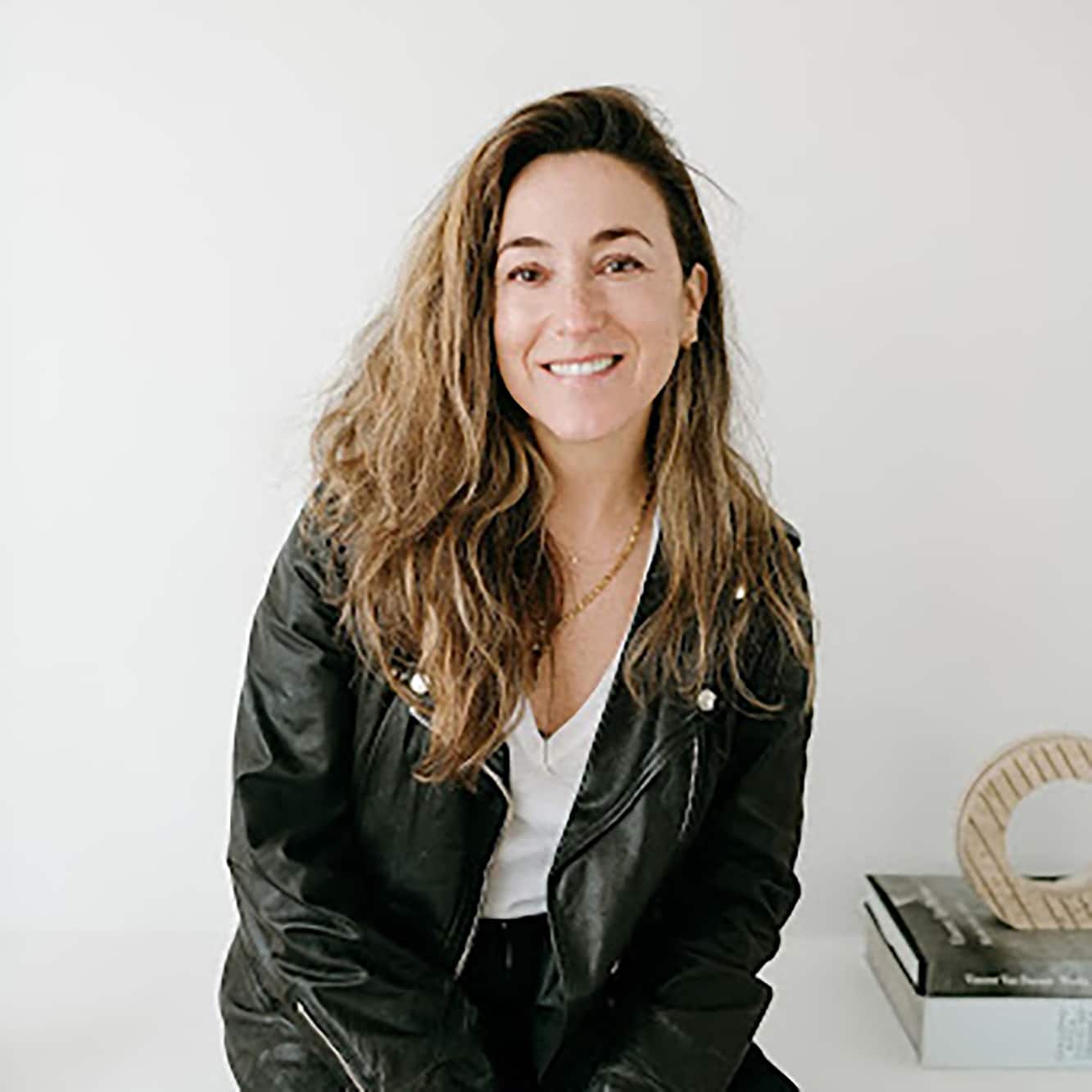
“What stops most of us from being creative is the belief that, oh, I’m not creative. I don’t even know how to draw a stick figure. If I told you how many times I’ve heard that, it’s like, you know, artistic expression is one form of creativity, but it’s not the only one. Creativity lives in virtually every single domain. If you’re a human, you’re a natural born creative.”
~ Pia Mailhot-Leichter
Pia Mailhot-Leichter is a creative partner, published author, certified coach, and entrepreneur. Her path has been anything but ordinary: a recovering nomad, she’s reported as a journalist in Sri Lanka, graduated summa cum laude from NYU, and worked as an award-winning creative director for some of the biggest brands in the world. Now, as the founder of Kollektiv Studio, through creative partnership, from storytelling to coaching, Pia is uniquely positioned to co-create wild visions and ventures.
Kollektiv Studio works with founders, leaders, and creatives with a rebellious spirit and visionary tendencies. As Pia puts it, “The outcome isn’t just what you create—it’s who you become in the process.”
She recently published Welcome to the Creative Club, a book that challenges everything people thought they knew about creativity. Praised by Google’s Global Head of Creative & Innovation as “life-changing,” and by iconic fashion designer Betsey Johnson as “a wild ride,” this part-memoir, part-guide invites readers to make life their biggest art project and reclaim their creative power.
I’ve read Welcome to the Creative Club and as a lifelong creator myself, I found it to be eye-opening in how Pia cuts straight to the heart of overcoming the stumbling blocks that most creatives encounter. If you’re looking to supercharge your creativity, I highly recommend Welcome to the Creative Club to you.
WEBSITES:
- Kollektiv Studio
- Welcome to the Creative Club
- Instagram: @pia.leichter
- Substack: @pialeichter
IF YOU LIKE THIS EPISODE, YOU MAY ALSO ENJOY:
- Samuel A. Simon, Playwright-Actor-Advocate, #353
- Christian Schu, Filmmaker-Episode #348
- Ana Benitez, Co-Founder-President of Storyrocket.com, #330
- Jeff Leisawitz, Musician-Producer-Writer-Teacher-Session 2, #325
- Richard Walter, Author-Legendary Teacher-Session 2, #323
- Dr. William J. Carl, Greek Scholar-Novelist-Playwright-Episode #304
- Maria Baltazzi, TV Producer-Teacher-Author, #297
- Michelle Danner, Actor-Director-Coach, #285
- John Vorhaus, Comedy Writer-Author-Session 2-Episode #284
- Amy Powers, Author-Songwriter-Producer-Coach, #262
- Leigh Marz, Leadership Coach-Author, #243
- Scott Myers, Screenwriter-Teacher-Episode #193
- Valorie Kondos Field, Champion Gymnastics Coach, #122
- James FitzGerald, Actor-Teacher, #90
Steve Cuden: On today’s Story Beat,
Pia Mailhot-Leichter: What stops most of us from being creative is the belief that, oh, I’m not creative. I don’t even know how to draw a stick figure. If I told you how many times I’ve heard that, it’s like, you know, artistic expression is one form of creativity, but it’s not the only one. Creativity lives in virtually every single domain. If you’re a human, you’re a natural born creative.
Announcer: This is Story Beat with Steve Cuden A podcast for the creative mind. Story Beat explores how masters of creativity develop and produce brilliant works that people everywhere love and admire. So join us as we discover how talented creators find success in the worlds of imagination and entertainment. Here now is your host, Steve Cuden
Steve Cuden: Thanks for joining us on Story Beat. We’re coming to you from the Steel City, Pittsburgh, Pennsylvania. My guest today, Pia Mailhot-Leichter is a creative partner, published author, certified coach and entrepreneur. Her path has been anything but ordinary. A recovering nomad, she’s reported as a journalist in Sri Lanka and graduated summa cum laude from NYU and worked as an award winning creative director for some of the biggest brands in the world. Now as the founder of Kollektiv Studio. Through creative partnership from storytelling to coaching, Pia is uniquely positioned to co create wild visions and ventures. Kollektiv studio works with founders, leaders and creatives with a rebellious spirit and visionary tendencies. As Pia puts it, the outcome isn’t just what you create, it’s who you become in the process. She recently published welcome to the Creative Club, a book that challenges everything people thought they knew about creativity. Praised by Google’s global head of creative and innovation as life changing and by iconic fashion designer Betsey Johnson as a wild ride, this part memoir, part guide invites readers to make life their biggest art project and reclaim their creative power. I’ve read welcome to the Creative Club and as a lifelong creator myself, I found it to be eye opening and how Pia cuts straight to the heart of overcoming the stumbling blocks that most creatives encounter. If you’re looking to supercharge your creativity, I highly recommend welcome to the Creative Club to you. So for all those reasons and many more, I’m deeply honored and to have the creative force better known as Pia Leichter join me today. Pia, welcome to Storybeat.
Pia Mailhot-Leichter: Thank you so much, Steve. What a warm and lovely welcome. It’s a pleasure to be here.
Steve Cuden: It’s a great pleasure to have you here. So let’s go back in time a little bit. When, at what point in your life did you know you were a creative person?
Pia Mailhot-Leichter: You know, it’s really interesting because as we are all creative people, but as kids, it’s. We’re just. It’s naturally creative. Like, we don’t. I don’t even think of myself. We don’t think of ourselves as creative as kids. Right. We’re just making stuff. Right. We’re just playing. We’re just imagining. We’re just doing things. So, from a really young age, I remember playing and creating. You know, I would write stories about a princess who didn’t need a kiss to wake up and, you know, inspired by Shel Silverstein’s poems and writing my own poems and, you know, doing a lot of different things. And I was fortunate to grow up in, a household where my dad’s an abstract painter. So creativity and art were just a part of life. Like, you know, weekends would come, he’d put on classical music or Stevie Wonder on the radio, and he would start painting in front of a canvas with his paint splattered jeans and a cup of coffee nearby. And I’d be on the floor, you know, drawing or writing, I’d usually write. That was my medium.
Steve Cuden: So you were surrounded by art even as a child?
Pia Mailhot-Leichter: Yes, and it was always something that was just what we did do, you know, it didn’t really feel special because it’s what was around me. Even his friends, my dad had a loft on the Lower east side on the Bowery in New York City for 25 years. So a lot of artist friends.
Steve Cuden: I think that makes you, as a creative person. That’s your natural being. That’s the state that you grew up in. It isn’t something that you had to force or go find. It was just always there.
Pia Mailhot-Leichter: Exactly. Ah. I mean, then the question is, am I creative enough? Right. There’s always that enoughness as you get older, but not as a child.
Steve Cuden: And how do you apply it? How do you apply what you have into whatever it is you’re doing? And like you say, as kids, we’re all very creative. We play and we have all that fun. But sometimes as adults, we lose some of that. And I think that’s what’s helpful about your book, is that it brings us to the how can we do this as a, as an adult? Not only just in life, but in work and all the rest of it? Were you a competitive kid? Was that something that you like to do to compete?
Pia Mailhot-Leichter: No, no, I don’t think so. I think as an, as an adult. Well, you know, listen, I remember I had this question asked so many times as A kid, it’s like, oh, so, you know, do you draw and paint like your father? Like, it’s like. And I would almost want to rebel against that because it was his, it wasn’t mine. So I think. Not that there was any competition, but it, you know, there was a comparison from the outside about, like, oh, of course I would do what my father does. And I always felt like I wanted to claim my own way of creating so that it was mine in a way.
Steve Cuden: Well, that’s. I think all kids want to sort of distance themselves at some point from what their parents do. Even if they do what their parents do, they want to distance themselves. You say, which I found fascinating, that you’re a recovering nomad. What does that mean?
Pia Mailhot-Leichter: That means that I spent my whole life moving and traveling. My mom a, proud hippie and independent, independent spirit. Just, you know, she loved do overs. She liked a good move. She liked change. And so we would pack up every year, two years, and move to different places. So my dad was like. He was always on the Lower east side, so that felt most like home. When I’ve lived Manhattan and Brooklyn and Puerto Rico and Montreal and Ottawa and Vermont and just moving, moving a lot.
Steve Cuden: And how do you think that impacted you, not only as a child, but ultimately as a creative person?
Pia Mailhot-Leichter: Whew. That’s a great question. As a child, it shaped me. It shaped who I am. It taught me so much. It taught me how to adapt, and how to, in a way, shapeshift to be in many different cultures.
Steve Cuden: Well, you have that in the book that you’re a shapeshifter. So as long as you’ve brought it up, what does that mean, that you’re a shapeshifter?
Pia Mailhot-Leichter: That means I’m able to read the energy in a room, you know, the culture in a particular place, sort of, you know, how do I. What do I need to wear? How do I need to be in order to not only survive, but to thrive? M. To, like, fit in, to be a part of this. Even though I might not be here for very long, I want the time that I am here to be good, to be meaningful.
Steve Cuden: The word shapeshifter is used quite liberally as a character trait in storytelling, and shape shifters are in lots and lots and lots of stories. and you’ve noted for yourself that you’re a shapeshifter, and that means that you’re able to sort of meld yourself into whatever circumstance you’re in.
Pia Mailhot-Leichter: Yeah. And that can be a gift and a curse.
Steve Cuden: How so?
Pia Mailhot-Leichter: Well, because I start to ask myself the question. It’s like when you keep changing shapes over and over again, you know, do you forget the original form or shape of you?
Steve Cuden: And do you. And what do you do if you do?
Pia Mailhot-Leichter: Well, I think. I think I do. I did at some point, you know, and then it’s a homecoming age. Look, they’re not tons of benefits about getting older. Older, but one of them is, like, feeling more at home in the skin you’re in.
Steve Cuden: Mm.
Pia Mailhot-Leichter: You know, and being able to sort of stay grounded. Like, yes, I could shift to make other people comfortable or to make this smoother, but you know what? I’m not going to, because I don’t have to. I don’t have to worry about making other people okay for me to be okay. It’s a very, you know, as a young, child, like, as a young person, that was often sort of what was guiding me to, like, how do I make everything okay so that I could also be okay?
Steve Cuden: Well, you also had that issue where you were always moving, so you were in new environments all the time, and you were trying to fit in, I assume.
Pia Mailhot-Leichter: Yeah. I mean, and I usually did. I did a pretty good job. And so it was just. And I think at some point as I got older, it’s like, okay, wait a minute. I realized and became aware I don’t have to fit into any shape or into any room. I don’t have to, you know, make myself smaller or just change how I’m feeling or who I am in any given situation. I can, but I don’t have to.
Steve Cuden: You don’t need Alice’s magic pill to get larger or smaller?
Pia Mailhot-Leichter: No, I don’t. But actually, the practice is staying my size.
Steve Cuden: how. That’s interesting. What does that mean?
Pia Mailhot-Leichter: Well, that means that, you know, being able. I stay me being able to be compassionate and empathetic and understand people and see people and feel their energy and. And not take the pill that I think is needed to make, other people okay or the surroundings better. But just to know that I can be who I am and as I am and hold space for people being who they are and as they are without needing to change.
Steve Cuden: Do you think that makes you a little bit of an empath?
Pia Mailhot-Leichter: Oh, definitely. I think. To a certain. Definitely. I mean, I also grew up in a lot of chaos. Bless my parents. I grew up with a lot of love, but, you know, my mom loved to party, and there was a lot of chaos in my home, apart from moving and stuff. And there’s a lot of life and color and sound and also changing shapes. People change shapes when they drink.
Steve Cuden: For sure.
Pia Mailhot-Leichter: You have to learn how to, like, oh, this is unpredictable. So you become more highly sensitive to the environment.
Steve Cuden: And that, I assume, has helped you greatly over the years as a creative director, because you’re able to, work your way around whatever that was those circumstances are that you’re being thrown into.
Pia Mailhot-Leichter: Definitely. And it also made me a great storyteller because sometimes when life, as it was, felt scary or difficult, I was able to escape into the world of my own making. I had an imagination that would take me places, and I could go there, and I would travel there often when I needed to, within myself, within the stories I would write or create, within, and also within other people’s stories. I mean, I remember sitting on the floor in Barnes and Noble. I could just. In Manhattan, I could just. 6th Avenue. I could just sit there for hours, just reading stories as a kid and then also creating them myself. And so I think in many ways, you know, the shit in our lives that we might go through, become. There are gifts in it, there’s gold in it. We just need to be able to see it.
Steve Cuden: If you can back up enough to take perspective and see it.
Pia Mailhot-Leichter: Absolutely. And when we learn to appreciate everything, who we are, and everything it took to bring us to this place. And I do think there’s always a flip side, you know, to every gift, there’s a flip side. To every curse, there’s also a flip side.
Steve Cuden: Well, that’s the infamous, silver lining in the gray cloud. It’s always there.
Pia Mailhot-Leichter: It’s always there. So I’m grateful for everything I went through because it made me who I am and it gave me superpowers. I also have Kryptonite through it, too. But, you know, it gave me superpowers.
Steve Cuden: I think that kind of just makes you human.
Pia Mailhot-Leichter: Yeah, definitely.
Steve Cuden: Everybody has whatever their Kryptonite is, and sometimes it really knocks you for a loop, and sometimes you overcome it relatively easily. It just depends upon the circumstance. So you eventually become a longtime creative director for lots of different products. did you go to school to learn to be a creative director?
Pia Mailhot-Leichter: No, I never did.
Steve Cuden: How did you get there?
Pia Mailhot-Leichter: So I went to Hunter College in New York City, and I studied English language arts, so language, literature, arts and writing. And I always. I was writing a lot then, and I wanted to make a career in writing or creativity. But I think. And I’m still. This is a story. I’m still rewriting, and I’M very conscious of it. I grew up witnessing my father in New York City as an abstract painter. Go through the highs and lows of being an artist. Also financially, it’s a tough life. At least that’s what I saw. You know, and I, and I saw ah, financial strife and difficulties and him working as a blackjack dealer for the Mafia and him, you know, working at the Metropolitan Museum of Art as a security guard, working as a merchant marine for six months in Borneo just to be able to make his art. Like that’s. It was all just to fuel and fund his art. He, I remember he used to tell me, you know, I didn’t choose art, art chose me.
Steve Cuden: that’s a very compelling way to look at it.
Pia Mailhot-Leichter: Yeah, he said I had to do it, this is what I was meant to do. And so he did everything he could to do it. But it meant, and sometimes also, you know, a lot of women don’t want to be number two to his art. It had a lot of consequences. Like from my small, like little person’s eyes, there are a lot of consequences to choosing to follow the art path. You had to pay a hefty rebell insecure.
Steve Cuden: It’s not something you can rely on if you’re going to be a true artist. you might get to a point where you can rely on it, but not at first. It’s usually almost impossible.
Pia Mailhot-Leichter: Well, yeah, definitely. And so I think what I didn’t see and that I realized as I reflected on it and I got older was that my dad is a gifted, talented artist, but not a stellar businessman.
Steve Cuden: So I think that’s true for a lot of artists. Art schools don’t teach you how to be in business as an artist.
Pia Mailhot-Leichter: No, my dad didn’t like selling his art to people he didn’t like.
Steve Cuden: So that might have eliminated a few dollars in your pocket.
Pia Mailhot-Leichter: Right. I mean, which I get. You know, you would spend months on a piece, you know, and if he, for him, it, there’s so much meaning in it and I guess it got, it’s very personal. Right. And business is not personal. So there are challenges. But I think I carried a sort of a fear within that if I chose just to focus on writing that I would have this very insecure, financially difficult, up and down experience.
Steve Cuden: And then you go into a business of creative director, where you are actually working for others. So therefore you have to have a little bit of a mercenary’s attitude where I’m going to do this great job whether I like them or the Product or not?
Pia Mailhot-Leichter: Oh, definitely. Well, I mean, you, you, you have to like it to a certain degree, like the product. You have to believe in what you’re to, to. To make great work, you have to also believe in what you’re.
Steve Cuden: You’re creating or it comes off as false.
Pia Mailhot-Leichter: Exactly. So there, there was that. But what. The reason I went down the commercial creativity route was because I was like, hm, how can I keep creating but have like some. What might that look like? Oh, advertising, you know, and slash marketing. Let’s. Let’s do that. But I didn’t go there, right out of Hunter College. Cause I was also thinking, like, I love traveling. I wasn’t a recovering. We’ll come back to the recovering part. We never got there. I wasn’t recovering yet. So still very nomadic, right? I was like, I want to travel, I want to make, create. What might it be? You know? And so I was searching. I did a master’s in, like, I didn’t finish. I did a master’s class in cultural anthropology and then I ended up doing, Wanting to explore international relations. Like, I don’t know. So I didn’t know. but I decided if I’m gonna do something in those fields, I better be able to survive in a very different place. So that brought me to, Actually it was an internship working for a local Sunday English publication in Sri Lanka, in Colombo, right. So right after Hunter, I decided to go do that work as a journalist in Sri Lanka. And I ended up publishing seven pieces, op ed pieces on. It was 2002, so it was the US incursion into Iraq without the UN’s, you know, without going through the UN and everything that that meant for international law and who we were as a country. And I remember thinking, oh man, they might not let me back in. They would have let me back in then, but not now. That’s probably true without getting into politics. But, And so I did that and I was like, oh, this is interesting. And I also worked for an ngo, as in marketing and Communication at the time. There are different opportunities that popped up for me while I was in Sri Lanka. And I also worked for the undp, rewriting their website copy so that it wouldn’t sound so. So many acronyms. So people actually understood what they did in the country. And, out here, this is the thing. It’s like quasi advice. What I did was after I had published like, I think there were seven to nine articles in the Sunday paper. It’s called the Sunday Leader. I was like, I want to do something more. I don’t know what it is. Journalism is good. I created my own little portfolio and I went knocking on doors, you know, and that’s how I got these different roles. I would. I pick up the phone and say, hey, this is who I am. This is what I can do. I have, I have, I have nine articles here that was in Sri Lanka or Sri Lanka. Sri Lanka, you know. And so that got me this part time road that an ngo, a Big Plan international, worked, writing articles for the Canadian International Development Agency on their projects in the country and then doing the UNDP website copywriting. So that was just me saying, what do I have to lose? Let me take a chance. I have a little something in my pocket now because I had, you know, let’s take that and show them like, this is evidence. Like, hey, I can do this for you too. And that opened up a lot of doors.
Steve Cuden: And how does that then turn into being a, creative director? And by the way, what does a creative director do for those that don’t know?
Pia Mailhot-Leichter: So I came back home and I thought, you know what, what if I use creativity to do good in the world? I would like to do that. Because that’s what it felt like I was doing in Sri Lanka. I was doing that. And I thought, well, maybe I’ll get my master’s in global affairs. This will be. So I went to NYU and I got my master’s in international relations, which was eye opening and fantastic. I wrote my thesis on the role of transitional justice and post conflict peace building. Never really used it, but here we are. And then, I had the chance to work at the UNDP in marketing and communications on a contract role for not enough money based on the loan that I had on my back from NYU or produce an economic documentary in Bahrain. So I decided to do the economic documentary in Bahrain, which ended up being ad sales. I didn’t know that producing it, I thought it was gonna be like, you know, writing the script and, you know, all the creative stuff. But it was. No. We also had to produce it, so we had to sell ad space to get it off the ground.
Steve Cuden: Wow, okay.
Pia Mailhot-Leichter: And I was like, I just wrote on transitional justice and now I’m selling ad space in the Middle East. What is going on as.
Steve Cuden: As one does, right?
Pia Mailhot-Leichter: It’s just, what am I doing here? Ah, but it taught me a lot. It taught me a lot about sales and communication and how important communication is, how important pitching your ideas are.
Steve Cuden: Well, pitching is a form of sales and you’re then selling. To be able to sell.
Pia Mailhot-Leichter: Absolutely. But it’s also a way of being able to succinctly tell a compelling story.
Steve Cuden: Well, absolutely. And you are working in a, field in which you’re doing the most difficult sales jobs ever. Storytelling jobs ever. Which is short. And short is hard.
Pia Mailhot-Leichter: Absolutely.
Steve Cuden: Getting your message across and making it clean, that’s hard to do.
Pia Mailhot-Leichter: It was. And so actually I really did have moments where I wondered, what the heck am I doing here? Like really those crisis moments of really, how did I get here? but looking back once again, the gift of hindsight, it did give me a lot. It taught me a lot. It taught a lot of tools. I ended up using much. So then I ended up going, to France. I left and I was wondering, what am I going to do? I met my, actually my ex husband and he lived in France. So we went to France and I started to apply for a lot of different jobs in France and in London, in Paris and London. And I ended up getting interviewed by a, brand agency in London who appreciated this, geopolitical background I had because they were working with Shell at the time and who wanted really to engage with the citizens of 2050 who would be living with the consequences of the energy choices we make today. And this is a long time ago. And they thought, oh, you’re profile, this is okay. You might not have agency, background, but you have an eclectic background that I think could really suit this global campaign and a strategic background that we’re interested in. So I got the job. My first agency role, and I remember it was in London. I remember being in my first brainstorm. It was not for Shell, it was for someone else. It’s an agency, so you work with a lot of different clients and coming up with ideas with my colleagues and thinking, oh my God, I get paid to do this. This is so much fun.
Steve Cuden: Oh, that’s nice.
Pia Mailhot-Leichter: It was an absolute blast. It’s like, how can we do this? I don’t know. Let’s think about it. What might it look like? How might we solve this problem? And oh, how might we communicate that what would get people’s attention? And it was just really, it was really fun. And I think fun and enjoyment, are really good sign that you’re in the right place.
Steve Cuden: Yeah. Because it means that you really want to do that.
Pia Mailhot-Leichter: Yeah, it’s enjoyable. It’s like this M feels good. And so I kind of stumbled into it, I guess. Well, not really stumbled because I was applying for more creative roles across the Board. But I could have landed at arguably many different places. And that was where my agency career started. And I didn’t start as a creative director. You never start as a creative director. I started off as it was a brand agency, so it was interesting. It was kind of sitting on creative strategy and also, concepting and copywriting.
Steve Cuden: And were you being taught things by these folks or were you just absorbing it yourself, or how did you learn?
Pia Mailhot-Leichter: Well, I was being taught a lot by the people I was with, but I also had my own. Like, I had been writing for a really long time. But of course, writing for NGOs is very different than writing for corporate. So I think you learn.
Steve Cuden: Well, being a writer does not necessarily make you a strategist, and you’re talking about strategy.
Pia Mailhot-Leichter: That’s true. That’s true.
Steve Cuden: So how did you learn to be strategic?
Pia Mailhot-Leichter: I think that’s a good question. I don’t know if you. I think it was just experience. And I’ve always been quite strategic in my thinking, even though I’m. I mean, you know, it’s an interesting thing. People, especially in the old advertising world, you would have planning departments which are strategy, and you would have creative as very separate.
Steve Cuden: Right.
Pia Mailhot-Leichter: Two separate departments, which never really made sense to me because the best creative work comes from really understanding what the problem is that we’re trying to solve and getting really, really clear on that and from that place. And, like, what’s the insight? What’s the core human insight for our audience? What is the real problem we’re trying to solve here? And really getting under the skin of that. And then the creative ideas are, meaty and juicy and relevant and finger on the pulse kind of thing.
Steve Cuden: When you figure out why corporations insulate one particular department from another, you let me know. Because for whatever reason, there’s a lot of that that goes on in corporate entities, in organizations, because there are little fiefdoms that build up and people protect their fiefdoms and then they don’t interact, and that becomes a problem.
Pia Mailhot-Leichter: Yeah, and in agencies, I mean, luckily I was. There was the CEO of the first agency that I started at in London. It was very progressive. And so she hired people with a lot of different skill sets. So when clients came to us, it wasn’t just, oh, your problem is X. the answer is an ad. Right. So she had change management consultants and PR people and designers and, you know, a host of people with different skills. That’s. That could really answer, understand what the problem was and then figure out what tool was needed rather than just one particular thing.
Steve Cuden: All right, so for those who don’t know, which will be many who are listening to this show, what does a creative director do? What’s the purpose of that position?
Pia Mailhot-Leichter: A, creative director, usually you come from either a copywriting background or sort of an art director, slash design background. I’m on the copy side of life. So it’s a blend, which is what I love about it, of creative strategy is understanding what is it we’re really trying to solve. Creative client facilitation and partnership. So being able to work really closely with clients and facilitate workshops and thinking and ideas and sparring to really also challenge to be like, okay, is this really the problem we’re trying to solve? I mean, like, what’s, what’s really going on here? Let’s look at this. Because the best work I’ve ever done in my entire career has always been in close partnership with my clients.
Steve Cuden: Nice.
Pia Mailhot-Leichter: Always like looking back, award winning work. That’s because I had a great partnership. Close partnership because the client will know more about their brand than I can ever venture to know about. But I know that makes sense what I know about. And so together we’re unstoppable.
Steve Cuden: Right.
Pia Mailhot-Leichter: anywho, so creative strategy, copywriting and ideas concepting. So being able to come up with, with ideas, whether it’s for campaigns or it’s for products or whatever it might be for, but being able to ideate. But as a creative director, it’s not about you in the sense that it’s really about creatively directing not only clients but also teams. So being able to serve as a soundboard and inspiration to be able to activate, curiosity and passion and ideas and the best from the creatives that are working within different teams.
Steve Cuden: And so you are the leader of the creative enterprise, is that right?
Pia Mailhot-Leichter: Or different creative teams, depending on who you’re, how you’re set up as an agency. So you might be the head of a creative department, but in like in the US for example, you have huge, like you could have huge. A lot of people working for one particular client. So you might even have several creative directors for that particular client with different teams. So it depends on how big. In Europe it’s a little bit we have. The budgets are not as big, so we have smaller teams and more clients.
Steve Cuden: Correct me if I’m wrong. The creative director can generate the ideas that work, but may not necessarily generate those ideas, but oversee the production and the creation of those ideas into what ultimately is advertising of some Kind or marketing of some kind.
Pia Mailhot-Leichter: True.
Steve Cuden: That’s. So I got it right. Yay. it’s always fascinating to me that I think most consumers don’t realize that this product that they’re looking at on TV or listening on the radio or seeing on a billboard or wherever, that they don’t realize that there was a whole big machine that happened to make that appear.
Pia Mailhot-Leichter: Absolutely.
Steve Cuden: And that machine is a very creative machine. Even though sometimes it looks like that doesn’t look good creative at all. But it is, in fact, a highly creative thing. So let’s talk about your book. Let’s talk about. Welcome to the creative club. it’s clear why you wrote it, but why did you write it now?
Pia Mailhot-Leichter: I wrote it now because I’m not sure I was conscious of this at the time, but definitely reflecting back on it, I think we’re at a period in time where many of us feel disempowered, also creatively like that things are coming at us. Things are. Life is happening to us. And in many ways, we can feel disconnected from our creativity. And for me, creativity is a lot more than creative direction or, you know, just. It’s not only what we do. It’s a way of being in the world. It’s how we creatively respond to life. It’s how we creatively direct ourselves in so many ways. So it feels like it’s an important time to reclaim that, to reclaim what’s always been ours, which is our creative power and capacity.
Steve Cuden: You make it abundantly clear in the book that it’s not just about creative works, but it’s in fact, creating a life that’s creative.
Pia Mailhot-Leichter: Definitely. I mean, it’s also reframing, framing, or redefining what creativity is. Because what stops most of us from being creative is the belief that, oh, I’m not creative. I don’t even know how to draw a stick figure. If I told you how many times I’ve heard that, it’s like, you know, artistic expression is one form of creativity, but it’s not the only one. Creativity lives in virtually every single domain. Creativity is how we survived as a species. Creativity is how our brains are wired. You know, from how our brains function and interact from the default mode network to the control mode network. We are. If you’re a, human, you’re a natural born creative. It’s also problem solving. And when we say strategy, that’s just a big word for problem solving. And we’re all problem solvers. We solve problems every day in our life, all day long, all Day long, we might not just realize it. That’s also a huge. That’s what creativity is. It’s like, oh, you’re presented with a challenge and you creatively respond.
Steve Cuden: I think a lot of people think that when you say the word be creative or creativity, that it means art and it doesn’t. It means what it is you’re doing and how you go about making things happen. I mean, the auto mechanic can be an incredibly creative person.
Pia Mailhot-Leichter: Totally.
Steve Cuden: It’s everywhere. All kinds of people are creative, but they probably don’t think of themselves as being creative. That’s what you’re pointing out in your book, is that we’re all that way.
Pia Mailhot-Leichter: Yeah. And I’m also pointing out that when we don’t think of ourselves as creative as like, oh, I’m just doing my job, or, oh, this is how it is. In many ways. We disconnect from our ability to create without belief.
Steve Cuden: Sometimes school kicks that out of us.
Pia Mailhot-Leichter: That’s true. And life does too. You know, sometimes we get, over awe. Ah. And wonder, get overshadowed by duty and responsibility.
Steve Cuden: And that’s what you mean by saying that the book challenges everything people thought they knew about creativity, right?
Pia Mailhot-Leichter: Absolutely.
Steve Cuden: And it says of your book, or said of your book that it is life challenging. In what way is it life challenging, life changing? Life changing. I beg your pardon? You’re correct.
Pia Mailhot-Leichter: No, that’s okay. well, I think that’s for everyone to determine on their own. Like, I really. That that was, Susanna’s feeling after she read the book. So I can’t really answer that question for anyone because that’s a very personal. Like, it’s life changing. It was life changing to me. Rediscovering what creativity means to me. I can only share my personal experience was life changing. So after a really gnarly divorce and being afraid to sit with my feelings and everything that was going on after that, jumping into a healthy rebound relationship. Getting fired from my job, which forced me to look at everything close up and stop. Just stop. Stop moving, stop avoiding, stop trying. Just look. And, I took a long, hard look. And it was, It was like life played 52 pickup with me. You know, everything was on the floor and I decided my gut. It was a felt sense, said, you need to do something different. And so I went on the Trans Siberian instead of. For four weeks alone. Instead of looking for another job or getting caught in a fear loop or doing a host of different things that I might have done in the past, but it really felt strongly like, no no, no, you got to do something different. So I did. I went on the Trans Siberian, and it gave me two really powerful reminders. One, that of course I was going to be okay on my own. I’ve been on my own for years. And I grew up in New York city in the 80s and 90s. I mean, of course I’m gonna be all right. Two, that the world is full of adventure and wonder. If we can just open to it and allow ourselves to receive it and experience it and take. Take some risks and get out there. I mean, from the Gobi Desert to Moscow and Lenin’s tomb, like, it was just. And all the people I met in between, it was a reminder of how big and wondrous life is. And the epiphany, or the life changing moment was when I was sitting back in the train, the landscape of Siberia hurtling outside the window, looking in front of me at a Russian man cradling a bottle of vodka, punching the steel wall, smelling sauerkraut and body odor, and just, like, taking in the scene and thinking, oh, my God, wait a minute. I creatively directed this. Like, I made this happen. I brought myself here. I created this moment. Scene, set design, main character energy, the cast of characters, I mean, you name it, costume design, I created that.
Steve Cuden: Nobody forced you to do it. You did it right.
Pia Mailhot-Leichter: And it was that realization that I’m not only a creative director at work, I’m creatively directing my life. And you don’t any. For anyone who’s listening, you don’t need to be a creative director to do that, to creatively direct your life, to become aware that you are also happening to life. Life is not just happening to you. And you get to choose that. You get to create the scene.
Steve Cuden: That certainly got to be a part of why Betsey Johnson called it a wild ride. And then beyond it, obviously. but life does not have to be a wild ride in order to be a creative life. It just is.
Pia Mailhot-Leichter: In your case, no, it doesn’t have to be a wild ride. That’s my scene. That’s my choice. That’s my creative direction. So everyone.
Steve Cuden: I think most life is wild, but it doesn’t have to be.
Pia Mailhot-Leichter: No, I think it could be whatever you want it to be. And that’s really the key to all of this, is getting closer to who you are and what moves you, what triggers you, what motivates you, what lights you up. And, creating from that place, which is bound to be original because there’s no other Steve Kudin like you in the world.
Steve Cuden: Are you sure?
Pia Mailhot-Leichter: I’m positive.
Steve Cuden: I think that’s prove me wrong. In some ways. I think that’s a good thing. So what would you say are some of the bigger challenges that you had to overcome while conceiving and writing the entirety of the book?
Pia Mailhot-Leichter: Whew. Well, the first challenge I had to overcome was I needed to smash the myth that, I needed to write the book alone in a cabin in the woods with my typewriter and a pipe.
Steve Cuden: And a pipe.
Pia Mailhot-Leichter: I don’t know, I just said like a Hemingway thing. I just like, I don’t know. I just, I just have this in a bottle of whiskey. I just, you know, had this idea that I needed to be prolific and it was just all going to flow through me and I was going to write it all by myself. And this myth, which is a cultural myth, was getting in my way of creating. And, that myth got smashed when I started working with a hybrid publisher. Because of course I’m not doing this on my own. Creativity, not a lone task. You know, we’re constantly co creating and so I worked with an, with editors. And that was extremely helpful as I to know that like, I have a team, I have people that can help make me even a better writer, that can work with me, that I can spar with. And then I’m also accountable to. I have deadlines.
Steve Cuden: You just said something that you write about in the book about that creativity is not a lone act. I think it can be in parts lone or lonely or alone. but it doesn’t have to be. And ultimately it isn’t. Ultimately, if you’re going to be an artist, you’re going to share your work with others, the public or whoever else. And that is definitely not a lone act because your art then becomes what they perceive of it.
Pia Mailhot-Leichter: Absolutely. And also I believe that creativity, you know, the ideas that we get are coming through us in a variety of different ways. So I believe we’re not creating alone. We’re also co creating with the universe, if you ask me.
Steve Cuden: So as you were writing the book, did you have a sense that what you were writing would be effective and applicable to many people?
Pia Mailhot-Leichter: I wrote the book when I started writing the book, and we’re gonna answer that, but I’m gonna go backwards. Another thing that got in my way for the process of writing was, holding on too tight to what the book needed to do and the outcome, what it needed to be for me and for other people. So it blocked me. So I needed to let it go, I needed to let it go and just say, you know what? My intention writing this book is to hopefully make an impact in one person’s life. And I’m gonna let go, and whatever needs to emerge from me is going to emerge from me, and I’m gonna trust it. And then the word started to flow. The more that I tried to choke it and think, who’s gonna get value and what is this gonna be? The more it was blocking me. I had to trust that, it would. If I wrote from a place that was true, that was very important for me. Does this feel true? Not is this good, not is this bad? But does this feel true?
Steve Cuden: So you had to learn to trust yourself in doing this.
Pia Mailhot-Leichter: Absolutely.
Steve Cuden: And even though you’d been a creative person and have been a creative person your entire life, you weren’t sure of yourself at that moment, and you needed to learn to be sure of yourself.
Pia Mailhot-Leichter: Sure. I think we could be creative, and we’re always still human, and insecurity is a part of that. Right. And whenever we’re about to embark on any new creative venture, which is going to be new, if it’s creative, if we’ve done it before, it’s not very creative. Right. So there’s going to be an element of what I call the wobbles. It’s going to be like, oh, can I do this? Like, what is this? Oof.
Steve Cuden: That’s where things really start to happen, isn’t it?
Pia Mailhot-Leichter: Yeah. And I think we all counter that. And if we’re lucky, because it’s a sign that we’re growing, we’re going to encounter it again and again. Right. The point is not to not encounter it.
Steve Cuden: It’s fearful in some ways to some people. And when you get those wobbles or you become insecure or unsure or whatever those words might be, that sometimes you have to work to overcome it in order to move forward. And that’s part of the process, and it actually stops some people from moving forward, and that’s what they have to overcome. Yeah.
Pia Mailhot-Leichter: Yeah, absolutely. And I think sometimes just allowing it, like, ooh, I feel wobbly. And then reminding yourself of, why are you writing this book? Why are you creating this? What’s the intention behind it? And does this feel true to me? And, let that guide you. Don’t worry about the rest. The rest is the rest. People will interpret the book or get value from it or not. That’s not up to you.
Steve Cuden: So ultimately, you had to satisfy yourself first.
Pia Mailhot-Leichter: Yeah. Or I don’t know if the Word is satisfied. But I felt compelled to write the things I was writing about because it wasn’t always very satisfying to write about. you know, stories of where I lost my creative power. That was difficult. They were vulnerable stories. I wasn’t anticipating. I didn’t expect to write those stories. It wasn’t part of my plan, but it’s what emerged.
Steve Cuden: I guess what I’m trying to say is, once you did write it, once you did get to it, then you went, okay, this is the right path. I am going to write about this. It is going into the book. I’m not going to cut it out. And that then became the satisfying part, is, okay, this is now. Right? That’s what I’m trying to get to.
Pia Mailhot-Leichter: Yeah. I think the word I would use is fulfilling.
Steve Cuden: Great. it fulfilled you once you got there. But it took you a little while to get there.
Pia Mailhot-Leichter: Oh, it did. And luckily, again, I had a great editor who was super. She was fantastic. And we would always ask the question, is this in service of the story and the reader? There’s a really good filter always. So that was always the filter. Is this in service of. So we’re not just going to share things that were difficult. Just for me. That’s not. Because it’s in service of the reader and the story.
Steve Cuden: So what did you get to along the way that surprised you? Were there epiphany moments where it was like, wow, I’d never thought of that before. And what surprised you?
Pia Mailhot-Leichter: having to write, there’s only one pure memoir chapter in the book where I write about my marriage and divorce. and I remember I handed the rough draft in to my editor, and she said, this doesn’t sound like the PIA I know today wrote this. This sounds like the perspective of an older version of you. It’s not very compassionate. And I think your readers deserve the version of Pia that’s here right now. It’s important. And that surprised the heck out of me. And it made me aware that I was still looking at myself and that part of my life through the eyes of an older version of me that was less forgiving and less kind and less wise.
Steve Cuden: And that helped. I assume that those.
Pia Mailhot-Leichter: Oh, hell, yeah. That was extremely transformative. I rewrote the chapter, and I got a chance to. To rewrite my story from the perspective of the woman I am today. And that was incredibly healing. Again, that wasn’t the intention, but it was incredibly healing. It was very transformative, and anyone can do that, by the way. You don’t have to publish it. It’s, a very powerful act to write and reclaim your story from the eyes of the person and perspective of the person you are today. Because we could forget that we might be stuck in an old past. An old prescription you write in the.
Steve Cuden: Book, and I’m quoting you. Creativity is the act of transformation. Taking no thing, the word nothing, no thing, an abstract idea, and turning it into something, whether a product, poem, book or business plan. So that’s partly what you’re talking about, is you’re taking this other life that you had, which was something else or it wasn’t nothing, obviously, but turning it into something different or other.
Pia Mailhot-Leichter: Yeah. And a reclamation.
Steve Cuden: And a reclamation. And that was then an epiphany for you in going through that, I assume.
Pia Mailhot-Leichter: Definitely it was an epiphany that I was stuck. I, was stuck looking at this in an antiquated way, that it needed an update. But I didn’t realize I was stuck till I wrote about it.
Steve Cuden: Well, you, write all kinds of wonderful things in the book. That creativity is not just something you do, it’s a way of being. And so that life then is a creative act. From the moment you wake up, or I guess even in your sleep, it’s a creative act.
Pia Mailhot-Leichter: Totally.
Steve Cuden: Ah, the dreaming is a part of that. and that you talk about believing in what you’re doing. This is partly what you’re alluding to, I think. How important is it for artists to believe what they’re doing now, as a creative director, we talked about that already, that you needed to get past it being false or fake, or you have to believe in it. But as a human, as an artist, how important does that then become?
Pia Mailhot-Leichter: Is believing in what you’re making? Is that what you mean?
Steve Cuden: Yes. Or. And yourself, I guess, too, the word.
Pia Mailhot-Leichter: That comes up for me most is trust first more than the. Because maybe belief follows. Do you know, like trusting in yourself and trusting in life and trusting in your work. So let’s say you have an idea to do, to create something, whatever that might be, allowing it, like following it, trusting it, not needing to know exactly what it will be. Because you can’t. Because that’s part of the creative process, is not knowing and allowing yourself just to trust yourself. That no matter what it becomes, it’s. It’s coming from you and it’s meant to be there in some way. And that builds belief. I think we. That feels like a prerequisite for me, is just to trust, Trust yourself. And maybe this is cliche, but it’s so damn true. Trust the process. Allow yourself to be in it.
Steve Cuden: Our artists sometimes have to take a leap of faith into the void. And, that can be really scary sometimes.
Pia Mailhot-Leichter: Oh, yes, we definitely. I mean, I think every time you. You’re about to create, you take a leap into the void. Because in the void is uncertainty. And it’s a liminal space. It’s when you’re between what was and what, what could be, you know, and it’s unknown. So it can feel like a, hallway of doors. It can feel like so many different things. But that’s the creative juice. That’s where, you know, you’re in. You’re in the thick of it and just becoming aware of like, oh, it feels like the void. Oh, this is wildly uncomfortable. Oh, yeah, good. You’re in the creative juice, man. You’re in the sauce. Stay in it. You know, it’s that.
Steve Cuden: It’s that discomfort that actually is where it starts.
Pia Mailhot-Leichter: Yeah, absolutely. Exactly. And if you start to feel that discomfort, just becoming aware, like, oh, man, I’m hitting that creative nerve. This is good stuff. Even if it’s uncomfortable, that will help you be in it.
Steve Cuden: Well, you also discuss that artists sometimes have a touch of madness. You talk about madness in the book. And, my question is, does it help to have a touch of madness to be a creative person?
Pia Mailhot-Leichter: Oh, what is that quote? Like, if the world is mad, they’ll think a, ah, sane man crazy or something like that. Do you ever hear that?
Steve Cuden: I’ve never heard that. That’s a good one, though.
Pia Mailhot-Leichter: Yeah. Yeah, exactly. So, anyway, in the book, I kind of smash. Because I do smash some myths in the book that I feel are really important for us to embrace our creativity. And one of them is that we don’t have to be reliant on alcohol or drugs or madness in order to create.
Steve Cuden: That’s.
Pia Mailhot-Leichter: That’s just. It’s not a.
Steve Cuden: Well, you can look at the truly famous mad artists. I mean, probably the most famous is Van Gogh, who was probably pretty crazy to deal with in the real world. but yet he turned out this extraordinary work and he worked through it, whatever it was that he was going through, whether he had been poisoned or whether he had something wrong with him, whatever it was, and that he was a starving, suffering artist. And it’s not necessary to be a suffering or starving artist, is it?
Pia Mailhot-Leichter: No, absolutely. And I think there was a piece of research that really resonated and kind of shifted something within me. When I read it, by a psychologist. It was an academic paper that was exploring and again, breaking, you know, breaking the myth or the idea that alcohol and drugs fuels creativity. And he said, actually the pattern that we’re seeing, the relationship between drugs and alcohol and creativity is a sign of a lot of artistic people being more emotionally sensitive. So there’s a higher sensitivity. So emotions are deeply felt. And when we feel all emotions deeply, that can be quite challenging, especially without kind of support. So people might then turn to alcohol in order to numb or drugs to numb the sensitivity. But it’s not about fueling the creativity, it’s about numbing the sensitivity. That’s the pattern. And that was fascinating to me.
Steve Cuden: I think that that’s correct. I don’t think that alcohol or drugs actually makes you creative at all.
Pia Mailhot-Leichter: No, it doesn’t. Research has shown that it doesn’t. It does the opposite.
Steve Cuden: Right? Well, because it takes you out of who you are sometimes.
Pia Mailhot-Leichter: Yes.
Steve Cuden: And that’s not what you want to do if you’re going to be a creator.
Pia Mailhot-Leichter: no. You want to go deeper into who you are.
Steve Cuden: Yes. Which is sometimes really painful. And so that’s, People want to avoid it. So what do they do? They self medicate.
Pia Mailhot-Leichter: But the beauty is that that pain can also serve as beautiful creative inspiration. It’s something we can take and transform and turn into something. We can use it. We can use it in our work. That’s another perspective we can hold about it.
Steve Cuden: In light of this, you also talk about the inner judge. How can we overcome our inner judge?
Pia Mailhot-Leichter: The beautiful and perhaps simple way of overcoming the inner judge is inviting in curiosity. Curiosity and the judge are like oil and water. They can’t coexist in the same room. The minute judgment starts to appear, activate your curiosity. So if you go, oh, this is really shit, you know, oh, it’s the judges around instead of that. Activate your curiosity and go, oh, I wonder what gold there is in this shit. I wonder how might I turn that into something else? Oh, maybe I take that. You know what I mean? We start to get curious. Curiosity is asking questions. It’s observation. it’s really asking powerful questions and getting. And getting very curious about what you’re. You’re looking at or what you’re making. And the minute you do that, the judge will start to moonwalk out of the room.
Steve Cuden: Do we still need our judge in a sense to decide, hey, this work is working, it’s done, it’s good, it’s worthy of putting out into the world. We need that judge too, though, don’t we?
Pia Mailhot-Leichter: It’s about knowing when to activate what, depending where you are in the process. So I’ll give you a very practical example. When I’m sitting down and I’m first starting to write something, my inner perfectionist or judge will waltz into this space and go, oh, no, that sentence, though, really? Is that how you’re starting off? And it will make me freeze. And I’ll say to the judge, hey, thanks for coming over and trying to make this good so I’m safe, but you’re not needed for this part of the creative process. I’m going to come back and ask you to come back later. So thank you, but, no, not now. Out you go. And then I go back to it. And however many times I need to do that, I go back to it. Because that’s the precious kind of ideation, creating time, where it gets to be whatever it needs to be. It gets to be shit, gets to be gold, gets to be good. It doesn’t matter. The fact is that you’re showing up for the work and you’re just doing it and just allowing it to come through, no matter what it is. Then after it’s come through, hey, judge. Hey, evaluator, come back in. How might we make this stronger? What are the parts that you see that could be improved? Let’s like, let’s get sharp, right? And then you might invite that inner judge back in, or inner evaluator at a different point in your creative process, Then that’s helpful. At the very beginning, it’s not helpful.
Steve Cuden: But you do need to have, as an artist and as a person, some form of judgmental ability to say that this is good, that this does work. It’s in the beginning where it’s really difficult to overcome. If the judge is sitting there saying, no, no, no, this doesn’t work.
Pia Mailhot-Leichter: And I’m just going to challenge that because I’ve been thinking about this a lot myself. Good. Another perspective to hold is, well, who are we to judge if it’s good or, bad?
Steve Cuden: True.
Pia Mailhot-Leichter: Who am I to judge if it’s good or bad? What if I don’t share a piece of work because I think it’s bad? And what if that piece of work would really positively impact someone? What if they think it’s good? Who am I to say it’s good or bad? My father would definitely disagree with me on this, but sometimes I just like, you know, to challenge things. I mean, of course we can. I don’t even. The word judge doesn’t sit well with me. I can bring in my evaluator and I can bring in my intuition.
Steve Cuden: So I’ve mentioned on this show many times, the author Anne Lamott and her book Bird by Bird. Are you familiar with that book?
Pia Mailhot-Leichter: Yeah, I’m totally.
Steve Cuden: And she talks, ah, she’s a writer and she’s talking about writing in that book. And she, has that wonderful chapter in there. And the title of it is Shitty First Draft. And that you have to be willing to put the initial stuff out to take a look at it and then craft it further. So I’ve always thought of writing that as a writer, your first draft is you, the artist making the clay that you then shape in your subsequent drafts. So that’s how I think of it. And that’s what you’re talking about? Yeah.
Pia Mailhot-Leichter: Yeah, I mean, it’s interesting. I edited. You can keep editing. Editing. Gosh, you could almost never finish editing a book or of course, piece of work if you wanted to. But at some point you got to call it. And I do think intuition plays a role.
Steve Cuden: So I worked. He’s no longer with us, but I worked for, I was friends with and worked with for a long time, a man named Ron Sargent, who invented the porta Potty and he invented the cruise control. He was an inventor and he was an engineer. And he used to have a saying. He’d say, there comes a time in the course of every product when you have to shoot the engineer because the engineer will keep tugging and playing and pulling forever if you don’t shoot the engineer and stop them. So that’s sort of what we’re talking about right now.
Pia Mailhot-Leichter: Totally what we’re talking about. There’s at some point you need to go, okay, that’s it, good enough, go. It’s done. But you’ll feel it again. Your gut will play it, your instinct will play a role in it. You’ll know.
Steve Cuden: You write in the book, and I’m quoting, fuck fear, do it anyway.
Pia Mailhot-Leichter: Absolutely.
Steve Cuden: Is fear useful in any way?
Pia Mailhot-Leichter: Definitely. Fear tells us when we’re on the precipice of something big, or, when we’re on the precipice or edge of something that’s very meaningful and requires risk. And if we can see fear like that, if we can discern it, because there’s different types of fear, but if we can discern like, oh, this fear is data. And it’s telling me I’m about to take a risk in the direction of something that’s really meaningful to me and I don’t know how it’s going to turn out or what it’s going to be m. And I’m scared shitless. Right. Okay, good, good. Sit with that. It’s all right. You know what I mean? Like, we can be. You can be with that. You’re strong. We’re strong enough. We can be with the fear, and we can do it anyway. Okay. All right. That’s all right. I’m not gonna. I don’t like the word fearless because it feels like, hey, sometimes I’m fearful. Like, I’m fearful. And, But, that’s not gonna stop me. I don’t have to be fearless. I can do it anyway with fear. That’s courage.
Steve Cuden: I think fear sometimes actually spurs you to be creative to solve. Overcoming the fear.
Pia Mailhot-Leichter: Oh, definitely. There’s. I mean, fear and risk are closely interrelated. Right. And I think with creative work, there’s an element of risk that’s involved. You take a risk, and with risk comes a certain amount, comes fear. Right. and that’s something that if we can identify as like, oh, this means I’m onto something big. I’m m about to do something big, then I think it becomes easier to work with.
Steve Cuden: Well, you write also in the book, whatever you do, don’t die with your magic inside you. You want to expand on that a little bit.
Pia Mailhot-Leichter: Well, what a shame it would be to have this big, beautiful life and all the gifts that we’ve been given and not share them with anyone because we’re afraid of how it’s going to be received or how we’re going to be perceived or failing or whatever the fears might be. What a shame that would be. And everyone, I believe, has magic and medicine to share with the world that we need badly as. Especially right now in a time of destruction. We need everyone to activate their creative capacity and their creative power. You know? and so it would just be a shame not to share that with the world while you can. And I think death is a. Is a really good reminder or a really good creative instigator.
Steve Cuden: It’s a motivator.
Pia Mailhot-Leichter: It’s such a motivator. It’s like, hey, you’re gonna. We’re gonna die. We’re all gonna die. And we all have a hidden expiration date. Ha ha. No one knows when our numbers are gonna be called. It could. Anything could happen. So why don’t we let that move us, to make. Create shape, go after the things that we’re burning to do inside? I mean, what do we got to lose when we’re gonna lose it all anyway. Nothing.
Steve Cuden: It’s a little bit like Nike says, just do it.
Pia Mailhot-Leichter: That’s right.
Steve Cuden: And get at it. Well, I’ve been having just a fantastic, fun, very fascinating conversation for just shy of an hour now with Pia Mayo Mailhot-Leichter And we’re going to wind the show down a little bit right now. And I’m wondering, you’ve worked with lots of people in your career, you’ve been to a lot of places, and you’ve already told us some really great stories from your life, but I’m wondering if you can share with us a story. Story that’s either weird, quirky, offbeat, strange, or just plain funny.
Pia Mailhot-Leichter: this is in relationships, too. When I worked at that agency in London, and it was the financial crisis, and we were, you know, pitching a lot of. A lot of clients for business. And there was a company called, I think it was called Blue Whale Mail. And they had like, another mail, like another Gmail, another mail provider. And we were pitching for their business and their mascot or their, like, brand. Character. Character was a whale. Obviously, that was their name. And so we had, one of the creatives, we bought a custom made, like, we had a whale suit made that he wore like a human, like size whales.
Steve Cuden: Yes.
Pia Mailhot-Leichter: For the pitch meeting. And then we even had like, the sound of like, whales. Whale sounds, you know, like that we had, like, under the desk when I press play, you know, as we shared all the work. And then I just remember my colleague coming in in that whale costume. It was really. We won, actually. We won the. The pitch. But it was, ah, it was, it was pretty far out. It was, it was. It was funny. It was definitely a moment.
Steve Cuden: Did he look like a whale?
Pia Mailhot-Leichter: Yeah, he had like, the full costume. Do you know what I mean? Like the whole. He had like, you know, those Tyrannosaurus rex, you know, like the whole suit. He had like a whole whale suit.
Steve Cuden: And.
Pia Mailhot-Leichter: And his name was Ed. And Ed was quite tall. So he was a tall guy. So it’s just like this big whale and whale sounds and a pitch deck. And it was just like, what we won’t do to try to win this client.
Steve Cuden: and you did?
Pia Mailhot-Leichter: We did, we did. So that was. That was quite funny.
Steve Cuden: That’s a beautiful thing. All right, so last question for you today, Pia. you’ve clearly shared with us a really massive amount of advice throughout this entire show, but I’m wondering, do you have a single solid piece of advice or a tip that you like to give to Those who are maybe starting out in the business or maybe they’re in a little bit trying to get to the next level.
Pia Mailhot-Leichter: Well, first, I don’t know if it’s advice. I’m going to activate curiosity. I would ask, what is it that you really want to create and make real in the world? Like, taking a step back, what about that is important to you? To get really clear on what it is and why it has meaning for you and seeing what you might discover from there. Because I think a lot of times, without realizing it at least myself, can be on past that have kind of been laid out for us or ideas that things we think we should do or things that we think we should do that will help us become successful or safe. And it might not always be the thing that we might really be called to do. So I guess more than advice, it would be I would get really curious about them or ask them to get curious about themselves.
Steve Cuden: I think that that’s really very powerful and positive because, the first step to creating anything is to ask what am I doing and why? And if you don’t know that, then you’re just sort of fumfering around, not really doing anything. And that can be valuable, by the way, that fumpering around process can lead to things. But until you know what it is that your goal is, your purpose, it’s storytelling. There has to be a goal at whatever it is you’re doing. And that’s what you’re talking about, is to determine what that is. Am I correct?
Pia Mailhot-Leichter: Yeah, absolutely. What is the adventure that you’re really after? And is it yours? Is it something someone told you is a good idea to do? Or something that you think is what you should do, that we should ourselves to death? Right. or is it really what you want? And then if it’s what you want, let’s say it’s storytelling. Oh, get creative. Start getting creative. What are like 20 different ways that you could use storytelling in your life and career?
Steve Cuden: Yeah, I think that that’s very valuable advice. I think that is the first step in the whole process is stepping back and saying, what is it I’m trying to do? without that, you’re not going very far, very fast, I think.
Pia Mailhot-Leichter: Yeah, I agree. And then when you discover what that territory is, there are all these different ways it can unfold. And that’s exciting because oftentimes we can get wedded to. It has to look like what in what has to look like something very particular. You know, it’s either black or it’s white. When it’s all the colors of the rainbow, it’s all the shades. It can be so many different things. Once we’re clear on what it. What it. What it is, I. I think that.
Steve Cuden: That’S very valuable advice. Pia Mailhot-Leichter this has just been a fantastic hour on Story Beat, and I cannot thank you enough for your time, your energy, and particularly for all of your wishes. I thank you for spending some time with us today.
Pia Mailhot-Leichter: Thank you so much for having me on, Steve. It’s been wonderful.
Steve Cuden: And so we’ve come to the end of today’s Story Beat. If you like this episode, won’t you please take a moment to give us a comment, rating, or review on whatever app or platform you’re listening to? Your support helps us bring more great Story Beat episodes to you. Story Beat is available on all major podcast apps and platforms, including Apple Podcasts, YouTube, Spotify, iHeartRadio, TuneIn, and many others. Until next time, I’m Steve Cuden and may all your stories be unforgettable.










0 Comments