
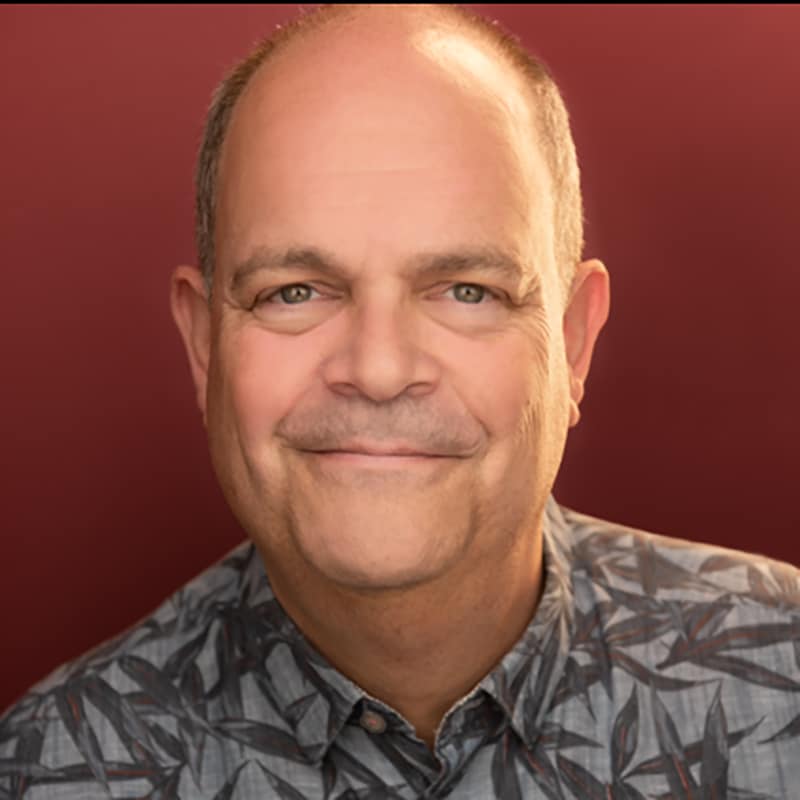
“I walk through as the audience is starting to come into the theater. And every night I see kids. These people are so excited to be there and see this show. It means so much to so many people. People are going to a Broadway show. I mean, it’s there. They’ve waited months, maybe they’ve spent God knows what, maybe whatever it is. But every night as I walk to my dressing room, I am reminded of that every night.”
~Brad Oscar
Brad Oscar is a two-time Tony Award nominee for his performances on Broadway as Franz Liebkind in Mel Brooks’ The Producers and as Thomas Nostradamus in Something Rotten!
Brad has performed in more than 15 shows on Broadway, including being in the original casts of the stage version of Schmigadoon, Mrs. Doubtfire, Big Fish, Aspects of Love, and a show I know a little bit about called Jekyll & Hyde. He’s performed in Wicked, Nice Work If You Can Get It, The Addams Family, and Spamalot. He’s also starred in The Producers in both the West End and Las Vegas productions.
National tours in which Brad has performed include: The Phantom of the Opera, Young Frankenstein, and, of course, Jekyll & Hyde. Off-Broadway, Brad has appeared in Little Shop of Horrors, Broadway Bounty Hunter, Sweeney Todd, and Forbidden Broadway. Stages he’s worked on in America include: the Arena Stage, the Old Globe, the La Jolla Playhouse, the McCarter, Barrington Stage, and more.
In film and on TV, you can find Brad on such shows as: Ghost Town, The Producers, Smash, The Good Wife, and three Law & Orders.
WEBSITES:
Brad Oscar on Wikipedia: en.wikipedia.org/wiki/Brad_Oscar
Brad Oscar on the IBDB: www.ibdb.com/broadway-cast-staff/brad-oscar-74379
IF YOU LIKE THIS EPISODE, YOU MIGHT ALSO ENJOY:
-
Kathleen Chalfant, Broadway, TV, and Film Actress—Episode #148
-
Jamie deRoy, Tony Award-Winning Broadway Producer—Episode #143
Steve Cuden: On today’s Story Beat,
Brad Oscar: I walk through as the audience is starting to come into the theater. And every night I see kids. These people are so excited to be there and see this show. It means so much to so many people. People are going to a Broadway show. I mean, it’s there. They’ve waited months, maybe they’ve spent God knows what, maybe whatever it is. But every night as I walk to my dressing room, I am reminded of that every night.
Announcer: This is Story Beat with Steve Cuden, a podcast for the creative mind. Story Beat explores how masters of creativity develop and produce brilliant works that people everywhere love and admire. So join us as we discover how talented creators find success in the worlds of imagination and entertainment. Here now is your host, Steve Cuden.
Steve Cuden: Thanks for joining us on Story Beat. We’re coming to you from the Steel City, Pittsburgh, Pennsylvania. My guest today, Brad Oscar, is a two time Tony Award nominee for his performances on Broadway as Franz Liebkind in Mel Brooks the Producers and as Thomas Nostradamus in Something Rotten. Brad has performed in more than 15 shows on Broadway, including being in the original casts of the stage version of schmigadoon, Mrs. Doubtfire, big fish, Aspects of Love, and a show I know a little bit about called Jekyll and Hyde. He’s performed in Wicked, Nice Work if youf Can get it, the Addams Family and Spamalot. He’s also starred in the Producers in both the West End and Las Vegas productions. National tours in which Brad has performed include the Phantom of the Opera, Young Frankenstein, and of course, Jekyll and Hyde. Off Broadway, Brad has appeared in Little Shop of Horrors, Broadway Bounty Hunter, Sweeney Todd and Forbidden. Broadway. Stages he’s worked on in America include the Arena Stage, the Old Globe, the La Jolla Playhouse, the McCarter, Barrington Stage and more. In film and on TV, you can find Brad on such shows as Ghost Town, the Producers, Smash, the Good Wife and three Law and Orders. So for all those reasons and many more, I’m truly delighted to welcome to Story Beat the exceptional actor Brad Oscar. Brad, welcome to the show.
Brad Oscar: Thank you, Steve. Happy to be here.
Steve Cuden: Such a privilege to have you here, especially our little tiny tenuous connection to Jekyll and Hyde, which I think is, uh, something we’ll talk about a little bit as we get down the road here. But let’s go back in history first. You’ve been at this acting game for quite a little bit of time at this point. How old were you when the bug to be on stage first bit you?
Brad Oscar: No, it bit it Bit me quick at a very early age. Um, and I was exposed, you know, I was exposed to live theater at an early age because my folks loved, uh, going to the theater and did some community theater. So it was always sort of a part of my life, cast albums, you know, growing up. So, yeah, I, I got bit really early. I mean, like, you know, by 7 or 8 years old. I think I’m starting to, you know, form the. Putting on shows and all of that and, you know, dancing around, of course, to these cast albums, you know, that are, you know, that become like touchstones, you know, we all have our touchstones, if you will. Right. Shows that really turned us on or a sound or something that really drew us to like.
Steve Cuden: What shows. What shows were the big ones for you back then?
Brad Oscar: Well, like a show like Mame, um, a show like Damn Yankees. And both of which I was able to see it at an early age with, believe it or not, their original Broadway stars. So that means I saw Angela Lansbury do Mame and I saw Ray Walston and Gwen Verdon do Damn Yankees. Now, God bless, I’m not that old, but what used to happen is these stars would take out their shows on tour over the summer. There was a whole circuit and they would go around, you know, a certain area in the country or whatever. And mostly these were in the round too, which is so interesting. Anyway, so, yeah, so the summer of. I think it’s like 1972ish, so I’m like 8 years old and uh, and I get to see some of these seminal performances in these seminal shows. These shows that, um, you know, these are the shows that, you know, shaped m. My love of American musical theater. And then to have grown up in the 70s, become aware of my love of this and discover Sondheim, who then over the course of the 70s, you know, just continues to break every rule and create yet new forms of, you know, and get so excited by that. And it just, you know, it just kept cascading. I mean, you know, again, my love of performance, my love of musical theater, uh, and then, as I said, performance and then the idea of what it meant to then be an actor and start, uh, you know, training and being very lucky at an early age to have teachers and some classes and stuff that I was. That I started to participate in that, um, you know, where I really started, now that I look back, you know, to form my craft, if you will, since I have been able to and very blessed to make this a profession.
Steve Cuden: How young, how young were you when you started to take training, was it, Were you still under 10?
Brad Oscar: Not really. I’m like 12 years old when I do this first summer program at the Jewish Community center, uh, of Greater Washington outside of D.C. in Rockville, Maryland, had an amazing theater department for kids, uh, up through, like, when I went to high school, pretty much. So we would, there was a program every summer where we would put on one production and then during the year there were, you know, classes. But, like, I learned, like, breathing techniques. I mean, like real classes and real stuff that I would then, you know, my parents would pay a lot of money for me to study at Boston University. I mean, at the age of like 12, 13, and then around 13, I think I started taking voice lessons weekly. I started singing and really, again, honing that Again, big asterisks here. Blessed with a family that, you know, was so supportive and loving and, you know, uh, enabled me to be able to do these things.
Steve Cuden: Well, that’s what I was going to say. You are one of the fortunate ones who your parents didn’t say to you, what do you think you’re doing? Get away from there. You’re never going to make any money at that. Instead, they encouraged you, they helped you.
Brad Oscar: Yeah, I mean, entirely, because they also, of course, had an appreciation for it and their own love of it. Uh, so they understood that. Uh, of course, I’m sure they were obviously aware and like, thinking, o, here’s hoping, you know, we know how tough it can be. They knew enough to know, you know, everybody sort of does, that the business can be so merciless and blah, blah, blah. But they were certainly willing to let me go for it.
Steve Cuden: Where did you go to school? Where did you go to college?
Brad Oscar: To Boston University.
Steve Cuden: And, and what do you think you learned there that has held you in good stead all these years?
Brad Oscar: That’s such a funny. You know, it’s so funny because education, theater, uh, education, again, I talk about how subjective this business is and how subjective, well, the arts are, right? Anything, you know, anybody can stand in front of a painting and say, it’s the greatest. It’s not, whatever. A piece of theater, a piece of music, whatever. What I loved about BU and the reason that one of the reasons I ended up at Boston University is because I had done so much musical theater up until then, training wise and performance wise, I wanted to go to a school that wasn’t musical theater centric. So, uh, even though I, I, I did apply and would love to have gotten into Carnegie Mellon, because that was at the time, man, that was the, you know, but that was a real triple threat they really needed. They wanted you to, you know, you need to sing, dance, act, the whole thing. And so I didn’t get into Carnegie Mellon, but I also felt like I wanted to spend the next four years, you know, on text and do some Shakespeare and some Chekhov and some. All that stuff and get an education, uh, as an actor, to be a trained act. Because I always. And to this day I feel like, you know, musical theater, um, is its own sort of thing. But at the end of the day, if you’re not a good actor, if you’re not telling the story, if you’re not, no matter how good your voice is, no matter how, you know, proficient you are at those skills, um, and at the end of the day, I want to see, you know, I want to see good act. I mean, I’ve seen some amazing musical theater performances, right. Where they’re not the best singer at all and it doesn’t matter.
Steve Cuden: Rex. Rex Harrison, for example.
Brad Oscar: Yeah. Time Daily in Gypsy. I mean, come on, you know, I mean, just an example of, you know, not a. Not as someone we think of as a singer, for God’s sake. But anyway, so, yeah, and BU was, um, BU was good. I mean, look, there are always going to be teachers. You like teachers? Not so much. Uh, uh, classes and ways of working techniques that you respond to and those that you don’t. Um, and that’s just going to happen throughout, I think your theatrical education, which ideally never ends because every room you’re in is its own, you know, new director, new cast, new people, new. Which should always be, I think, informing you as an artist. So you never stop.
Steve Cuden: I think, uh, the listeners should pay attention to what Brad just said. You never stop learning, even when you’re a top end proof. Um, that is just part of the game is to continue to learn. Correct?
Brad Oscar: I mean, because if you’re not, you’re dead. You’re not dead, but you’re not alive. You’re not responding. You’re not living in that way. And please. I’ve had finally the real opportunity to work with Jerry Zaks, um, years ago with Doubtfire. God, six years ago now, I think it was. But, um, I never really worked with Jerry Zaks up until then. I’d gone into Adam’s family on Broadway and Jerry came in to put us in. But that’s not being in a room with a director for fun four or five weeks and organically developing a piece of theater. You know, I joked to Jerry, I’m like, geez, I wish that it happened 30 years ago, Jer. I’d be a much better performer had I worked with you 30 years ago. Because Jerry taught me, you know, some very basic. But just being in a room with Jerry was so inspiring to me and exciting that, uh, again, at this point in my career, I could still, like, learn things new, think of things in a different way or so.
Steve Cuden: Tell us something that he has said to you that really had resonance.
Brad Oscar: The power of stillness. Jerry has a great eye. Jerry knows timing. Jerry. Jerry’s a great director in general. I mean, Jerry’s a, uh. When I moved to the city in 1986, Jerry Zaks was the man. And Jerry directed several productions in that next 10 year span that each one I will, you know, resonate still in my mind. So to work with Jerry, Jerry, and to m. To get to be in, you know, again was very exciting for me. But the power of stillness, the audience’s eye, right? It’s not a film where the director tells you where to look. Right? So we are part of. Everybody on that stage is part of the picture of the moment, of the beat, whatever you want to call it. And that awareness and M, especially with comedy, especially with comedy is, you know, is like paramount. So I learned again how to, you know, it’s a lot to sort of try to explain because it doesn’t mean just being still. It doesn’t mean it’s not a. It’s not always a literal thing.
Steve Cuden: Well, you’re not asleep on stage, but you’re paying attention intensely.
Brad Oscar: Yes, yes. But again, it’s so that when you’re playing ball, because you’re always playing. I always, you know, I always say you’re sort of playing ball on stage or ping pong or whatever, but it’s going back and forth, right? We’re acting, we’re responding, we’re telling the story, but we’re reacting off of each other or whatever it is that is making that moment live. You’re always responsible for keeping that ball in the air. Right. But you’re not necessarily always moving your paddle. You’re not necessarily always, but you are active in some way and participating in what is happening in that moment.
Steve Cuden: If you were, uh, moving around all the time, you would be pulling focus and you can’t do that.
Brad Oscar: Right. So the basic idea of that exactly is so true.
Steve Cuden: But, uh, what is it that you think that you love the most about musicals?
Brad Oscar: Oh, my gosh. I guess it’s just an elevated form of storytelling that I’ve always, again, responded to. Because at an early age, I learned that you could sing and you could dance and you could tell a story a certain way, you could express emotion a certain way, and it always just sort of excited me. And, you know, it was just sort of. I got a charge out of it, and it’s a. It’s, um. It shaped my life in so many ways. So I have such a passion, and, you know, a lot of it is very rooted, as I said, in a sort of a traditional form of musical theater storytelling. And it’s fascinating to see, of course, what’s happened, you know, to that in, you know, my lifetime, which is wild to look back on, um, having grown up at a time when still the golden age, where they were still sort of the touchstones and things were still being sort of informed by that, but when we were moving into a whole other, you know, with Sondheim and then the British Invasion and then, you know, how pop music, you know, all the things that. All the ways it transforms, all the ways that it stays alive or whatever, but I just, um. You know, nothing excites me more when it all adds up. And you have a moment that can only be that true moment when it’s brought to life, you know, in song, in that passion, whatever, that elevation.
Steve Cuden: As I’ve said to many people many times, when you’re a writer, uh, for either stage or screen, you can only deal with two senses, sight and sound. You can’t have, uh, an audience, understand what’s going on inside of a character’s head. And so unless you say it or show it. But in a musical, you can express that internal thing through this wonderful device called a song. And that’s what you’re talking about, Right?
Brad Oscar: Uh, sure. Exactly. That’s true, of course. Yes. I mean, that’s. Yes. Thank you. That’s putting it into. Exactly. Because you can take that. Exactly. You would not just recite as dialogue because it would just. It wouldn’t work, but. Exactly. You can sing about it.
Steve Cuden: Well, that’s. I think that’s what makes it so. To me, it’s. It’s just the big pizzazz of it. It’s. All of it makes it very special for me. Um. How long do you think you were at the game of being an actor, and especially in musicals, before you felt like you. You really were good at it? This is something you really could do. Was it early on, or did it
Brad Oscar: take you a while? You know, the successes that I had. I put that in quotes, you know, as a, um. A younger performer. Right. The. The encouragement I got from teachers, from my parents, of course, you know, from educators. As it went along, you know, um, I certainly felt like I. I was. Let’s put it this way, I wasn’t questioning it. And, you know, along the way, I, you know, as I got through, as college was going along, I was like, okay, I’m. I’m moving to New York. You know, I knew this is where I wanted to be in New York City. And I. I had known pretty much when I was, like, in high school, because then I started coming to the city and seeing shows a lot with my family and then solo. And so this was always fantasy land. So I pretty much, you know, that was. That was what I wanted to do. And it all, again, it all just sort of led this way.
Steve Cuden: But you had very little doubt along the way. You knew this was what you were going to do.
Brad Oscar: I knew it’s what I wanted to do. I mean, yeah, I knew it’s what I really, really wanted to do. And I thought that I could probably play in the pool, but getting in the pool was, of course, going to be the challenge. And then could I, once I was, you know, if that happened, whatever. So. But I also knew again, because I was surrounded by, uh, some people who knew enough to help me and tell me this. I was a young character actor. Well, I was a young character actor. So at the time, I was a young character actor. And that meant. I understood what that meant. It meant that the older I got, the more employable I was probably gonna be. The older I got, the more roles were going to present themselves to me, because I was not necessarily that easy to even. And I’m realizing now I didn’t know who I was as an actor in many ways. I didn’t know where I fit in exactly. And I could point to certain roles or what, and say, oh, yeah. But I was still finding also my sense of who I think I was as a. As a. Just as a performer, as an adult. You know, you leave college and for the first time, you know, you are an adult. You are living on your own. You are embarking right on that next part of the journey. And you need to find out, you know, okay, now who am I and what’s this all about, in a way? And so I gave myself a bit of that freedom. I ended up with a great job right away, like a couple weeks after I moved here, waiting tables at a fabulous restaurant on, uh, on 45th in the theater district called Charlie’s, which is no longer. They’re Building some monstrosity now finally they tore it down years ago and now they’re building some monstrosity at 45th and
Steve Cuden: 8th and um, right next to the Imperial, right?
Brad Oscar: Yeah, right next to the Imperial there was a row of restaurants. For anyone listening, who knows back in the day, Barrymore’s, Pulio’s, Charlie’s, right across the street from the Golden Theater and what used to be the Royale. And I forget the new names, the Schoenfeld, the this, that, that. But anyway, great job because it was a, A, ah, theater hangout for both behind the scene, a lot of producers, general managers, people like that, um, but also uh, people in shows, people in the biz. Um, so I got to sort of meet and got to know some people. Also we got paper all the time, complimentary tickets to shows in previews. They wanted us to see the waiters to see the show because if we like the show we might talk it up, up or whatever. And so I saw a lot of stuff which was amazing because I maintain to this day half one’s education is seeing is going and experiencing and again processing that and letting it inform what you do. But I think going to the theater, especially as an actor alive to live theater is paramount and so important. Any kind of theater, all kinds of theater. So I was those first couple years in New York and I went on some open calls. I wasn’t a member of Equity at the time, so I would just go to open calls or I would try to get in. At the end of the day sometimes they would see non Equity actors for, for equ. Stuff. And so, you know, I did that again. I also let myself be in New York City, living in the city and enjoying that and making new friends and seeing theater. And um, I didn’t feel like I had to make it happen tomorrow. And again, I did not have that pressure from my parents. They were helping me out with my rent. I mean I was semi supporting myself, but only semi. But they were, you know, that was a good situation. Thank God.
Steve Cuden: Again, I think that that’s a great gift that you had there because I’m sure you know, many people that didn’t have anything close to that support.
Brad Oscar: Unquestionably, unquestionably.
Steve Cuden: And I think if, if you’re a listener out there and you are thinking about going and trying to make a career, uh, on stage in New York, then you know, it’s not, it’s not inexpensive to live there. It costs a lot of money. So you have to think that through.
Brad Oscar: Right. And I’m thinking about it now, and believe me, because I think they were splitting my rent with me, but at the time they were sending me, I, um, mean, that was like $350 a month, maybe, or whatever. I mean, relatively speaking, it doesn’t. At the time, I’m sure it’s. It felt like more, but now it’s like such a pittance. Relatively speaking. No, but unquestionably, I did not have to worry. I mean, I was making okay money and I probably could have sworn. But anyway. Yes.
Steve Cuden: All right, so. So you. You’ve appeared in so many musical comedies, which is a very specific animal, but you also spent a long time in Jekyll and Hyde, which has comedy in it, but not really it’. You are a specialist in comedy. What do you think it is about comedy that you’re so good at? How does that happen? Is it just natural, or have you trained for it?
Brad Oscar: A lot of it, I think, are my early, you know, comedic influences, if you will. Certainly my idea of what comedy was. And that starts with, again, you know, it’s funny. It also starts with my family. You know, my folks have a great sense of humor, and they had a great group of friends that also had a great sense of humor. So I remember, you know, that that was something obviously, that I picked up on. And then again, being a child of the 70s, growing up my formative years, you know, TV, Norman Lear, all those shows, all in the Family and the Jeffersons and blah, blah, blah, Bea Arthur, Maude. And then, of course, you know, eventually we’ll get to the Golden Girls. But, you know, that. My God. Uh. I. You know, I just think Bea Arthur is, you know, the masterclass in sort of comedic timing and the music, comedy, you know, there’s something about. That’s another thing. There’s. There’s music in comedy. There’s, you know, every line is. You know, every line is musical in some way. I’m speaking in a certain way. And sometimes I’ll go up here or I’ll drop it down here, or I’ll play it this way. There are just so many ways of delivering a line. And, man, there are some Golden Girls, because I’ve seen each Golden Girls, like, a hundred times. I swear to God, I just can’t. I could just. I don’t know why. Just keep. And, um. Yeah, certain things are just. It’s just gold. It’s just comedy gold.
Steve Cuden: It’s on that show in particular, as many of those shows were, it was not just the writing but exquisite timing that those actors had with one another. And that’s. I’m guessing that’s what you really, uh, learned in observing it, and then you’ve practiced it for a long time. That timing.
Brad Oscar: Yes. I mean, when you get the opportunity, then, right. To have material that you can interpret and play. Um, and I just talked about this recently. I’ll never, uh, being in the rehearsal room for the original production of the Producers with Nathan Lane, Matthew Broderick, Mel Brooks, Tom Meehan, and Susan Stroman. But watching that process and watching Nathan’s process and listening to the discussions and bits that would occur, Nathan is a veritable encyclopedia of the history of great comedians. You know, obviously, it just. So his knowledge, his love of that, his youth, his sources, uh, of inspiration. You know, he’s got such a wealth of that knowledge. And then we all channel it through ourselves. And then Nathan is a singular, you know, unbelievable. Singular presence and. And a great actor. And again, that’s why I say, at the end of the day, no one’s funnier than Nathan Lane. But I’ve seen Nathan over the last 10 years now that he’s decided that no more musical theater, which I totally understand. God bless him. So Nathan, you know, been on text, shall we say, and given some astounding performances, and I am so excited to see him do Death of a Salesman, which will start previews any moment now. Um, because he’s such a good actor. But. But in this case, here’s a really good actor, which again, at the end of the day, right, I say it all comes down to, like, that you got to have those chops, and you got to be able to really connect and tell a story and be true and find that truth and whatever it is, and then. And then to have the technical artistry of what comedy is, because it’s timing and it is music, and those are. Those are more technical things. They’re not. I’m not in the moment every night and just going to, you know, that can vary or whatever. Comedy is music and time. Mel Brooks comedy. God, that show, you know, was so musical.
Steve Cuden: I was going to say, on top of, uh, Nathan Lane, uh, all you had sitting there was Mel Brooks, which is, you know, one of the great comic geniuses of all time. Uh, and Tommy Meehan, who is a. Also was an incredible comedy genius.
Brad Oscar: I mean, when you get everybody on the same page like that, it’s just, you know, you think it can’t miss. I mean, it’s funny sometimes, you know, you get a lot of creatives together, and it just doesn’t happen. But in this case, it all just. It all did.
Steve Cuden: In that case, you literally captured lightning in a bottle. And it. And it just worked on every level. And it was extraordinary. Uh, I saw it on Broadway. It was extraordinary. And then I saw it in L. A with, um, Marty Short and, um, uh, Jason.
Brad Oscar: Jason Alexander.
Steve Cuden: Right, exactly. Uh, and that was also a different take on it, but this just as brilliantly fun and wonderful and of course, based on incredible material to begin with, with the movie. What. I asked this question of lots of artists on this show, and I’m just curious for, for you, what makes a good role good? Why does it work? What attracts you to it?
Brad Oscar: That it’s there on the page. You know, there’s the little cute little saying, if it’s not on the page, it’s not on the stage or whatever. When you have to work as an actor to make material work, that is always a muddy path. When you have material that is just. It works, it’s, uh, whatever, it’s smart, it’s good. It’s, you know, these are all subjective things, but you know what I’m saying? Um, when you can then take that and you go from there, you don’t have to go back and help the writer make it work by somehow trying to make something funny that I’ve worked on plenty of pieces. They’re not good, they’re not funny enough. They’re just whatever that is. Right. As the actor, we only have so much input or control, obviously, of that, depending on the room, but, you know, or the part of the process or whatever. So, um, you can only do so much. And at the end of the day, uh, I’ve been involved with many projects where I’m like, well, you know, we all did the best we could, and I’m assuming the writers did too. But guess what? It didn’t add up, or it’s not going to play, or it’s not, you know, or it doesn’t succeed or whatever, blah, blah, blah.
Steve Cuden: So as. As another truism, it’s, you know, you have to have the writing work. If the writing doesn’t work to begin with, it all begins there. You, uh. My experience has been as a writer that really great actors will take whatever you’ve given them. And plus, it always, no matter how bad it is, it will get plussed by the actors. Even if it doesn’t work out wonderfully well, it’s still better. Uh, that said, if you can write something that, you know, really nails it, then the actors have a much easier time Getting to that next part because we.
Brad Oscar: Because again, we believe in the material. We believe what we’re saying, we believe the moment, we believe whatever. You have to be able to find that truth, I guess. And so when, you know, you know, I’ve been in moments when I’m like, oh, I have a big truthy truth issue, which I like to say. I just have a big. I’m having trouble finding a way to make this true or honest or work because I don’t see it. I don’t see it either from the actor’s point of view or I think it. I don’t see it from the story point of view or I don’t see it from the, you know, this landing as a joke point of view or whatever it might be.
Steve Cuden: Do you express that to the powers that be it dep.
Brad Oscar: That again, that is going to be different in every room that you’re in. Nine. I would say to you, though, that nine times out of ten, no, because unless it’s a collaborative room in a way where, you know, they want your input, or, you know, you could say, you know, this could be better. Or we could, you know, or you find a way in to make it better. Or, you know, I have an idea. Or, hey, how about, you know. But that depends on. Again, that depends on the people you’re working with. Because, you know, we’re all very. We. We have to be protective of our art, of ourselves to a certain extent. We also want to be collaborative and not take it personally. But, you know, it’s a tricky thing. So that’s going to sort of depend.
Steve Cuden: How do you test that? How do you know that that room is either open to it or not open to it? How do you. What’s the test for that?
Brad Oscar: Oh, gosh. Uh.
Steve Cuden: Is there a test for it?
Brad Oscar: No, I don’t. I mean, exactly. I don’t. I don’t necessarily think there is. I think it’s something that you just, you know, or you should have a sense of. And that’s. Look, with age, honestly, comes a bit of. I can say more or maybe make my feelings known a little more in a way that I can feel comfortable doing and stand behind, because I have done a lot and put to, you know, whatever it gives me a place of, like, I think what I’m saying is worthy and. Or, you know, worth being heard. But again, it just sort of depends. And you have to pick your battles, too. And you have to realize, at the end of the day, it’s not about you. You know what I mean? We’re all, again, we take it very, you know, it is me up there doing it. It is me at the end of the day, I guess, going out there, of course, but you’re part of something that is bigger that you’re part of a collaborative process in a way.
Steve Cuden: You’re all working together to. You’re all working together to tell a story. And so all those cogs have to work together, they have to mesh together, otherwise it will easily fall apart. I mean, that’s the part of the problem and that’s the director’s job, isn’t it, to make that all fit together? It’s their vision, ideally.
Brad Oscar: Yes. Put everybody on the same page. Yes.
Steve Cuden: So let’s talk about performance and how we get there. Uh, the first thing that happens before you get to a performance is you have to go through. Most people have to go through some kind of an auditioning process. Are you still at this point in your career auditioning for people or do they cast you?
Brad Oscar: Um, no, it depends. It depends. I am, I have, yes, some things have been offered to me, some Broadway shows even, which I’m like, really? Um, but for instance, I’m just finishing, uh, two amazing years playing the wizard at Wicked. Right now. I’m finishing, actually this is my final week coming up right now. And it’s been a wonderful job. And joining a show like this. I had no idea the story we were telling. I really didn’t. The resonance of what this show has to say and the power of this 22 and a half year old show and why it is still there and how it is kept in such extraordinary shape. Again, you talk about the actor’s responsibility to complete a hole that obviously is working and has something to say and a story that we’re telling. And uh, I’m very impressed over there as to how it all. Just how they maintained that week after week now and how important it is and that responsibility that we have, uh, because, you know, kids coming to see their first show. Gosh, anyway, yeah, it’s in the face
Steve Cuden: of two blockbuster movies on top of it. It’s still hanging in there huge. The question was about auditioning, which. I’m going to take this to the next step there.
Brad Oscar: Yes, I had to. I auditioned for Wicked. This was not, this was not a job that was offered to me. I went in, I went in a couple times. I, you know, when it. But, but it was something that I was very interested in doing and I have no, look, I have absolutely no problem auditioning. I mean, there might be certain Actors who reach a certain point and they think that for whatever reason or whatever, uh, gives them the prerogative to be offer only, you know, God bless you.
Steve Cuden: Do you know the famous Shelley Winters story about, uh, casting?
Brad Oscar: I don’t know if I do.
Steve Cuden: So there’s a famous story about Shelley Winters, and she’s. It’s later in her career and there’s some young casting director doesn’t really know her work, and he insists that he see her to cast her. And so she goes in and she has this big old bag with her, and she, she’s sitting in front of him, and as he’s talking to her, she pulls out one Oscar and puts it on his desk. And she pulls out a second Oscar and puts it on his desk. And she says to him, some people in this town think I know how to act. That’s like a famous story about Shelley Winters. Um, but, you know, actors still need to sometimes present themselves to people to see if they fit into the hole. Uh, and, and that’s part of the process. What is your philosophy toward auditioning? How do you prepare for it? How do you look at it?
Brad Oscar: Well, I mean, because I’m going to have the material in advance. It’s not like, you know, gone are the day. I mean, most of the days for me having to, like, go in and do a monologue or sing a song of my own choice, you know, that’s. That doesn’t happen very often, which is fine with me. So, you know, so I get the material. Obviously, if it’s new and I don’t know it or I haven’t, you know, it’s a new piece, it’s a new song I have to learn or something like that. I just try to find my way in from whatever information I’m given. If you’re able to read the whole piece or obviously you get a breakdown or something like that, you’re trying to
Steve Cuden: take a position, a point of view on that character that you’re auditioning for. You’re not coming in and trying to just be everything to everyone. You’re trying to take a position.
Brad Oscar: Right? Well, that’s the thing. Exactly. You can’t be everything. But, I mean, who knows what the hell they want? Who knows the composer is looking for a. The character to be more this. The director wants him to be like this, and the writer thinks he has to have a little bit of that. So, yeah, the best thing I can do is be true to my sense of, okay, again, story, moment, uh, whatever it is that I’ve learned Over the years that I can. Then how. I’ll process the material. You have to make guesses. You have to commit. You have to. Now, the joy of being in a room, a real live audition, is that I trust that if I do make good, if I do just do something real, right? And. And as whole as it can be, I. In quotes, whatever. Because there’s so many variables and auditions suck anyway, right? Because you’re, you know, it’s the thing. It’s a thing. I’ve gotten more comfortable, but it’s still. I’ll get nervous. It depends on who’s in the room. Maybe some great director or whatever that I’m like, oh, my God, you know, I’ll still. But you got to, you know, you focus and do it. But ideally, what I love is when I finish reading maybe the scene or this or whatever, and they give you some notes, they give you some adjustments, they say, okay, now try this, or let’s now do the scene again. I love that because I think I’m pretty good at trying to incorporate that. I’m pretty good at thinking on my feet in a way that, okay, if. Again, if it’s clear, I can adjust. I can adjust and give you. And then I’m showing you two things. Ideally, I’m giving you more what you want at the end of the day for this character to be. But I’m also showing you that I can work, that I’m. I can work with you, that I want to play, that I want to learn, that I want to. All those things that I. In the room, I’m going to be that kind of performer.
Steve Cuden: Do you think that your ability to adjust that easily is something that you have always had, or is that something you’ve learned through time and experience?
Brad Oscar: I tend to think it’s something that I’ve always had in the way that I feel like I’ve, you know, always approached material as a young, uh. You know, even as I went along and was learning and stuff and trying to, again, can, you know, make those connections, to make it yours, but still honor the material. And so I feel like that’s always been a part of my thought process. So how effective, you know, it was earlier on, I can’t say, but I think, you know, I’ve gotten. Yeah. Pretty. I mean, it doesn’t. Yeah, it doesn’t freak me out anymore.
Steve Cuden: Well, of course. But, uh, you know, part of the wisdom and experience is knowing I’m not going to get cast every single time I audition. And when I do get cast, hopefully you know what you’re doing and all those good things. So you’ve now been cast in a show. At some point you’ve got cast and they say you’re, you’re, you’ve got this part and I guess you do a little happy dance for a few minutes and then you realize you’re the dog that caught the car. Now the real work happens. Um, what is, you’ve, you’ve got a script from someone, uh, you perhaps get some music, I guess, in a musical. Aside from reading it, which is obviously you need to do, what’s the first thing you do after that to develop what you’re going to do? How do you start to develop a character and what your intentions will be?
Brad Oscar: Well, that’s going to happen for me on its feet in the room pretty much. Because up to then, everything’s just happening in my head. Right up to then. Or, or I, I may vocalize, I may verbalize, I may read it out loud, but you know what I mean, you, you know, you can’t play ball.
Steve Cuden: Are you learning it uninflected so you’re not trying to put anything on it?
Brad Oscar: I’m not learning it. I’m not getting. No, no, I’m not learning, I’m not memorizing it, if that’s what you mean. No, no. Um, no. My pro now, unless I have to. There are several instances, like summer stock jobs. Oh, my God. I did. You know, and I love to do. When I get to do a play, I love when I get to do text because, you know, I like to think I’m a pretty decent actor and can do other things other than just musical theater, which again, requires great acting skill. But anyway, this play called moonlight and Magnolias, which is about, um, Ben Hecht and, and, uh, uh, Victor Fleming, the director, and David O. Selznick putting together Gone with the Wind. It’s a three character play. I played O. Selznick. He has monologues that are the length of Cleveland. And so I’m, uh. And you know, the rehearsal process is very truncated. And then we’re going to run at the Cape Playhouse. It was fabulous. And I got to work with the great Dan Butler. Hi, Dan. I love you so much. But anyway, that was something where I had to sit down and get off book before we started rehearsal because it was going to be so tight that I need. And these monologues, some of these monologues were huge. So that was an exception. Uh, I did a summer run of Hairspray. I got off book for Hair, you know, it’s tricky to do it that way. It’s not the way I like to work. It’s not organic for me because my preferred process and 90% of the time what I get to do is you start rehearsal and you, you either sit around a table, ideally for the first day or two, and you read through it and you talk through it and you, you know, there’s a process involved. Um, but every process is going to be different because every director is going to be, you know, everything is going to be what it’s going to be. But ideally that happens. Then you get on your feet and you start to stage it and with script in hand, so that then my body starts to. Then my body and my mind, then everything starts working together. The physical. Okay, so now. So then I start to put together my physical action with my, with my vocal, if you will, or whatever that is, learning my lines and what that’s going to be. And so I find that nine times out of 10, depending on how long the process is, if that goes on for. If you’re lucky enough to have a three, four week rehearsal process, then I’m. I naturally get off book, you know, pretty much it’ll sort of happen. I’ll still have to study and I’ll still make sure and run lines with my husband and stuff like that and make sure I am. But it’ll tend to just happen because of the repetition and the physical. Marrying it to the physical. Um, and then with that, during that technical, all that technical stuff is happening, then you’re discovering, ideally. And ideally, you need to get off book to really. Right. You need to have scripts out of hand before you can really start giving a full performance.
Steve Cuden: Are you pretty good at quick memorization or do you have to really struggle to get it in?
Brad Oscar: Like, you know, for TV and film, often you get the copy a day or two before, you know, and you have to put eight pages on tape yourself and everything in the world we live in right now. And I can’t. I’m not good. I can’t memorize. I’m not going to be able to get this copy and memorize it within a day and put it on. I’m not going to. It’s just that process doesn’t happen for me. So again, usually it just happens during rehearsal, you know, But I’m not. I wouldn’t say that. I’m. No, I can’t, like, sit, you know, if you hand me a piece of paper and let me have me read something, a poem, and then say, okay, I’m gonna give you, you know, a half hour to memorize this. I guess I probably could, but it wouldn’t be my favorite thing to do.
Steve Cuden: So you have to work at it. You have to work to get the words in there. And it’s helpful. You’re talking about prior to this when you were talking about working it out in, uh, rehearsal. It’s marinating at that point. But sometimes you don’t get that marination process.
Brad Oscar: No, you don’t. And, you know, and I’ve had to do it before, you know, it’s just not my. Yeah, it’s not my favorite way to have to memorize, you know, and even if I have to sit down, I mean, even if, you know, we’ve been through the rehearsal process and I’m like, okay, I’m not really fully off book here. You know, I know certain things, but I don’t, you know, then I can sit down and then I can really drill, and then I can get myself.
Steve Cuden: But.
Brad Oscar: But I have a familiarity at that point with the material.
Steve Cuden: And in the theater, you’re getting that rehearsal opportunity. If you go do tv, notoriously, you get little or no rehearsal.
Brad Oscar: Exactly. And if I had been, you know, doing more film or TV over the years, that facility, that muscle, I’m sure would be much more active. I mean, think of the soap actors.
Steve Cuden: I’ve had the. I’ve had the privilege of interviewing a few soap operas on this show. And some of them, I don’t understand it because they’re memorizing like, uh, 10 pages of script overnight.
Brad Oscar: It’s remarkable. And, you know, and that. So you, you develop that muscle, that skill is required for that job for sure. You know, and then to make it look effortless and not look like you’re searching for words or what. I mean, my God, in that amount of time, every day. Woof.
Steve Cuden: So what are you looking for in rehearsal, aside from the, the marination and so on? What do you want from the process? From the director? What do you want? What do you. What is your goal? Aside from learning blocking and, and lines and so on? What are you searching for?
Brad Oscar: I want a positive room. I want everyone to play well together in the sand. I want, you know, I want a collaboration, uh, uh, you know, from everyone there. Because that’s sort of. I mean, everyone, not just the actors, you know, we’re all there trying to do one thing, you know, in a room, like, you’re gonna. Yes. You’re gonna have your. Maybe your writers and then assistants and stage managers and assistant stage managers and Interns and, you know, people who are all doing stuff, ideally to make this process happen and, and, and develop, you know, and especially, again, if we’re talking putting together a Broadway show, because that’s no joke, that’s big time, big money, big stuff. And so everybody has to rise to the occasion and be professional and do their job. But if we all do that and do it, then it’s gonna, you know, it will be a great thing, it will be, uh, a positive, you know, but there’s a lot of things, needless to say, that can influence that because you have a lot of personalities, and it’s a very personal, subjective thing, as we’ve talked about, you know, so, so it’s trickle down, you know, depending on your director, your director sets a tone in the room, your star or stars set a tone in the room. Um, you know, so that also is part of the equation.
Steve Cuden: Do you, do you have the ability at this point, whether on Broadway or elsewhere, do you have the ability during rehearsals to feel whether the show is going to work or. Or not, or do you need the audience to tell you?
Brad Oscar: Yeah, you always, uh, ultimately need the audience to tell you? Yes, because, yeah, especially with comedy, musical comedy, you can fool yourself into thinking something’s working or something’s funny or, you know, we want it to be good, we want it to work. We’re very encouraging. Usually with each other, um, things are developed sometimes in the room because it made everybody else in the room laugh. But it might not be best for the p. Is it really. Is that the right moment for the character or the story or whatever? But it made everybody laugh, you know, anyway, there’s a lot of stuff that happens. Um, and so ultimately, uh, you can’t know until you get it in front of an audience, because that’s the nature of live theater, that exchange of energy. And then they’re going to tell you, you know, how it’s playing in that respect. And even though, you know, I mean, the producers is. Is a great example, Something Rotten is an even better example, really is that. I had no idea with, uh, Something Rotten, the producers. Look, it was Mel Brooks, it was Nathan and Matthew. There was a lot of pedigree. The expectation was that the show was probably going to be good and probably pretty funny and probably not suck. Uh, but, you know, no one knew. I mean, we did the invited dress in Chicago and added, you know, 20 minutes onto the show with the laugh. It was. None of us have ever experienced, you know, getting that show in front of a live audience for the first time was ridiculous. And I thought, this will never happen again. Until, you know, 14 years later, at the very same St. James Theater, something rotten does its invited dress rehearsal. And we finish that number, a musical, in the middle of act one. Um, and they jumped to their feet and it was just, you know, anyway. And then that continued for a while. That was a crazy random experience. But so no. Did we think that was going to happen? Of course not. I was worried that that number was too meta to nudge, nudge, wink, wink, look at us, you know, not. We weren’t making fun of. We were. We were celebrating. We were. I was channeling. I mean, you know, it’s such a great way to do whatever the hell you want because as this crazy Thomas Nostradamus, um, I was seeing the. The future of what musical theater was going to be. And so all these wonderful, random moments. But I didn’t know that the audience was going to embrace that number the way they did both. Our community will be the first ones to be like, you know, ah, yeah, really funny. Oh, yeah, look, you’re making fun of Annie and Evita and, oh, very funny. You know, not only our community, but then audiences just in general. And so, yeah, never knew that was gonna happen.
Steve Cuden: Have you been in a hit show like the Producers or something rotten, et cetera. And for whatever reason, during a given performance, it just isn’t working. It’s not clicking with the audience. Has that happened for you? Yes.
Brad Oscar: I mean, yes, audiences will vary.
Steve Cuden: So my question is, then, what do you do to try and get them back to you?
Brad Oscar: You don’t do any. No, no, no. That’s a road to ruin too, I think, to try to then start to cater to again because you’re. What is that? That has nothing to do with the story we’re telling or what we’ve been doing eight times a week or. Audiences are. No, audiences are going to come and go. Audiences are going to be great and better. Now when you get spoiled when they eventually did not stand every night after a musical, you know, when, you know, when some audiences of the producers were just not as vociferous or whatever, you know. Yeah. You’re like, hey, what’s up? You know, what’s the matter with you? But really, at the end of the day, we’re talking about, you know, a couple thousand people depending who come together and give you. Us as performers, uh, and doing the show a sense of, oh, they’re a good audience. Oh, they’re a great audience. Oh, they suck. Oh, they. The, you know, this generalization for all these people. And it’s like, you know what, you know, it sort of is what it is. It doesn’t make it easy all the time. Because God knows when you’re doing comedy and they’re not laughing or they’re just tittering or. You used to get a guffaw. Um. Oh, it can be debilitating, believe me.
Steve Cuden: The key here, correct me if I’m wrong, is you don’t really change anything. You just keep doing what you do. Correct.
Brad Oscar: You can’t. I mean, again, that has nothing. Yes, it’s an exchange of energy, but if, if you don’t get the energy, then just keep going and power through to the next time. Because, you know, you, yeah, you can’t be. You cannot be swayed by it and you can’t. And I say this, and believe me, it’s. I’ve done those shows where I’m like, oh, my God, really? But you can’t let it piss you off and you can’t let it influence what you’re doing.
Steve Cuden: What are your performance preparations? What do you do on. And you’re doing eight shows a week. What do you do on a show day? What, you know, how do you prepare? What do you do before performance?
Brad Oscar: Each from show to show. For me, depending on what those demands of the show are, um, and what kind of shape I need to be in in any particular physically, you know, vocally, if it’s a very demanding show, you know, then I obviously, I take care of myself in a way or I make sure I’m warming up during the day or whatever. Um, you know, this right now, playing the wizard is a lovely, very manageable track. Eight times a week. It doesn’t bust my ass in that way. The older I get, I joke, you know, less is more. And in some capacity, you know, it’s sort of true. I don’t mind doing eight a week is. Yeah, it’s tiring. It is. It’s a thing. I love it still. But it’s. It is. I, uh, do have a bit of a love hate relationship with it as well, you know, in that way. Because. Because it is, you know, these handcuffs, these golden handcuffs, if you will. Right. I mean, please, I’ve been so friggin blessed and I love it, but that’s the way I make a living is by doing eight shows a week.
Steve Cuden: It’s still a physical activity. It still takes a toll on you. No. No matter how much you love it.
Brad Oscar: So. Yeah, so each, uh, again, each show is different and I love, you know, like in a time right now when I don’t have to live my life to get through the show eight times a week. So I can do other things. I can do sometimes double duty, which is always exhausting regardless, but I can do double duty, meaning I can work on another project during the day. You know, we do a lot of readings and workshops of new shows. So there’ll be a week long, two week long, four week long workshops or whatever. And, um, so I’m able to do that more if my eight times a week job isn’t busting my balls. So, you know, um, yeah, well, I
Steve Cuden: would be terribly remiss if I didn’t chat with you for a few moments about Jekyll and Hyde.
Brad Oscar: Yeah, come on.
Steve Cuden: Since we both have a connection to it. I know. You did the entire run on Broadway, did you not?
Brad Oscar: Almost. Jekyll was very good to me because the show did have such a lovely run on Broadway. They would give, uh, they would give, uh, ensemble, um, members a little leave of absences to go do other, you know, short term projects, which was lovely. And come back to Jekyll, which was amazing. Right? So two years in a row, I went to play Santa Claus for the Radio City Christmas Spectacular, which at the time was being done also in a lot of cities outside New York. So in the. In the winter of 2000, I leave Jekyll on a leave of absence again to go play Santa Claus in Branson, Missouri. Can’t write this, people. Um, David Hasselhoff has just come into Jekyll on Broadway, and I am in Branson and I hear that the notice has gone up and Jekyll’s gonna close at the beginning of January. So sadly, um, I’m not gonna be back for the closing, which I was very upset about having been involved with it for so long. But then I’m in Branson and I get a call to come audition for the standby from Xbialistok and the producers. And my life changes. And what eventually happens is I am, um, let out of producer’s rehearsal to go and be a part of the final performance of Jekyll. So I did actually appear on stage in the final scene of the final performance on Broadway, which was very special because again, this had been a part of my life since 94. Frank and Linda came to see me and came to see us in Forbidden Broadway. This posse of us at Forbidden Broadway in Los Angeles. Loved it. Stayed after, were so sweet. And Frank’s like, hey, you guys want to sing on my Jekyll and Hyde demo album we’re making. So we’re like, yeah. So I think just me and Christine Petty ended up, uh, doing some ensemble work on the. The double concept album with Anthony Warlow. Um, and then a couple months later I get a call, hey, you want to come do Jekyll and Hyde at the Alley? And I mean, at was, uh. No. Where were we?
Steve Cuden: It was the Alley in Houston.
Brad Oscar: Alley Alley was the first production which I was not involved with, but we were going back to Houston. It was, it was Tuts and it was Seattle.
Steve Cuden: Then it was Tuts. It was the Theater under the Stars.
Brad Oscar: And then that turned into a, uh, nine month tour and then that eventually led to Broadway. And again, the weird thing is you remember most of that tour. The company that did the tour that all thought we were coming into Broadway with that production. That did not happen. And as the tour is nearing its end, we find out, oh, new director, new concept, new maybe new actors. And other than the three of them, uh, Bob Cuccioli, Linda Etter and Christian Noel, that great triumvirate, um, there was some major recasting and only myself. Who else? Martin Van Turen, Ray McLeod, John Tracy Egan. I guess a couple of us, uh, ended up in the Broadway company as well. Yeah, no, it provided an enormous amount of work for me. I don’t think anybody thought the show was gonna run the way it did on Broadway because, you know, we got so slammed. It was so dismissed. It was so summarily dismissed.
Steve Cuden: You couldn’t get really worse reviews and run than that show did. It got terrible reviews. It got a couple of nice thoughts. Larry King gave it a wonderful, you know, uh, uh, blurb, but, but, um, Ben Brantley in the New York Times absolutely skewered it. And, and nobody, uh, thought it was going to run. But what kept that show alive really were the Jackies. They were out there in force and they kept telling people, they’ve got people, have to go see that show. And that’s really what kept it alive for a long time. That, and I think the music is awfully good. You know, that’s. That’s what brings it in.
Brad Oscar: People, please. There’s nothing greater than having some longevity now, you know, to be able to look back and to be able to work then with younger performers who. There are people. Jekyll and Hyde is huge to them as a, as a show again, as a touchstone, as a score, as a way in or whatever it was for them. You know, Jekyll means a lot to a lot of people and, and that’s the thing about art. You know, we can. It’s so easy to be dismissive about something like that that has, you know, a popular appeal or whatever. Um, and, uh, you know, and yet there we were, you know, well, outrunning all of the musicals of our. Of our season, including the best musical winner, Titanic.
Steve Cuden: Um, although Chicago was in that. I think that was the year before, but Chicago is obviously still running on Broadway, so.
Brad Oscar: Yes, exactly. But that was. Yes. At least that was a revival and on a new musical at the time. But. Yeah.
Steve Cuden: I don’t know if you know, but Jekyll has just finished this past year, its 20th anniversary season in South Korea.
Brad Oscar: No. Really?
Steve Cuden: Yes. 20 seasons in South Korea.
Brad Oscar: Wow. That’s amazing.
Steve Cuden: It is amazing. I got to go over and see it a few years ago, and it was extraordinary. It’s a really wonderful production. If anybody’s in South Korea and gets to see it, you’ll know what I’m talking about. Um, how challenging is it for you in a show to continue to repeat performances for.
Brad Oscar: For years?
Steve Cuden: How do you do that?
Brad Oscar: Um, you try to listen and, you know, I. I’m very aware that that’s my job. You know, that’s my job as a. You know, I’m very aware, again, I said, especially, like right now, every night, I have a. I have a very important job to do. I had no idea the wizard was really who he is and what he stands for. And though it is the antithesis of everything I believe and support and feel, I have to go out there and believe it and make it somehow palatable and tell store and, you know, and that’s. That’s a big responsibility, and I love it because rarely, um, does our work line up with literally the moment having some. You know what I mean? It doesn’t often happen that you get to. To, uh, perform on stage nightly and have something to say that resonates so much in what is happening right now in the moment, you know, Happens more in film, you know. But anyway, so I try to, you know, all those things. My responsibility to the show, my responsibility. I have a. Every night when I go to the. When I walk into the theater, the way the Gershwin is laid out, uh, I take the elevator up because my dressing room’s on the third floor, but in order to get to my dressing room, I have to walk around through the lobby. I walk through as the audience is starting to come into the theater. And every night I see kids or. Or someone, or I just. These people are so excited to be there. And See, this show, it means so much to so many people. You know, as. As any given show, on any given night, people are going to a Broadway show. I mean, it’s their. They’ve waited months, maybe they’ve spent God knows what, Maybe whatever it is, you know? But, uh, every night, as I walk to my dressing room, I am reminded of that every night.
Steve Cuden: And that helps to give you energy, doesn’t it?
Brad Oscar: Yeah, of course. Of course. Because it’s not because there should be nothing casual about it, and especially because, you know, and look, I’m lucky. I have a. I have something to really sink my teeth into. I have a role. I have 20 minutes of stage time that I get to make the most of. The ensemble is up there eight times a week, working their asses off, changing costumes every five minutes, singing their asses off. They are the demands placed on many Broadway ensembles and musicals. That’s the backbone of Broadway. That’s the backbone of Wicked. That’s. That’s truly the soul. I mean, you know, so we all have such responsibility, but theirs is, I think, so more than you know. I have great respect for this company because I see what they do every night, and I have such great respect, and the way the show is kept in shape, as I’ve said. Um, and that’s hard work. That is hard work. But these are professionals, and they are at the top of their game, which is why when you come see a Broadway show, that’s exactly what you should be seeing. Performers who are at the top of their game, ready to deliver eight times a week, understanding the responsibility that we have, how lucky we are to have a job on Broadway, for God’s sake. I’m not saying there aren’t issues, and I’m not saying there aren’t problems, and I. This isn’t. I’m not trying to Pollyanna the whole thing up, but at the end of the day, you know, if you want to, why are we all, you know, the big picture, man. The big picture. And, uh. So, yeah, I really try not to lose it. And I’ve been very blessed to be able to continue to. To do what I love and truly, you know, lay into that passion and have the opportunities, as I’ve said, to go out and. And tell these stories and do these things.
Steve Cuden: Well, the Broadway stage is a very special place, and people that get to perform there, like you are, um, you know, you’re in a special breed, and it’s a great thing. I’ve been having just the most awesome conversation with Brad, Oscar, and we’re going to wind the show down a little bit. I’m wondering, in all of these many experiences you’ve had, are you able to share with us a story that’s either weird, quirky, offbeat, strange, or just plain funny?
Brad Oscar: You know, it’s funny. I’ve been asked this question before, and I never. I guess because so many things happen. Right? I mean, because I. Again, I’ve been doing this so long and so many shows eight times a week in that way. And, um, so I. I don’t feel like I have any really good, juicy stories to tell you. I mean, you know, always things happen. Um, it would happen a couple times in the Purdue. When I took over the role of Max Bialystok. Um, when we entered the office in Act 2. I don’t know why. Sometimes mind and body didn’t coordinate. And instead, because you didn’t have to necessarily turn the doorknob, the door would. You could push the door. It was on more of a little ball hinge or something, I don’t know. But I pushed the glass, the pane of the window, which had just been replaced, of course, because in Act 1, it says Max Bialystok. In Act 2, it says Bialystok and Bloom. So, um, yeah, I would somehow, I don’t know why, push and then, boom, out it would come onto the stage. You know, first time, aha. Uh, we left. You know, second time, I was able to start to at least understand and make a bit of it. Um, you know, so stuff like that obviously is randomly going to happen. Uh, like, I loved something that just stays with me just because it tickled me to death. We would come on stage for places at the Addams Family, which was one of my favorite moments in the show, when the curtain was still down because that opening set in the graveyard was so beautiful. I could live in the Haunted Mansion at Disney or Monsters Unchained at Universal, which I just went on, um, a couple weeks ago, which is. I can’t even talk. I’ll go on for hours if we talk about that. So, anyway, the opening design of Addams Family is gorgeous. And it was very. It was lit beautifully before the curtain went up or whatever. And we would be chatting and we would get in that pose for the curtains to open as the Addams Family and BB Neuwirth. I had a couple months with BB When I came in. And, uh, I don’t know, we were talking and we were talking about the Golden Girls of all things and comedy or whatever, and I just said, and she just thought it was the funniest thing. She. I said, I worship the Golden Girls. And I said it just at that moment when the curtains were about to open. You know, again, timing, I guess, or whatever. She thought it was the funniest thing she’d ever heard. Then just getting through the rest of the number, clocking her the whole thing, you know, I mean, you know, moments like that that just sort of stick with you and that are silly. And, um. Oh, my God. The moment that should have gotten me and my fellow swings kicked out of Actors Equity. 19, uh, 90, my first Broadway show, Aspects of Love. Andrew Lloyd Webber. Uh, I’m a swing. With, uh, three other extraordinarily talented performers. The show, again, not terribly well received, opens in April. By Halloween, uh, the audiences are so small. Ish. At the Broadhurst, which is not a big theater, mind you. But, uh, audience is so small that night that they move everyone down to the orchestra from the mezzanine. So the mezzanine is empty. Well, it’s Halloween. We have a pumpkin backstage that is lit inside with a candle. We take the pumpkin, we go up to the mezzanine. And during this number in act two, toward the end of act two, it’s a funeral. It’s awake for one of the characters who has passed away. Big number. Hand me the wine and the dice. But it’s very dark on stage, so, you know, obviously. And even it’s always dark in the house. Well, not when there’s a lit pumpkin floating back and forth in the mezzanine. During the number, we’re running back and forth in the mezzanine, so it looks like the pumpkin is floating while they’re on stage doing the number. Knowing that, uh, several of our cast members are clocking. I mean, so unprofessional, so horrible. Obviously, we thought this was going to be fine, and nobody on stage was gonna be like, um, by the way, to stage management. In which case, I know we would have been written up, and geez Louise. But, yeah, I’ll forever. But I like to think that on certain Halloweens, if there’s a bomb playing at the Broadhurst, that you can still see that.
Steve Cuden: I love theater stories like that. Um, last question for you today, Brad. Uh, you have shared just a huge amount of advice throughout this whole show for anyone trying to get to do what you get to do. But, uh, I’m wondering, do you have a solid piece of advice that you like to give to those who come up to you and they say, I’m trying to get into the Theater, or maybe I’m in a little bit trying to get to that next level.
Brad Oscar: Yeah. Um, well, as I said earlier, you know, see as much theater as you can as far as, you know, again, in education and honing your craft and all that stuff. And when it comes to, like, then just professionally or the actual business of it all, you know, try just everything, you know, to. To be seen, I guess, to. To audition as much as you can and let it just be a thing and let it not be about each particular job, necessarily, if you know what I mean, but just experience, to get in a room and, you know, get to that point where you’re comfortable enough, where you’re showing as much of, uh, of who you are. You connect as much as you can, you know, I wish I’d learned earlier in my journey, I guess, to trust myself, my timing, my sense of what works, my approach to character, whatever it is. Because again, we spend so much time wanting to get reaching, reaching, wanting the job, wanting to be liked. Reaching, reaching. All. That’s all outside of yourself. It has nothing to do with what’s inside. And at the end of the day, that’s all you got, because that’s what you’re presenting is you. You and everything that you bring to the table. And so, yeah, I. I think the more you can embrace that and try to find who that. Who that person is, you know, trust that. Um, then at the end of the day, at least you walk out of the room and say, you know what? I just did the best that I can do. That is my. That was my best shot right now, given the information I have, given the. Whatever the situation is. Um, I did the best that I could do. And that’s all you can do because it is totally subjective. And remember, again, big picture and life is about a lot of things. Uh, family and friends. And, you know, there are other ways of. I have friends that I grew up with doing shows at the jcc, this posse of teenagers who love putting on shows. You know, I’m the only one who made a career of it. But guess what? One of my dearest friends just closed last weekend in Company. She just got to play Joe. I mean, you know, so she’s still doing it in a community. The. And at the end of the day, it’s the same damn thing. The lights go down, we tell a story, we share an evening together. And, you know, so it happens here on 51st, or it happens in Damascus, Maryland, or wherever it happens. You know, it’s. It’s. You can feed your soul in that way still. So it can’t be because the be all end all can be tricky, right?
Steve Cuden: Oh, for sure. I mean, what absolutely wonderful advice. Because the truth of the matter is they’re, uh, not casting you because you aren’t you. They’re casting you because you are you. And so be the best you you can be. Right, sure.
Brad Oscar: That’s easy to say, and you get in the room and you want to please in a way, but it’s like, yeah, no, it’s okay. They’ll come to you.
Steve Cuden: Much easier said than done, but, yes, that’s what you have to try to achieve. I think that’s tremendous advice, Brad. Oscar, this has just been just a tremendous show today, and I’m so happy that you’ve joined me and I got a chance to chat with you about all these, uh, really great things that have happened for you and your career. And I can’t thank you enough for your time, your energy, and really for all this wonderful wisdom.
Brad Oscar: Thank you, Steve. It was a pleasure. Thank you. I appreciate it.
Steve Cuden: And so we’ve come to the end of today’s Story Beat. If you like this episode, won’t you please take a moment to give us a comment, rating, or review on whatever app or platform you’re listening to. Your support helps us bring more great Story Beat episodes to you. Story Beat is available on all major podcast apps and platforms, including Apple Podcasts, YouTube, Spotify, iHeartRadio, TuneIn, and many others. Until next time, I’m Steve Cuden, and may all your stories be unforgettable.











0 Comments