

“Writer’s block is a symptom of you don’t know enough. Imagine the most extraordinary thing that ever happened to you. Can you remember who was there, what you were wearing, what the sights, the sounds, the smells were. Now go out and randomly pick the first stranger that you see and do the same thing. You can’t do it. That’s writer’s block. It’s because you don’t know enough.”
~Michael Tove
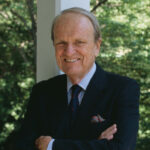
Writer-producer Michael Tove is finally seeing his long-term vision of a film career coming to life with the successful completion and multiple festival run of his first film, the Hitchcockian short, “Yard Saleing.”
It’s rare to find a screenwriter whose first project is made in what would otherwise be one’s retirement years, but Michael has always been a big fan of unpredictable stories like those by O. Henry, and on shows like ‘The Twilight Zone ‘.
As a young man, writing stories didn’t seem like a lucrative future, so Michael earned degrees in biology, only to find little work. Over time, he gave screenwriting a try, turning his focus to an enduring historical subject – the legendary pirate, Blackbeard. Though Michael readily admits he had no idea how movies were actually made, he answered a cattle call for a film that was shooting locally, and suddenly found himself on the set of a major motion picture. Michael has appeared in movies like the 1990 feature of The Handmaid’s Tale, The Exorcist III, and Love Field.
I’ve seen “Yard Saleing,” which finds a young married couple in possession of a small, locked box purchased at a yard sale. Driven by the wife’s imagination, she and her husband seek out what she believes to be a hidden treasure. I’ve seen “Yard Saleing,” and can tell you it’s quite an amusing and charming tale with a truly surprising twist ending.
WEBSITES:
IF YOU LIKE THIS EPISODE, YOU MAY ALSO ENJOY:
- Leslie Rasmussen, TV Writer, Author-Episode #398
- JJ Nelson, Screenwriter-Episode #388
- Haris Orkin, Novelist-Screenwriter-Game Writer-Episode #385
- Paul Chitlik, Writer-Producer-Director-Teacher-Session 3-Episode #373
- Tom Ruegger, Animator-Producer-Writer-Episode #369
- Alexandra Hainsworth, Pop Artist-Novelist-Advocate-Episode #365
- Alretha Thomas, Novelist-Playwright-Actress-Episode #364
- Ed Driscoll, Emmy Winning Writer-Comedian—Episode #355
- Steven L. Sears, Screenwriter-Producer-Author-Episode #351
- Hal Ackerman, Screenwriter-Novelist-UCLA Professor-Session 2-Episode #333
- David Paul Kirkpatrick, Former President of Paramount Pictures-Episode #332
- Max Kinnings, Novelist, Screenwriter, & Playwright—Episode #308
- Brian Gunn and Mark Gunn, Screenwriters-Producers—Episode #272
- Rick Hawkins, Emmy Award Winning Screenwriter—Episode #49
Steve Cuden: On today’s Story Beat.
Michael Tove: Writer’s block is a symptom of you don’t know enough. Imagine the most extraordinary thing that ever happened to you. Can you remember who was there, what you were wearing, what the sights, the sounds, the smells were. Now go out and randomly pick the first stranger that you see and do the same thing. You can’t do it. That’s writer’s block. It’s because you don’t know enough.
Announcer: This is Story Beat with Steve Cuden. A podcast for the creative mind. Storybeat explores how masters of creativity develop and produce brilliant works that people everywhere love and admire. So join us as we discover how talented creators find success in the worlds of imagination and entertainment. Here now is your host, Steve Cuden.
Steve Cuden: Thanks for joining us on Story Beat. We’re coming to you from the Steel City, Pittsburgh, Pennsylvania. My guest today, writer producer Michael Tove, is finally seeing his long term vision of a film career coming to life with the successful completion and multiple festival run of his first film, the Hitchcockian short Yard Sailing. It’s rare to find a screenwriter whose first project is is made in what would otherwise be one’s retirement years. But Michael has always been a big fan of unpredictable stories like those by O. Henry and on shows like the Twilight Zone. Um, as a young man, writing stories didn’t seem like a lucrative future, so Michael earned degrees in biology, only to find little work. Over time, he gave screenwriting a try, turning his focus to an enduring historical subject, the legendary pirate Blackbeard. Though Michael readily admits he had no idea how movies were actually made, he answered a cattle call for a film that was shooting locally and suddenly found himself on the set of a major motion picture. Michaels appeared in movies like the 1990 feature of The Handmaid’s Tale, The Exorcist 3, and Love Field. I’ve seen Yard Sailing, which finds a young married couple in possession of a small locked box purchased at a yard sale. Driven by the wife’s imagination, she and her husband seek out what she believes to be a found hidden treasure. I can tell you from seeing Yard Sailing that it’s quite an amusing and charming tale with a tr. Surprising twist ending. So for all those reasons and many more, I’m delighted to have the screenwriter and producer Michael Tove join me on Story Beat today. Michael, welcome to the show.
Michael Tove: Hi. Thank you for that. Yeah, I appreciate you having me.
Steve Cuden: Well, it’s a great pleasure to have you. So let’s go back in time a little bit. Uh, you said that you were attracted and interested in storytelling As a young person. But how old were you when you first started thinking about stories and storytelling?
Michael Tove: Oh, my goodness. Um, elementary school. I can’t remember not wanting to be a storyteller. I remember so many different things. I remember collecting bubblegum cards and with. With little stories on them. And. And. And those little stories became, uh, the source of. Of inspiration. I remember. I remember, uh. When I was in the 11th grade, I, uh. Oh, gosh, there were two stories. Well, okay. So the teacher. Our teacher was a new teacher. She wanted to, um, uh, follow in the footsteps of a venerable senior, uh, English teacher who I actually ended up having, uh, Mrs. Peacock. And, uh. So she put a series of cartoons on the board, and they were terrible. We had to pick one and write about it. And so the one that I chose was about these three little kids going through an art museum. And the older one was saying, I know more about art than you do, so I’ll tell you what to like. So I wrote a, uh, little essay about how, uh, these three. That these three kids represented people on the earth. And, uh, that the older one was the domineering, uh, um. Autocrat. And, um, then the two little kids represented the. The silent minority who just let it all happen. And I just built it and built it. And I concluded by saying, if it wasn’ three for these three children, the world would be a better place to live. And, um, so I turned it in and she. She handed it back to me. And she says, I can’t. I can’t grade this. Why? Because it was above her pay grade. The next year I gave it to Mrs. Peacock, and she read it. She handed it back to me. And the only comment on it was that she, in red ink, put, uh, the last line in quotes and wrote the word cliche. But, um, that was. That was the kind of thing I was doing.
Steve Cuden: And Were you paying attention to movies and TV at the same time?
Michael Tove: In the 60s movies, you’d get to go to a movie. They only had one. They would only have one movie at a theater. And, uh. So going to the movies, um, was a big deal. I remember. I remember when I was in. In camp, in summer camp, that once, uh, a week, they would give us a dollar, one dollar. And turn us loose on the town for a half a day. And for $1 you could go to a movie. You could buy a comic book, which I did. And you could get a sundae of some sort, all for a buck. For a buck.
Steve Cuden: Now you can’t get a page of a comic book for a buck.
Michael Tove: No. Uh, well, and never mind the fact that I didn’t keep any of the comic books, and I wish like heck I had. Sure.
Steve Cuden: So. So what was then, your influences? Was it. Oh, Henry in the Twilight Zone. As. As I said earlier, that.
Michael Tove: Well, I, you know, it was funny because I don’t even remember why I was reading O. Henry short stories, but I remember I would sit there and I’d read the short stories, and I just loved it. I loved the. I just loved the twists. I mean, gift, uh, of the magi being one of the obvious ones. But there were several others, and I just. I don’t remember the titles of all of them anymore. But there was that. And then, of course, you would watch tv. Uh, and it was. We had black and white tv, and I, uh, didn’t even have a color TV in the. In the early days, you know, and. And one of the shows I’d like to watch was the Twilight Zone. And. And. And I’d watch a lot of other stuff, but, uh, but those things. And then the Alfred Hitchcock Hour, Alfred Hitchcock’s film scared the crap out of me.
Steve Cuden: Well, scared the crap out of a lot of people.
Michael Tove: Yeah. And, you know, I mean, you know, Psycho was like Psycho and the Birds and.
Steve Cuden: Would you say he was a filmmaking hero of yours?
Michael Tove: Hero? No.
Steve Cuden: Who did you most admire in those days?
Michael Tove: I didn’t have anybody that I admired, per se. It was more about just the stories. And it wasn’t until way, way, way later that I started developing, uh, an interest in the filmmakers. I didn’t know who any of these people were in real life. I mean, you know. Okay, yes, Alfred Hitchcock. I knew who he was because it was the Alfred Hitchcock Hour. And you would have that silhouette image of him coming, uh, on, you know.
Steve Cuden: Exactly. Right.
Michael Tove: Uh, so, yeah, so you would. Of course, the little tiny lips. But, um, no, I mean, you know, I used to watch. I watched Rawhide, for example, and I never even realized that Clint Eastwood was there until years and years and years and years and years later.
Steve Cuden: He played Rowdy Yates.
Michael Tove: Yes, well, I didn’t know that. I did. And I saw some of the early works, the classic B movies, and turns, uh, out Jack Nicholson was in a lot of those. That was how he started his career. And I didn’t know who that was either. I mean. And as it turns out, a very good friend of mine, Tom Mount, used to do a lot of films with Roger. I was young. I didn’t know.
Steve Cuden: Well, so at what point in your life all, uh, right, let’s take you through the. Where. Where your history was. You, you go to school to learn biology. How, how long did that last? In other words, how long were you in the world of biology?
Michael Tove: Well, okay, so it was worse than that. I started off life in geology, um, and anthropology and uh. But in my uh, My sophomore year in college, I um, I became fascinated with birding, bird watching and I became obsessed with that. And then I ended up in graduate school at Southern, uh, Illinois, uh, and in anthropology. And I was doing a lot more uh, bird oriented things than I was archaeology oriented things, even though I love that. And uh, they threw me out.
Steve Cuden: Why?
Michael Tove: Because an anthropologist can’t be a birder. And uh, so I. Yeah I know. And then, so I shifted into biology and I, from 1977, um, I’m dating myself big time now. But uh, so I got into graduate school at Western Carolina in uh, in biology with a mandate that I had to complete the equivalent of a biology undergraduate degree. At the same time I was working on a master’s. And so I went through that and I, I completed my master’s by 80, took uh, off a year and taught at the University of North Carolina, Chapel Hill for a year. And then I went to graduate school at Utah, uh State and ended uh, up getting my doctorate in biology, um, in 1987. And um, then I came back to North Carolina and there were no jobs. And so I floundered around trying to figure out what to do for five years. And uh, I went into education trying to get uh, teaching in the high schools.
Steve Cuden: And this is a person with a doctorate, correct?
Michael Tove: Yes, I know. And I had an assistant principal say with a PhD in biology, aren’t you overqualified to teach biology to high school students? And my response was how much of my brain do I have to lobotomize to become qualified? And nonetheless it didn’t work out. So uh, in the meantime. So in all of this, um, this is when I, and when I was at, when I was at, at at Carolina in 1981, I stumbled on the story of uh, uh, this Blackbeard story. And I, you know, I was in summer camp back in the 60s, you know, this was at, this was on the coast of North Carolina. And so all the stories about Blackbeard, all ah, the legends and all of the, the ghost tales about him were just everywhere.
Steve Cuden: And uh, how old are you at this point?
Michael Tove: Uh, I don’t know, uh, in my. See I guess 30s.
Steve Cuden: In your.
Michael Tove: So this is after graduate 20s, late 20s? Yeah, well no, I mean I was uh, in 1981. So I guess I was 20, uh, 28. Anyway, um, so, uh. But I was at a, um. Just kind of a, you know, a. A party. And somebody was talking about, uh, that one of the direct ancestors of Blackbeard’s, uh, Quartermaster was, um, very much alive and uh, and had a gift shop out on Ocracoke Island. And because I was birding constantly and I was always going down there, uh, because the Outer Banks, North Carolina is one of the best places in North Carolina to do birding, especially in the wintertime. Uh, and I was like, really? What? So I went and uh, I met the guy and I was talking about it and I was just fascinated. And um. He actually showed me photos of actual, uh. Photograph of his great, great, great, great grandfather, who was the, uh, fourth generation descendant of Blackbeard’s Quartermaster. And uh. So. But there was more. I became aware that the Blackbeard story was not accurate, and so I started delving into it. I went to the North Carolina History Museum and went through the archives and, uh, started researching. Um, you know, science teaches you how to research. And so I started researching.
Steve Cuden: It’s an interesting question regarding screenwriting. Many screenwriters are researchers and many are not. Do you think that researching is an important element of being a screenwriter?
Michael Tove: I think researching is critical to it. As a writer, I. I constantly say there is no such thing as writer’s block. I don’t believe in writer’s block. Writer’s block is a symptom of you don’t know enough. And I have, uh. In. In some of the tutorials that I put together on. On writing. One of the things that I like to do is a little exercise which is imagine the most extraordinary thing that ever happened. Visualize it. Can you remember who was there, what you were wearing, what you felt like, what the sights, the sounds, the smells were? The answer is yes. Everybody knows when it’s that important. You wouldn’t have any trouble physically picking up a piece of a pen and a piece of paper and writing that stuff down. Now go out outside and randomly pick the first stranger that you see and do the same thing. You can’t do it because you don’t know anything about them. You don’t know who they are. You don’t know anything. That’s writer’s block. It’s because you don’t know enough. And so when. When you are facing a situation where you’re trying to create a character, a setting or, uh, whatever, any type of where do I go from here? It means you don’t know where you are, you don’t know who they are. The characters. You don’t know your characters, you don’t know the setting, you don’t know the place, you don’t know anything. You go back to basics, you dig and you dig and you dig. And you don’t just take it to one layer. You take it to one layer and then the layer before that and before that and before that with the Blackbeard story. And because it’s not been out there, I’m going to hold off on any details but I will simply say that I started asking, I asked an important question and that was what was going on around him? What was happening in North Carolina when he was here? North Carolina was at war with Virginia. Why? Oh wow. Well, here’s more and more and more. So I would, I would look at the background of each and every character that kept cropping up. So yes, you got Edward Teach, but you’ve got Edward Teach, uh, interacting with the uh, the governor of North Carolina, Charles Eden. You’ve got him interacting with Tobias Knight. So I go back and I start researching each one of those people.
Steve Cuden: So tell the listeners who, tell the listeners who Teach was.
Michael Tove: Well, Edward Teach was uh, the uh, the, the, the, the real name of the Persona Blackbeard the pirate. He was a real person. He was in his early to mid-30s, uh, when he died in 1718. Um, he was murdered by the governor of Virginia. And interestingly enough it cost the governor of Virginia, technically the uh, Lieutenant Governor, um, his uh, governorship. But he um, married a uh, Teach married a, a uh, 16 year old, uh, local girl, uh, by the name of Mary Ormond, um, in the town of Bath, North Carolina, which is a very small town to this day. Uh, if you go to the phone book, they don’t do those anymore. But in those days, um, and you look at how common the name Ormond is, it’s a pretty uncommon name except in Bath, one out of every 11 people in the town. His last name is Ormond.
Steve Cuden: That’s interesting.
Michael Tove: And when you go there, you walk around on the streets and the waterfront and all of that and this is the exact same. Blackbeard spent uh, the last uh, five months of his life. He was not a pirate. He, he had given it up. He, he was uh, going straight.
Steve Cuden: But he had, but he had been a pirate for some time.
Michael Tove: Six months.
Steve Cuden: He’d only been a pirate for six months.
Michael Tove: Well, in charge of. Yeah, in charge of his own ship. Yeah.
Steve Cuden: So what made him so notorious?
Michael Tove: Theater.
Steve Cuden: Theater Made him notorious.
Michael Tove: Yes. He was a master of, uh, theater, and, uh. He was a master of, uh. Of creating a Persona that, uh, struck terror. Have you ever. I’m sure you have seen the movie, um, the Princess Bride. The Dread Pirate Roberts.
Steve Cuden: Yes.
Michael Tove: That’s Blackbeard.
Steve Cuden: Yes.
Michael Tove: What he did, believe it or not, it is documented. He never actually killed anybody other than Battle, but he never actually killed anybody.
Steve Cuden: But so he. He, uh, got his reputation to be of that nature then.
Michael Tove: Yeah. Because the whole idea is that if you tear the Dread Pirate Roberts, it’s the name. It’s the name that counts. And he created this Persona that when he was trying to, uh, go legit, he couldn’t escape the Persona. It’s what got him killed.
Steve Cuden: So you decided to sit down and write a feature out of that. Yeah. Not a book.
Michael Tove: Yeah. Well, no. Well, yeah, because I always thought it was a movie. And, um. And I have this stack of paper that I called a script.
Steve Cuden: Did it help to introduce you to the people in Hollywood?
Michael Tove: Well, that wasn’t the idea, but, yeah, but I had it, and I didn’t know what to do with it. And. And then I had a client of mine, uh. And, uh, who told me that he was very good friends with Tom Mount, who had been president of Universal for eight years. And, um, I said, would you be interested in. Would you be willing to give Tom this story? And he said, yeah. And so I gave the script to, uh, my friend. And, uh, two years goes by, and I didn’t hear anything.
Steve Cuden: Welcome to Hollywood.
Michael Tove: Yeah. Well, then I come home from vacation, and my phone’s been ringing off the hook, and it’s, uh, Tom Mount trying to get a hold of me. And, uh. And he said, you know, Jake, uh, kept telling me that I hadn’t re. I hadn’t looked at it. And so finally I sat down, and actually, just to satisfy him, I read it. And now I understand what he’s all excited about. And then I got to tell you, what you have is not a shootable script. You have an incredible story, but you don’t have a shootable script. And he says, so here’s what I’m going to do. I’m going to give you an instruction. I want you to do it, and then we’ll go from there. He said, I want you to write down everything you know about this, the main character, about Blackbeard. I want you to tell me what he likes, what he doesn’t like, what he. What he believes in, all of that. He said, I don’t care if you write it, you scribble it. Just get it on paper, take a couple of weeks and get it to me. Okay? So I did that, except I did it for every character in the story. And I got it to him the next day. That was his reaction. He was like, this isn’t. Yeah, you know this stuff better than anybody I’ve ever met. So, uh, six weeks later, uh, I meet him and, uh, he flies out here for something else. And, um, he hands, uh, me a, uh, um, an option agreement. And we spent quite a bit of time trying to get, uh, the thing made. But unfortunately, um, the story was great, but there wasn’t a script.
Steve Cuden: And that’s a big. That’s a big issue, isn’t it?
Michael Tove: Well, yeah. So he was trying to pitch the, uh. He was trying to get a director. And we, we talked to every major director in Hollywood and I had some pretty big names looking at it very seriously. Um, and uh, at the end of the day, I started to understand that I needed to learn the craft, the art of screenwriting.
Steve Cuden: So this is important. I want the listeners to understand what Michael’s saying right now. And this is true literally every day, all day in Hollywood. Literally every day, all day. And that is that people come along with really good story ideas, but the execution of the story may not be up to snuff for the professionals of Hollywood. And therefore someone like Michael or anyone else has to learn what does it take to be a craftsman in an arts world? And that’s what you’re talking about. Correct.
Michael Tove: And now I’m going to tell you the other side of the equation. So 15 years later, of training. 15 years of training, yes. With everything from especially Jacob Krueger Studios, uh, write your screenplay. Jake is a master, and he has some of the top, uh, instructors anywhere. To, uh, me being, um, having direct instruction from the likes of Carl Iglesias or, uh, Par, you know, with, uh, Aaron Sorkin or Susanna Grant, on and on and on and on. I learned my craft and.
Steve Cuden: And there’s no substitute for just churning out pages. That’s really how you learn.
Michael Tove: No. Well, one of the. Well, right. Well, one of the instructions that I had was that you write every day. Because I had started off back in 1989, I’d gotten on to the film the Handmaid’s Tale and, uh, just fell in love with it. And I fell in love with acting. And so I. Three and. Three and a half years of acting training, and I learned about, uh, the idea of building character, crafting a character. Um, and it’s the same. It’s the same process.
Steve Cuden: It is the same process. In fact, the director, the producer, the writer, the actors, the craftspeople that work on it, the DP and so on, they’re all pulling in the same direction, and that’s to tell the story. So you’re all storytellers, and it’s all of a piece when you’re all done.
Michael Tove: Absolutely. And one of the things that I advocate is that a great. Anybody that aspires to be a great writer, by the way, if you’re not, you’re not gonna get anything made, um, because there’s too many out there that are. Okay, that’s correct. And, um. But a really good writer has to know what an actor does, has to know what a director does. And I will say straight up that a director is not somebody who stands there and yells action and cut. Um, that is the least of what they do. And by the way, get on a Clint Eastwood set and see how he
Steve Cuden: directs totally different from most other people.
Michael Tove: No, he hates that. And the reason he doesn’t is because when he was, uh. When he was on, uh, Rawhide, the director had one of those gigantic conical, uh, megaphones and was yelling and action. And the horses would spook. And so Clint was going, uh, can we not do that, please? I don’t want to be thrown off. But, Tom, um. Yeah, I mean, with Yard Sailing. Yard sailing, um, was 15 months from start to finish.
Steve Cuden: Well, let’s. Let’s start. Let’s start at the beginning of Yard Sailing. What’s it about? For the audiences that don’t really know, I said a little bit about it up front. But what is it truly about?
Michael Tove: Well, you said as much as I will ever say about it, unless somebody wants to watch it, in which case you go to emeraldoakproductions.com and. And you can click on it and you can see it.
Steve Cuden: So, um, it is a short. It’s about 28 minutes long. And so how long did it take you to write it? Where’d the idea come from, first of all?
Michael Tove: Okay, so the idea came from way back. Um, it’s actually the after teach. It was the second, uh, idea that I had come up with in terms of wanting to make a film of, um. In 1990 or 91, I had, uh. Again, I was taking acting classes, and I had chance to, uh, to. To work with Sherry Rhodes. And Sherry was a casting director, uh, who cast Sugarland Express, Jaws, Close Encounters of the Third Kind for three. Three consecutive films for Spielberg. And then she went on to cast uh, oh my God, Tell Tender Mercies, Terms of Endearment, Silverado, Urban Cowboy. And by the way, Urban Cowboy has that classic uh, song in it, uh, Looking for Love. And when I was doing my acting training, I won the um, the, the lip sync contest where I used Searching. Looking for Love is my piece. So there was this connectivity. Anyway, but um, I, I had a chance. I had Sherry, uh, and I had dinner and um, and I was, and I had already come up with the story, the base story of what Yard Sailing was. It wasn’t called yard Selling, called Hot Ice. But um, and I was telling her the basic story and she was like, oh, you must get this movie. This is, this is, this is great. And you have to do it. And so, um, I tried several times over the years, but I didn’t have the resources, I didn’t have the time, you know, anything.
Steve Cuden: And well, when you sat down to work on the idea, how long did it take you to write it so you had something to show to people?
Michael Tove: Well, you um, know when I don’t remember for you that I can tell you that generally speaking, like case in point, I have a, a better example is I’m work where I have a feature that we’re in the final stages of, uh, of development to pre production on. It’s theatrical. It’s a uh, two hour movie. It’s going to be amazing. And when I first came up with, when the first, when the idea was first introduced to me, it was from a friend. He thought, well, do this, do that. I had a very minimal amount of material to work with. So I spent two days just trying to figure out what was this story going to be and then I wrote it on the third day. I write once I, when I know what I’m doing, I write fast. And then, and then it’s, then it’s rewrite and rewrite and rewrite and rewrite and rewrite. So with Yard, uh Sailing there was this very Hitchcockian sort of a theme. The uh. And it has to do with the fact that I lead you up one path and I take you down to that Hitchcockian ending. And that was always sort of the, the point behind it. And then the rest of it was how do I fill in the details? Well, I don’t, Honestly, it’s been 35 years. I don’t remember what it, how I got it done that far back. I. But I do know that the idea is always there first.
Steve Cuden: So, so why make it as a short? Is it financial or what Was no,
Michael Tove: it was always a short because it’s the kind of a story, if you drag that story out too long, it’s like there’s too much. The, the reality is that, um, the length of a film shouldn’t be what you’re doing. You need the exact amount of length to tell the story and not anything more or less.
Steve Cuden: I agree with you 100%. The only question that I have, and it’s a, it’s a real world question, which is it’s very hard to make money with a short.
Michael Tove: Oh, it’s impossible.
Steve Cuden: So most people don’t even try to do that unless they’re using it as a, perhaps a precursor to a longer adventure.
Michael Tove: But let’s, that’s true. But let’s think about the, uh, folks who uh, started their careers with shorts. Okay, how about Chris Nolan? How about uh, George Lucas? THX 1138? How about uh, Martin McDonough, who was, who’s 27 minutes short, won him the Academy Award. Um, how about uh, Sophia Coppola? Or uh.
Steve Cuden: Most everybody has to start with a short of some kind. Especially, especially anybody that’s in school. They’re all making shorts. But people in the real world make shorts as a, uh, as a calling card. And you, you need it.
Michael Tove: There’s two categories because I go to a lot of festivals and most of the people that, that are making shorts, they’re doing it because that’s, that’s all they aspire to. And I see an awful lot. I, uh, mean, I just got back from one a week and a half ago and half or two thirds of the films were just, uh, for lack of a better term, and my apologies, amateur hour. They’re these just these little, these things shot on camcorders seemingly, or maybe even iPhones. And uh, and it looks it, uh, I, there was a couple of films that I was like, um, dude, do you know what contrast is? Because everything is kind of like one muted color. And by the way, you’re about two stops underexposed and uh, you are way down on your saturation. I mean, come on. You know, there is something called color correction. You might want to consider that.
Steve Cuden: Well, the, the, the hallmark of most, um, not good festival movies winds up being what you’re talking about cinematography and bad sound. And you can tell instantly that they didn’t know what they were doing. So, so let’s talk about yard selling a bit more. How long did it take you once you said, okay, we’re going to make this? How long did it take to get into Production. How did you raise the money? Etc.
Michael Tove: Well, okay, so I had the story sitting around for a long time and Tom Logan, who was the director. Tom and I had been, uh, friends for quite a few years at this point. And, um. And in large part because he was really interested in this feature that I mentioned. But I. He and I were on the phone. It was, ah, may of, uh, 24, I think. I think that’s about when it was. Anyway, I just kind of just threw out at him, hey, by the way, are you at all interested in a short? And he said, yeah. He said, you know, send me the script and let’s take a look and kind of go from there. So I sent him the script and, um, he goes, okay. He says, yeah, this is good. He says, it needs work. And he said, but let’s go ahead and get into it. And so for six weeks, um, we did, uh, a lot of tweaking of the script. And this was a very big screenwriting lesson because what I learned was the difference between a scene that is expensive and a scene that is not so expensive. Just something as easy as he would say, does this particular scene, does it have to be at night? Because that’s going to add a lot of cost. And I was like, you know, yeah, we don’t. Or. Or can we cut this whole scene out? We can, we can replace this scene with just an indication and we can save, you know, a whole location. And I was like, okay. So there was a lot of little refinements that had to do with budget, that had to do with making it not just efficient, not just streamlined and good pacing, but also less expensively.
Steve Cuden: And that’s a very valuable lesson.
Michael Tove: That’s a very incredible lesson. So six weeks of that. And then, uh, he said, I want to shoot this in San Diego. And I says, why? Because it’s supposed to be, you know, in North Carolina. He says, well, he said, because in San Diego I have a crew and they will work for next to nothing and it’ll cost you an awful lot less. And I went San Diego. And, uh, so we, we got the crew and then, uh, and then we put the thing up on breakdown, uh, services for casting.
Steve Cuden: So how did you raise the financing? Was it come out of your own pocket or where did the m. Money come from?
Michael Tove: Well, uh, I’ll just simply say that, uh, it was a, uh, an angel investor. And, uh, it’s confidential between me and Tom.
Steve Cuden: Okay, good.
Michael Tove: So we go from crew to casting. That blew my mind because we put the. We put the script up on breakdown. And by the time we were done, we had actually received 87,000 auditions.
Steve Cuden: Wow. That’s too much.
Michael Tove: Unbelievable. Tom. Tom was watching all of them come in for the first, uh, two months from August through early October of 2012. He watched them all. Um, he’s, uh, he’s doing another film right now. It’s the same thing. You know, he had 5,000 audition tapes come in in the first hour that the thing went live on breakdown.
Steve Cuden: This is the. This is one of the complaints that’s going on right now about all of the video casting, rather than the old days where you had to physically come in and sit or work in front of a casting director. And so that would limit things somewhat.
Michael Tove: Tom likes it that way because he can watch, uh, these things one after the other after the other. I mean, he watches them all, and he watches every single one of them up to a half a dozen or even a dozen times now, what’s funny? And Tom and I are constantly. I mean, we’re on the phone virtually every single day. But, um, one of the things that happens with these is that. And this is. By the way, here’s another major lesson. So out of 87,000 auditions, probably 86,000, 950 fell into one of three categories. Category number one, you don’t know how to act. For God’s sakes, take lessons. Category number two, much worse than that. Category number three, I will never unsee what you did for the rest of my life. Please go away. Okay, the v. The vast, vast, vast majority of what we got was horrible. And then there were a handful that stood out as, uh, as really good. And it’s been that way for a long time. Um, for Jaws, Sherry talks about how, um, when she cast Jaws, she went out to Martha’s Vineyard. She called it the Island. She went out to Martha’s venue three months ahead of production to cast it
Steve Cuden: to look for locals.
Michael Tove: Yeah. And. But she had to go to SAG because Massachusetts is not a right to work state. And so she. For your listeners, they. She wanted to cast locals for all of the supporting roles because she felt that a police officer playing a, uh, police officer would be authentic. Anyway, she got SAG to agree that if she cast 10 roles from SAG members, she could cast the rest locally. And here is what Sherry summarized it. She said, thank God I found 10 SAG actors who could act in.
Steve Cuden: In Massachusetts or in Hollywood or New York.
Michael Tove: Well, anywhere, but. Yeah, um, anywhere, because none of the. None of the leads were from. From Massachusetts. You know, Richard Dreyfus.
Steve Cuden: Uh, no, your three stars were.
Michael Tove: Were legitimate star actors, but Dreyfus was not all that well known at the time. You know, she. Cat. Sherry cast, uh, Richard straight out of Jaws for the next film that was Close Encounters of the Third Kind.
Steve Cuden: Yeah, but he was already a star from, um, American. American Graffiti.
Michael Tove: Just. I wouldn’t call him a star. I mean, yes, he was in American Graffiti, but no, nobody knew who he was. You know, I mean, you know, it was. He was. It was a supporting role. Um, and everybody in there, except for Ron Howard was a supporting role. Everybody. I mean, you know, Harrison Ford was. Was a. It was a. Was a day player. And, um, Mackenzie Phillips was what, 12?
Steve Cuden: It is. It is his story, though. If you look at American Graffiti, it’s actually his story that. That you actually follow. So in an ensemble, you still need a protagonist for the audience to follow.
Michael Tove: Well, that’s fair. But, um, but again, from a. From a star power standpoint, nobody knew who he was. Not really. He wasn’t. He wasn’t. He wasn’t at that level yet. Nobody was. I mean, there were no. There were no mega stars.
Steve Cuden: Roy Scheider had done French Connection.
Michael Tove: Shaw.
Steve Cuden: Shaw. Shaw was not unknown. The.
Michael Tove: The un.
Steve Cuden: The unknown at the real unknown was Spielberg, who had only made one feature.
Michael Tove: Uh, well, okay, well, one and a half, if you want to call it dual. Well, okay, so he had done Duel, and then he had done Sugarland Express.
Steve Cuden: Yes, I understand, but I’m saying that he. He was not a big household name either.
Michael Tove: And then from American Graffiti, you go to Star wars, and except for Alec Guinness, nobody in Star wars was a.
Steve Cuden: That’s correct.
Michael Tove: A money draw.
Steve Cuden: And again, Lucas was not a name at all at that time. So. So. So those are. Those are the days when people would take big risks on somewhat unknown people.
Michael Tove: Well, yeah, but. But the reason that George even got to even American Graffiti, the. George had, um. He had clout in his back pocket in the form of Francis Ford Coppola. So he. Coppola was the one that. That advanced American Graffiti. And I think it was to Alan Ladd and. And, um. And then, of course, a year trying to get Star wars, um, off the ground, uh, with no success. But by this time, George had made the, uh, the good or bad, whichever way you want to look at it, connection with, uh, his good friend Stephen. But Stephen had just come off of Jaws, and yes, we know what kind of a hit it was, but it also was grotesquely over budget and over schedule. And, uh, the powers at 20th Century Fox, who were so, um, who are going to fund this Star wars thing. They didn’t like it, they didn’t believe in it. And, and, and except for Alan Ladd. Except for Alan Ladd. Because of, because of, of American Graffiti.
Steve Cuden: Yes.
Michael Tove: And, um, and, and so George was told, do not go over budget, do not go over schedule. And it was a direct, it was a direct indirect reference to Jaws.
Steve Cuden: So what for you, I’m curious, what for you makes a good story good? Why is one thing better than another?
Michael Tove: Yeah, so several things. Um, one, uh, the story has to have a, a logical flow. Stories that are convoluted, where you’re jumping from, from idea A to idea B to idea C. Um, and unless you’re Christopher Nolan, don’t try to get away with it. But, um, it has to have a good logical flow. It has to have phenomenally compelling characters who are not all clones of each other. Um, in Yard Sailing, I’ve got Jim and Sally Marsh, who are protagonists. They’re, ah, a wonderful couple. They’re obviously in love with each other, but they couldn’t be more opposite. And each, each one of those characters has an individual want and need that is in conflict with the wants and needs of the other characters. It’s not just that you’re in conflict with the, with the, the forces of the story. It’s. You have these, you have these layers of, of conflict. That conflict, uh, creates tension. Uh, Aaron Sorkin talks about intention and obstacle. And this is 100% right. And so you build that and then hold back on. Uh, don’t reveal too much, but don’t reveal too little. You want the audience, you want to capture the audience and you want to drag. You want to pull them through the story so that once they. From the moment, it’s like Star Wars. I was captured by Star wars, by the way. I hated sci fi when I first saw it. I had zero interest in seeing it. I got corralled into seeing it. And yet from the first five seconds, the, the opening crawl and that and John Williams, that music. But from the moment the thing started, I was completely captivated.
Steve Cuden: I saw that movie on the day that it opened on Hollywood Boulevard at Grauman’s Chinese Theater in 1977. I saw it on the day that it opened at the 5 o’ clock show when nobody knew anything about it. And the audience, I’ve never heard it before. I’d never heard it before then and I’ve never heard it since. In that first opening sequence, the audience erupted when those ships came over top of you.
Michael Tove: Yeah, they erupted when I saw it. Um, I went to the theater. I was on a date that I had hoped was going to go in directions other than what it did. You can fill in the blanks. Um, but I ended up sitting in the front row under, under an air conditioning duct. So you had this blowing. Now, under almost any other circumstances, that would have been a horrible thing. These circumstances. Holy cow. It added dimension. That was unexpected. It was an extraordinary film and it, it captured me completely.
Steve Cuden: And, uh, so for you, good storytelling has a lot to do with logic and flow and having things make suspense and, uh. Yeah, well, all great stories are story of suspense. Doesn’t matter if it’s comedy, drama, whatever, because you don’t want the audience to know what’s coming next.
Michael Tove: And when I write, I always try to put in some form of. God, I’m going to, I’m going to spill my. I’m going to do a reveal here. But I always like to put in distractions, so false flags. Um, I’m going to, uh, let you think it’s a. And it’s like I’m going to pull the rug out from when you know it’s not. And uh, because personally I hate films that are predictable.
Steve Cuden: So one of the lessons I learned a long time ago is it’s okay to surprise an audience. It’s not okay to cheat them. When you put in something, uh, that’s not predictable, as long as it’s not a cheat.
Michael Tove: I like that. I like that. Um, and with, uh, you know, with. Well, my God, you know, with yard sailing, there were all kinds of little, uh, twists and turns that didn’t work out exactly like you thought.
Steve Cuden: No, but at the end, there’s a big twist.
Michael Tove: Yeah, exactly. And, uh, but the big twist doesn’t exist with all. Without all of the others.
Steve Cuden: All of your, all of your twists have to be set up. They can’t come out of nowhere.
Michael Tove: Correct. And that’s everything that I like to do, film wise operates off of that premise. And it’s organic for me. I, you know, I can’t, I can’t say, well, you know, there’s some formula. I don’t, I don’t know how I do what I do, if there’s any such thing.
Steve Cuden: I mean, there is no formula. There’s only form. There is form, but there’s no formula. And that’s the, that’s a very important lesson for most young writers. They think there’s a formula to it, but there is not. So I’ve been I’ve been having just an absolutely fascinating conversation for quite a bit of time here with Michael Tove, and we’re going to wind the show down just a little bit at this point. And, um, I’m just wondering, in all of your experiences, whether it’s with yard sailing or anything else, in all of your experiences, are you able to share with us a story that’s either weird, quirky, offbeat, strange, or just plain funny?
Michael Tove: I was on the Handmaid’s Tale, and even though I was only an extra, um, I was, uh, on and off set for the course of three months. And, uh, we had a night shoot, and I was, uh, in a scene opposite Victoria Tennant. I. We were just talking, and, um, and I said to her, I said, please tell me, what is it about this industry? Because these are the hardest. The hardest work, the longest hours, um, for the least amount of pay I have ever experienced. Why is this so much fun? And her response was, exactly.
Steve Cuden: Well, that’s a truth that what you said is really true. It’s that no one would do it for the pay or the hours, because, as you say, long, hard, ugly hours for very little pay. But if it isn’t. If it wasn’t fun, nobody do it 100%.
Michael Tove: And, uh, you know, and with yard sailing, that was the piece of. That that was incredible, is that we had so much fun making this film. We had an extraordinary cast, we had an extraordinary crew, and the. All of these people are now friends. I mean, you know, everybody says, well, how did you get Eric and Eliza Roberts? Well, uh, Tom, the director, got them. Um. What’s it like? They’re just good friends now. I mean, you know, I talk to Eric, I talk to Eliza regularly. They’re friends. They’re just. What they are is just friends.
Steve Cuden: And people forget that as they get deep into the business.
Michael Tove: Tom says, if it’s not fun, what’s the point?
Steve Cuden: Exactly. And that’s what I’m saying. And there. People get serious about the business, and then they lose that childhood childlike sense of play. After all, what are you writing? You’re writing a screenplay, not a screen work.
Michael Tove: Oh, that’s a good. I like that. I hadn’t heard that, but I like that. And, you know, just. Just last week I was doing a, uh.
Steve Cuden: Um.
Michael Tove: I did an interview, you know, one of these things with. With, uh, Eric and Eliza, and. And Eric said something that just resonated and, uh, that fundamentally. And he didn’t say it like this, but it triggered this response. And I said this, and he Went, yes. Um, what we get to do is we get to relive those childhood fantasies that we had before we were taught that that’s not a good thing.
Steve Cuden: Right, exactly right.
Michael Tove: And we, we, we get to, we just get to, to have an imagination again, which somehow is not supposed to be something that adults have or do.
Steve Cuden: Well, it’s beaten out of you by screen school and parents and all the rest of it. It gets washed out of people.
Michael Tove: There’s got to be something there. And that’s, that’s what it is. It’s, it, it’s, there’s virtually nothing in making in filmmaking that’s actually glamorous.
Steve Cuden: Oh, that’s 100 true. The, the glamour is at the after parties or at the events and awards.
Michael Tove: Yeah, exactly. And I love those. I love, I love putting on my tux and going the red carpet and. But the red carpets are invariably much smaller than they, than you think they are. I mean, it’s like a little strip of red like this.
Steve Cuden: And sound stages are not, uh, what I would call sexy places.
Michael Tove: No. Well, no, great big boxes is what they are. Oh, yeah. But, uh. Well, except for someone in the product, in making the film. I love sound stages because guess what? You get to control everything.
Steve Cuden: Oh, I’m not saying that there’s nothing wrong with sound stages. I love sound stages. I’m saying that there’s nothing glamorous about that.
Michael Tove: No, there’s nothing glamorous about getting up at 5 o’ clock in the morning and uh, and you know, and being outside in the cold and then it turns hot and then the sun is out and you’re burning and you’re baking and, and uh, you don’t get to get home back to bed until 8 o’ clock at night. And then you got to do the same thing the next day and then the next day and the next and the next, and you keep on going and then all of a sudden you’re unemployed and,
Steve Cuden: and that is the nature of the business for sure. It’s frequently more unemployment than employment. And so, yeah, that’s a very difficult part of the business for a lot of people. So, last question for you today, Michael. Um, along the way here, you’ve given us tons and tons of wonderful advice. It’s very useful for people. But I’m wondering, do you have a single solid piece of advice that you like to give to those. Anyone that comes up to you and says, how do you do this? How do you, do you get into the business? How do you make a living?
Michael Tove: Etcetera so it starts off with a fundamental, um, mantra philosophy of mine, and that is that life is filled with once in a lifetime opportunities that they come and they go just like that. And if you’re going through life with your head down, they will pass you by and you will miss them. And the second thing is, is that never, ever, ever give up. Never give up. But people, uh, say that all the time, except they don’t understand what the word never means. And then three, to hearken back to earlier conversations of ours is that become an ardent student of the industry. Do not assume that success will chase you. It will. You have to chase it, and you have to be relentless in it. And if you haven’t gotten there yet, it’s because you don’t know enough yet. You haven’t earned the right yet. Just keep doing and doing and doing and doing. Eric talks about act. If you’re an actor, act every single day. Do something. Read pages of a play, of a screenplay. I would get scripts of favorite films and I would print them out. And you can do this. They’re available. A lot of them are available on, uh, on Google. You just Google the script, uh, you know, for a PDF, and then watch the film with the script in hand. That is one heck of an eye opener.
Steve Cuden: Yes. Because frequently the scripts are not what you’re seeing on screen.
Michael Tove: No, but. But whether they. Oh, my God. Well, depend certain actors, like with. Yeah, do that with. Do that with Tootsie, uh, and watch what’s in the script and then watch what Dustin Hoffman.
Steve Cuden: Oh, well.
Michael Tove: Oh, God.
Steve Cuden: Michael Tove, this has just been a terrific time today on Story Beat, and I, uh, thank you very much for your time, your energy, and for your wisdom, and thank you for being with me today.
Michael Tove: Oh, awesome. Well, thank you for having me. I appreciate it.
Steve Cuden: And so we’ve come to the end of today’s Story Beat. If you like this episode, won’t you please take a moment to give us a comment, rating, or review on whatever act or platform you’re listening to? Your support helps us bring more great Story Beat episodes to you. Story Beat is available on all major podcast apps and platforms, including Apple Podcasts, YouTube, Spotify, iHeartRadio, TuneIn, and many others. Until next time, I’m Steve Cuden, and may all your stories be unforgettable.









0 Comments