
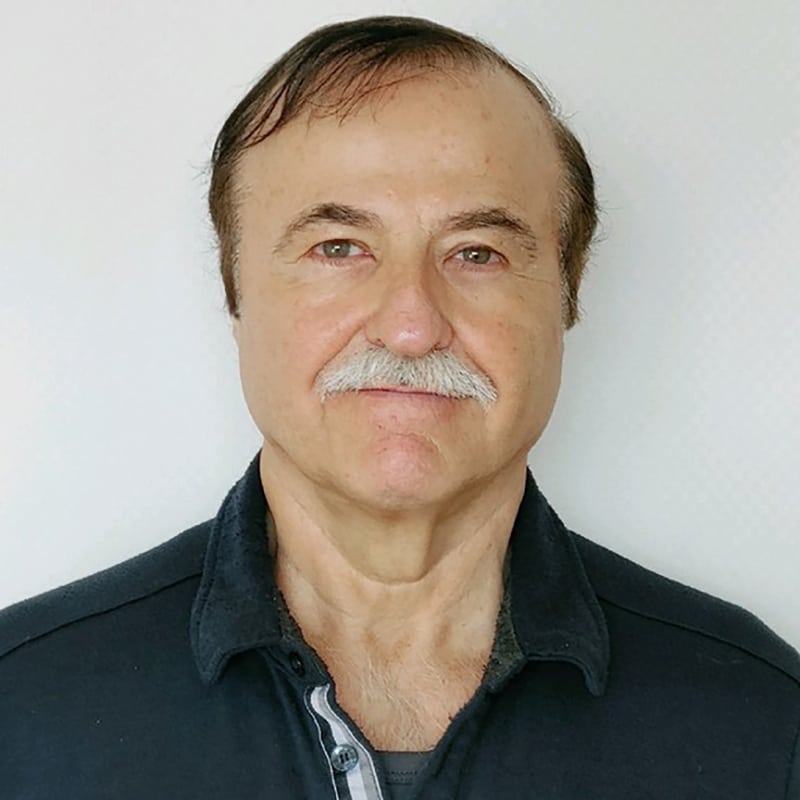
“I’ll tell you one of the things I used to do in my, uh, English, uh, literature classes when I was teaching for the University of Maryland. I take them out and, um, for 10 minutes, all I just said, all I want you to do when I go outside is look up in the sky and look around. I want you to make mental notes of what you see, you hear, you smell, if anything. And then we come back into the room and then we talk about, well, what did we observe? You know, what do we sense? What did we feel? Not just maybe with our own five senses, but inside our being, inside our soul, and then write it down. That was a good, uh, takeoff to, uh, further writing exercises.”
~Ron Roman
Ron Roman has written extensive travel, academic, and political articles for regional, national, and international publications. He studied both fiction and creative writing for his third graduate degree in Humanities from Wesleyan University.
Ron has acted in numerous Korean TV dramas and motion pictures like Operation Chromite, portraying Admiral Forrest Sherman opposite Liam Neeson’s General Douglas MacArthur.
In 2025 Ron published his alternate-history apocalyptic doomsday thriller novel, Of Ashes and Dust, which was a Finalist for the Chanticleer International Book Award in the Global Thrillers category.
I’ve read Of Ashes and Dust and can tell you it’s a highly entertaining story that explores the anarchy of an apocalyptic future that includes revelations about UFOs and governmental conspiracies all set against a crumbling society. If you enjoy reading about the potential societal challenges a deteriorating world may face, I highly recommend Ron’s insight-filled book to you.
Ron is also the recipient of The POET Magazine’s “Poet of the Month” award for his contributions. Also, check out for his book A Poetic Rhapsody of the Soul, which is published by Windtree Press.
As an Associate Professor of English, English as a Second Language, and Humanities, Ron taught at the University of Maryland Global Campus-Asia. Ron resides in South Korea with his wife where he works on US military installations assisting US military retirees and dependents.
WEBSITES:
www.writerronroman.com
IF YOU LIKE THIS EPISODE, YOU MAY ALSO ENJOY:
- Wanda E. Brunstetter, Author and Martha Bolton-Author-Playwright-TV Writer-Episode #360
- Qin Sun Stubis, Columnist-Poet-Author-Episode #359
- Lady Dhyana Ziegler, Author-Professor-Songwriter-Episode #354
- Sharon Virts, Author-Artist-Entrepreneur-Episode #346
- Tom Stein, Author-Episode #339
- Adam Rosenbaum, Author-Episode #336
- L.A. Starks, Author-Episode #334
- Martin Dugard, Author-Episode #328
- Jon Kremer, Writer-Episode #319
- Stephen Games, Author-Publisher-Episode #275
- Peter Smith and Laura Smith, Authors and Teachers-Episode #244
Steve Cuden: On today’s Story Beat
Ron Roman: I’ll tell you one of the things I used to do in my, uh, English, uh, literature classes when I was teaching for the University of Maryland. I take them out and, um, for 10 minutes, all I just said, all I want you to do when I go outside is look up in the sky and look around. I want you to make mental notes of what you see, you hear, you smell, if anything. And then we come back into the room and then we talk about, well, what did we observe? You know, what do we sense? What did we feel? Not just maybe with our own five senses, but inside our being, inside our soul, and then write it down. That was a good, uh, takeoff to, uh, further writing exercises.
Announcer: This is Story Beat with Steve Cuden, a podcast for the creative mind. Story Beat explores how masters of creativity develop and produce brilliant works that people everywhere love and admire. So join us m as we discover how talented creators find success in the worlds of imagination and entertainment. Here now is your host, Steve Cuden.
Steve Cuden: Thanks for joining us on Story Beat. We’re coming to you from the Steel City, Pittsburgh, Pennsylvania. My guest today, Ron Roman has written extensive travel, academic and political articles for regional, national and international publications. He studied both fiction and creative writing for his third graduate degree in humanities from Wesleyan University. Ron has acted in numerous Korean TV dramas and motion pictures like Operation Chromite, portraying Admiral Forrest Sherman opposite Liam Neeson’s General Douglas MacArthur. In 2025, Ron published his alternate history apocalyptic doomsday thriller novel Of Ashes and Dust, which was a finalist for the Chanticleer International Book Award in the global Thrillers category. I’ve read Of Ashes and Dust and can tell you it’s a highly entertaining story that explores the anarch of an apocalyptic future that includes revelations about UFOs and governmental conspiracies, all set against a crumbling society. If you enjoy reading about the potential societal challenges a ah, deteriorating world may face, I highly recommend Ron’s insight filled book to you. Ron is also the recipient of the Poet Magazine’s Poet of the Month award for his contributions. Also check out his book A Poetic Rhapsody of the Soul, which is published by Wintry Press and it’s uh, being released. Released in 2026. As an Associate professor of English, English as a Second Language and Humanities, Ron taught at the University of Maryland Global Campus Asia. Ron resides in South Korea with his wife where he works on US Military installations assisting US Military retirees and dependents. So for all those reasons and many more, it’s a great privilege for me to have the Author Ron Roman as my guest on story be today. Ron, welcome to the show.
Ron Roman: Thank you Steve. Great to be here. It’s um. M talking live right outside the Osan Air Base um where I work uh part time. It’s really part time. Part time as assistant um, retirees director for um. For veterans, um, you know uh, retirees and dependents and um.
Steve Cuden: How do you help them? What do you do?
Ron Roman: What I do is I help them, uh, you know I help them bring them to hospitals and whatnot and stuff like that as a resistant as I said um, assistant retiree, uh officer u. Uh as director of the um. The division here and uh, that uh, other than that I’m really busy writing as much as I can as well.
Steve Cuden: I just want to thank you for your service. That’s very kind of you.
Ron Roman: Oh yeah, yeah sure yeah. I was uh, in fact I was stationed here in Korea way back in the uh, in the 70s getting on in years a bit, you know. And uh, I was uh. I’m a member of the. The local uh. And an officer in a local VFW post 8180 and uh, uh. Colonel Millet’s uh uh post and uh, um. A lifetime member to VFW as well and I, I write a lot about uh, combat veterans and their inability to uh. To fit into civilian society. My short story is available for anybody who wants to read it. I’m going to copyright to register a register to copyright rather, uh, later this week with the U. S. Um Office of um of Copyright and it’s called the Journey. You can get on my website it’s 8200 words. It’s 26 and a half pages so it’s not that short. It’s the call the Journey. It’s about a uh, veteran who. Combat uh veteran who wakes up and he’s in the middle of the forest and he doesn’t know where the hell he is. I mean he’s. He’s got temporary or maybe even permanent amnesia. He doesn’t know if he’s alive, he’s dead, he’s reincarnated and he struggles to get. Find his way back into normaly. Uh, it’s called the Journey and it’s on my website which is uh, www dot writer Ron Roman that’s www dot writerronroman.com so let’s uh, let’s talk about
Steve Cuden: your uh, creative process. What were your earliest inspirations and influences? What writers uh. Did you begin to read when you were what, a young boy?
Ron Roman: Yeah, yeah, you know, I wasn’t A good student by the way, in high school, uh, my parents always uh, reminded me of that. Unlike my brother who later on became a surgeon. He was older, retired. You know, National Merit Society scholars. They used to call this is way to hell back in the 60s. And uh, you know, I, I thought I. At times I hated high school. You know, I barely made it through. And uh. But I remember in my senior year I started um, getting interested. I had a natural talent, if you would, for English. More so certainly than chemistry, which I hated. Mrs. Thomas’s class over half a century now. And uh, like um, Somerset Moms of Human Bondage, 1915. Wow, that’s 111 years now was the first novel I think I ever read. I really uh, captured me, you know, and got me interested. And I went on to college, uh, initially as a uh. As what as a uh, general major. Not majoring in anything in other words. And then I finally uh, became an English major and then started uh, back in the uh, the 70s as an English teacher back in Connecticut where I have my home. I still own a home out there by the way, in Connecticut. And uh, what did you teach? I taught, uh, English. And then, uh, not for very long. I lasted uh, three days. It started Monday morning and Wednesday afternoon. It was pouring like the uh, dickens. And this was in Bridgeport, uh, Central High School. And uh, was about 2:30 in the afternoon. School was out. And what happened was I was staring out the window. I says hey, I can’t do this. I can’t do this for the next 20, 30, 40 years. I got to go out and get me some more education, go back to graduate school and uh, and become a professor, you know, at least teach adults, which I did. Got three graduate degrees and my latest one was at Wesleyan University, Middletown, Connecticut. And that’s a, uh. In humanities with a specialization in interdisciplinary writing. And then, uh, you know, when I started uh, teaching u. Uh s. Military overseas, actually I taught in Connecticut as well. But uh, I started teaching, uh. My niche was teaching U. S. Military overseas and what is called the Indo Pacific Command. And I taught all over the uh, uh, uh, Indo Pacific Command. I taught in Japan, North Central South Okinawa, which is actually part of Japan. I taught Diego Garcia, which is in the Indian Ocean. You know, that’s in the news now because that was just attacked by the um. By the Iranians with the 2M missiles. That’s a U. S, uh, British joint, uh, site on an atol out there. And I taught in uh, Korea, I taught in the Philippines. You name it here and there. And, uh, retired in 2020 at the, the, uh, beginning, um, and the intensification of the, uh, COVID 19 virus, because everything went online, you know, and it was time for me to retire. And my college teaching career in English spanned over four decades. So I’ve been around the block a few times.
Steve Cuden: What kinds of stories do you most gravitate toward?
Ron Roman: Doomsday thrillers? My book of ashes and dust is an apocalyptic doomsday thriller. Like Stephen King, you know, I think his stand right came out in 1973. What was like 1200, 1200 pages. My book is like about, uh, 260, 65 instead 88 and a half thousand words. And I would say if I had a single one writer, you know, was the biggest influence for me. F. Scott Fitzgerald, I’ll tell you right now. The book of get Great gatsby, which came out, by the way, in April 1925. So it’s been just over the centennial. It’s been coming up 101 years now, uh, was instrumental in me, as in terms of emulating his style, which is poetically lyrical. Or is that lyrically poetical? You know, I mean, it reads like poetry at times, and it’s, it’s uh, bring tears to the eyes of a dead man.
Steve Cuden: So let’s talk about your book of ashes and dust. Uh, tell the listeners what of Ashes and dust is about.
Ron Roman: At the time of the millennium, three people struggle for survival in a small New Hampshire town as the world spins into chaos, not realizing that each harbors secrets that will eventually pit them against one another. The story evolves from the u. S. Government’s earlier two classified secret projects during the Vietnam war, the United States air force’s revelation about UFOs and Project 67. And by the way, this is actually true. 1973, u. S. Air Force Chief of staff, uh, brought general Brown admitted that there were some strange, uh, um, flying saucer sightings, you know, and uh, originally they were thought to be, uh, the, uh, uh, uh, helicopters of the Viet Cong in North Vietnamese. But they didn’t have any helicopters. And uh, that’s uh. So the story over here is actually embedded partially and in a lot of, a lot of truth. To continue striving to survive a global armageddon with his Japanese teaching assistant, paramore professor Will Watson, tortured Vietnam war hero and New Hampshire liberty militias activist, hounded by the state police and the FBI, struggles to surmount haunting Vietnam war ghosts and the impending collapse of a nation, a world caving in on them, Watson must face the truth about his friendship with classic homosexual and militia comrade, Mark Mercati, who while in the military himself, surreptitiously had Watson placed in a top secret Vietnam war project, Project 67. Both Watson and Mercati struggle to adjust to civilian life. When Watson finally thinks he is settling down, he discovers something beyond his wildest fantasies. While Watson was in the army, Mercati had the US government secretly inject an implant inside his head to monitor him. When he finds, uh, out how and why, it forces him to question his own sanity. But Mercati is not the friend he pretends to be. Not all his conspiracies are theories, some are fact. The US government appears to be collapsing, yet extraterrestrial forces are also monitoring events. Watson isn’t a mild mannered professor. He’s a secret vigilante killer. His paramour, Kimiko Tanimoto, is pregnant with his child, but knows little of his true nature. Of Ashes and Dust is a no punches pulled apocalyptic tale of mesmerizing intrigue and gut wrenching survival, told as an alternate history thriller during the last days of a global Armageddon, culminating in an unexpected and explosive amen.
Steve Cuden: So what inspired you in the first place? To write this?
Ron Roman: Yeah, I guess, you know, I’ve always. And by the way, the idea of UFOs next, it’s really tangential to the, to the plot. It’s, it’s. That’s more of a teaser if anything. But I’ve always, uh, been, uh, interested in that. Well, ever since I was a kid in high school. My best friend in high school got me interested in, uh, you know, UFOs. This is way back when I graduated late 60s, and I used to listen at night to the, uh, what is it, uh, New York City, Long John Neville Show. You know, it was the, the dean of talk radio way back then, you know, and practically, uh, when I was a college kid, you know. And, uh.
Steve Cuden: So what got you to want to write a book about the Apocalypse Now?
Ron Roman: Well, hell, you know, Steve, we live in dangerous times, you know, and every, every time you turn on the computer these days, lately, all we see are these stories were one step closer to World War iii, you know, and, uh, it just intrigued my, my being, if you will. And I wanted to, you know, I just, the more I dug into, the more interested I got. And I kind of like, I gotta get this off my chest.
Steve Cuden: Are you, are you a big UFO buff? Do you follow ufo?
Ron Roman: Yeah, yeah, I think, uh, you know, yeah, I think this stuff is real. And like the David Garage right. Three years ago was it, uh, it’s 2026, 2023. He appeared in Congress and he was in the, you know, in the secret, uh, intelligence. The US Government saying this is all real. It’s a, it’s a government because uh, cover up. Because it’s all being looked at from the government. The, the crash, flying saucers and uh, and the debris. It’s all being looked at the government and above top secret, uh, uh, investigations because it’s being looked at as a weapons research, development point of view.
Steve Cuden: Mm. Are you concerned about our world devolving into an Armageddon like world of chaos like you described?
Ron Roman: Yeah, absolutely, absolutely. You know, it’s, it’s crazy but uh, you know what’s going on. Yeah, the short answer is yes.
Steve Cuden: So you’re, you live in South Korea. Um, I visited South Korea several years ago. Um, how much do you think that the fact that you live not too far from the DMZ and you’re. That the. Your both countries, north and South Korea are threatening each other sort of on a regular, regular basis. How much do you think that that influenced what you wrote?
Ron Roman: Yeah, I, uh, don’t. Not all that much, you know, actually because um. Because my, My interest in this long predates my even coming here to Korea. But um. Yeah, by the way, I own a home with my wife in Connecticut as well. I go back once a year for a full month. Uh, but uh. Um. Yeah, I can see I. Maybe because I’m overseas and I live most of my uh, my life as an adult overseas in different countries. I got a different perspective from other Americans who just live in the same neighborhood, uh, year in and year out, decade in and decade out. You know, got a more like an international viewpoint about this and.
Steve Cuden: All right, so you’re, you’re, you’re obviously spend a lot of time overseas as you just said, and you have a home in Connecticut. Why did you set the book in New Hampshire?
Ron Roman: Uh, again, you know, just because that’s. I’m most familiar with the New England setting, uh, New England milieu. And um, the book starts off in um, in Fairfield county, which I got my second uh, uh, graduate degree at Fairfield University and an imagina town and very similar to actually Fairfield Connecticut that I grew up in. But um, uh, the uh, protagonist, the main uh, character, the Professor Will Watson, he’s, He’s a part time professor there and then he uh, gets divorced in the um. In 1998, 1999 at the Millennium Eve. Because remember the story takes place in Millennium Eve 1999. And then he uh, gets divorced and he. All he gets is part time teaching job score, which I went through myself a long time as well. And so it’s semi autobiographical to some degree in that respect, Every respect. You know. And then he uh. Finally gets a tenure track position up in South Central, um. Or Central New Hampshire up there, this imaginary town called Springvale. And at um. At this college over ritzy college and he gets a tenure track position and he joins this malevolent uh, this militia, uh because he likes the uh. The camaraderie of men, you know. And it reminds him of his military days and he doesn’t really quite fit in civilian life, you know. And then he meets this guy, as I said this. So this computer salesman by the name of Mark Mercati. And uh. Mark is attracted to him sexually. And uh. Will Watson is a little uh. Uh. On the ditzy side. He doesn’t quite realize this until the very end. You know, that’s how many people come buddies and. But they have a really good friendship or so he thinks. And uh. When they member uh. When they uh. When actually when Mark uh. Not Mark Will Watson uh Joins the uh. The Liberty Militia and then uh. The world is startly is. Is beginning to fall into chaos at the time in 1999 and then all hell broke uh. Breaks out when uh. Uh. World War III actually uh. Uh breaks out. And I don’t go into much detail into that in the book because uh. Uh. He’s. He’s hidden in a shelter uh, with his uh. With his girlfriend, uh. Kimi Tanimoto. You see, that’s his uh. Teaching assistant at the college and they have a romantic relationship which is obviously against the. Against the regulation of the college. But uh. Uh. The dean of the college, uh Looks the other way because uh. Uh. He. The dean of the college knows that uh. He wants to use uh. Um. Professor um Will Watson to milk Mrs. Tani, Ms. Tanimoto’s um, father’s money to make a big endowment pledge to the. To the cops.
Steve Cuden: So. So are any of these characters based on anyone? You know, I know you said, you said there’s some semi autobiographical stuff in there, but are the characters based on people you know?
Ron Roman: Only the names. Only the names. Like I think I never said this publicly. Tanimoto was. It was the name of a Japanese American soldier I was stationed at in Fort Hood, Texas. The last name. That’s also that. That’ you know, uh. And the uh. M. Mercati was the name of this Football, uh, player at Central Connecticut State University. I, uh, used to work out at the playing YMCA together, you know, with it. Last name? That’s just the last name.
Steve Cuden: All right, so then how did you develop these characters if they’re not based on anyone, you know, other than the names? What did you do to develop the characters?
Ron Roman: They just came. It just came to me because, I mean, it took a long time for me to write this book. It just came to me in terms of, uh, like epiphany, you know, that’s the best word I can use to describe.
Steve Cuden: Have you had an experience in your life where a friend that you had um, suddenly turned into something else that you weren’t expecting, the way that Mark Mercati does?
Ron Roman: Oh yeah. Hell yeah.
Steve Cuden: Yeah. So you’ve had that kind of experience?
Ron Roman: I used to work out at the Bridgeport Y. Ah. When I was a graduate student. My first graduate degree, University of Bridgeport in Connecticut. Uh, I was a member of the Bridgeport Y for years. And one, uh, of the guys I used to work out with was uh, about the sweetest guy you ever met, Steve. I tell you, he was a monster of a man. He was a real estate, uh, broker by day, and he was a professional hired assassin, um, and mafia. One of the five New York City mafia families. He led a secret life. And when he was executed himself way back in the late 80s, uh, by a tit for tat mafia assassination, we heard about it all in the Connecticut, uh, newspapers, front stories. And um, one of the other guys in the gym was a member of the Connecticut State Police Intelligence Unit. And uh, for the three years that I worked out of, it was actually probably a little bit more uh. They never used to talk to each other. And then after uh, this guy was um, was. Was executed, actually assassinated, uh, he called. I was overseas at the time, teaching in the Philippines at the time. But my, uh, my best buddy told me about. He sent me all, all the uh, the uh, newspaper clippings. We didn’t have the Internet at the time, quite wasn’t sophisticated, you know. So he sent me to the newspaper, uh, clippings when back in the days when people actually used to read newspapers. And I found out that he called a meeting at the uh, at the gym to tell the uh, the guys that, you know, you always, through the years, you wondered why I never talked to so and so. Well now you know, because what you read in the newspapers is all true. I know it hurts you to believe this about him. He was that kind of guy. He was, uh. We know that he was attributed with, uh, 19, uh, uh, killings. Killed 19 people. We believe that actually was 26 when we had him under investigation for three years. And that’s why, uh, you. You realize that I never talked to him in public here, in. In the gym, because he knew. He knew who? I know that he was under investigation by me.
Steve Cuden: So were elements of this person you knew, did he wind up a little bit in Mercati?
Ron Roman: Exactly. Exactly. Yeah. Yeah. Come to think of it, yeah. Y. That’s it, you know, I mean, it’s been, you know, a while now since, uh, I fleshed out the characters, um, in the story arc, but, uh, that’s a good way of putting it.
Steve Cuden: So Watson seems a little bit cut, um, off emotionally. A little bit. He seems a little indifferent about Kimiko’s pregnancy. She gets pregnant, and he seems a little bit indifferent about it. Do you think his wartime experiences made him feel shut off or cut off from his emotions?
Ron Roman: Yeah, absolutely. Absolutely. Yeah. He can’t fit in the civilian society anymore, and neither can. Is his buddy Mark, uh, Mercati. Uh, you know, can you tell us
Steve Cuden: just a little bit without giving too much away about Project 67?
Ron Roman: Yeah, that’s. It’s to make a, um, Myrmidon or. Or, um, you know, some super soldier, you know, one, uh, who doesn’t, uh. That’s an ancient Greek, I think, concept one doesn’t question authority. And, um, he, uh. He was, uh, going to be recommended for the Medal of Honor. Moh. But it had to be quashed by Secretary of, uh, Defense, uh, Melvin Laird, who’s actually Secretary of Defense at the time in. In war. And it had to. He had to be quash because we couldn’t let. Let, uh, this story out, uh, be made public about what happened to Mark Mercati. You know, having the US Government, having said, the CIA secretly implanting this. It. This implant inside his head to monitor.
Steve Cuden: And what does that have to do with the aliens?
Ron Roman: A little.
Steve Cuden: This has something to do with the aliens, right?
Ron Roman: Yeah. Yeah, because it was taken out. The. The implant was, uh, based. It was modeled after the, uh. The implants were found in, uh, uh, American civilian abductees or abducted by extraterrestrial, uh, aliens and flying saucers.
Steve Cuden: So you have Mercati beg Watson to get into a sealed shelter that he’s built by saying that we’re human is an illusion. You. That’s a quote. That we’re human is an illusion. What do you mean by that?
Ron Roman: That we’re human is an illusion. Professor Will Watson asked Mercati says well in that case, what are we? And he says well we are of ashes and dust. You know, we’re not who we think we are.
Steve Cuden: Well who do you think we are
Ron Roman: as the author maybe of Ashes and Dust? I mean uh, we’re spiritual beings and maybe we don’t even know it.
Steve Cuden: What do you mean by we’re spiritual beings?
Ron Roman: Good question. We’re spiritual beings and, and we’re made in the image of God. But God might not be who, what we, we think he, uh, she or it is, you know. And uh.
Steve Cuden: Are you implying that it might be aliens?
Ron Roman: Uh, I’m implying in the, the book or actually saying in the book that we’re like, we’re actually half alien, half and half terrestrial ape. And we were as a genetic hybridization uh, program and we were uh, formed about just over 200,000 years ago and planted and put on this uh, put
Steve Cuden: on this Earth obviously. Do you have some sort of actual evidence of this or is it just fictionalized in your head?
Ron Roman: Yeah, in between. Uh, uh, Steve, because this is all. As I said, this has been covered up by the US Government dating back to probably that so called Roswell crash, which actually didn’t happen in Roswell. It happened in Corona, about 60 miles north of Roswell back in uh, Independence Day, 1947. And this has been covered up because Uncle Sam is looking at it from a um, from a weapons research, development point of view. These crash flying saucers are trying to be reversed engineered to see if we can learn anything like that to improve our own military capabilities, unfortunately to use against other human beings, other, other you know, other countries and you know that we are so called adversaries like Iran, uh, Russia, China, North Korea, etc. Etc. Etc.
Steve Cuden: Right. What do you think humanity would do if we learned that they’re really are aliens? How do you think we would react to it?
Ron Roman: You know I’ve been thinking about that a hell of a lot in a. Because evidently this is going to be um, supposedly reveal uh, you know, President Trump is going to come on supposedly. There’s some. You’ve heard about that I think saying
Steve Cuden: that it’s been in various news sources.
Ron Roman: Yes, yeah, yeah, yeah, right. Whether it comes out to that remains to be seen. But you know what? I think originally it was uh, said that uh, in the MJ12 documents that President Truman uh, learned about this and he set up uh, a committee of 12 men, uh, and uh, which the chief of the committee was to report to him directly in case of um, more information about The UFO became, uh, became public that the United States government could not cover up. So far they’ve been able to do this, uh, fairly successfully, you know, But I mean, if every combat came to the point where, uh, aliens were actually, um, came, um, down to Earth and you know, to. To like, make themselves present, you know, rather than hide, uh, then there would be a, uh, supposedly, uh, a draft, uh, notice that he was supposed to use a national television to. To say this. But it never came down to that. That point, you know. So, uh, that’s where we are today. So what would happen to. At that time, back in 19, in the late 40s, 1947 to be exact, um, people, America was still a Christian nation. And that would be too upsetting for, uh, particularly for conservative Christians, you know, to know that we’re not alone in the universe and maybe everything we’ve been told in the Bible isn’t exactly the way it really happened, etcetera, etc, etcetera. You know. But now I think, you know, for better or for worse, I don’t know what the religious, um, uh, preferences are, and it doesn’t really matter to me. But, you know, we’re not there anymore like that. America is largely a, uh. If it’s a Christian nation, it’s more or less on a periphery like that. And I think that if this were made, uh, known to people, um, it would not be the big, big epiphany or revelation that it would have been back, you know, back in the late 40s.
Steve Cuden: Do you think that. Do you think that the many entertainment products, whether they’re movies, TV shows, books, et cetera, that have come out over the last 40 or 50 years about aliens, do you think that that has helped to prepare humans to deal with it?
Ron Roman: Right, right, exactly. You said it better than I could, you know.
Steve Cuden: So as you were writing this book of ashes and dust, what came first for you? The plot or the characters?
Ron Roman: The plot, I think pretty much they were like, contemporaneous, you know, going on at the same time, but I think more or less the plot. And then the, uh. The plot to a certain degree, gave birth to the, uh. Birth. The, The. The main characters, the three main characters there.
Steve Cuden: Did you outline the story?
Ron Roman: No, I didn’t. You know, that’s a good point. Uh, I’m not that kind. I’m not that, uh, methodical a writer. This. I outlined it, but not the way you’re thinking right now.
Steve Cuden: You’re. You’re doing it by the seat of your pants.
Ron Roman: I’m outlining the book for example, when I’m jogging on the beaches of Diego Garcia, you. I’m jogging on the basis of, you know, when I was. I had a. A, uh, military assignment out there. Now I’m teaching the U. S. Military at Dave Garcia way back when, you know, and I’ll be, uh, jogging the beaches. And uh, while I’m jogging the beaches of Diego Garcia in a beautiful Indian ocean, um, the, the book is being written out inside my head.
Steve Cuden: And. And did you then go back to somewhere and mark a journal down?
Ron Roman: Yeah, yeah. Then I went back to my room and I wrote it back down longhand. You know, your, your listeners might find this interesting. In me, I couldn’t write anything in pen because. Why? Yeah, why? Because when I wrote stuff in pen, I feel that was irreversible. I couldn’t, you know, change, uh, anything. But on. I did more erasing and worn, um, down more erasers. I’m on top and tip of my pen, my pencil than I did, uh, anything else.
Steve Cuden: Did, did you then type up the book yourself or give it to a typist?
Ron Roman: No, no, I typed it up. In fact, I typed it up originally. The manuscript, originally the old fashioned way on a, um, on a manual typewriter, you know.
Steve Cuden: How long ago was this?
Ron Roman: Quite a few years ago. But then, uh, you know, a word, Word, uh, processing came out and those days are gone now, thank God.
Steve Cuden: Which. The manual typewriters.
Ron Roman: Yeah, yeah, yeah, right.
Steve Cuden: If I, I started on a manual typewriter, if I had to go back to one, I’d stop writing.
Ron Roman: Yeah, yeah, right, exactly.
Steve Cuden: Did you do a lot of research for this book?
Ron Roman: Some research. Some research, yeah, I did in libraries. But for the most part, this stuff that happened, you know, the research was done inside my head. Being exposed to these stories and reading about it down through the years, snippets here, snippets there.
Steve Cuden: And, and how long did it take you to write the book overall?
Ron Roman: Oh, man, it took me many years. And I just cobbled the piece together, by the way. I did have a, uh. Ordinarily I don’t get a writer’s block block. If anything, I. Not writer’s block in a sense of writer’s constipation. If anything. I got writer’s diarrhea, you know, Uh, I couldn’t, I couldn’t figure. I had the ending written out inside my head and, you know, and jotted down on paper. And then also the, the. It was like 90 book of the manuscript was done.
Steve Cuden: Are you a big rewriter? Did you do a lot of rewriting
Ron Roman: not much except for the end, because I couldn’t. I couldn’t get the, uh. You know, the final. I couldn’t get to the final bridge, you know, the very end. And for a long time, I struggled at that. And I don’t know if I’d call myself a spiritual person. I mean, and it didn’t actually ask God to help me out, to. To give me, uh, you know, the. The. The impetus, the, uh, afflatus, if you will, you know, the spiritual inspiration to. To come up at the end. But then, uh, I struggled for, I think, maybe a few weeks. And then all of a sudden it came to me. And then I was able to, um, jot a few things down on paper and then put the dots together and the story was written and done. And it took me many years.
Steve Cuden: Yeah, many years. And then once it came together, it all came together.
Ron Roman: Yeah, exactly. Once it came together, it came together at the, uh. I’ll tell you was I was at the Camp Humphreys, which is the United States military’s largest overseas, uh, base. And half just happens to be here down the road from where I’m speaking right now. Took, uh, came, uh, to me in the computer lab there one day. I was inside the computer lab, and I just popped inside my head, and boom, I was done.
Steve Cuden: That must have felt like a big epiphany, huh?
Ron Roman: Huh? Yeah. Yeah, right. I was really, uh, relieved.
Steve Cuden: What are the things that you think that a writer needs to do in order to secure a publisher?
Ron Roman: Uh, just have a thick skin, man. It’s. It’s tough. I mean, it’s easier for me to say. I mean, it’s just like saying you get one rejection after another. I read Sweater. Stephen King was rejected 38 times in a row in North American publishers, United States and Canada under a pseudonym, you know. And then finally the word got out. What he was trying to do. See if he, uh. I think it was, um, Hearts in Atlantis was his name of the book. He wanted to see if he was not, uh, an unknown. Right. If he was again, an unknown writer, if he could get published, you know, years after he got his initial success with Kerry back in, I think, 1976.
Steve Cuden: Well, his. His pseudonym that he. That he got published under was Richard Bachman.
Ron Roman: Bachman. Right. Right. And then he got rejected 38 times in a row. And then finally the 30 he found
Steve Cuden: out somebo figured it out.
Ron Roman: Publishing world figured out what he was trying to do, and he got picked up. Yeah, that was one of his, um, more critically acclaimed books too. From what I’m told I never read it, but that’s what I’m told.
Steve Cuden: So talk to us about your poetry. How long have you been writing poetry?
Ron Roman: Oh, yeah. Okay. Poetry. I’ve been, uh, right here, right here in this, uh, this laptop. I had the poems, uh, for 12 and a half years hibernating in there. And, uh, you know, some of them published and most of them had not been. A lot of it is haiku, which is Japanese, uh. Uh, condensed poetry. Usually, uh, traditionally, um, not, um, rhyming poetry, but zeros in on a, uh. On a singular image. And it’s in, uh, five, seven, five, uh, uh. Uh, three lines of five syllables, seven syllables and five syllables.
Steve Cuden: It’s 17 syllables overall. Yeah.
Ron Roman: And it was just hibernating. I says, by God, you know, I gotta get this stuff out. I mean, it’s just. I’m gonna. I’m gonna, you know, I’m not getting any younger. I’m just gonna get it out and, uh, I’m gonna get it published.
Steve Cuden: So is poetry a kind of calling for you? Does it just happen for you?
Ron Roman: Yeah, you know, because as an English professor. Don’t forget I was an English professor. Uh, I, uh. I’m teaching this stuff for decades. And I decided, well, you know, it’s my time to do, uh. To, uh, you know, show what I got, you know, to the world. And. And there we are, you know, and I, uh. I. I got this stuff out and out. It’s going to come out in the, uh. Let me subtitle. Is an eclectic blend of poetry from the ethereal realm.
Steve Cuden: That’s a lot of words there.
Ron Roman: Yeah, yeah, right on. On the front cover. Right.
Steve Cuden: Did you, did you go in your schooling? Did you train as a poet at all?
Ron Roman: Yeah, no, I actually did when I was an undergraduate, as an English major. But I’ll tell you what, now I take a dim, uh. And the listeners are going to be, uh. Hello, Any listeners still out there. Uh, you’re going to take a dim view of what I’m. What I’m telling you, I don’t think much of modern poetry. I really don’t. You know, I. I say in my, uh. My forehead over there. Most of it published today is gibberish.
Steve Cuden: Well, so who do you admire? Who do you read?
Ron Roman: Well, I read kind of like, uh, Robert Frost, you know, and that’s very structured. You don’t find that today in modern poetry. And it doesn’t rhyme. Doesn’t have to rhyme. That went out with the American Civil War. But there’s no rhythm, rhyme or harmony. Harmony. And, um, most poetry today doesn’t make sense. You know, I remember as a national member of the, uh, uh, the National Authors Guild, I once wrote a thread about this about a year ago, and one of the other woman, uh, poets who was far more, uh, uh, accomplished than I am, I don’t know how many awards and, you know, she’s won in poetry and. And, uh, and books that she has in poetry. She, uh, made a reply on her thread saying, yeah, she agrees. She locks on, you know, to most, uh, of the poetry that’s published today out in these online journals. Mostly electronics online journals, you know. She says, I can’t understand the stuff myself. I can’t understand it, you know.
Steve Cuden: So is it possible for you to define, at least from your perspective, what makes poetry poetry?
Ron Roman: Yeah, first of all, the rhythm, rhyme and harmony. Oversimplified somewhat. And something that’s comprehensible, must it rhyme? No. No, it doesn’t. In fact, some of my. That’s. In fact, that’s a no, no in today’s modern poetry world. Um, some of my poetry does, but most of it does not. But I want something. I think the singular word to answer your question here, Steve, is comprehensibility. Can the average person say of a high school grade. Well, maybe not so much today. High school kids are graduating high school today, you know, can’t even read and write. Maybe even sometimes in college. But the. Can the average college graduate read the poem and understand it on the, uh, say after two takes? Right.
Steve Cuden: Well, it can be a little dense and sort of difficult to divine when you’re reading a lot of poetry and you have to kind of back up and do an analysis of it to understand it. Uh, do you think that poetry must, by its nature, be truthful and honest?
Ron Roman: Yeah, absolutely. Yeah, you got to be honest. Yeah. Uh, which I think a lot of poets, I hate to say, but a lot of poets are not, you know, they’re not honest about this. And the more obscure their poetry is, they think the better chance they got of being published in.
Steve Cuden: Well, what. One of the most important things that poets and writers do is to observe and listen and take in the world. How important do you think it’s been in your life to be an observer of the world?
Ron Roman: Yeah, yeah. Very, very, very important. You know, I’ll tell you one of the things I used to do in my, uh, English, uh, literature classes when I was teaching for the University of Maryland. I take them out and, uh, for ten minutes, all. I just said, all I want you to do, going to go outside is look up in the sky and look around. I want you to make mental notes of what you see, you hear, you smell, if anything, touch and taste. You know, five senses. I want you to really look around and see what do you see. And I want you to be quiet and you don’t talk to each other for 10 minutes. And then we come back into the room and then we talk about well what did we observe, you know, what do we sense, what did we feel? Not just maybe with our own five senses but inside our being. Pain inside our soul. And then write it down. And then uh. We uh. That was a good uh, you know takeoff to uh, further writing exercises.
Steve Cuden: And how did you get into acting? Let’s talk about that for a moment.
Ron Roman: Oh yeah, acting. Yeah. I was uh, I always uh. Well I was always big you know and uh, you know a good moviegoer when I was a kid in high school and I uh, was. I got started in high school actually and I was the uh, one of the other two kids and I uh, um. In the high school uh class. The uh, the uh. The high school uh. The senior uh m. In our senior year, one of the two class uh actors and uh, I got uh, started in that I had a natural proclivity or penchant for that if you would. Uh, unlike as I said I wasn’t a good student. But uh, uh you know I was in for. In dramatic arts. You know I got started in that and then, and then I went on to uh, uh junior college because I couldn’t get accepted into four star. I mean in a four year college you know my grades uh, just weren’t good enough. And don’t forget in the late 60s that uh college was still selective. Unlike today where any nincompoop who’s got the money can get into college. You know it was just still selective. It’s a whole different world today. And I got a junior college and I got started in the local. The uh junior college, uh drama, uh uh club and then also the uh, the local uh community theater summers. And they got started in summer stock in um. This is up in Northwestern uh Connecticut. And uh, if you’re familiar with the Berkshire’s up there you got a lot of uh, summer, it was called summer stock theater plays that are made in the summertime for turf coming into Berkshire’s and I got started in that as well and of course I didn’t get paid for that but um, you know we had hell of um. After the um, after rehearsal parties, we had a hell of a good time in these, uh, um, um, actors. Actor, uh, rehearsal parties. That was a lot of fun.
Steve Cuden: Do you think that your having been an actor has helped you as a writer?
Ron Roman: No, not really. Oh, by the way, I neglected to mention, and it’s not in my biography, I’ve done a hell of a lot of Korean television over here in motion pictures. Not, uh, anymore because I’m getting too old for that, you know. But I uh, was in the most popular national television series way back when I was a one star United States forces, Korea general and I was in the first seven episodes on national television around for 60 episodes. Usually it’s only 40. And uh, you know, I’d be, I’d be walking down the street of Seoul, which is a bigger city than New York City. 10 million compared to 8 and a half million compared to New York, and walking uh, down the city of uh, Seoul. And I’d be recognized on national television, you know, as a national television actor. And uh, but that didn’t last too long because you know what, you would
Steve Cuden: also stand out a little bit.
Ron Roman: Yeah, yeah, yeah. I mean, you look a little bit
Steve Cuden: culturally different than the average Korean.
Ron Roman: Sure. And people would, you know, come. You know, I remember I never. First time a Korean girl was asking me for my autograph and all. And by the way, that, that, that uh, that wears off fast. You know, I can understand why real movie stars not like me. By the way, when I said I was, uh, you know, in the movies I had these small roles, cameo, they’re all speaking roles and cameo. But I was never, you know, big time movie star, paid well for what I did, but I was never any, uh, you know, Liam Neeson, whom I uh, acted opposite of. And when he was portraying uh, General Douglas MacArthur in Operation Chromite.
Steve Cuden: What was that experience like?
Ron Roman: Oh, that telling. Working with him, locked up all day with him from 8 o’ clock in the morning to 4:30 in the afternoon was just, just inspirational generation. He’s a hell of a decent guy. You know, uh, maybe I shouldn’t make a judgment based on just the short time that I was with him, but I mean, he’s well educated, never went to college. My understanding was well educated, well informed and he’s very articulate.
Steve Cuden: But. But he treated you, he treated you well?
Ron Roman: Oh no, and really, he says, uh, yeah, I says, hey, uh, you know, um, Liam, you know, I’ll tell you, you know, makeup artists did a hell of a job on you. You look like uh, um, uh, General Douglas McCarthy says, yeah. He walks over to me, grabs my hand, and he puts it on his belly, you know, I mean, he’s got his pillow underneath his belly to show that MacArthur actually had a punch, you know, and he had some physical ailments at the time. And I’ll have a sense of humor. Liam Neeson. So I had a great time working with him. I started this back on, back in the, uh, in the mid-90s. So it’s been like 30 years ago, and when I was here before in Korea and. But now, uh, you got so many. Got like 1500 cables, television channels, maybe a dozen of them are pornography and stuff like that. And you got these gangster rappers are now just playing rappers. And you got the Korean, uh, you know, K Pop artists and all. You got all these shows on television and radio inundated. Two months, I mean, two weeks after your. Your face appears on the, uh, on the big silver screen, you know, like a downtown movie theater in Seoul, two weeks later, you’re all forgotten.
Steve Cuden: Well, that’s true of pretty much everybody.
Ron Roman: Just inundated. Well, everybody’s a celebrity. Everybody’s gonna get to 15 minutes of Andy Warhol thing.
Steve Cuden: So some of the most famous movie actors of all time, going back to the, you know, the beginning of movies, nobody remembers them anymore. Just very, very few that stand out over long periods of time, you know, uh, that’s just the way it works that’s been that way from the beginning of time. Well, I’ve been having the most fascinating conversation with Ron Roman, the author. Ron Roman of, uh, Ashes and Dust is the novel that we’ve been talking about, among other things that Ron has done. And we’re going to wind the show down a little bit. Ron, in all of your experiences, you’ve told us all these incredible stories. Do you have a story you can share with us beyond the ones you’ve already told us, uh, that’s happened to you in the business of writing or in acting or whatever it is, that’s either weird, quirky, offbeat, strange, or just plain fun.
Ron Roman: Funny. Yeah, just plain funny. Uh, this is a few years back, you know, a couple decades now. I remember when I was, I guess I was doing my graduate, uh, degree. Third graduate degree at Wesleyan University in Connecticut, and I was finishing up on my thesis, and I would, um, be using a floppy disk at the time because that’s all we had, you know. And, uh, I’ll never forget, uh. Uh, I didn’t make a backup file and I was working on my thesis and I, you Know I had a deadline and all stuff and, and like an idiot, and my wife would always remind me that hey, you know, you need a backup file, get another. A floppy disk. And I never paid attention and I paid the price. I lost the damn thing. And when I think I found it was too damaged to be retrieval the information and I had to start the um, pretty much part of the thesis all over again. And boy was that. Was that ever uh, debilitating. What a debilitating experience that was. So I learned a lesson. Always come prepared. And, and uh, and a good piece of advice I got for would be writers is um, always uh, come prepared. Hire a professional copy editor, at least a proofreader because nobody but nobod that good. They don’t make mistakes. I don’t care if you’re a Harvard University professor of English. Everybody makes mistakes because you see everybody else’s mistakes, but you can’t see that speck of, you know, of uh, of dust in your own eye, as the Bible said.
Steve Cuden: Well that is true. That is absolutely true.
Ron Roman: Hire somebody and always uh, be open to have a thick skin. And one more thing. Uh, we don’t have time to get on this, but um, I’m just going to put this as a teaser out there. I don’t know know to what degree AI now artificial intelligence, is it going to impact us? Because we might only have three, four year, uh, years left as writer. I remember I saw a interview, um, what is it, 20 minutes with uh, with David Baldacci, one of the most commercially successful writers in the world, you know, and he said that, you know, he’s got a big lawsuit against these AI, uh, manufacturers now. You know, they’re stealing his books and they’re putting out there, you know, uh, by essentially uh, the uh. What AI technology. Uh, and he says we might have only three, four years left as writers.
Steve Cuden: It’s scary. It’s more. More apocalyptic stuff.
Ron Roman: More apocalyptic stuff. Yeah, right. I mean, you know, I think, uh. And I, as a. Speaking as a history, I mean an English professor, I remember reading somewhere that my research when I was a student said that this novel by the name of Pamela was the first English language novel to be, uh. Uh is generally considered history’s first English novel. 1608 and I might all be coming to an end now, Steve, in the next three, four years.
Steve Cuden: It might be. Sadly it is true. But I think that I hope that humans will continue to create in their own way. I hope so.
Ron Roman: I hope so too.
Steve Cuden: So Ron Roman, this has been a very fascinating and fun hour on Story Beat. And I thank you very much for your talk, your energy, and your wisdom today.
Ron Roman: I really enjoyed being on here, Steve, and appreciate it. And to the listeners, go out there, buy the book.
Steve Cuden: Thanks very much, Ron. You take care.
Ron Roman: Thank you. Appreciate it.
Steve Cuden: And so we’ve come to the end of today’s Story Beat. If you like this episode, won’t you please take a moment to give us a comment, rating, or review on whatever app or platform you’re listening to? Your support helps us bring more great story Story Beat episodes to you. Story Beat is available on all major podcast apps and platforms, including Apple Podcasts, YouTube, Spotify, iHeartRadio, TuneIn, and many others. Until next time, I’m Steve Cuden and may all your stories be unforgettable.









0 Comments