
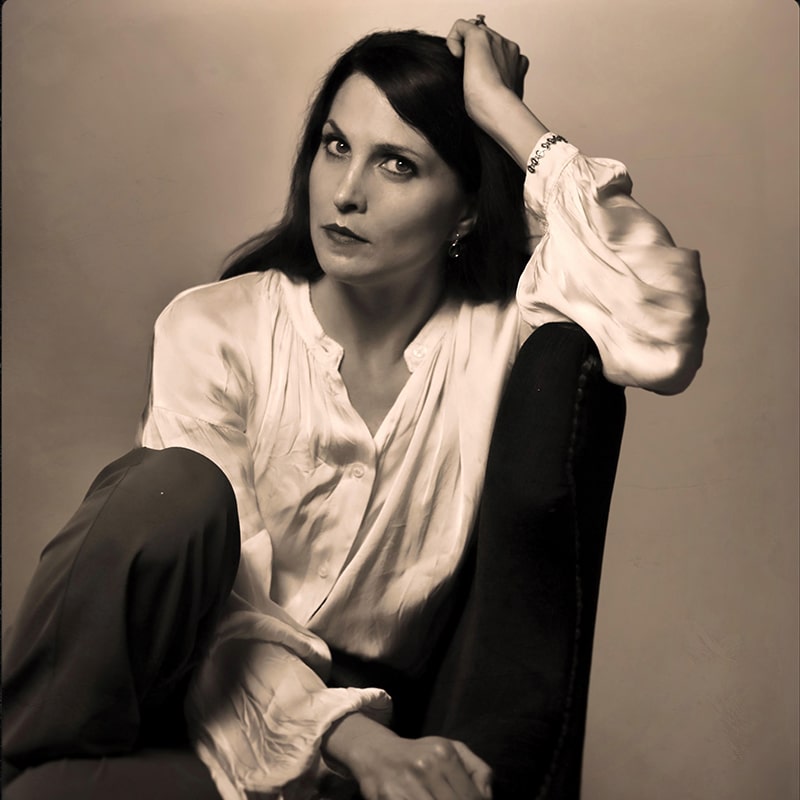
“Read as much as you can, even things that you don’t like. But it’s really important to be a reader. So many people want to be writers and they think they can just skip over that part to give a devoted study to literature in order to actually be a writer and that you have to divorce your ego. You have to devote yourself to the craft of writing in order to make anything that’s any good.”
~Christa Parravani
Christa Parravani is the author of the bestselling books Her: A Memoir and Loved and Wanted: A Memoir of Choice, Children, and Womanhood.
Loved and Wanted is acclaimed for its take on curtailed maternal health care as it pertains to children, and its condemnation of the personal, financial, and emotional repercussions of curtailed access for women. Loved and Wanted was a New York Times Editor’s Choice and one of Dwight Garner’s favorite books of the year.
Christa’s bestselling book, Her: A Memoir, shares her journey through grief after the death of her identical twin sister, Cara. It was an NPR critic’s pick. Vanity Fair called Her, “astonishing.” Bookforum said, “Her invites obsessional reader behavior because Parravani has the ability to make life, even at its worst, feel magic-tinged and vital and lived all the way down to the bone.” I’ve read Her and can tell you it’s a most beautifully written and unnerving memoir. I was deeply moved by Christa’s telling of her experiences in confronting Cara’s challenged life and untimely death.
Christa also happens to be married to one of my favorite StoryBeat guests, the extraordinary writer of Jarhead and other books, Tony Swofford.
WEBSITES:
en.wikipedia.org/wiki/Christa_Parravani
english.wvu.edu/faculty-and-staff/faculty-directory/christa-parravani
IF YOU LIKE THIS EPISODE, YOU MAY ALSO ENJOY:
-
- Mike Bodayle, Writer-Episode #408
- Paige Regan, Author-Episode #397
- Christopher Fryer, Author-Episode #381
- Anthony Swofford, Writer-Memoirist-Professor-Episode #371
- Qin Sun Stubis, Columnist-Poet-Author-Episode #359
- Lady Dhyana Ziegler, Author-Professor-Songwriter-Episode #354
- Sharon Virts, Author-Artist-Entrepreneur-Episode #346
- Tom Stein, Author-Episode #339
- Adam Rosenbaum, Author-Episode #336
- L.A. Starks, Author-Episode #334
- Martin Dugard, Author-Episode #328
- Jon Kremer, Writer-Episode #319
- Stephen Games, Author-Publisher-Episode #275
Steve Cuden: On today’s Story Beat
Christa Parravani: Read as much as you can, even things that you don’t like. But it’s really important to be a reader. So many people want to be writers and they think they can just skip over that part to give a devoted study to literature in order to actually be a writer and that you have to divorce your ego. You have to devote yourself to the craft of writing in order to make anything that’s any good.
Announcer: This is Story Beat with Steve Cuden, a podcast for the creative mind. Story Beat explores how masters of creativity develop and produce brilliant works that people everywhere love and admire. So join us as we discover how talented creators find success in the worlds of imagination and entertainment. Here now is your host, Steve Cuden. Thanks for joining us on Story Beat. Hello.
Steve Cuden: We’re coming to you from the Steel City, Pittsburgh, Pennsylvania. My guest today, Christa Paravani, is the author of the best selling books A, uh, Memoir and Loved and A Memoir of Choice, Children and Womanhood. Loved and Wanted is acclaimed for its take on curtailed maternal health care as it pertains to children and its condemnation of the personal, financial and emotional repercussions of curtailed access for women. Loved and Wanted was a New York Times Editor’s choice and one of Dwight Garner’s favorite books of the year. Christa’s bestseller bestselling book, A Memoir, shares her journey through grief after the death of her identical twin sister, Kara. Her was an NPR critic’s pick. Vanity Fair called her astonishing book form, said her invites obsessional reader behavior because Paravani has the ability to make life, even at its worst, feel magic tinged and vital and lived all the way down to the bone. I’ve read her and can tell you it’s a most beautifully written and unnerving memoir. I was deeply moved by Christa’s telling of her experiences in confronting Kara’s challenged life and untimely death. Christa also happens to be married to one of my favorite Story Beat guests, the extraordinary writer of Jarhead and other books, Tony Swofford. So for all those reasons and many more, it’s a true honor for me to welcome to Story Beat today the gifted writer Christa Paravani. Christa I’m so glad to have you join me on the show.
Christa Parravani: Thank you for having me. I really appreciate it. I’m looking forward to this conversation. Thank you.
Steve Cuden: Well, um, me too. I’m truly looking forward to it. So let’s go back in time just a little bit. Am I correct that you really started out more as a photographer than a
Christa Parravani: writer Yes, I did. Although it’s complicated, as the, uh, beginning of any art endeavor is complicated. I actually started off as a writing in high school. I wrote actually. I wrote poetry. I won prizes. I was the editor of my high school literary magazine, the Alvordian. I, um, studied creative writing in college also. I was, um, studying, uh, poetry at Bard College and studied with John Ashbery and some really great poets. And, um, I, uh, had an identical twin sister, as you know from reading my book. And she was also a writer. She wrote fiction, and she also went to Bard College. And she sort of drew a line in the sand and said, you will not be a writer if I am a writer. And that was it for me. So I, um, I started taking photographs. And I started taking photograph, um, because there was a young man who approached me who was a photography student at Bard. They had an excellent photography program, and he was interested in photographing identical twins. So the beginning of my life as a photographer was because I was an identical twin, just like so many other things in my life.
Steve Cuden: Um, but you had. But you’d been writing all along. It was something that was interesting to you.
Christa Parravani: I had been writing all along, and then I started taking photographs, and I was genuinely good at it.
Steve Cuden: Well, I’ve seen some of your work, and you’re correct. You’re genuinely good at it.
Christa Parravani: I loved it. Um, and so I stopped writing and started taking photographs and had a very good career, actually. I, you know, I went off and got an MFA from Columbia and was a professor of photography and exhibit all over the world. And then.
Steve Cuden: Are you still taking pictures?
Christa Parravani: I’m not. I’m not anymore. You can only do so many things.
Steve Cuden: Well, I find, you know, I’m not a. I’m not a professional photographer at all. But I’ve taken thousands of pictures now. Mostly when I have my phone, I just pull the phone out and take a picture. So what do you think, storytelling, your early work as a writer leading to being a photographer? What do you think storytelling informed your photography?
Christa Parravani: I think that my study as a photographer and also my life as a photographer, when you look at a photograph, you have to read it. And so you only have the information that’s available to you in the photograph. And so you become a person who is able to visualize a story, if that makes sense. The challenge of making a good photograph is because there is a limited amount of information. It’s only inside of that box that you invite a reader to bring in the story outside of the box. And so therefore, I was always thinking about that, you know, in terms of my own work or, you know, photo history. I’ve studied that extensively. Um, and I approached photography from the. I don’t know if you know any. Do you know anything about photography, like, photo history or anything?
Steve Cuden: A little bit.
Christa Parravani: Okay. So, you know, like Bresson in his indecisive, uh, moment. Okay.
Steve Cuden: Edward Steichen.
Christa Parravani: Yes. Very basic. I, you know, I really believe that writing is very similar to photography in that way, which is that you come at something, um, in an intuitive way from your feeling, from yourself and all of the feeling and your id, and you invite that into the work. And as a photographer, you don’t see what happens in front of you in that instant. You feel it and you know when to take the foot or. It’s all about instinct. And for me, writing is about instinct, too. Um, obviously it’s about craft. And as I’ve gone on in my career, I can really write a sentence and I. My way around a story. But, you know, my. The impulse to start writing was the same impulse that I had when I made a photograph, which is just, you know, an undeniable pulse in the body. So that is, you know, those two things are tied together for me that way.
Steve Cuden: Well, there’s no question for me that a really good photograph is in some way telling us a story and that clearly writing can be visual. And in fact, your writing is very visual. I mean, do you. Do you think that, uh, when you’re writing that you’re trying to create mental pictures?
Christa Parravani: I don’t know. Actually, it’s a really good question. I like that you asked me this, because I’m not actually sure. Sometimes I think people assume that my writing is visual because they know that I’m a visual artist. But I don’t know that I am a visual writer because it’s the only writer writing that I know in terms of what comes out of me. So I don’t know if I’m any more or less concerned with what’s in a room or the way things look than anybody else. I just know who I am and what I invite there. And I, um. You know, actually, now I’m gonna back up and say that’s not true. I’m really interested in, like, in tactility and texture and color and the way all of those things come together to make somebody feel something.
Steve Cuden: You do not write in an obtuse manner. You don’t write in an esoteric manner. You write in a very clear manner that actually presents an image, uh, a mental image. And that way, as the reader is reading, at least in my case as I was reading, I could see a lot of what was there. Now, of course, I don’t know what actually was there, but I’m getting some kind of an image from it. That, to me, is a very good sign that the writer is communicating in a way that is, uh, understandable to me.
Christa Parravani: Yeah. And I think, um, I’m glad that you noticed that. I think, um, being that her is my first book, also, that it’s a beginning writer’s toolbox to be able to utilize that, you know, because you, you only, you have what you have at that moment. And I was still learning about how to be a writer as I was writing that book. I mean, that book taught me how to write. And so I thought, okay, basic sentences make sure that people understand what they, where they are, what’s in the room and go from there. And so I, you know, I did, I did it that. I did it that way because I knew that people would. People would be able to connect with that. And it was better to do that than it was to try to be overly philosophical.
Steve Cuden: I think it was very obvious to me that you hadn’t started to write when you were writing that book.
Christa Parravani: Well, yeah, but every piece of work teaches you how to write it.
Steve Cuden: Every single piece of work is unique. It’s what we famously call the tyranny of the blank page or the tyranny of the blank screen. And we don’t know what we’re doing as we start. We have some idea.
Christa Parravani: Yeah, I mean, I think that’s right. I mean, I was learning how to write that book. How’s that? I was learning how to be in that book, which was a very challeng. Challenging book to be in for many reasons.
Steve Cuden: Well, sure. Do you think of yourself today primarily as a memoirist, a, ah, novelist, a journalist? What do you think of yourself as?
Christa Parravani: I’m a writer. I’m a writer. Yeah. Which is a perfectly good thing. And also, I mean, I’m a writer, but I am also an artist. And I know a lot of writers say, I’m an artist and you’re making art, but. Yes, and you are, you’re making art when you’re writing. But I, I really identify as a visual artist. Um, even though I don’t make photographs anymore, it is an essential part of who I am. You know, like, going to the museum for me is like going to church. It really is like art. Visual art speaks to me in a way that nothing else does. Um, so I’M a writer and I’m an artist, and in that order now. But, um, I. And I’m. Right, I’m working on a novel, so I would say, you know, writer for sure.
Steve Cuden: Well, that’s excellent. I mean, you. You don’t think of yourself as a. A photographer anymore, really. But that’s a part of your existence.
Christa Parravani: It’s a definite part of my existence, yeah.
Steve Cuden: Absolutely. And by the way, uh, it’s interesting, though, we don’t think of writing as visual art. It kind of is, if you think about it. You have to use your eyes. Unless you’re listening to an audiobook, if you’re actually reading something, you’re. It’s a visual experience. It’s translating into your brain maybe a little differently than a photograph would.
Christa Parravani: Yeah, I mean, uh, an audiobook is even more visual in some ways because when you’re reading a book, you have your relationship with the sentence on the page, but when it’s being read to you, you only have the world that you see as you hear the book.
Steve Cuden: True. Absolutely true. So who do you admire as a writer? Who are your writer heroes?
Christa Parravani: Oh, my gosh, of course. Joan Didion is my writer hero. I really adore Joan didion. Um, Scott McClanahan. I don’t know if you’ve read Scott McClanahan’s books.
Steve Cuden: I don’t know that name.
Christa Parravani: Scott McClanahan is a WR. He’s probably my favorite living writer if I’ll send this to him, but he’s amazing. He wrote a memoir called. Or It’s a novel, it’s an auto fiction. I don’t know. You’d have to ask him. You should interview him much. Called the Sarah Book about his divorce, which is exquisitely funny and devastating and amazing. Um, so, Scott, um, for sure, um, the poetry of Robert Creeley. I love Robert Creeley. Um, John Cheever is a writer that I really. I mean, it’s a mix of people that you might never guess.
Steve Cuden: You like to. To spread your wings. You’re not stuck down one narrow aisle.
Christa Parravani: Oh, no, no, no, no. Um, I read everything I can. I read everything that I can and even things I hate. I always, um, have a book. I’m always reading something. But, you know, those writers speak to me really intimately.
Steve Cuden: You’re an obsessive reader, which, you know, is part of why you’re a writer, I think.
Christa Parravani: Yeah, I’m an obsessive reader. I read to see how things work and to deconstruct them and to see why they don’t work for me. If they don’t work and really admire the things that do that do work. I’m never a jealous person. I don’t hate somebody for writing someone writing something that I wish I wrote. Never.
Steve Cuden: Well, well, do you think that, uh, as you’re reading all this stuff that you’re, you’re trying to figure out how to do it like that when you say you’re. Do you back up and reread things in order to break them down?
Christa Parravani: Mhm. I just to figure out the story. And I want to know, you know, to think about, to just. I’m interested in seeing how every single writer makes a story work.
Steve Cuden: Do you think you write to understand yourself?
Christa Parravani: No, I think that I write to exercise the parts of myself that are too shy to be on display in any meaningful way in real life.
Steve Cuden: Isn’t that interesting? Isn’t that interesting? So you’re actually, I, uh, use this word cautiously. But you’re exposing yourself on paper so that you don’t have to expose yourself in front of other people?
Christa Parravani: I think so. I think so. Or because I think that that. Not because I’m interested in that exposure as something that’s like flamboyantly interesting or anything like that. Just because I just feel it’s kind of a dare. And also it’s a busy mind there in my head and I feel like, well, there must be something in that if I’m covering it up. And so I like my characters to live there.
Steve Cuden: We’re going to talk more about her in a moment, but her, uh. We’ll talk about it. I found for you to have written that was extraordinarily brave and that you, you poured out something that in your life was, at least at the time, intensely private. And out it came into this written form, uh, and it was like you’re reading into your private experience. And that’s. I think that’s very brave to do. I’ve never done anything so, uh, you know, I’m. Most of the work that I’m associated with is fiction, true fiction. And I suppose some of you as a writer, when you’re writing fiction, comes out in it, but not as it was in a memoir.
Christa Parravani: Yes, yes and no. I mean the book I’m working on now, the main character in that book feels like a version of the person that I am, uh, but not me at all. She’s not well. But I do feel naked through her in a way that in memoir I never did.
Steve Cuden: That’s interesting.
Christa Parravani: In memoir you have to be careful. You have to obey the facts and you have a structure, and that structure is the truth. And you have people that you have to honor who are still alive and those who are dead. And you need to be careful, um, because you don’t want to inadvertently hurt someone. It’s a multifaceted art form. In that way, um, fiction feels freer to me, and therefore, I have the ability to tap into the part of me that is there and exposed in a way that in nonfiction, I can’t because I have all of those other moving parts to consider.
Steve Cuden: Well, there’s no question that fiction can be very freeing. But at the same time, I don’t think there. I think it’s inevitable that you’re putting yourself in there somehow.
Christa Parravani: Yes. Oh, yes. Yes. Well, we’ll see how that goes for me. And I believe you.
Steve Cuden: You won’t even know you’re doing it. It’s just there. And then maybe in retrospect, you’ll go, oh, that is me in there. But you. But when you’re writing it, you’re writing a. I think this is how my process is. That you’re writing a character that is not real, that you’re trying to make feel real.
Christa Parravani: That’s correct in my case. In the book I’m working on right now, the character is a real person, and she is me. It’s a piece of historical fiction in which I have used auto fiction. And we’re trading off me.
Steve Cuden: Wow. Well, I can’t wait to hear what that is. Um. Uh. All right. So how do you sit down when you wrote her, for example? Uh, and any of your books? How do you structure your books? Do you plan them out? Do you outline?
Christa Parravani: I outline. I don’t know. People I don’t understand. On people who don’t outline. I don’t understand it. I would be panicking if I didn’t have an outline.
Steve Cuden: I agree with you. I’ve spoken to many authors on this show. Many, um, who don’t outline. Who don’t. They just go. They have a notion and they go. And I don’t know how you do it. I’m an outliner as well.
Christa Parravani: Yeah, I don’t know. I mean, with her. Because it was my first book, and I really, as nice as you are, was learning. I wrote that book. I started to write that book in an MFA program. So, um. And I was older. I was an older student at that point. I’d already gone to get an mfa, and I’d been a professor, and I quit my whole life because I couldn’t handle my life and went and decided that I was going to be a writer. A most practical decision I might have. But, um, I didn’t have an outline for that book, actually. I didn’t. And it was like getting your tires stuck in mud because that book deals with a very large period of lived life. Um, and it has to deal with that in order for the reader to understand the what of it, really. But, um, I knew that the book needed to be constructed of moments that without them, the book wouldn’t be as good. So I used moments rather than outlines. And I was like. And I thought, okay, this, this, this, this, this, this. And I had that in for. And I wrote that per chapter. I used a happening as like the seed of the chapter.
Steve Cuden: You had a wealth of story already. It was your story. You knew all these things that had happened. You weren’t creating them out of whole cloth.
Christa Parravani: No, I wasn’t. I had a wealth of my own story, which was, you know, the life that I had lived. And then I had, you know, my identical twin sister Kara, who, um, died. Um, and that is what the book is about. Um, I had her story and I felt I needed to tell it because she wanted desperately to be a writer and hadn’t had the opportunity to tell her story. And she was a great writer, by the way. She really was. I had those two stories, and that’s a lot of story for one book to hold.
Steve Cuden: Oh, it’s huge and absolutely huge. So Kara and you and other people in your real life become characters in your writing. Did you think of them as characters? Were you able to back yourself away and have a little bit of distance? Or was that that not possible? Were they already lived in for you?
Christa Parravani: In a way, they were lived in for me, but I knew that nobody would know who they were unless I told them. Because every reader comes to a page with no idea of a person. Just, you know, like, you meet somebody in the supermarket, you don’t know who they are. Um, so I had to do that, uh, like every writer does. Um, but the thing is, also, though, I think that it can be from a non fiction writer. And I don’t know if you’ve written nonfiction in this way, like I have here. Um, but you, you’re working. Even though you know people intimately and you know your characters intimately, you’re working against yourself in a way. Because the thing is, like, knowing somebody too well means leaving things out that are super important, right? So you have to go back to the beginning and make sure that you put it out. And for the reader to Understand, like, they’re meeting someone and assuming things about that. They’re not assuming things about them, you know, since they’ve known them for 40 years or whatever.
Steve Cuden: Well, did you sit down and develop the characters of Kara, Christa et cetera, or did you just. Once you started to write, you knew what was, you know, the three dimensions of these characters.
Christa Parravani: I knew the dimensions of them. Um, one part of the book is, you know, the beginning of the book. And in the beginning of the book, I heavily use an alternating perspective, which is. I, um, you know, toggle between my perspective and my sister’s perspective in the book, using a lot of her writing. And that did a huge amount of work because it allows the reader to feel like they know her in a way that I can’t say. If I said, this is who she is, it wouldn’t be nearly as impactful as it would be if you heard it from her. It also. I wanted the reader to have the experience of missing her when she does. So I utilized that as a tool so that the reader knows her. They know the version of her that she wished that. That she’d gotten to put into the world and then, um, took that away after she died. Cara appears in very little bursts after she dies in the book. Um, but is there a lot in the beginning?
Steve Cuden: I mean, you can correct me if you think I’m wrong, but the book ultimately is your story, though you’re telling Kara’s story.
Christa Parravani: Oh, it’s a thousand percent my story. Yes. It’s not her story. It’s my book. Um, but it is the story of my life with her. And we shared a life in so many ways, and therefore, it is part of her story. So I don’t know how to answer that question, or I don’t even know how to address what you’re saying, because, uh, I do. Yes, it’s my story and my experience with her. But then again, she’s free to tell the reader about her experience with me, which I did not edit. Really. I allowed her to have it. She hated me so much, and I allowed her to write that without saying, you can’t say that thing about me. You can’t do that.
Steve Cuden: You’re saying this is. After she’s gone. She’s telling you that you can’t say that about me.
Christa Parravani: Well, so the book was. The book is constructed of my sister’s writing. A lot of it is. I would give her, um. In the italicized sections of the book, those are her words. Those are what she had to say
Steve Cuden: from A diary from where did it come from?
Christa Parravani: Her MFA thesis at UMass Amherst. She was, had graduated and gotten MFA in fiction, um, and she wrote autofiction. Um, I photographed us together throughout the years and every time I made a photograph, I gave her the photograph and she wrote about it. So I had that writing. Um, the section of the book where she um, is raped in the woods, that’s her account from her police report.
Steve Cuden: Wow.
Christa Parravani: Um, so that’s her.
Steve Cuden: I did not know that until you just told me. As I read it. I thought you were just retelling it out of research and so on. This is actual words.
Christa Parravani: That’s her word. Those are her words. They’re not my words. And the reason they sound not like my words is because. Because they’re hers. And also though there’s. When you have a book with two voices in it, they have to be very different in order to pull it off. And my sister was a younger writer. She didn’t have time. Um, you know, so there’s a lot of ways in which it’s like every sentence is on warp speed and at the volume is 10. And it’s really gut wrenching and kind of great. Honestly, when I look at it, I’m like, oh, I love that about you that you were able to say these things and not edit yourself. But you know, um, in mine I had to be restrained in order to work against her in that way.
Steve Cuden: Do you think if she had had been around to work on it further, she would have edited it?
Christa Parravani: Probably, I think so. But I. Again, I don’t, I don’t know what would have happened with her. I have no idea. I don’t know. Um, she. Yes, I think she would have. I think she was writing and she’d gone through a horrible and traumatic experience at the like, like beginning of her. What she believed to be her career and her like entrance into the world of writing into this. You know, it was a great MFA program and she was on drugs, let’s just be honest. So when a person is on drugs, they’re not really editing themselves. I don’t know if she got clean and I don’t know what would have happened. I don’t know.
Steve Cuden: Well, you know that, that kind of writing, um, when someone is either on some form of substance, be it alcohol or drugs or whatever, um, sometimes it works out really well, like in the case of a Hunter S. Thompson. And sometimes it does not. It winds up being very self destructive. Did you then need to approach writing the book as if you were a journalist where you had to take a step back, or did you, uh, come at it from, um, an internal and emotional perspective?
Christa Parravani: I came at it from an internal emotional perspective, knowing that she would want me to have the experience with writing that I was having while I was writing the book. And also, also, I just, you know, what I said earlier about feeling responsible for those people in my life and thinking about, um, how they’ll be perceived and who they are and giving them dignity. I had that, and I just. Therefore, because I had that in mind, I just trusted that it would be okay. I didn’t feel like I needed her permission. It didn’t need to be journalism. It just needed to be, you know, an articulation of a lived experience that I had with her. I didn’t. I didn’t have that. It was more like a art. I wanted to make art. I didn’t want to make a document that felt like true with a capital T. It is true. But that wasn’t my first priority.
Steve Cuden: Well, I think that that’s. This is going back to what you said earlier about your background and experience in poetry. I think that the poetic nature of a writer is what shows up in this book. It’s not written like a journalist. It’s not written like a reporter. You could have written this like a reporter and it would have been a far colder story. But, uh, this is a very internal story and it’s very emotional, which is why I asked that question. I wanted to hear whether you thought the same. And in fact, that’s what I think you managed to do. Why it’s so powerful is it feels like you’re not being a reporter. You are telling it almost in a novelistic or poetic way.
Christa Parravani: It’s a kind of reporting. How do I tell somebody what this crazy experience was like? And the only way to do it was to say it felt like this.
Steve Cuden: Well, you know, fiction and screenwriting in particular. But fiction is all about conflict, and there’s the variety of conflicts, the way that you can deal with conflict in storytelling. And this story that you wrote is wall to wall conflict. Was that your. Did you realize that as you were writing it that it was a full conflict?
Christa Parravani: Oh, my God, yes. Did I know how to handle conflict? I don’t know. Um, yeah. I mean, there’s too many conflicts in that book. There’s like, how do I. How do I save your life? How do I. How do I, you know, keep to being a faithful wife? How do I live? How do I, you know, stay in my family?
Steve Cuden: Yeah, well, there’s there’s two kinds of conflicts in play here. One is the actual conflict that actually happened at the moment that it happened, happened versus you. Then as a writer retelling it, that’s a second form of conflict. So you’re, as a writer, you have to then interpret it through your, through your lens.
Christa Parravani: Well, yeah, of course.
Steve Cuden: The reader is not watching a movie of what you went through. The reader’s reading what you have interpreted through your lens and written out. Mhm. Does that sound crazy?
Christa Parravani: No, it seems, it just, it’s just what it is.
Steve Cuden: It is what it is.
Christa Parravani: So that’s like, that’s the limit of memoir.
Steve Cuden: So I. So my question then, going back to the question is, were you conscious of it? And the answer was yes. You were aware that you were writing this conflict filled storytelling.
Christa Parravani: Yes. But if you, but the thing is, any memoir has a conflict because you could say, well, how does that person, how are they able to tell this story? Why should they be telling it like from their point of view, like, you know, like that anyway, Anybody could have that.
Steve Cuden: Yes. But uh, I’ve actually read a memoir or two that have almost no conflict in them and somebody just.
Christa Parravani: That’s a problem.
Steve Cuden: That’s why I’m bringing it up. It’s a huge problem if you have no conflict. It’s not interesting, it’s boring.
Christa Parravani: Not at all. No, no, I think I, I understand what you’re saying. Yes. It’s just that, you know, there was no way to invite myself to the page without that conflict. And I was fully aware of it. And not only was I aware of it, I embraced it.
Steve Cuden: There’s no question if anyone else is listening to this and they get your book and read it, you fully embraced it. It’s all the way through, wall to wall. It’s a tough story to read and get through from an emotional perspective. It’s not simple emotionally, it’s very complex. How long did it take to write the book? From beginning to end.
Christa Parravani: I started writing this book as poetry.
Steve Cuden: As poetry?
Christa Parravani: As poetry. I started writing it as poetry in a mental hospital.
Steve Cuden: Okay.
Christa Parravani: I did, um, I was in a mental hospital for a decent amount of time and I started writing poems about my sister. And then, um, it was my first sort of, you know, I allowed myself to go back to writing after my sister died. I gave myself permission to do that. And also I, you know, I used to photograph, um, with a giant heavy camera, a big four by five, you know, the kind that are just like as big as your head and.
Steve Cuden: Right.
Christa Parravani: I was after my Sister died unexpected. Able to do that anymore because I was like £85. There was nothing left of me. I didn’t have the ability to, like, you know, carry a camera through the woods and take pictures. I didn’t. So I had lost that, that part of my life as a result of my grief. Um, so I, as a, as a person, I needed something. I didn’t. I wasn’t able to leave. Taking photographs and have no art. That’s just not who I am. So, you know, I. Yeah, I was in the mental hospital. I started writing about going crazy, losing my sister, about having her visit me, about all of the things that happened. Um, and I, um, kept up with those poems. And then I applied for an MFA in poetry. And I got in to the very same MFA program that my sister got into. And I studied there with the great James Tate, and he was amazing. And then I quit that MFA program because I wanted to write a whole book. And that is how that happened.
Steve Cuden: Um, not. Not a whole book of poetry.
Christa Parravani: No, I wanted to write a memoir. I knew that the poems couldn’t contain the story like they were. They were. They had the feeling in them. But that wasn’t good enough for me and for this project. I mean, it had so many virtues, of course, and poetry has so many virtues. But I wanted readers to understand because there is not. There was not a book like this. There was no book that I could find, Mind, that just described what it’s like to lose your identical twin. It’s like the closest thing to dying
Steve Cuden: yourself, you know, As I said earlier, you do not write, at least in this book, in an obtuse manner. But poetry can be obtuse.
Christa Parravani: Mhm. Yeah. In some ways it has to be, just by virtue of the way that it is. You know, it’s about what’s not there as much as it’s there. And I just really needed. I needed people to know this.
Steve Cuden: So obviously, as we’ve talked about, some of this came from, uh, Kara’s writing, I assume some of it came from your own journaling or diary writing or however you did it.
Christa Parravani: I mean, the whole book came from my own writing. I mean, I wrote it chapter by chapter in a very fiction forward kind of way. I got my second MFA in fiction. It was not a nonfiction writing program. Um, and I wrote each chapter like a person sits down to write a story. And each chapter is very story forward. And I mean, it is my book, it’s not hers. But all the italicized sections for readers who want to pick it up and read it. Are those are my sister’s words. I mean, it’s like an eighth of the book, probably. It’s very small. But, you know, even that is not. It just. It’s part of the experience of reading it to know that these two voices are exchanged or having conversation with each other.
Steve Cuden: Did you go and do further research, like, interview people that you had that you talked about in the book? Did you do anything like that that?
Christa Parravani: I did, actually. So I did. I. There are. There are moments in this book in which my art, my, uh. My life as a visual artist presents itself just in terms of thinking about performance art. Like, I went on dates with all of my sister’s boyfriends, like, knowing that I was right about them. I already knew that I was writing. So in the book, I talk about going on dates with my sister’s boyfriends, but I was really only there to be able to write about it. I was like, well, what would happen if I did this?
Steve Cuden: Do you think any of the books is skewed by time, your memory of things?
Christa Parravani: I wrote the book very, uh. I started writing the book. Kara died in 2006, and I started writing the book in 2009. And so it wasn’t that long after she died that I started writing it. And then I published it in 2013. Such a long time ago. Um. But, um, I don’t think so. No, because I wrote it in the moment. It would be a very different book if I wrote it now, obviously. Um. So I don’t. I do feel like it’s pretty true. And I. I never had a single person tell me that they felt like I’d misrepresented them or argued with the veracity of something that I’d written, ever.
Steve Cuden: How important do you think it is for a memoirist to be as accurate as possible?
Christa Parravani: I think it’s very important because. And, uh, not for all the reasons that people might think. I think it’s really important because when you lie to yourself, you’re missing the whole emotional point of it. So anytime a memoirist says, oh, I’ll just fudge it here. What really they should do is say, why am I trying to fudge it here? You know, like, the whole reason to be able to be accurate is because you’re exploring that corner of your mind. It’s not. If you’re lying to yourself, that’s not interesting. But also, you’re missing the thing that makes you lie. So I was constantly asking myself that question. I was writing. I never let myself not go. Go If I wanted. There were plenty of. Trust me, there were plenty of moments in that book that I wanted to just jump over.
Steve Cuden: Why? Because you knew it was going to be challenging for you emotionally to go through?
Christa Parravani: Yeah. You know, and there’s also things that you don’t necessarily understand, but as a writer, uh, of nonfiction, memoir. M. Good memoir, like, it’s part of your job to try to understand them, you know, like. And to ask yourself why they’re hard and to do your best to figure it out. But, you know, even now, when I. People. People do ask me about this book a decent amount, which I. You know, which is crazy to me, being that I didn’t even imagine publishing it, to be honest with you. It was never the endeavor.
Steve Cuden: So you were using it as a means to purge it out, then?
Christa Parravani: I don’t know. I don’t know. It was an obsessive thing that I did. I wanted to be with the book just like I wanted to be with my sister. I didn’t.
Steve Cuden: I see.
Christa Parravani: I didn’t want to want. I didn’t know what I wanted outside of that.
Steve Cuden: So there was no. As you were writing, there was no intention. Uh, I’ve got. I’m gonna find a publisher with this. No. That’s interesting.
Christa Parravani: There wasn’t. There wasn’t. I mean, at a certain point when I realized that I had something, then I thought, okay, well, what do you do with this something? You know, and actually, I. You know, it wasn’t until I was almost finished with the book, and I met my husband, and he was like, what are you gonna do with this thing?
Steve Cuden: You know, what is this?
Christa Parravani: That I did that. I mean, I never published a story. I never published an essay. I didn’t go for A Modern Love. I didn’t do any of those things.
Steve Cuden: But you could have asked him the exact same question, couldn’t you? I mean, he wrote Jarhead, which is a really tough book to get through.
Christa Parravani: Oh, my God. Sure. But the thing is that he went to the Iowa Writers Workshop, where there were. That was the whole conversation I really kept myself. I was in poetry. Like, you know, let’s just think about that. I. You know, it wasn’t like. Like, he wrote poetry occasionally or when he was a younger man or whatever, but I was in a poetry program. Like, this was po. People were not getting giant book deals. This was not what was happening. I just. It was about a dedication to a, uh, craft. And of course, then I published it. I’m not. I’m not saying that I’m some sort of Monk or something like that at all.
Steve Cuden: Well, I, I think that’s a fine way to begin for any artist of any kind of art is that you’re. You don’t start out saying, oh, I’m going to sit down today and write something to make money, money with it. You sit down to write it because you’re, I think, hopefully compelled to be, uh, to do something that is. Has an artistic bent to it.
Christa Parravani: I mean, that’s exactly, that’s exactly right. You know, and my husband was already a very well known writer at that point. So, you know, part of me is like, oh, what business do I have doing this? I’m an MFA student and, you know, I wrote about this character in the book. I was, you know, with a man who was 20 years older than me, who was very well known. He won a MacArthur genius grant for being a writer. I didn’t have any business being a writer, you know, Like, I really didn’t. I knew writers, I was not one of them like that. I was. I didn’t. So I didn’t imagine myself in that position is what I’m saying. I just wanted to know what happened if I wrote it.
Steve Cuden: You’re saying what I find fascinating. You’re saying something that is, I think, fundamental to every successful artist, and that is you start out not being successful and not being famous and not known for your work.
Christa Parravani: Work.
Steve Cuden: And everybody, I shouldn’t say everybody, but I think a huge number of, uh, artists think this is not worth anything. Nobody’s going to be interested in it. I’m just doing this for me. And that’s what you did. And then it became something that had value to someone else, I. E. A publisher, whoever, the readers and so on. Um, and that’s the way art works, that you don’t start out at the beginning of your artistic life, life thinking, I’m going to be successful with this. At least I think most don’t.
Christa Parravani: I think that’s true. I mean, the thing is, I think a lot of times, and it’s hard and I understand why it happens, and it probably happens to me now, ambition, career ambition gets in the way of really being able to invest yourself in what you’re creatively interested in.
Steve Cuden: Agreed.
Christa Parravani: So there’s a lot of ways in which not being in communion with that part of yourself is excellent, excellent for your work. And I would say that, like, I was raised that way too. I mean, I was raised by a woman who was a career waitress. Nobody in my family went to college. Nothing. So therefore, when I went out when I got into college, a good one. And I got. And I decided I was going to be an English major. No one said, that’s not a good idea. You know, I was always thought, I can. I’m. I’m dealing with nothing. I know what it’s like to not have food in the house. What is the big deal about being an English major? Therefore, like, what is the big deal about just living in on ramen noodles and writing this?
Steve Cuden: Well, notoriously, English people don’t go into becoming an English major thinking, wow, this is going to be a, uh, an instant path to success and money. Nobody thinks that as an English major. You, you know, English majors think, oh, maybe I’ll be a writer, or maybe I’ll be a teacher. That’s usually the two paths. Um, so let’s talk about the book in detail just a little bit. You open, your opening line is. I quote, I used to be an identical twin. I was Cara Paravani’s twin.
Christa Parravani: Twin.
Steve Cuden: I forgot who I was after my sister died. That’s how you open the book. That’s extraordinary, I think, when you say you forgot who you were after she died. Explain for the listener how you even begin there. How did you get to that?
Christa Parravani: Well, that was the. That I used to be a twin. I used to be an identical twin. That was the first line of the book that I ever wrote. I didn’t edit it or anything. That was it. I said, I was sitting in a cafe in Northampton, Massachusetts, and I sat down and I said, I’m going to start writing a book about my sister dying. And that was the first sentence. Um, I. You know, you start there at the barest, the barest moment of what it is. I mean, I used to be an identical twin. I mean, people still call me my. My sister’s name on a regular basis. And so it’s part of who I am. It’s. It’s that line to me, the divorce of that. I used to be this thing which is foundationally and pivotally who I. What does it mean to no longer be that thing? You know, also I. You know, people still say to me, like, well, you’re still an identical twin even though your sister is dead, because they can’t handle it. But I say, well, no, I’m not, actually, because she’s not here. I’m not. I don’t have that experience in my life anymore. But I just. I wanted to start the book on that sort of full emotional register, you know, to boil it down to the bones of what that experience felt like. And also to tell the reader what they were about to. To experience, you know, this. Who, what, when, where, why?
Steve Cuden: Well, I’ve never been a twin, so I don’t know what that experience is like. But you ultimately are still you. You share lots with your twin, but you’re not. You’re not your twin. You’re you. So that’s part of it. Uh, and I think that expression at the very beginning is extremely powerful. What makes scientifically, what makes a twin identical?
Christa Parravani: Well, so it’s just, you know, it’s a biological occurrence. There is one egg and it’s fertilized, you know, and splits in half. That, that is what makes an identical twin is one. One set of DNA and it splits into two separate people. And you’re really the same person genetically speaking. You share all of the same, you know, DNA markers. Basically fraternal, um, twins are two separate people that grow together in the womb and are also close. I mean, if you think about that really intimate, intimate experience of sharing that space, there’s, you know, videos or, you know, ultrasounds of twins holding hands. And you have, you’re never alone. There’s never an occasion as a twin to have been alone. And so your experience is coming into the world as a human being, which generally is one that is a singular experience. I mean, everyone says that you live alone and you die alone. Well, not if you’re a twin. I mean, you’re born alone and you die alone. Not if you’re twin, you’re born with somebody else, you know, and there is that. But you’re born, uh, competing for resources from the very moment that you are an idea in this world.
Steve Cuden: What an interesting way to put it. You are always competing for resources. Certainly in the beginning, for sure.
Christa Parravani: For sure. I do think to address what you asked about the line in the book, like, I forgot who I was after my sister died. There’s a narrative reason for that. And, and it’s the, uh, it’s the engine of the book, really. You know, and I said this. I wanted very much to be able to talk to people about what the experience of losing my sister was like, because I hadn’t read anything like that. But one of the things about losing your identical twin that is incredibly deranging is that because you look exactly alike, you are genuinely hallucinating that this other person is on and in your body. You know, I missed my sister so crazily that I really did not know the difference between her and me. And it caused me to be unable to know who I was anymore.
Steve Cuden: Was that true for you when she was alive but not with you?
Christa Parravani: Absolutely not. We were very different people. I was Christa and she was Kara, and I was a photographer and she was the writer and I was the sensible one. And she was. Was doing tarot cards and sleeping with a million men. Like I, uh, you know, I had dogs and a family in a little house in the woods, and I did my job, you know, all of the things. We were very different people. And always, even as little kids, she. I was emotional in a way that she wasn’t. She was tough, outwardly tough. But then, um, you know, those roles changed as we got older, but we were very different people. She was, ah, flashy and I was shy, you know, uh, and I knew all of those things about myself and I liked them. I didn’t feel like I needed to incinerate those things about myself. I enjoyed them. But not after she died. It wasn’t. I really. That version of myself was gone.
Steve Cuden: It just, Just disappeared for you, Just went away?
Christa Parravani: Yeah, because I wanted her back. And the only way to get her back was she looked just like me. It was like, wait, this is obvious. This is the perfect making for a science fiction, horror, horror film. I know. It’s like, I miss somebody this much that, okay, well, I’m the bodysuit for them.
Steve Cuden: And you were seeing her in the mirror. You talk about the reflections in the mirror in the book.
Christa Parravani: I was, see, I was seeing her in the mirror. I was looking at her and seeing in the mirror, her in the mirror. But I, you know, I. The thing about the book is that structurally and craft wise, I wanted the reader to have the experiences. They’re following the narrator, me, um, and I thought of myself that way as a narrator. You have to divorce yourself from yourself when you’re writing a book in that way. You have to move your character through the world and have them do things. And sure, it was me doing them, but you have to have a certain amount of control over them. I, um, wanted the reader to feel that journey and feel that this character had changed. The book begins with the temperature way up like that, that. Because by the time that it ends, you want to feel that you’ve seen the writer, the character through this moment.
Steve Cuden: We spoke earlier that you took lots of pictures of her. You also took pictures of the two of you together, correct?
Christa Parravani: Yes, yes.
Steve Cuden: Did it wind up being revelatory to you when you were taking the pictures about the two of you and then was it a, uh, different kind of revelatory Thing when you saw them after she was gone.
Christa Parravani: Oh, my gosh. Yes. So it’s a complicated thing because. And there’s. There’s so much ground to cover here. My sister was, um. As you know, she was raped in the woods while she was in grad school. And it was a horrific rape. And she’s very lucky that she survived that. I mean, she died, obviously, and by her own hand, pretty much. And because of that instance. Absolutely. Um, but a result of that was that she was afraid to leave the house. Um, understandably, she. You know, the thing that happened to her, which is the thing that’s supposed to never happen, which is that you’re getting pulled behind the bushes by somebody, you know, that happened. Um, so, um, my photographs of my sister were really genuinely a way to get her to leave the house. That’s what they were. I had to take care of her. I was in graduate school. I was studying photography. I had to do my work. And I convinced her to leave the house. And I spent all my time with her, taking care of her. And she had. You know, in the picture she’s wearing, we. I dressed us in these long coats, and I did that because she has her pajamas under there. She wouldn’t get dressed. She was depressed. She wouldn’t get dressed. She wouldn’t brush her hair. I got her to put on some red lipstick. But the photographs became, uh. It was, you know, healing for her to be able to leave the house. But I wanted her to experience herself the way that I experienced her, which was beautiful. And, you know, I wanted that in the book, too. I wanted people to see that, as much as she really bothered me, that she was exquisite. So the photographs for that were me. For her, for me were. That part. I wanted her to have that experience. But then also, as I started taking them, the way in which we stood together, you could see in the body language all of the discomfort, all of the agony, all of the love, all of those things that are impossible to articulate were right there in front of me, and I could see them happening, and I. I couldn’t. I. Of course, I wanted to keep doing it because it was teaching me about my life, but it was teaching me about people, you know, so.
Steve Cuden: So the. The event that plays out in quite a number of pages in the book of the. The rape and its aftermath. You’re. You said earlier that most of that was in her words entirely.
Christa Parravani: I found that. I mean, it was. This is a crazy story. So I was writing the book. My sister has haunted me forever, obviously. But I, um. I was writing the book, and I’d got to this point. Like I said, I was putting it together in instances. I knew this had to be here. I knew this had to be here. Well, of course, her being raped needed to be there. It was the thing that killed her and the thing that broke us apart. It really did. Um, and I couldn’t write it. One of the reasons that she felt so frustrated and angry with me, and she did feel angry with me, was because I didn’t live that experience. I don’t think she wanted me to live that experience, but it caused me to not understand her anymore. She felt alone in the world, and for that reason, she was angry. And it’s justified that she would be angry with me. I. I represented a version of herself that she no longer got to enjoy. Um, I couldn’t write that part of the book. And then I went to visit my mother. Um, and I said to myself, I am not. I’m quitting this mom book. I’ve been putting two years into this. It’s not happening. I can’t write this pivotal thing. It’s not happening. Oh, it’s over. I’ve failed as an artist. It’s done this book. Goodbye. A book. And then I went up into my sister’s old room there, which I’d really not done very frequently because it creeped me out. And she died in there. And I sat on the foot of, like, on the floor on the foot of her bed, and I dropped something. I don’t even remember what it was. I think a pencil or something. I don’t know what I was doing with a pencil, but I dropped it. And then I looked under the bed, and there was a giant Tupperware container under the bed that I had never seen. Scene. And I pulled it out and I opened it, and inside of it was a, um, one of those, you know, marbled black and white notebooks. And it was that exact scene.
Steve Cuden: Wow. If. Did you say that in the book? Because you’re telling me this?
Christa Parravani: I’m.
Steve Cuden: Um.
Christa Parravani: No.
Steve Cuden: Yeah. That’s so interesting. And it is very graphic, and it’s very detailed, and it’s painful to read. I mean, it’s. It’s violent.
Christa Parravani: It’s really violent and really painful. I will say that I did. It was the. It was the only piece of the book that I collaborated with her directly. Whatever wasn’t there, I put it in, and I allowed myself into that moment in her life. And I put it in third person because it’s neither of us I took the raw material for what she had, and I took what I had, and I made something to make a picture for the reader.
Steve Cuden: So had you heard the detail that you were now reading? Had she told you that, perhaps? Or were you reading it for the first time?
Christa Parravani: I mean, I sat through the trial, so I’d heard it all. But not like that. You know, not like. Not like that. I mean, in all the ways that she could tell me in her writing otherwise. I, um. Yes, but not like that. You know, there’s a rawness to that telling. Oh, yeah, yeah, yeah.
Steve Cuden: But you then had to make it. What’s the right word? You needed to make it, uh, um. Publish worthy.
Christa Parravani: I had to make it publish worthy. And outside of the fact that. And outside of being a document for court. So it had to be a story. It had to have tension. It had to be longer. It had to be. Have more interactions. But there are plenty of pieces of dialogue in there that she wrote. You know, it. I don’t even know what she wrote and I wrote honestly anymore. But it’s hers primarily, and I went in there and made it what it is. How’s that?
Steve Cuden: Yeah, Well, I think that makes sense. You. But you had to. I’m sure when she wrote it, it wasn’t ready for publication.
Christa Parravani: Oh, no, it wasn’t. And it was probably half that length.
Steve Cuden: You contributed to the telling of the whole, but much of it was her in her words.
Christa Parravani: Yeah. And I allowed myself to sit inside of her mind and write it.
Steve Cuden: Uh, I think that that’s. You know, again, what I said to you earlier. I think that what you did is very brave. It just is. Did you think that you were being brave doing this as a writer?
Christa Parravani: Writer? No.
Steve Cuden: It was just something you needed to do.
Christa Parravani: It was something that I needed to do. I thought that, uh, the, uh. Anybody was brave. She was brave because she actually lived through that. And I didn’t. I don’t. I didn’t think of myself as brave. I don’t know. I thought of myself as. Actually, I thought of all the things that people call memoirs. Nasty things. I thought, she’s a. I’m a vulture. I’m at this. I’m a. That brave was, like, not on the list.
Steve Cuden: Really? You thought you were being a vulture? Because you were. Do you feel like you were taking her story sometimes?
Christa Parravani: Sometimes.
Steve Cuden: Well, I. I can understand that, but you were also. It was still your story all the way through.
Christa Parravani: It’s still my story. It’s also her story, and she didn’t get to tell It. Imagine that, you know, somebody that you love desperately wants to be able to be something, and they don’t get it. They get it stolen from them, and you’re left with it, you know?
Steve Cuden: So I. I think that. How do I say this? That. That. That you’re talking about is also a story.
Christa Parravani: Oh, my gosh. Yes, it’s also a story. And it’s one I’m really interested in. You know, there are ways in which I think I’ll always be telling that story or, um, I’m interested in. I mean, I love. I don’t know if you read the book Yellow Face, but I loved that book. I adored that book for all of the reasons that we’re talking about, you know, from a dead writer. So you.
Steve Cuden: You eventually meet. I mean, there’s a whole lot of the book that we’re not going to get to today, but, uh, you eventually meet Tony Anthony Swofford, who wrote the great book Jarhead, uh, that eventually became made into a very well known movie. Um, and of course, he’s been on the show as well. Do you think that when you met him and he was already a successful memoirist, that that encouraged you to further with it? Had you already published it before you met?
Christa Parravani: No, I had not published it. And it already was almost written all the way through by the time that I met him. So he didn’t encourage me either here nor in terms of the writing of it. That’s not to say that I was not aware, uh, of the way people do things or anything like that. It’s just that he did encourage me. He said, you know, it’s time to try to think about getting an agent. I was like, what are you talking about? You know, that, that, that, uh. So.
Steve Cuden: So Tony actually helped you to take it to that next level?
Christa Parravani: He, I mean, in terms of getting the, you know, the gumption up to submit it.
Steve Cuden: Yeah, yeah, that’s what I mean. He actually encouraged you to go to that next level where you might not have. Have otherwise.
Christa Parravani: Yeah, I don’t. I mean, I probably would have taken more time.
Steve Cuden: And yes, that’s obviously quite valuable because sometimes, as we’ve spoken about artists before, this was your first book. You, uh, didn’t really. It wasn’t part of your, uh, business, uh, experience at that point. And so to have someone who actually had that experience give you that encouragement, that’s. That’s a big plus.
Christa Parravani: It’s a big plus. Yeah. Uh, it’s a big plus. I also was, uh. You know, I went to my MFA in Fiction to specifically study with the writer Jane Ann Phillips, who was my dear friend and you know, I was aware of what people do. She was with me from page one all the way through. So, um.
Steve Cuden: That’s nice.
Christa Parravani: That’s a good Tony. I had that also as you.
Steve Cuden: I don’t need to tell you it’s a lonely profession. You work alone. You. Not unless you are in a collaboration, which most people are not. It’s a lonely profession. So it’s nice to have that exterior. Um, encouragement.
Christa Parravani: Yeah, it was. It’s really nice. I do feel like her is a special book in that way. And I do feel like an extension of everything that I’m interested in doing as I go along. Um, it wasn’t a lonely process because I was working with my sister. I had a nurse in there.
Steve Cuden: Ah, that’s very interesting. Interesting.
Christa Parravani: I’m not a codependent person in any capacity, believe it or not. I’m not. I don’t, I don’t. That makes me very uncomfortable. But she was there with me. I wasn’t alone.
Steve Cuden: I don’t get the impression that you’re a codependent person. I get the impression that you.
Christa Parravani: Or uh, you know, like I help people write memoirs. Like I take on memoir clients now to make extra money. And a lot of people are. I don’t mean to say I don’t. Please don’t listen to me.
Steve Cuden: After everything we’ve just talked about, this is what I get. Uh, that you are very much you. M. After everything we’ve spoken about, about you being, you know, so closely attached. You’re very much your own entity.
Christa Parravani: Yeah. It’s a good thing for a writer to be.
Steve Cuden: I think you actually write in the book. Quote. As children we’d fought over toys. As adults we fought over memories and words. Mhm. That’s fantastic. And you fought over memories and words even after she was gone?
Christa Parravani: Oh my gosh, yes. Yes. I mean, one of the beautiful things about this book is, you know, I. If I couldn’t remember something, I always could go back to her writing and say, well, did she write or write about this? And what did she say happened? Because now I have someone to put this up against, you know. So yeah, we did fight over those things. And sometimes I don’t know what, which one of it had us had happened to. I don’t, I really don’t.
Steve Cuden: Because there’s no doubt memory is fragile and uh, you, you may remember something and you’re certain that’s the way it was. And then you go, go and Check the tape, as they say, or read the journal or whatever it is and find out. Wait a minute. That’s not quite the way I remembered it. And that’s what makes memoirs very interesting, because they aren’t always, uh. I asked you the question about accuracy earlier. They aren’t always a hundred percent accurate. There’s a little bit of stuff that goes on in the process of writing it so that it’s worthy of being
Christa Parravani: published a thousand percent. It’s also point of view. You have to take. You know, you have to take it for what it is because it’s one person’s version of a story. Story. It’s its own thing. It’s not true or false. It is. It is its own creature.
Steve Cuden: While, uh, we’re moving along, uh, at quite length here on the show, which I love, this has just been so much fun to talk, but tell the listeners a little bit about loved and a memoir of choice, children and womanhood. What’s that all about?
Christa Parravani: Um, well, I had the experience of living in the state of West Virginia and becoming accidentally pregnant. Pregnant. That’s just the way it is. And I. We had. I was married and still married. Uh, we had two beautiful daughters. And I got accidentally pregnant after my husband’s father had died. And the person who was the closest version of a father that I had died. They died in quick line. It was like three weeks apart. And missed. Yeah, uh, I’ve missed. I missed a lot of work to go to funerals and found myself pregnant. And there was no place to get an abortion in the state of West Virginia. And we couldn’t afford to have, um. But we have a third child. It’s. We have a beautiful son. Um, but, um, I wrote about curtailed reproductive health care and what it’s like psychologically to be denied agency over your body, but more so our son. And this is the part. I mean, I love that we’re talking about this after talking about her, but the real catalyst for that book was that my son Keats, was born on the anniversary of my sister’s death. Death.
Steve Cuden: Wow.
Christa Parravani: Yeah. This little boy, who I love very much and who I wasn’t sure that I could bring into this world, was born on the same day as, you know, the person who I told to leave my house died. And it caused a real crisis for me. I thought, oh, my God, you’re never done with a story. First of all, I thought I was finished with that story of her, but I wasn’t, because that grief was still there. You know, the fear that Happened after I gave birth to my son, um, because he was really not doing well. He had serious complications when he was born. I thought, oh, my God, I’m gonna lose him, just like I lost her. But I. You know, I got a little better from that moment. It was incredibly traumatic. And I put one and two together, and I said, well, what happens to babies born in states that deny women reproductive healthcare? Well, it turns out they’re dying at enormous rates. But the thing is, I wrote that memoir, Pre Die Hobbs.
Steve Cuden: Oh, is that right?
Christa Parravani: Yes. My son was born in 2018. It was not a popular idea. You know, my publisher was like, what are you thinking writing this book? Whoa. Holy Moses. And I wrote it in four months.
Steve Cuden: So it was there and ready to go in your being.
Christa Parravani: It was. I wrote an essay, and the essay went viral. The essay took me nine months, and then I wrote the book in four months. I was given to write the book. I had, you know, a bidding war, which every writer wants. Um, and I sold the book because there wasn’t a book like that one either yet. And it was a conversation that was. That was brave. How’s that? That was terrifying. That was. That was terrifying.
Steve Cuden: So you were. You were under serious pressure at that moment?
Christa Parravani: I was under serious emotional and professional pressure on that.
Steve Cuden: Okay, so let me ask you what I asked tons of artists on this show. What do you do to handle the pressure? What did you do? How did you handle it?
Christa Parravani: I fell into the sentences of the book and did what I always do, which is I need tell the story and to love the art of it and try to forget about the rest. And, you know, for four months, my children didn’t have a mother because I really, legitimately couldn’t get out of my chair. It was. I mean, that is a crazy. There was no book. I sold it on a proposal. There was no book in four months. So, yeah. And, um, I. I just fell into the art of the book. And I. You know, I actually think in a lot of ways that book is a superiorly written book to my first book by a lot. It really is, actually. But it. I published it during the pandemic. It came out in November of 2020. It shielded me from a lot of the ugliness that I think I would have had to endeavor, endure, um, had I been out in the world. And I was not prepared for that at all. Me, I’m me. I’m shy. I didn’t want that. Yeah. The book itself was an extension of, you know, everything I love about writing, which was the sound of a sentence building a scene, wry humor, being dark and funny, like all of the things that her is. I mean, we’ve talked a lot about how the book is sad, but it’s actually pretty funny.
Steve Cuden: Yeah, there’s a lot of funny stuff in her for sure. It’s a difficult, dark, sad understory, but there’s a lot of humor in that book.
Christa Parravani: There’s a lot of humor in that book and a lot of playfulness in that book. You know, loved and Wanted has all of those things in it too, as I allowed myself to have. Have them given such a difficult subject matter. And, you know, kudos to my husband. I will say this. You know, being married to a writer, having your wife write a book and say these things about a marriage, about finances, about all of that is incredibly difficult. And he just never said a word about it. He read it and he read the last draft of it as it was going into Galilee, and he said, it’s extraordinary.
Steve Cuden: I can’t think of a better person to have on your side in that case. Because. Because if you’ve read Jarhead, he’s fearless in terms of writing about stuff.
Christa Parravani: Yeah. And also I married him. He’s a grizzly marine. Uh, he owed it to me. We put in 15 years together.
Steve Cuden: Well, uh, I think that the fact that you had that four months to crank it out, I’ve always said there’s nothing I like better. And I’m more terrified by. Thank you. Deadline. I love deadlines, and they’re also really hard to deal with sometimes.
Christa Parravani: Deadlines are excellent in that way. Although I would say I don’t recommend it. I do not recommend writing a book like that in four months with all of that pressure.
Steve Cuden: Well, okay, so you’ve never worked in Hollywood, right?
Christa Parravani: Oh, no, and I don’t want to.
Steve Cuden: So if you do work or if you know anyone that works in Hollywood, like I spent a long time working in Hollywood, it’s nothing but definitely deadlines, you know, so. So you learn early on in a, in a, like a TV writing career like I had, that if you don’t perform in that timely manner, you’re not going to get paid or they’re not, you’re not going to get hired again. So you learn how to cope with it, even though it’s always, oh, my God, how am I going to get through this? And somehow you do. That’s the magic and the miracle of it, uh, that you do. And that’s what you did. You got through it.
Christa Parravani: I got through it. It. I Think that it’s better to find, to spend more time writing a book, not less time. I, I think it would have been nice to have the extra time. I think that my body hurt from sitting in a chair that long. And I do think, I mean, I, you know, I’m working on another book now and it’s been a while and the, um, it’s not because I, I don’t, I’m lazy or don’t want to write. It was so physically taxing and emotionally taxing to have to do that, that, that it’s put me, it’s slowed me down. I needed time to recover. I really did. It was, it was too much. It was very hard.
Steve Cuden: Sometimes. Well, sometimes a constriction makes you more creative because you’re forced to. Um, and that, that’s time. Time is that constriction. Uh, and sometimes, like you say, it’s so painful to get through that you have to recover from it somehow. Unless that’s just. You’re just naturally gifted at getting through the physical body part of it, which some people are and some people are not, then you need that recovery time.
Christa Parravani: I was surprised that it’s taken this long. I’ve just gotten back into loving writing again.
Steve Cuden: Oh, uh, so when you finished it, you did you fall out of loving writing?
Christa Parravani: I just was exhausted.
Steve Cuden: You just had enough?
Christa Parravani: I’d had enough. I was in love with reading, but also, I just didn’t, I didn’t have the feeling that I needed in order to make something I didn’t, I felt like it had been killed.
Steve Cuden: When you were writing it. Under that time, uh, crisis, were you able to also read at the same time?
Christa Parravani: Yes, I was always reading, always writing. I was just a machine.
Steve Cuden: So you were reading other people’s books. Were you reading stuff that was irrelevant to what you were writing?
Christa Parravani: Yes, uh, the book, the Days of Abandonment was really important to me during that time. For example, I read as many slim, fast moving, page turning novels as I could. For that, I wanted to write a book that people couldn’t put down, down about a subject that nobody wants to talk about. And I actually think I did that. So, um, you know, I did. I, I did that. I, I did. I, I was reading books for that reason.
Steve Cuden: Well, I, I know you’re, you’re, you’ve been a little bit harsh on yourself in terms of her thinking it’s not as good, but I thought it was a page turner.
Christa Parravani: Oh, I’m glad, I’m glad. That’s hard to do in a book that has so much.
Steve Cuden: Oh, my goodness. My goodness. It’s. I don’t know how you did it. I think. I think it’s miraculous that you made it a page turner on such a. Ah, very challenging subject all the way through. So, um, I’ve just been having just this most marvelous conversation with Christa Paravani, uh, and we’re going to wind the show down just a little bit. In all of these experiences you’ve had as a writer, you’ve been a teacher for a while, uh, and a mother and a wife and so on and all your experiences, can you share with us a story that’s either weird, quirky, offbeat, strange, or just plain funny?
Christa Parravani: Oh, my goodness. A thousand percent. A thousand percent. I have a funny one, which is that on the day that my book was published, her. I had a photo exhibition of my, uh, photographs from the series was called Kindred that I took with my sister. And it was in a New York City gallery. And everyone from my publisher was there at this opening. And my mother was there, who’s, you know, a tough customer. And she approached the vice president of marketing and sales at Henry Holt and said, so how many copies of her book is she sold? And it was so mortifying and also hilarious.
Steve Cuden: That’s such a mother thing to do, though, isn’t it?
Christa Parravani: Yeah, it’s such a mother thing to do. I wanted to just about.
Steve Cuden: That’s something my mom would have done. She would have gone up and said, you know, how. How many copies have you sold? Did he give her an answer?
Christa Parravani: No. She was just like, I don’t know. And then I thought, oh, no, this book is not going to be a bestseller based on that. Based on that reaction, I’m in trouble. Thanks, Mom.
Steve Cuden: But they stayed with you.
Christa Parravani: Didn’t they publish my second book with them? Yeah, I’ll probably go elsewhere next time because my editor is retired from the business. Um, but, yeah, I did. Um. So, yeah, there’s that funny story which is exactly descriptive of who my mother is. Um, and, um, I have a great story about meeting my husband, which I never tell. I think this might be the first time I’ve ever told this story, but it’s a good one.
Steve Cuden: Oh, please do. Yes. I’ve got an exclusive.
Christa Parravani: You’ve got the exclusive. So in 2003, my sister went to rehab. Um, and. And she had hit a real bottom. She was using heroin, hit a real bottom and went to rehab in Arizona. And I was at her house cleaning up her house while she was. And it was March, I do believe, and she called me from rehab and she said, Christa um, there’s a reading group here at Rehab, and we really need you to send me a book. Could you please send me a book? And it’s supposed to be a book that I feel like has something to do with my life. And I. And I said, okay, fine. All right. Um, I’d happened to be driving that, ah, weekend, ah, uh, from New York City, where I lived, to her house in Massachusetts to clean her stuff while she was in rehab and was listening to this American Life. And there was a guy on there talking about his time in the Gulf War and on Marine Corps bases. And I thought, oh, I want to read that book. That’s interesting. I. But then I, um, went to the library to pick out the book, and I saw that book on the carousel, and I picked it up and I thought, okay, well, we were raised on a Marine Corps base. We haven’t. We haven’t discussed that here in the conversation. But I was. I was raised by a Marine, which is not ideal, by the way. I was raised by a Marine. And, um, and my sister. Oh, too, obviously. And I thought, okay, this book here, you know, being in. My, um, stepfather was a combat veteran also. Um, he was in Beirut. I sent my sister the book in the mail, uh, from the library, Florence Public Library in Northampton, Massachusetts. I sent it to her, and we never discussed it ever again. Okay. Never had a word about it ever. And then fast forward, I’m writing my book, and of course I’m, you know, the recipient of all things that belong to my sister. She had a vast collection of military history books because she was interested in writing about the military. Um, and I was looking at her collection of books, and I saw, lo and behold, there was the copy of Jarhead that I sent her. And she had never returned it to the library.
Steve Cuden: Wow.
Christa Parravani: Of course she didn’t. And it was checked out in my name. I thought, oh, my God, I owe like a million dollars to this public library in Florence. What am I going to do? But then I, you know, I wanted to write about growing up on a Marine Corps, basically, space also in my book. And so I picked it up and started reading it, and I fell in love with the book. I was like, this book. Everything in this book says is speaking to me from the. He lost his brother. We were raised by very similar parents. We love this country in a way that, you know, as a liberal writer, you don’t encounter that often. You know, there were all this. These ways in which our stories intersected. Um, and I happened to be reading that at the exact same time that I was breaking up with my boyfriend, which is also weird. And I was like, hey, boyfriend, this book is amazing. Right? Have you read this book? It’s amazing. And he was like, yeah, I’ve heard it’s amazing. And then we broke up. And then I was escaping the relationship, and I left New York City, where I lived with my boyfriend at the time, and I went upstate and visited a friend. And all this while I’m reading Tony’s book. I’m thinking I should write him a letter. And I thought, no, that would. That’s weird. That’s a sycophant. Weird thing to do. I’m never doing that. No way. And then I got to my friend’s house in upstate New York, and she’s like, oh, my God. I know. This was supposed to be a girl’s weekend. I’m so sorry, but I’m having dinner with the writer, Anthony Swofford. Would you like to come? Wow. And I went, wow. We were never apart ever again.
Steve Cuden: Wow. That is wild. That is the definition of synchronicity.
Christa Parravani: It really is. Is.
Steve Cuden: That’s. That’s a great story. That was kismet. You were meant to meet, uh, for whatever reason.
Christa Parravani: We were meant to meet. Yes. Yes.
Steve Cuden: That by itself is a movie.
Christa Parravani: Oh, my God. That by itself is a movie. It is. I had so many thoughts about that, too. Not about the movie, but you’d have
Steve Cuden: to work very hard to make that believable.
Christa Parravani: Yes. And that did really happen to me. And, you know, there are ways in which my loss of my sister has followed that exact path of things like that, where she’ll remind me every once in a while that she’s still kicking around. You know, that would be it. But I. You know, foundationally, when I think about that story, you think, well, she helped you find your husband and get into this life, but this is the real. The reality. I chose that book.
Steve Cuden: That’s pretty cool. I think that’s just a fantastic story. Thank you for sharing that. Uh, sorry. So, last question for you today, Christa Um, along the way of this conversation, you have given us a huge amount of very valuable advice. But I’m wondering, do you have a single solid piece of advice or a tip that you like to give to those who are starting out as writers or maybe they’re in a little bit and trying to figure out how to get to that next level?
Christa Parravani: Read as much as you can, even things that you don’t like. And I know I already said that. But it’s really important to be a reader. So many people want to be writers and they think they can just skip over that part, especially like in the world of the Internet and little sound bites and things. But you have to be a devoted study, uh, to give a devoted study to literature in order to actually be a writer for sure. And that you have to divorce your ego from the craft. You have to devote yourself to the craft of writing in order to be make at, uh, anything that’s any good.
Steve Cuden: That’s excellent. That is an excellent way to look at it. Christa Paravani this has been an absolutely fantastic episode of Story Beat today, and I can’t thank you enough for your time and for your energy and all this great wisdom that you’ve shared.
Christa Parravani: Oh, you’re so welcome. Thank you so much for having me.
Steve Cuden: And so we’ve come to the end of today’s Story Beat. If you like this episode, won’t you please take a moment to give us a comment, rating, or review on whatever app or platform you’re listening to? Your support helps us bring more great Story Beat episodes to you. Story Beat is available on all major podcast apps and platforms, including Apple Podcasts, YouTube, Spotify, iHeartRadio, TuneIn, and many others. Until next time, I’m Steve Cuden and may all your stories be unforgettable.








0 Comments