
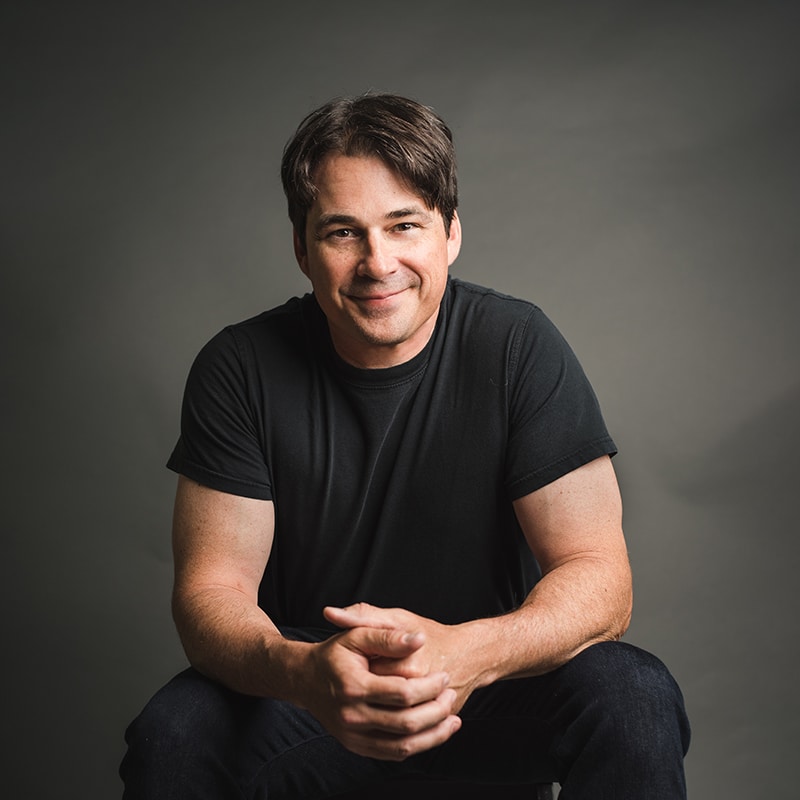
“Very few people make it to the end, very few people get published, but even fewer people who want to write a story actually finish. And there’s a lot of regret there. So my, my clarion call to anybody who even brings that up to me is if you start it, do not stop. Never, never, never give up. And if, uh, if you see it through, it’s going to be worth it.”
~Chad Boudreaux
Novelist Chad Boudreaux is a Washington insider who was hired by the US Department of Justice the night before the attacks on September 11, 2001—launching him immediately into counterterrorism work that earned him high accolades at an early age.
Chad’s success at the DOJ carried him to the Department of Homeland Security, where his role as deputy chief of staff allowed him to work directly with the head of the department, advising on significant policy, operational, and legal issues.
He’s currently the chief legal officer of a publicly traded, Fortune 300 company and America’s largest military shipbuilder.
As a novelist, Chad leverages his unique, high-level experience in global security matters and his extensive legal expertise to craft breathtaking, insider stories of mystery and intrigue that are ripped straight from today’s headlines. Following his first two novels, Scavenger Hunt and Homecoming Queen, he published Mob Justice, which I’ve read and found to be a riveting, fast-paced ride through Chicago’s mob scene. If you’re a thriller fan, I highly recommend Mob Justice to you.
WEBSITES:
IF YOU LIKE THIS EPISODE, YOU MAY ALSO ENJOY:
- Alexandra Hainsworth, Pop Artist-Novelist-Advocate-Episode #365
- Alretha Thomas, Novelist-Playwright-Actress-Episode #364
- Marcia Peck, Writer-Musician-Episode #352
- Sharon Virts, Author-Artist-Entrepreneur-Episode #346
- Gabby Gruen, Writer-Producer-Episode #342
- Hal Ackerman, Screenwriter-Novelist-UCLA Professor-Session 2-Episode #333
- John David Bethel, Novelist-Episode #316
- Max Kinnings, Novelist and Screenwriter-Episode #308
- Joey Hartstone, Screenwriter-Novelist-Episode #302
- Shannon Bradley-Colleary, Novelist and Screenwriter-Episode #182
- Leslie Tall Manning, Novelist-Episode-#112
- Dana L. Davis, Actress-Novelist-Episode #74
- Peter Telep, Novelist, Teacher-Episode #22
Steve Cuden: On today’s Story Beat
Chad Boudreaux: Very few people make it to the end, very few people get published, but even fewer people who want to write a story actually finish. And there’s a lot of regret there. So my, my clarion call to anybody who even brings that up to me is if you start it, do not stop. Never, never, never give up. And if, uh, if you see it through, it’s going to be worth it.
Announcer: This is Story Beat with Steve Cuden. A podcast for the creative mind. Storybeat explores how masters of creativity develop and produce brilliant works that people everywhere love and admire. So join us as we discover how talented creators find success in the worlds of imagination and entertainment. Here now is your host, Steve Cuden.
Steve Cuden: Thanks for joining us on Story Beat. We’re coming to you from the Steel City, Pittsburgh, Pennsylvania. My guest today, novelist Chad Boudreau, is a Washington insider who was hired by the US Department of Justice the night before the attacks on September 11, 2001, launching him immediately into counterterrorism, work that earned him high accolades. At an early age, Chad’s success at the DOJ carried him to the Department of Homeland Security, where his role as Deputy Chief of Staff allowed him to work directly with the head of the department, advising on significant policy, operational, and legal issues. Chad is currently the chief legal officer of a publicly traded Fortune 300 company and America’s largest military shipbuilder. As a novelist, Chad leverages his unique high level experience in global security matters and and his extensive legal expertise to craft breathtaking insider stories of mystery and intrigue that are ripped straight from today’s headlines. Following his first two novels, Scavenger Hunt and Homecoming Queen, he published Mob justice, which I’ve read and found to be a riveting, fast paced ride through Chicago’s mob scene. If you’re a thriller fan, I highly recommend Mob justice to you. So for all those reasons and many more, it’s a great privilege for me to welcome the outstanding, multi talented Chad Boudreau to Story Beat today. Chad, thanks so much for joining me.
Chad Boudreau: I’m honored to be here. Thank you.
Steve Cuden: Well, uh, the honor is truly mine. So let’s go back, way back in time. How old were you when you first became enamored of stories and storytelling?
Chad Boudreau: Uh, probably my mom reading to me, you know, as a kid. And, um, my mom was a very big influence in my life and she just challenged me at every point, said I could be anything, I want to be in the world. I didn’t believe her. And, um, still not Derek Jeter. I’D love to be Derek Jeter, but who wouldn’t play for the Yankees, shortstop for the Yankees. But, um, no, she. She was a great influence, and she was the one that always said, have a creative mind. She had a little hippie in her. She had me when she was 19 and single, uh, mom. You know, we were very broke, and she was just a. Just a huge source of energy and gave me license to do whatever I wanted to do.
Steve Cuden: Did she put books in your hands and get you reading?
Chad Boudreau: You know, there was this. I don’t remember what it was called, Steve, but we had this thing in public school when I was growing up in South Texas. It was almost like a list of books, and they would bring boxes of books in, and you got to check off what books you wanted to buy. And even though we didn’t have a lot of money, she would spend. She would let me spend however much I wanted on books. And so I always had the most books coming in when we ordered them and took, uh, them home. And, uh, I was a big Hardy Boys fan, and so she bought me all the Hardy Boys books, and so I devoured those.
Steve Cuden: So I was a Hardy Boys fan as a kid, too. And so that’s where I’m suspecting your interest in thrillers and suspense and mystery came from.
Chad Boudreau: Yeah, I’ve never thought about it like that, but you’re probably right.
Steve Cuden: Well, that’s usually somebody, you know, somebody gives you something or you’re influenced, uh, by something very early on, and you may not make that connection till later in life. But there was. In my case, it was the Three Stooges. I mean, that’s. That’s what took me into a whole long career. So, you know, you don’t know what’s going to trigger something in someone’s life like that. So when then did you become interested in government and service to your country? How did that happen?
Chad Boudreau: Yeah, so I actually, um. You know, I grew up in a military family. I was the first, I think, male in my family not to serve in the army. And that was by design. I was the first to go to college. And I started out a law firm after. After law school. And literally an hour from now, 25 years ago, I was in my study in Austin, Texas, preparing for a trial, and I got a call from the Attorney general’s office in D.C. i interviewed for the job, of course, But I’d waited nine months, and they called me an hour from now, 25 years ago, to offer me a job at DOJ in D.C. and of course, Told them I accept. And it was the next morning, I’m driving into work in Austin, and when I hear about the attacks, uh, the 911 attacks. And so this is kind of a historic night that I’m on your program. For me individually, I’m deeply honored that
Steve Cuden: you’re here at all. And for the listeners who won’t quite understand what we’re talking about, because they’re going to hear this at any number of points of time down the road, um, we are having this conversation, Chad and I, on September 10th at, uh, 2026, which is exactly as Chad says, 25 years to the day later when he became part of the doj. Uh, when you think back on those days, how much do you think all of what you must have gone through at the time has influenced the way that you think about stories and writing?
Chad Boudreau: Well, it was really, for me, the, um, just being enamored by DC. I was 28 years old when I got that job. I was married for three years, no children. Had a Great Dane named Judge, who’s in my. In my Scavenger hunt thriller series.
Steve Cuden: I think Judge is also in Mob Justice.
Chad Boudreau: Yeah, he is. Yeah. And so we might want to get back to that, because when I do book signings, that’s, like, the biggest issue that comes up is Judge got in a little bit of trouble. Um, his first. In the first book. And there were a lot of people mad at me that said that they would have never read the book if it didn’t end like it did. But anyway, uh, you don’t mess with animals in books.
Steve Cuden: No, no. Especially dogs in particular.
Chad Boudreau: But, yeah, he’s the only real character in my book. But, yeah. So when I was at Main justice, let me put the audience in time and place. Main justice is right across from the FBI building. It’s nine blocks from the Capitol on Pennsylvania Avenue. Kind of equidistant between the Capitol and the White House. It’s an amazing building that most people don’t get to go into. It’s got incredible artwork that most people don’t get to see. Very Art Deco, think aluminum. And, you know, It’s. It’s a 1930s kind of building, but it’s preserved in time and place. And I fell in love with that building. And I would spend a lot of long hours there, and sometimes I felt like I was the only one there, and I would walk around. But, uh, what I found was Steve there. There is, like, a hidden eighth floor in the Main justice building. This is real. It used to be the FBI Ballistics lab. And the elevator only goes up to floor seven. And I found a custodian to kind of take me up to floor eight. There’s a hidden staircase that takes you up there. And it’s kind of macabre. It’s, it’s. It’s like a. It’s like an attic now with a bunch of, you know, air conditioning stuff. I mean, not my thing, but, uh, a lot of chains that are hanging down. But when I saw that floor and walked around that floor, I said, I have to start writing about this. And I went home that night and started jotting down notes, and the rest is history.
Steve Cuden: Were you interested in writing when you were in school?
Chad Boudreau: So I actually had a, um. I had a creative writing teacher when I was in high school. His name was Joe Wilson. And Joe was one of these amazing creative minds. And he was. He would say, anything goes, and you can write anything. You can say anything in a time when, particularly in Texas in the 1980s, you couldn’t really do that. And so I kind of fell in love with that class. And that really spurred me to want to write a lot more. So when I got to university, I started writing a lot more, Took creative writing there, too. And, yeah, I never thought that I was going to be a novelist by any stretch. I mean, I was the one in the family that was supposed to do something with their lives.
Steve Cuden: Most people are not likely to make a living at it, at least in their heads. They might eventually. But it’s not one of those careers. Law. Yes. You think at law I’m going to go off, I’m going to have a career, but not writing novels. Am I incorrect to say. And I’ve had other lawyers on this show who, who I’ve asked this question about, and I find it fascinating. As a lawyer, you’re trained to be a good storyteller in the sense of you have to make a case, and it has to have a narrative flow, and you have to be able to explain it so people understand, uh, it clearly. Am I correct to ask that that way?
Chad Boudreau: 100%. So there are really two major categories of lawyers. Either on the contract side, transactional, or you’re a litigator. And I’m a litigator by trade and practice. And litigators have to be able to tell a story. Just think about 12 jurors, any judge, you know, and we’re all human beings. So the justice system that we have, it’s not perfect. It’s not perfect because we’re human beings. It may be the best in the world. But, um, people can argue about that, but yeah, you have to be able to take sometimes very complicated issues and make them, um, you know, into a story. And if you don’t have a story, particularly on open opening and closing statements in a trial, then you’re not. You’re not worth what they’re paying you.
Steve Cuden: When you’re writing your books are. Do you think of yourself as. As presenting a case to the reader?
Chad Boudreau: No, I do not, actually. I. One of the lessons learned that I had from becoming a novelist was I cannot write like a lawyer and I cannot think like a lawyer.
Steve Cuden: Okay, what are those differences?
Chad Boudreau: Well, one of them is there’s just a. It’s a tradecraft issue. They’re totally different tradecrafts. And the way you write legally is not the way you need to be writing fictionally. And, uh, you know, some of the things you just need to be. You certainly need to know the English language. You need to be able to, um, convey thoughts clearly. But the. The standard of writing is probably the same. It has to be superior or your audience is not going to listen to you or be moved by anything. But the. The way you go about it is completely different. And so my legal writing is not anything like my fictional writing. Took me a while to understand that. So I’ll give you an example. Stephen King and On Writing, which is one of the greatest books for novelists, I think, you know, he says, go and take out all the adverbs. Right. And so when I start, when I wrote Scavenger. Huh. Hunt, my first book, I go back and I look at the original drafts, and I have a bunch of moreovers and howevers and a lot of adverbs. And, um, that first, let’s say seven to 10 drafts, they’re just trash. And it took me years to really figure out how to get it to where it needs to read like a novel.
Steve Cuden: Oh, but you’re saying something super important for listeners to understand. I mean, really, it’s one of the most important things. You don’t get to finish a novel on your first draft anyway. It’s going to take many drafts, and you’re going to churn through a lot of words and a lot of changes to get it to where it actually functions properly. And I assume you do that as well in writing a legal brief, but in a totally different set of language.
Chad Boudreau: True, that’s true. But with a novel, that’s your baby. Uh, and so you spend a lot more time with her. And for me, it took me. Let’s say 20 years, 18 months. Over 20 years to write Scavenger Hunt before it was published. Uh, now I can do it in about nine months. But in those nine months, I am. I am churning through draft after draft after draft.
Steve Cuden: Do you tend to write a purge draft all the way out and then go back and work on it, or do you work on it, you know, a chapter at a time or a little bit at a time and keep reworking it?
Chad Boudreau: I actually do a little bit of both. Um, I spend a lot of time on a chapter before I go to the next chapter. But then when I have all of my chapters together, my book is complete, I will go through and I’ll start tearing up some more and rearranging, taking stuff out. A lot of stuff ends up on the cutting room floor. But, yeah, I’m constantly editing in my mind and on the computer.
Steve Cuden: I imagine that this, uh, bifurcation of writing for the law and writing for fiction, uh, still you have to use the English language. Um, it’s just how you approach it. Do you find that, uh, you have. There’s a certain deal of creativity in writing for the law as well?
Chad Boudreau: I do. And I think as chief legal officers go, I think I’m probably on the forefront of, like, really making sure that a brief. Let’s just call it a brief because that’s mostly what we’re doing is submitting briefs to judges. And there is. There’s this misunderstanding. I think it’s. It’s basically largely rooted in tradition where you have to say these things in briefs, like, here comes now, you know, all these this. And then Latin words and things like that that people cling to. And I’m not that person. I want my opening draft to read like a novel. So it’s, um, kind of going against what I said before, but in the opening statement of whatever I’m doing when I’m trying to influence somebody that actually does look a lot more like a novel. And then you get into the legal analysis, the standard of review, and all that blue, boring stuff, uh, that nobody really wants to deal with. But judges need to see that. But, um. But yeah, you have to. You have to capture the reader’s attention immediately or you’re not going to win.
Steve Cuden: You have to make it as compelling as writing fiction, but in a very different set of tone and how you’re presenting it. But it has to be. It has to be engaging in some way.
Chad Boudreau: I find that even in briefs, where we have even a billion dollars at interest, that you have to almost write the Introduction to your novel for your introduction to your legal argument. It’s just because you’re dealing with, again, you’re dealing with human beings, at least for now. I mean, AI we might have judges that are robots, but, uh, now you’re still dealing with humans.
Steve Cuden: We’re certainly having a conversation in the middle of this huge uproar within media, uh, and so on about AI and where’s it going and what are we going to be left with. And who knows, maybe by the time this show has been around for a few more years, I won’t need to be here. It’ll all be AI talking to AI. Um, so when you are looking to create a novel, you, especially when I read Mob justice, you have a lot of characters in there. It’s not, it’s not simple in that way where it’s just a handful of characters. You’ve got a lot of characters. Would you say that the people that you’ve met along the road to being a successful attorney, um, is filled with the characters that somehow populate your thinking?
Chad Boudreau: I think that people I meet influence my characters in my books. And I think, to take that a step further, I think that most of my characters are an amalgamation of people that I’ve met and in my world, wherever that is personal or professional. You know, Blake Hudson is my main protagonist in the Scavenger Hunt series. He, um, he’ll actually have a cameo in book four and there’s going to be a return of my CIA ground branch character. But it doesn’t matter what character it is. Blake Hudson actually looks, feels kind of like me. It’s probably the closest to me that there is. But he’s not me, so. But he held a similar title. He has, he’s from Texas and that’s kind of where it ends. But, um, yeah, all my characters are really, I think, kind of an amalgamation of people that I know. Annika Raven, who’s my protagonist in Homecoming Queen, which is the only off brand book I’ll probably have outside of the Scavenger Hunt series, everything else will be in a series, I think so. And uh, because all the stories I have in my head right now, and there’s probably 10 of them all fit very nicely within Scavenger Hunt. And I kind of want to set myself apart as the, the leading novelist for doj because DOJ covers so many different things and there’s not an author right now that has taken over that space. Kind of like Tom Clancy took over dod. And you know, you have, uh, Robert Ludlum who had you know, state, CIA, um, there’s really nobody that’s taken over that DOJ space. And I think I’m, I’m not trying to be prideful, but that’s just my goal.
Steve Cuden: But you’re not, you’re not like Grisham or Tarot, which are lawyerly but not doj.
Chad Boudreau: You’re going to get a lot. I mean, DOJ deals a lot with the law, but it also deals with immigration issues. I mean, that’s primarily dhs, which I also have, you know, experience in. And we’ll be going down to the, the border in two weeks for a tour and talk to some of the people down in Arizona and Mexico. But I, I do bring in a lot of legal issues, but I do it in a way that is not pedantic. I’m not trying to teach anybody anything. I’m just, I have to make sure I have some, several different constituencies that, that I care about. And the law enforcement, legal and intelligence communities are at the very top of that. And if I’m not writing in a way that’s at least sophisticated for them to know that I know what I’m talking about, then they’re not going to buy my books.
Steve Cuden: So what’s interesting is you’re talking about the DOJ and so on, but at least from my perspective, when I read Mob justice in, it’s not the least bit political. And that I think is a, is an interesting line that you’ve managed to walk without tripping, uh, over yourself.
Chad Boudreau: Nobody will ever read any of my books and feel like that I’m giving them my politics. I certainly have strong viewpoints on several different things, but my job is not to, uh, promote a particular political ideology. My readers span the political ideological spectrum. And so my job is to entertain those people who buy my books. If they learn something along the way, that’s great. But you’re not going to read any of my books and say, this is Republican slanted, this is Democrat slanted. And I’m very cautious about that because that’s not my, it’s not my role and I don’t want to do it.
Steve Cuden: You’re a suspense writer, you’re a thriller writer, and that’s what that’s all about. And so there’s going to be a mystery of some kind, almost inevitably, um, and that does not have any need to be political unless you choose to make it. So, um, do you write everyday fiction?
Chad Boudreau: I try to. Uh, I’d be lying to you if I told you I was disciplined enough to do it. Every day but five out of seven days a week, I’m putting something down.
Steve Cuden: Is there a particular time of day when you do it?
Chad Boudreau: 4:30 in the morning.
Steve Cuden: You’re like the fourth or fifth person I’ve had on this show who said that exact same thing. I have to do it first thing in the morning.
Chad Boudreau: Before.
Steve Cuden: Before you go to work, before you get your day going. And this is. Do you think that that’s a, uh, an advantage in terms of your ability to think, being first thing in the morning?
Chad Boudreau: Oh, yeah. I mean, before your thoughts are disrupted. You have, I think, the most pure thoughts, the most creative thoughts you can have. My days are just subsumed by things I don’t plan for in my job. I’ve got four kids, you know, one one in the house. When I started this journey, I had all four in the house. There’s no way that I can set aside time at 8 o’ clock at night and say that I’m going to write. So the only way that it gets done is if I get up early and do it before the sun rises.
Steve Cuden: And so you probably, if I had to guess, you don’t get a lot of sleep. It’s not like you’re sleeping eight hours a night, I assume.
Chad Boudreau: I do like to sleep late. I just don’t get a chance to do it very often. So, um, you know, waking up at 6 or waking up at 4, it’s kind of not that big of a deal. But I try to get. I try to get six hours of sleep a night.
Steve Cuden: And how many hours a day do you typically work at work? I mean, what’s that?
Chad Boudreau: Um, my job is no matter where I am. So, you know, I would actually have my Hardy Boys books behind me if I was at home right now. I’m in D.C. this week. But, um, my job feels like it’s sun up to sundown. I’m always on call. We have a host of issues, legal and otherwise, that I have to field. And, uh, you told me to turn off my phone before I started. And I can already see that it’s been blowing up since we began. So, uh, it’s kind of a nonstop. But it’s a fun job and I love it to death, but it is. It’s kind of sun up to sundown and then some.
Steve Cuden: All right, we’re going to talk about mob justice in just a moment. But I’m just curious. You say you’ve got 10 or 11 ideas already floating around in your head. Where do the ideas come from? From, uh, from the News from your own experiences. Where do most of these stories come from?
Chad Boudreau: Uh, mostly from my own experiences. So my fourth book is tentatively called Borderfall, uh, hopefully be published early next year. And it’s largely an immigration book, meaning kind of border wars kind of book where we have cartels battling coyotes battling, you know, CIA. Um, and again, you mentioned politics. That’s one that is a political hot topic that I’m not getting into. What I want to do there, like I do, I try to do with all my books, is to take somebody behind the curtains to show them the real life decisions that people who may not even be politically minded at all have to make. And uh, you don’t get that on Fox News and you don’t get that on cnn. You just don’t. They take an issue like, you know, immigration enforcement and they make it out to be this or that. And it’s so binary when you hear it depends on depending on the source. It’s really not like that. It’s, it’s one of the darkest places on earth. I’ve never been to Africa. I know there’s a lot of bad things going on there and go to the Middle east. But in, in just in terms of our continent, that is a very dark place where lives are being destroyed and changed. And it’s, it’s, I’m very passionate about, um, you know, all sides of it, but it’s, it’s a more holistic view than you would get. And so I hope when people read that book, they’re going to be wonderful, entertained, but then also kind of understand what it really means to um, have to live in that world whether you’re a victim or whether you’re law enforcement or whatever.
Steve Cuden: Is it going to take place in Texas?
Chad Boudreau: No, it’ll take place in Nogales and in Mexico and in Mexico, somewhat in Phoenix as well.
Steve Cuden: So it’s really a border story. When you say dark, you don’t mean it’s there’s no light. You mean that it’s really heavy, that it’s um, an unpleasant scene down there
Chad Boudreau: and not, and not my book, because I don’t want to write dark books. My, my book is hopefully going to be entertaining and it will get into some dark issues, you know, but that, that whole, the whole issue around, you know, people who want to come to our country to make a better life and really like the cartels that are just, they’re just evil and the things that go on in that world are just not being told like they should be. And I think that would better inform our policy. Whether you’re a Democrat or a Republican, I think it would better inform your policy and how you think about those issues.
Steve Cuden: Well, I’ll look forward to reading that. Uh, for you, when you think about stories and the stories you’re going to write, what for you? This is a question I ask lots of guests, and I’m always fascinated by the answer. What. What makes a good story for you good?
Chad Boudreau: Well, I think first of all, it starts with character development, right? You have to have great characters that can propel your story, and you just have to have an interesting plot line. You need to have a novel thought. That’s why they call it a novel, is you need to have a novel thought that is, um, going to really inspire somebody to turn the page and turn the page again. And so I don’t know if there’s any formula to that. I think some people can do it, some people can’t. I’m, um. I’ve really stopped watching a lot of movies lately because I’m seeing the same movie over and over again. It’s like sequel number five of Spider Man. It’s like, where’s the creative thought there? So, uh, I do like this, this, uh, influx of, of new writers that have come in just because the platforms have changed and it’s not the publishing. Big publishing houses that get to control the stories that come through. And we’re seeing a lot more creativity there, but starts with creativity, but it’s just particularly in the thriller genre and the sub genres there make me turn the page, make me keep turning the page. And that may look different to different people, but I know what it looks like for me.
Steve Cuden: Well, I know when I was a kid, the thriller shelves, the suspense shelves were not that deep. There was lots of books, but not that deep. Now you go into a bookstore and there’s shelves and shelves and shelves of thrillers and mysteries and so on. Um, and so I think what you’re talking about is perhaps, um, it’s become a little burned out. And so you’re looking for some unique slant on how to tell these things that will bring people in that otherwise are kind of turned off at this point because they’ve read it over and over again. And by the way, movies, it’s all about money. It has really nothing to do with, uh, art. At the end of the day, it’s all about making money for those people. All right, so let’s talk about mob justice. Tell us a bit more than. Obviously I said, because I said very little. What is the Story in Mob justice. What happens?
Chad Boudreau: So we’re picking up, uh, with our protagonist Blake. Just, uh, Blake Hudson, who works for the Attorney General of the United States. And then he gets in trouble dealing with terrorists. And so the first opening scene, or I think maybe second chapter, Blake’s kind of in the doghouse, and he’s been, uh, transferred to the organized crime Strike Force Force, which used to be a real thing at doj. It doesn’t exist anymore. They certainly have organized crime, you know, uh, divisions within U.S. attorney’s offices. But, um, my mentor at DOJ was the.1 of the original members of that strike force, and that’s how I got the idea. And, um, he is sent to Chicago, um, to. To fight the mob. And one of the focus areas for him is the consigliere, or the law lawyer, if you will, of the Chicago outfit, which is Al, uh, Capone’s old, um, uh, Mafia, who is also a Supreme Court justice clerk like Blake is. But he went to the dark side. Blake went to the side of the angels. Or maybe, depending on how you read it, that’s vice versa. But, um. But the focus is really on those two. And, um, like you said, I have a lot of characters, and they bring in different aspects to. To it as well. But, um, I think in terms of character development, Enzo Renzi, who’s the consigliere that I mentioned, he is, uh, also a very focal point in the book. And I think I nailed it with him because I have all these people telling me that they might like Enzo better than they like Blake, and they, uh, want more of Enzo.
Steve Cuden: I might like Enzo more than, like. You know, it’s interesting. They. They are sort of throughout, uh, two sides of one coin. They are birds of a feather. They’re not that different other than what they’ve chosen to support. Um, and I don’t know if you know, but Leo Tolstoy once said, uh, famously that the best stories are good versus good. And I think that’s what you’ve set up there is Enzo and Blake, though. Enzo’s clearly working for the mob, and Blake’s clearly working for the government. They are sort of both trying to achieve positive goals, not negative goals.
Chad Boudreau: Yeah. And there’s, um. I mean, we were kind of, um. We were dogging movies earlier, but one of. One of my favorite movies is Heat. In that movie, um, many of your listeners will know you have the Al Pacino character who’s the, uh, law enforcement guy, and then you have Robert Dinero, who’s the robber, and they’re both at the top of their games. They both have things going on in their lives, personal lives, that distract them. But there’s this one scene where they drive off of the interstate in LA and they are at a cafe and they’re sitting together for the first time and they’re talking about, if I do this, you’re going to do this. And. And it was kind of one of those conversations. Like, you and I are the same. We’re just on different sides, but we’re the same person. And I think that scene. Normally, scenes and movies don’t inspire what I put in books. But there is a scene, as you know, if you read Mob justice at the Chicago Chop House, where I will be having dinner on Sunday and, uh, doing a book signing there, where they have that conversation. And, um, that’s one of my favorite parts of the book. Book. Because it is like you said, they both have good aims, but even if they didn’t, it’s kind of this theme of people who we think are good are not always 100% good, and people who we think are bad are not always 100% bad.
Steve Cuden: People are complicated.
Chad Boudreau: Exactly.
Steve Cuden: And, uh, it’s impossible for even the most vile, evil person to be 100% violent or evil. And truthfully, characters in stories like yours and others, um, the people that are the antagonists rarely think of themselves as bad or evil. They have a motive. And their motive might not be what we think of as good, but to them it is. That’s what makes them really compelling. What is it that you like about Blake and Enzo? Why do you like these two guys?
Chad Boudreau: I like them because they’re extremely intelligent. They know what their limitations are. They’re highly driven. And, uh, they’re very practical in how they go about, uh, carrying out their responsibilities. They have loves in their lives, so you know that they’re truly human. And I, uh, like. I particularly like my readers, almost fall in love with the bad guy. And so for Enzo, I was very pleased to, uh, hear people say they liked Enzo because Enzo is the bad guy. He just is. And, uh. But most people are rooting for him in the end, so. Well.
Steve Cuden: Well, I taught screenwriting at a University for 10 years before I finally stepped aside. And one of the things we talked about in developing movies is that you want, uh, people to feel something, some empathy for the villain, for the antagonist as much as they do for the protagonist. And that then makes the story that much more difficult for the audience to, uh, let it go. Right.
Chad Boudreau: Makes sense.
Steve Cuden: So, all right, so where do you begin when you have a story? We’ve already said that it’s important that you develop your characters, and it’s important that you have a really solid plot. Do you sit down and outline your stories before you write?
Chad Boudreau: Well, the first thing that I do is I come up with a title, because I don’t know why, but the title is very important to me to drive my focus.
Steve Cuden: They are important.
Chad Boudreau: The title changes, but I, uh, at least start with one. So I told you that my tentative title for book four is Born, Order, Fall. I, uh. I don’t know if that’ll hold. Um, I might test it a little bit, but, yeah, I have a scaffolding approach to outlining. So I think about it in terms of 2000 words a chapter. I want to aim for 50 chapters. Again, that’s not formulaic. It’s just, uh. You know, one of the great things about being a novelist is there are no rules, at least until you get to the publishing piece. You can do anything you want. But as a lawyer, I’m. I have a more disciplined way of thinking about things. And so the open license to be creative almost becomes paralyzing to me if I don’t have some rules or some aims. So I’m very much like a scaffolding. I’m going to give 50 chapters. It may be three sentences per chapter when I start. And then, as you know, um. I mean, I’m sure many of your authors have said this. Your characters kind of take over. Stephen King famously said this in the same book I mentioned earlier. Characters kind of take over after chapter 15 or 16, and your outline’s pretty much mud. But, you know, I at least try, uh, at the very beginning to do something.
Steve Cuden: Callie Curry, who wrote Thelma and Louise, once said that she needs to find the quiet in which she can hear the characters talking. That’s what you’re talking about. You. You actually, at some point, the characters do begin to speak in your head. And then you. At least from my perspective, you almost a reporter. You’re reporting what you’re seeing in your mind’s eye, and it’s just coming out as. As a. As journalism, in a way.
Chad Boudreau: Well, Stephen King said that in On Writing, you know, he said the characters take over. And when I read that, I was kind of like, that’s hokey. Like, I love your books, man. But, um, I live in a real world, and I know this is my mind that’s creating these characters. And I kind of glossed over that. But then I started to believe it when I really started writing. And I’ll never forget, I went to bed one night and my wife was reading something, and I, I, I was just staring up at the ceiling. And she said, what’s, what’s wrong? And I said, I was writing Homecoming Queen again. Annika Raven is the protagonist there. And I said, I cannot believe what Annika did tonight.
Steve Cuden: What’d your wife say to that?
Chad Boudreau: She looked at me like I was crazy. I’d gotten in the wine cellar. Uh, she thought I lost my mind. And it was one of these stares, like, what did you just say? And I said, I cannot believe who she turned into tonight. She is on a roll.
Steve Cuden: So many creative people, not just writers, but many creative people, will say that they aren’t actually creating anything, that it’s coming through them from somewhere else, and that they’re like a conduit. Do you have that sense of it sometimes?
Chad Boudreau: I’ve never thought about it like that. I, um, I do think at some point in the, in your book, maybe three quarters of the way through it, uh, there’s certain channels that you have to follow because the characters are who they are. They’re not going to break character. The story is kind of what it is. You might have a surprise ending that changes or some nuance to it, but, yeah, when you’re about three quarters of the way through, you, you pretty much are locked in. And so I can see maybe you could become a conduit in that sense. I do feel like I have a strong control over my creative process, and so I don’t feel like I’m just putting stuff on paper that’s emanating from something else.
Steve Cuden: All right, so you’ve got a title that you are starting to work with. It leads you to where you want to go. What tends to come first, the plot or the characters?
Chad Boudreau: Uh, well, in a series, you’re going to start with a couple of characters that are just going to be there. Right? So, uh, but absent, that is definitely the plot. Like, what, what is it? That is. What. What is it that separates your story from somebody else’s? And why is your story worth reading? And it’s really that simple. You can make it much harder. But at, at the end of the day, like, people pick up a book and they either keep reading it or they put it down. So I don’t want people to put my books down. So I spent a lot of time making sure that I have a plot that is going to be intriguing to me.
Steve Cuden: People, yeah, you’re trying to write page turners, which is exactly what you’ve done, at least with the book that I’ve read. Why Chicago? Why did you settle there? What happened to make Chicago the place I worked for?
Chad Boudreau: Uh, Michael Chertoff, who really, if you, if you watch Netflix, it’s. I think it’s trying to think of the Fierce City is the name of the series on Netflix where it talks about how he brought down the New York mob. And, um, there’s. There’s a lot of great stories that come out of the New York Mafia, but it really needed to be New York or Chicago. And the Chicago history is just so rich. I mean, Al Capone is probably the person that most people think of when they think of the mob. But when I started digging more into the Chicago Mafia history, you had the Irish mob that was on the north side, and then the Italian mob that was on the south side. You have hidden tunnels that most people don’t even know exist in Chicago that, uh, they use to pedal hooch during prohibition. And, uh, the stories there are just so much richer. I love the city and spent a lot of time in the city, just kind of getting to know people and the different places, uh, where a lot of the things happened, including the St. Valentine’s Day massacre right across from a pizza shop that everybody loves. But most people who eat there don’t know that this. The, um, St. Valentine’s Day massacre happened right across the street. It’s just there’s a plaque there.
Steve Cuden: So the. The tunnels, which are prominently appear in your book, that those are real. I didn’t realize those are real.
Chad Boudreau: No, they’re. They’re definitely real. And, um, they’ve been shut down because there was what they call the Great Chicago Flood that happened, I think in 1991. And if you remember my final scene with, um, with the bridge that. That’s hanging over the river, that’s where a boat ran into, uh, some pylon there, and water from the Chicago river went through those tunnels, came up through like, Macy’s and the, um, all sorts of different places within the city. So they shut them down. So. But I got kicked out of, um, the one building where, um. The one building where they have, um, access to the tunnels now. And, um, they were having justice of the Peace things there. I was there on a T shirt and some blue jeans on a Saturday, and I thought it was going to be open on Saturday and it wasn’t. And, um, I snuck in with some people getting married during the justice of the Peace, and a security guard found me while I was trying to find elevators. And she said, what in the world do you think you’re doing? And, uh, I pretty much got. Perp walked out of there. And, uh, I said, can you at least tell me where the. Where the elevators to the tunnel are? I’m writing a book. And she said, you’re not going to the tunnels. And I said, no, I don’t want to go to the tunnels. I just want to know the elevator is. And she said, it’s right there. And then, uh, she kicked me out, but mission accomplished. I got kicked out of Provident Hospital, which is on the south side, which is where my book starts. I went up to the. Because I like to see everything. And, uh, I got kicked out of that hospital because I was taking pictures. And, uh, not a people, but of. They’ve got some great murals in there. But, uh, I got kicked out of a lot of places in Chicago. Right. In the book. It was a lot of fun.
Steve Cuden: So the DOJ guy gets. Gets.
Chad Boudreau: Yeah.
Steve Cuden: Bumped around by the legal officer.
Chad Boudreau: Yeah. They, uh, get any legal trouble? Just people in Chicago don’t like, you know, outsiders snooping around.
Steve Cuden: Did you spend time talking to anybody that’s in the mob? Do you. Have you ever dealt with it? No. So do you ever worry that you’ve written this thing and that maybe somebody’s going to knock, knock, knock one day?
Chad Boudreau: No, because I think anybody from the Mafia who reads my book will feel like I treated them fairly.
Steve Cuden: I think you did treat them fairly.
Chad Boudreau: Yeah. I mean, they. I mean, look, it’s, um. It is what it is. It’s. You have good guys and bad guys. They know they’re the bad guys. They know they’re breaking the law. And I think I gave their side of the story great homage. So, I mean, I’m not. I’m definitely not. There’s. There’s something with the mob that I would say. I mean, they. They kill people. And particularly in the past, they’ve killed a lot of people and brutally. And so I’m not glamorizing that by any means, but at the same time, I’m trying to tell a human story.
Steve Cuden: Did you have to do a lot of research on them or did you know stuff already?
Chad Boudreau: No, I, um. Couple of categories. First of all, there are three men. They’re all men, uh, that I think played a prominent role in being on the law enforcement side of. Of prosecuting, um, the mob. And I’ve mentioned two of them. Michael Chertoff and my mentor, David Margolis, who I’ve dedicated the book to. And, um. Um, the other one was the assistant attorney general for rfk, and he was a Republican that, uh, RFK hired to go after the mob. And Jimmy Hoffa, um, because he didn’t want to put a Democrat in there. This was Jack Miller, who’s the guy’s name? Jack told me the story before he died. He was my, um, had the office right next to mine in a law firm, um, right before he died. But he was telling me all these stories, and he was a pallbearer for rfk. But, um, he said he didn’t want his brother, uh, getting in trouble. Um, and so he put a Republican in. So if anything went wrong, he was blaming on the Republicans. But, uh, great stories, but, um. But those three men told me a lot of stories. And so I. I kind of knew a little bit going into that. I actually did some very. A lot of academic study in terms of. Maybe that’s not the right word, historical study. And with, uh, the Chicago Mafia, a little bit of the New York Mafia. I watched almost every mob movie there is from the 1920s on, uh, which is great. You’ll get a set. You’ll get almost get, like, a. A glimpse of that from time to time. You have to know your movies to pick up on it in the book, because I didn’t want it to be Okie. But, um. But if you’re really a student of mob cinema, you will find something in about every other chapter that most people can’t pick up on. Um, so I laid those little eggs, uh, there. But really, for me, it was wiretapping. I had never wiretapped. Wiretapping is a huge thing in prosecuting the mobile. And, uh, I tried my best at it, and then I turned it over to some beta readers that are, like, the best in the business at wiretapping. And they said, chad, not only did you get it wrong, you don’t even have the nomenclature correct. It’s like, this is the way we talk. This is the way it works. And so I really let them help me get to where it’s accurate, because that’s obviously very important.
Steve Cuden: Well, so I was going to bring up. I’m glad you said that right now, because I was gonna bring up that painting houses. I didn’t know that term. Painting houses means murder. That’s something. Did you get that from them? From the wiretap guys?
Chad Boudreau: No, I got that from, um, just historical study and reading some accounts from former mobsters. They have their own language, too, which is great.
Steve Cuden: So how similar is the process of Research, uh, for a novel like yours, as to researching a case in law, are there similarities to that research process?
Chad Boudreau: Uh, I think legal research has its own, um, characteristics to it that are different. Like there’s a term that we use called shepherding, where you read a case and then it’ll point you to another case, then that case will take you to another case. There’s actually a button you can push on some of our software, uh, that we use now a lot of AI. It’s called shepherding, and it gives you all the cases that cover thing. Um, the only thing I have is like cross references on other books that you. That you read. But, um, I would say that maybe there’s some similarities, but. But maybe not so much.
Steve Cuden: But you also, I’m gathering, enjoy the process of research for your novel that you. That you dig in. It’s something that you must enjoy doing and have fun with.
Chad Boudreau: I really do. And I usually do that after I’ve started. Well, I do some of it before I start writing. And then I start writing and I get into areas where I may not be as secure in my knowledge and I’ll do some research. And oftentimes when I do my research, I find these cross threads or these revelations that I would have never thought of that kind of help the story improve. So it’s kind of works hand in glove.
Steve Cuden: What is the most challenging aspect of doing research like that?
Chad Boudreau: Just the time.
Steve Cuden: Not the physical labor, but the time itself. Finding the time and being able to. I guess it takes, uh. It does take a lot of effort, time and energy to. To dig through and find stuff, especially as detailed as you have it. Um, so do you have any particular method for developing your structure? Do you use seven plot points? What do you. What do you do to develop the structure?
Chad Boudreau: No, I do not. I, um. I. Beyond what I told you in terms of how I set up my chapters, I don’t have any more structure to it. And I’m very happy with that. I like. I like the ability to just be able to flee free flow. Right. And, um. And then I will go back and I will structure my paragraphs, you know, just kind of the way I always do it. But, uh, no, I’m not studied in that and I’m not interested in studying it.
Steve Cuden: Do you know where you’re going to wind up at the end of the story as you start, or does that come in time?
Chad Boudreau: It, uh, depends on the book. So, um, with Scavenger Hunt, I did not. With Homecoming Queen, I did. It was, um. It’s Almost like a Thelma and Louise. I forgotten about that movie. It’s Homecoming Queen. Almost ends like a Thelma Louise. Little, uh, happier ending. But um. But with Mob justice, uh, I got pretty close. You know, I, if you remember the last scene there on the Chicago River, I, you know, I had stood underneath that, that bridge, that rusty old bridge, and I said this is where the final scene is going to be. But I didn’t know what it was going to look like.
Steve Cuden: But you knew. Did you know when you started how the story would twist and turn and wind up? Did you know that ahead of time?
Chad Boudreau: Yes, because, uh, having read the story, it’s, you know, there’s an underlying collection agency kind of theme that’s going on that will con. That will persist in my future books. That’ll become something that Blake Hudson is very focused on. He’s almost gonna be like an X Files guy. He’s uh, he keeps getting in trouble in all these different places and moved. At some point they’re going to put him in a closet.
Steve Cuden: Explain for the listeners what the collection agency is. You just brought it up.
Chad Boudreau: Yeah. So the collection agency is kind of an underlying theme in my books that um, really speaks to this institutional shadow, uh, force, uh, that kind of governs society. And um, it is a school where highly ah, intelligent or wise or kids with special skills get collected and they go to this school that has the best teachers, not only academically but um, and certain other arts, including physical arts. And uh, the whole purpose of that is to deploy them into society, to make society better. And um, it’s all behind the scenes, kind of conspiracy driven. But Blake is just now getting to the tip of the iceberg on that in Mob justice and figuring out that that exists. Um, and there’s going to be several stories that have gone through, through my head and stuck there that really press into that.
Steve Cuden: So I think you’re very good at presenting a tone within your storytelling. Are you conscious of that tone? Is it something you try to achieve?
Chad Boudreau: Uh, help me understand what you think my tone is.
Steve Cuden: So I think that the tone is um. It’s not um, ear shattering. M. You’re not trying to rattle bones. It has a kind of a, A through line where Blake is very thoughtfully working his way through. So it’s kind of got an even keel to it. That’s a tonal thing. Um, it’s not uh, full of um, craziness and people shouting and yelling, although there’s a little bit of that. But the tone is kind of straightforward but yet Propulsive. Are you conscious of that as you’re working?
Chad Boudreau: Yeah, I think about it almost in terms of music and not. Not tone as much. It’s. It’s almost like I have to. That is constantly. It’s a. It’s a drum beat that I just want steady going on. Now there are. There are, you know, they’re. They’re, you know, maps that they do now, they do AI on your book and they show you, like, these graphs about how it’s supposed to look. And, And I understand that I, um. I’m also highly allergic to those kinds of things. Like with new country music. Uh, I love all kinds of music. I’m very allergic to, uh, a lot of the new country music. And one of the reasons why is they showed this one thing where all the new songs have the same graph about how they go up and they go down and with words and with. And I don’t like that it’s impossible to sustain.
Steve Cuden: I think an audience if you’re at one. At one speed all the way through, it needs to have. You need to have breaths in there and it needs to have a kind of a. Like music. It has to have a rhythm to it, but then it has to alter the rhythms in order to keep your attention. That’s what you’re talking about, right?
Chad Boudreau: Right. So I know there’s going to be ups and downs, but for the most part, I want this underlying beat, beat, beat, beat, where you’re just moving along and you are engaged and you want to turn the next page and again, like, everything’s not going to blow up on one page and then we’re going to be asleep on the next page. You kind of have to have that. That cadence, if you will, I will tell you that becomes more nuanced the more you write. So one of the lessons that I learned, and it took me a while to learn it because I love action films, it’s very difficult, if not impossible, to sustain, uh, a lot of high action on paper. So go back again to, to the movie we talked about, Heat. One of the best action scenes in cinematic history, in my view, is when they’re walking down the streets of LA and they’re firing up the whole place. That goes on for seemingly 20 minutes. Right. Uh, I tried to write those kinds of scenes in Scavenger Hunt, and they’re all in a file somewhere because they didn’t make it. Because you can’t sustain that over 10 pages. It just doesn’t work. And so getting to a point, at least for me, where I can comfortably convey an action scene was very difficult, but it’s something I focus on a lot because you will lose the reader if you are bullets firing and people falling off and more bullets firing, cars coming. And so, um, you gotta be very adroit in how you address that.
Steve Cuden: There is a storytelling principle called habituation, where over a long period of time, and I’m talking about decades or even much longer, um, the audience gets used to a certain kind of speed or so MTV comes along and suddenly quick cutting comes in and we went from. If, uh. You go back and look at the French Connection, it’s kind of slower by comparison to, let’s say, the Fast and the Furious. And so that kind of speed becomes. The audience becomes habituated to it. So you’re always having to then go to that next level of. Of speed, uh, or intensity. But you’re also right when you try to write that in a book, you. The audience can’t. They can’t catch their breath, so they. They start to fade away on it or they get burnt out on it. So you have to be very careful with that, I think.
Chad Boudreau: Yeah, I think you’re right. Well put.
Steve Cuden: Have you ever had writer’s block? Do you ever get stuck?
Chad Boudreau: Rarely. I know that’s a thing. I, um. There are times in the morning when I get up and I might put 15 words on a page, but I always put something on a page. It’s, um, therapeutic for me. And, uh, I would like. If I binge on Netflix, which is very rare, sometimes I binge a lot on sports and I don’t get the writing done, and I’ll have, um, some regret because I feel like I was unproductive. So far. Knock on wood. I really haven’t had a time when I’m like a weekend, and I can’t think of anything to write. Maybe. Maybe two days. Um, but if I’m not writing because I can’t think of anything to put on the page that day, or I’m stuck, I’m in a rut. I’ll, uh, just do a little bit of research and it’ll get me right back into it.
Steve Cuden: Do you think there’s anything that a novelist must do, at least in your case, uh, beyond getting the mechanics of the story right. Um, to secure a chance at a sale, do you think there’s anything specific that you can share to secure a
Chad Boudreau: sale or multiple sales?
Steve Cuden: Or multiple sales. In other words, to get people’s interest in you?
Chad Boudreau: Yeah, I mean, that’s a whole. That’s a whole Other podcast, Steve. Because, I mean, so I started my journey and I was like, I just need to make sure that the people in those communities I mentioned earlier don’t think I’m a fool. Uh, check. And then you got to get to the, the publishing community and. And, uh, they’re even harder. Right. And, uh, okay, maybe check. Uh, and then you got to get into the marketing piece of it. And the marketing piece of it is the hardest part. It’s, uh. You want to talk about needing diligence to write a book? I mean, if I showed you my to do list right now, it’s probably 3/4 marketing.
Steve Cuden: I understand. It’s, you know, you can’t, um, get to where you’re trying to go in terms of selling anything unless you figure out the audience and figure out how to get them interested and get them exposed to what you’ve done. And that’s maybe the highest and most difficult hill to climb of the whole thing. I mean, you spent. How long does it take you to write a book? You say nine months. Right. Uh, so. But it’s now going to take you probably the rest of your life to continue to sell what you’ve written.
Chad Boudreau: Yeah. And you really need to have, you need to have the right kind of expectations. So I get this question a lot in different forms. For me, I feel, I feel free because of course I want millions and millions of people to read my books. And this most famous author, that would be so fantastic, that’s probably not in the cards. So I need to have, I need to be comfortable writing for the audience that I have. And I am very comfortable that If I have 200 people, and it’s more than that, but If I had 200 people that are saying, I want the next book, that’s enough. Like, I, I certainly don’t want to just write for myself, but if I have a limited audience, and so that’s going to keep me writing, I’m not going to get, I’m not going to get discouraged. And my whole thought was, it’s probably going to take me five books to really figure out where I’m going to be. And, uh, since that time, I’ve, you know, I’ve invested time, I’ve invested money in kind, um, of getting a brand and getting on social media, which is. I was only on LinkedIn before I started writing books. I, um, stayed away from social media for the most part, and now I’m all over social media because I have a great publicist. But, um, you know, it’s all those things Start working together and you try to get some momentum, but you just got to love your stories and you got to be able to, you got to be willing to tell them. I would say for those people who want to abandon ship after, let’s say, two or three books because you’re not a best selling author yet probably weren’t right for the job anyway.
Steve Cuden: You’re saying something so incredibly important. Uh, you said you can’t write for yourself. I think you probably are actually writing to please yourself. And you probably aren’t thinking about, oh, I’ve got to make sure that, uh, Bob and Bill over in, uh, Des Moines make sure that they know about my book. No, you’re writing to please yourself and then hopefully those people will come along. Well, you know, and your, your, your books. Well, I haven’t read your other two. Mob justice reads a little bit like you’re writing a movie. Have you tried to, to get some influence out in Hollywood?
Chad Boudreau: Sure. I mean, I, I, um, I’ve actually been out in Hollywood. I, um, you know, know a couple of people. My, the thing there is there are people who want to do movies and there are people that want to do series. And um, it’s really the people who want to do series that are like, you need to write more books. We need more of a canon than what you have. But, um, yeah, I would love to have a movie or a series done on my books. It hasn’t come about yet, but I think it certainly lends itself toward that.
Steve Cuden: Well, certainly as a series of, um, a television series based on a series of novels needs to have a bunch of them. Uh, though you, it’s not impossible to think that you could have one book that becomes a season of. A series of seasons.
Chad Boudreau: Yeah, that’s true.
Steve Cuden: I mean, like Reacher. Right now, if you’re watching Reacher on tv, it’s. I think it’s fantastic. I’m a big fan of the books and I’m a big fan of the television. I think they’ve done an excellent job with it. Well, I’ve been having just a marvelous, fascinating and very insightful conversation with, um, uh, Chad Boudreau. And we’re going to wind the show down just a little bit. And you’ve worked with lots of people in your life and you continue to. And I’m just wondering, you’ve had all these experiences in writing books and in the law. Are you able to share with us a story that’s either weird, quirky, offbeat, strange, or just plain funny?
Chad Boudreau: Yeah, I think I’ll Go back to, um, when I became deputy Chief of Staff of dhs. And, uh, it’s a little bit. It’s. It’s funny, but I had gone there from doj, and I thought, you know, I was going to be, you know, one of the main policy people helping to create this new department. My predecessor, however, had been kind of like the admin person, uh, for the building and all these things. So I had this huge line of people when I first started, and I’d been working for the FBI and doing all this policy, policy stuff. And I was coming, and I was going to be this big man on campus. And I think I was more humble than that, but I. I had aspirations, and I’d left DOJ to go here, and they kept coming to me and they kept saying, like, there. I don’t have the right parking spot. Like, I need another parking spot. And I’m. I’m like, I don’t deal with parking spots. But the funniest one was there was, um. This is a little bit crude, but I think it’s a personal. I had this one woman come into me, and she said, there is a, um. There’s people that are urinating on the floor in the woman’s bathroom. And, um, and I said, I just. I had lost my mind by that point. It was just that that agency at the time, it’s. It’s great now, but it was so crazy. We barely had phones and copiers and. And I said, well, we’re gonna have to start a le. And everybody laughed. And it was just one of these things. Uh, but, yeah, that was one of the many crazy, funny stories in dhs, and there are probably a thousand more of them.
Steve Cuden: All right, so last question for you today, Chad. Um, you have shared along the way here, uh, just a ton of really valuable advice, but I’m wondering, do you have a single solid piece of advice that you like to give to people when they come up and say, hey, how do I get started in this? How do I write a novel? Do you have something like that?
Chad Boudreau: I do. I mean, um, it’s really the advice my mom gave me when I was a kid. And it’s, uh, dedicated my first book, Scavenger Hunt, to her. And it’s mentioned in there. It’s the Churchillian phrase, never, never, never give up. Very few people make it to the end, very few people get published, but even fewer people who want to write a story actually finish. And there’s a lot of regret there. So my. My clarion call to anybody who even brings that up to me is if you start it, do not stop. Never, never, never give up. And if, uh, if you see it through, it’s going to be worth it.
Steve Cuden: Well, that is, um, truly excellent advice. Because if you give up, you can’t sell it. So you must carry on. Chad Boudreau, this has been a terrific, terrific show today, and I can’t thank you enough for your time, your energy, and all this great wisdom. And wish, uh, you much luck in, uh, selling all your future books.
Chad Boudreau: Thank you. Steve had a great time.
Steve Cuden: And so we’ve come to the end of today’s Story Beat. If you like this episode, won’t you please take a moment to give us a comment, rating, or review on whatever app or platform you’re listening to? Your support helps us bring more great Story Beat episodes to you. Story Beat is available on all major podcasts, apps, and platforms, including Apple Podcasts, YouTube, Spotify, iHeartRadio, TuneIn, and many others. Until next time, I’m Steve Cuden, and may all your stories be unforgettable.











0 Comments