
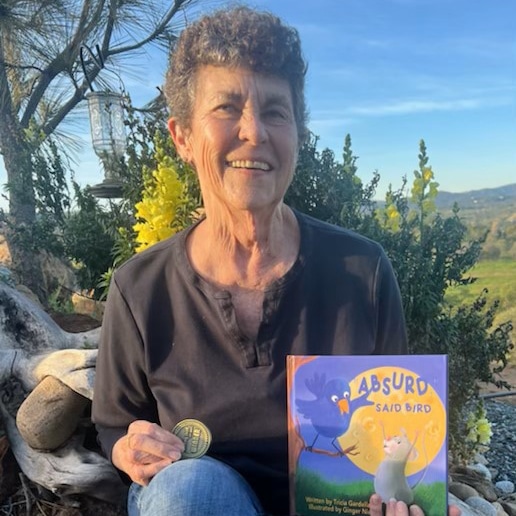
“You know, every time that you hear somebody who is happy with what they’re doing or you think, if I do that, I’m going to sell books or if I do that, not necessarily, uh, you have to do what works for you because if you don’t love it, it’s not going to work.”
~Tricia Gardella
Tricia Gardella, who is known as National Park Gramma, is the award-winning author of scores of children’s books, including a 10-book Mouse Travelers Series, which explores and promotes a love of national parks and monuments. I’ve read Mouse Visits Everglades National Park and can tell you it’s a charming story, wonderfully illustrated, about Tricia’s hero, Mouse, exploring the Everglades during a most engaging journey through the park so that young audiences can get a sense of the beauty of the endangered species that live there.
Tricia’s had her writings published in Highlights Magazine, been interviewed on Sacramento TV shows, and was featured in her local newspaper.
She’s a Lifetime Member of The Society of Children’s Book Writers & Illustrators, as well as an active member of Women In Publishing, the Independent Book Publishers Association, and The Alliance of Independent Authors.
Tricia’s not only a celebrated author, she’s also the matriarch of a large family, and an entrepreneur who has run a half-dozen businesses, including an ice cream parlor, crafting, and ranching.
After raising her family, Tricia earned her B.A. in Ancient History and Classical Archaeology at the tender age of 75.
WEBSITES:
IF YOU LIKE THIS EPISODE, YOU MAY ALSO ENJOY:
- Amy Pollack, Author, Teacher-Episode #396
- Rusty Austin, TV Producer, Author-Episode #390
- Joe Wos, Cartoonist-Illustrator-TV Host-Episode #380
- Adam Rosenbaum, Author-Episode #336
- Megan Woodward, Author-Episode #301
- Leslie Tall Manning, Novelist-Episode-#112
- Kelly Ward, Actor-Writer-Director-Choreographer-Episode #66
Steve Cuden: On today’s Story Beat.
Tricia Gardella: You know, every time that you hear somebody who is happy with what they’re doing or you think, if I do that, I’m going to sell books or if I do that, not necessarily, uh, you have to do what works for you because if you don’t love it, it’s not going to work.
Announcer: This is Story Beat with Steve Cuden. A podcast for the creative mind. Story Beat explores how masters of creativity develop and produce brilliant works that people everywhere love and adm. So join us as we discover how talented creators find success in the worlds of imagination and entertainment. Here now is your host, Steve Cuden.
Steve Cuden: Thanks for joining us on Story Beat. We’re coming to you from the Steel City, Pittsburgh, Pennsylvania. My guest today, Tricia Gardella, who is known as National Park Grandma, is the award winning author of scores of children’s books, including a 10 book Mouse Trav Settlers series which explores and promotes a love of national parks and monuments. I’ve read Mouse Visits Everglades national park and can tell you it’s a charming story, wonderfully illustrated, about Trisha’s hero mouse exploring the Everglades during a most engaging journey through the park so that young audiences can get a sense of the beauty of the endangered species that live there. Trisha has had her writings published in Highlights magazine, been interviewed on Sacramento TV shows, and was featured in her local newspaper. She’s a lifetime member of the Society of Children’s Book Writers and Illustrators, as well as an active member of Women in Publishing, the Independent Book Publishers association and the alliance of Independent Authors. Trisha is not only a celebrated author, she’s also the matriarch of a large family and an entrepreneur who has run a half a dozen businesses, including an ice cream parlor, crafting and ranching. After raising her family, Trisha earned her BA in ancient history and classical archaeology at the tender age of 75. So for all those reasons and many more, I’m delighted to have the children’s book author Trisha Gardella join me on Story be today. Tricia, welcome to the show.
Tricia Gardella: Thank you. Who was that person you were talking about?
Steve Cuden: I have no idea, but I think I’m talking to her. So let’s go back in time a little bit. At what age did you become interested in books and writing and all that kind of stuff that you wound up doing?
Tricia Gardella: I got in trouble all the time for reading too much when I was a kid.
Steve Cuden: Too much?
Tricia Gardella: Yeah, I did. I really got in trouble. I used to turn the light on on the porch and I could See it in, you know, my bedroom. And I would be reading, and I. My mom would catch me, and I’d get in trouble for that. I got in trouble in classrooms because I’d put my book inside another book. And, uh, I love writing. I love what people can do with words. Uh, you know, they’re building, um, something that we can see, and when it’s done right, it’s magic.
Steve Cuden: It is magic. There’s nothing more powerful than words. I think, um, you know, exactly what is the old phrase, uh, the pen is mightier than the sword. So I think there’s a lot of truth in that. Do you think of yourself primarily as a storyteller or an educator or an entertainer or something else? Or a comic book combo of all those. What do you. How do you think of yourself?
Tricia Gardella: A word player. My biggest thing is I hear people all the time say, you know, where do you get your ideas? And I feel like, where don’t you get ideas? It’s just like, I promised myself, no more books except the Mouse series, because I have too many of them out there, you know, and you just can’t handle everything. Then the other day, well, it’s been a couple months, I think now, but, um, these words hit me in the head, and I love the idea of it. And it’s turning into something that. It’s called, um, body language. And it’s about all the different parts of the body. It’s only 300 words, but it’s really. When an illustrator gets hold of it, it’s going to be really an interesting book. Entirely different, though, from my mouse books.
Steve Cuden: Do you find that it’s difficult to write that short, those little words, as opposed to being able to free form whatever you want to write?
Tricia Gardella: I don’t try. I, uh, It’s. They tell me what to write, you know, I don’t go, oh, well, I’m gonna write a 300. When I was writing for Highlights, I did. Because you could only write so many words. And. And that’s part of the fun is when I write something, I write it. I just write it down. And then the fun part is trying to get it into fewer words or, you know, different, uh, ways of looking at it or something like that. Rewriting is my favorite part of writing, I think. I mean, I love that. I love getting an idea at the beginning, too. You know, it’s. But I have to stop myself because I can’t keep doing this.
Steve Cuden: Well, I think rewriting, as I’ve said many times on this show and as I used to teach my students as well. I think rewriting is where the art of the whole thing comes. That writing is the word, is the craft. That’s where you first establish it and make things what they are. But the revisions is what, uh, those, that’s what makes it uh, beautiful and artistic.
Tricia Gardella: That’s the fun part.
Steve Cuden: That’s the fun part. I agree.
Tricia Gardella: And the only problem is I will rewrite until I force it out the door. I always see something that I could change or, you know, maybe if I did it this way or whatever. And I’ve had times when the illustrator is doing the book and I look at it and go, no, it shouldn’t be said like that. So she’s wonderful and changes it.
Steve Cuden: It’s relatively easy to change the words while it’s in mock up.
Tricia Gardella: I assume that’s true.
Steve Cuden: Once it’s out and published, there’s not much you can to pull it back. So how did you wind up writing books for kids in the first place? How’d that start for you?
Tricia Gardella: That’s really kind of funny how that happened because When I turned 40, I said, it’s my turn. You know, I’d raised kids, I’d helped on the ranch. I had done everything and I like doing. I mean I continued doing that. It wasn’t like that stopped, but I just felt like it’s my turn. And I decided that I was going to start writing because I’d always loved books and words and I. We have a community college here. Uh, I live in a very small area and uh, we have a community college. So I went. I just wanted to know if I had any talent. Uh, you know, we all think that we have, if we have a fun story or something, that we have the talent. And uh, so anyway, I wanted to do that. And after I had been taking this class for a while, the uh, instructor said, do you know that you write for children? I didn’t intentionally go in to do it, but everything I write is mostly for a seven year old. And I now believe I haven’t really gone beyond that.
Steve Cuden: Why seven? How did you arrive at that? How did that happen?
Tricia Gardella: I never did. But that is what talks in me. That’s what I have a few that are for older. And as a matter of fact it was kind of fun. But the picture book to me is the magic. And what I like to do is write a book. And then it’s like I am painting, um, with words. And I never tell an illustrator what I envision. And the most exciting thing for me is to See what they, uh, illustrate and to see if they see what I’m trying to say. And I have had so much good luck. Usually they’re better than what I had in mind.
Steve Cuden: They enhance your vision, or whatever your vision was.
Tricia Gardella: Well, you wouldn’t have. You would not have a book if you didn’t have an illustrator. You know, a picture book. The illustrator’s more than half.
Steve Cuden: You’re not, uh, you’re not an artist. You don’t actually do any of the
Tricia Gardella: drawings you wouldn’t want me to be drawing. Yeah, I can’t sit down and sketch something. Or, uh. I’ve done some silly stuff before. But the one that I have right now for, um, the mouse series, she’s just magic to me. She’s responsible for me writing a series. I never wanted to write a series. And I fell in love with Mouse the first time I saw him.
Steve Cuden: That’s interesting. So when you started to put this together in the first book, you didn’t think you were going to write more than one?
Tricia Gardella: Oh, no. It was called absurd, said Bird. And it was a bird that wanted to fly to the moon to get cheese. And he was going to get cheese for every farm animal if they helped him build an airplane. And, you know, that’s why Bird keeps saying absurd, because he knows you can’t fly an airplane to the moon. But, um, so the plane crashes at the end, and he bird, uh, swoops down and picks him up. And he says, we all know that you need a rocket to get to the moon. You know, it left it open perfectly for me. I never thought about it at the time, but it was a perfect stepping stone because, um, this book is about a mouse that goes to national parks, but he doesn’t go to a national park till the third book.
Steve Cuden: Interesting.
Tricia Gardella: Book two, he goes to a library. And, you know, all these things. They try to make a rocket work so that they can go to the moon. And, um, they discover they don’t have any fuel and they’re animals, so how are they gonna get any? So he gets depressed, you know, and Bert tells him, there’s a whole. This whole world, our whole world has wonderful places to visit. And he says, and there’s a place called a library where you can maybe figure out what you want to go to. And that’s. That was a transition book, and it really just kind of fit in there. And I have said from the beginning, mouse writes the stories. I just go along for the ride and do the rewriting.
Steve Cuden: Do you feel like you’re taking Dictation for mouse.
Tricia Gardella: In a lot of ways, I do, um, you know, it. I love researching. And so I’ll get, uh. If I’m going to do a park or something like that, I will come up with all these different things and just kind of throw them in a pile. And then you have to figure how. How it’s going to work together, you know, how. Um. Because at first the only thing he could do was teleport using a keyboard. You know, he jumped on an escape button or something like that. And when he did the, um, Six Monuments, uh, story, well, before that, in Yosemite, there was a wildcat that was coming after him, and he picked up this acorn and he was going to throw it at it, and then he was whoosh tome. And that happened to him all the time. He didn’t know when he was going to be sent home, so he was whooshed home. And he didn’t know this was a magic acorn until the next book. And, uh, so, you know, it’s fun, things like that. Now he can really move around because he knows how to make things work.
Steve Cuden: He’s got the magic down a little bit.
Tricia Gardella: Yeah, he does. He definitely has the magic down. And he’s a fun character and he’s, ah. And he meets a lot of other mice. That’s one of the things we focus on are the different breeds. Because, um, that’s one of the things he started out with and in. One of the fun things for me was in Carlsbad, when they go to Carlsbad. One of the reasons he wants to go there is he thinks that he’s related to bats. He thinks that they look so much like mice that he’s related and finds out that, um, bats are more closely related to humans than they are to mice.
Steve Cuden: Well, that’s part of what you’ve done, is you’ve gone in and exposed for children all of these scientific and natural facts.
Tricia Gardella: Exactly. And at the back of the book, we have questions. And, um, I almost always do, uh, author notes because, you know, I like to share why I did what I did sometimes, or something about mice or. I don’t know what I’m gonna share. Do you.
Steve Cuden: Was there a point when you started to do these books when you thought, these are really good? Was it in the first book or did it take a book or two before you thought, this really will work?
Tricia Gardella: Uh, probably by book six, I lived near Yosemite, and so when I did the Yosemite book, I mean, that was really exciting. I made myself Wait, though, we did Acadia before that, because my illustrator lives Acadia. She lives totally across the country.
Steve Cuden: Right.
Tricia Gardella: You know, that. That was fun. That has really been fun for me. But I’ll tell you what’s really becoming fun. You said we have 10 books. We’re working on the 13th right now. Well, we just kind of keep cranking them out, and we’re both, you know, getting up there, so I guess that’s why we keep doing it. But.
Steve Cuden: And where. Where do you. How do you decide which park or area to visit or monument? What. How do you make those decisions?
Tricia Gardella: I might come up with an idea. Like the. The last one that I just did, um, or the. The one that, um, Ginger’s working on right now is that our first people visit cultural, uh, sites. And it’s about, you know, our Native Americans, basically. And there was a limited. Really. I mean, there are a lot of archaeological sites for the Native Americans. So I had to really get choosy on what I did. But that was really exciting. And what I like about it is I could put seven parks in there because we have over 63 national parks in this country, and there’s no way I’m going to be able to ride all of them.
Steve Cuden: How many have you visited?
Tricia Gardella: 20.
Steve Cuden: You visited 20 of 63?
Tricia Gardella: Uh-huh.
Steve Cuden: And do you plan to. Are all the books, places you’ve visited, or some of them from just research?
Tricia Gardella: No, and I’ll never, um. I’m. I. I’m not traveling as much anymore or very little anymore. So, um. And I’m disappointed, but we’ve got parks like, um, the. The, um, Arctic. It’s huge. Huge. And doesn’t even have a road into it. So, you know, we have. We have parks, uh, that are out in the middle of the ocean that, you know, they’re not part of our 48 or anything, but.
Steve Cuden: Well, this I’ve never heard of before. There are parks out in the ocean?
Tricia Gardella: Oh, yeah, Several. And right now, don’t ask me the names of them because my brain is not.
Steve Cuden: Well, like I said, I’ve never. I didn’t know that there were parks in the ocean.
Tricia Gardella: There are a lot of them. I say a lot, but, you know, maybe seven. I can’t remember.
Steve Cuden: Are they. They’re underwater, then?
Tricia Gardella: No, no. There’s little islands or. I don’t know if any of them are underwater. I don’t think so. I think so.
Steve Cuden: They’re all islands out in the middle of the ocean.
Tricia Gardella: I should have studied so I could tell you that, because I didn’t even think I was going to talk. I don’t know that I’ll ever do one because there are, um, you know, I look for things that really would interest Mouse, too. And the book that’s coming out in August, which is coming out the week national, um, park week is in August.
Steve Cuden: Well, we’re having this conversation in 2026, but these shows will be around a long time. So August of 2026, this book will be available.
Tricia Gardella: The reason that we’re holding off on it. It’s finished. The reason we’re holding off on it is it’s a Christmas book. And I thinking. I was thinking one day, you know, it would be fun to do something for Christmas. So I did some research and, you know, they had tree celebrate, decorate the tree and everything. But, ah, one of them mentioned something about the 12 days of Christmas. And I went, oh, my gosh, if that isn’t perfect. And we, um, Mouse visits 12 national parks every day before Christmas. One every day before Christmas. And it is so much fun because it’s parks that I would never have done a book on. But, you know, we’ve got good illustrations and fun things to look at.
Steve Cuden: So I’m curious. You, at 75, graduated from college with a degree in classical archaeology and ancient history. How does that play into the books or doesn’t it?
Tricia Gardella: Uh, the research.
Steve Cuden: The research.
Tricia Gardella: I mean, you could do that anyway without that. But I’ve always loved that type of research. I started, um, I was going to be an archaeologist when I went into college, and that was a long time ago. I’m glad that I didn’t finish until now because it has changed so much, you wouldn’t even believe it.
Steve Cuden: Sure, sure.
Tricia Gardella: 50 years. I think it’s 50 years.
Steve Cuden: Do you do most of your research online or do you go to a library or where do you do your research?
Tricia Gardella: I do most of my research online anymore, or at least just get ideas where to look or whatever. And, you know, for this type of book, you don’t need a ton of research. You want to be right in what you say and you want to know more than research. I’m looking for things that I can use that’ll make it fun for Mouse, you know, uh, not fun for mouse, but fun to read about Mouse. Because I truly believe the most important thing in the world is that a book be fun and what kids like to read. And then you just bury what you’re trying to show them in there, and they don’t even notice. That’s what I believe.
Steve Cuden: So, uh, in what I read about you. You say that you’re still chasing curiosity. I’m just curious in my own curiosity, my own curious way. What is it that makes you curious
Tricia Gardella: most today, before COVID I truly did not have much hope, probably as an archaeologist. And you know, what I studied. I just felt we would go extinct. And I know how many times the world has almost totally gone extinct, of course. And so I thought, we’re doing it to ourselves. That’s what I was feeling. And now I have hope again. You know, I see all these things that we’re doing medically, and I, uh, see all these. I mean, it’s not. It won’t be in my lifetime, but I have grandkids and great grandkids and, you know, it’ll be their lifetime things that we have. Um, it’s called hcm that runs in our family. And I have it. My son has it, his son has it, and his daughter.
Steve Cuden: What is that?
Tricia Gardella: It’s hypertrophic cardiomyopathy, is called. And it’s the enlargement of the. Or the. It’s really not the enlargement, but it’s the, um, ventricle don’t work right. And that’s what pushes all the blood into the rest of your body. So, you know, it’s kind of nice to have it working right.
Steve Cuden: Yes, it is.
Tricia Gardella: I’ve lived really well. I didn’t think I would still be here at this age. My husband died nine years ago, and I’m still here. And I would never have dreamed that. So I think I’m meant to finish this.
Steve Cuden: Well, you’re on a mission. What do you think your mission is? What is your purpose?
Tricia Gardella: My, uh, mission. I didn’t start out to do this as my mission, but as I got into it, I realized I want people to understand the importance. You know, most people don’t think too much about national parks, but they are so important because they’re giving us little corners of the world of how it was before humans took over, you know, and it’s a. It’s also a place where I think that you feed your soul when you go places like that. Uh, I have a hard time now because so many people do like them, that they get really way too many people in them. So it’s not. When I was a kid and we would go, nobody was there. It was fabulous. And I feel terrible that it isn’t that way for everybody now.
Steve Cuden: They’ve become a victim of their own success because they’re extremely attractive to many people.
Tricia Gardella: They are.
Steve Cuden: And that, you Know, an ironic way is hard on the park.
Tricia Gardella: Well, and populations increase. When I was in high school, I remember they told us that. I forget what the number was, but we did not believe that there could be that many people. And now look at it. It’s like, oh, well, especially living in a small area too, you know, and
Steve Cuden: it keeps, and it keeps growing. The populace just keeps getting bigger.
Tricia Gardella: Well, of course it does.
Steve Cuden: So you say, uh, in reading up on you, that the best adventures often begin with the simple question, what if? And I’m curious, what if are your most prominent what ifs of today?
Tricia Gardella: Well, I’ve got a book called Middle C. Learns a Music Lesson.
Steve Cuden: Okay.
Tricia Gardella: He’s sick of it, you know, he’s, ah, he’s caught in this, um. There’s a little boy that’s learning how to play an instrument and he’s caught in, um, tuba or whatever. I don’t remember what was drawn. But anyway, he’s caught in there and he’s just had it. And he, um, goes on strike. He’s not going to do this anymore. And he leaves. And music, uh, everywhere, you know, in the world or around there where they are, everybody’s just sick because nothing sounds right and everything. Because you can’t live without a middle C, you know, or C. And so that’s a what if, you know, what if music, you know, when even one note goes away.
Steve Cuden: What if we had no music or sound or anything like that? That would be a very different world we’d live in.
Tricia Gardella: It would be.
Steve Cuden: We know that there are people that don’t have hearing, unfortunately, and they live in a slightly different world than those of us that are gifted with having hearing. Um, and so that what if is a really good what if. What if we didn’t have sound? What if we didn’t have music? Um, do you test your books out on your seven grandchildren and great grandchildren?
Tricia Gardella: Occasionally. Everybody’s really. They all live right here. So, um, I see them quite a bit and yes, they love them. But that’s how I got started on this. I did a book for each one of my grandchildren and great grandchildren and then, then for my kids too. And the very first book I ever wrote was called Just Like My dad. And it was, um. I wanted to show that ranches were a real thing, you know, it wasn’t cowboys and Indians and all that kind of stuff.
Steve Cuden: And you grew up on a ranch, right?
Tricia Gardella: I didn’t, but my husband did, you know.
Steve Cuden: I see.
Tricia Gardella: And I grew up by ranches, but I didn’t grow up On a ranch.
Steve Cuden: So you weren’t unfamiliar with ranches?
Tricia Gardella: No, I wasn’t. Um, I wasn’t as filming m familiar as I am now. But I’ll tell you, the greatest joy for me was when my grandkids this was written and published. HarperCollins published this. It was my first book. It was written and published before I had any grandkids. And when they got to be around two years old, it was the favorite book of each one of them. And that was the greatest joy of my life. That’s much better than, you know, selling them is.
Steve Cuden: Is having your. Your kids, grandkids, et cetera, really like what you’ve done?
Tricia Gardella: M. Yeah, but that’s not the way you test the book, because, of course, they’re your family. They like everything you do.
Steve Cuden: Well, how do you test a book?
Tricia Gardella: I, you know, I’m not exactly sure. I think that. I mean, I’ve been writing long enough that I get a feel that, nope, this isn’t going to work, and I don’t want to work on it anymore.
Steve Cuden: Oh, so you’ve abandoned stories and books, then?
Tricia Gardella: Oh, yeah, A lot of them.
Steve Cuden: Interesting.
Tricia Gardella: But, uh, but there are other ones that say they have to be written. They won’t let go of me until I at least rough them out. You know, I at least have that. I don’t, I don’t know, um, how you know for sure there. In this day of indie publishing, which I love, I, you know, I’ve done both traditional and indie, and I love indie because I have more control. I guess I’m just kind of a control freak.
Steve Cuden: Well, you test it, I guess, ultimately, by putting it out into the world, and you see what kind of reaction
Tricia Gardella: you get unless you’re, you know, marketing. They’re 4,000 books a day. And it’s probably more than that now that Amazon publishes 4000 and you are competing against them. And I’ve always said, well, since I got into this, it’s like taking a, uh, glass of water and throwing it in the ocean. You know, nobody sees it.
Steve Cuden: That’s. That’s a true thing. Well, even for the big publishers, even for the big publishers, they can put all their marketing might behind something. And if you, uh, know there’s so much competition that it’s difficult. I mean, do you. Do you think about doing things that try to get attention? Or what do you do? Do you do anything at all?
Tricia Gardella: Okay, so when I got into this, and it’s been four years, uh, it’s been four years, I think in March, when I first Read about it. It said it took five years. And I’ve had several businesses, so I know that it takes five years, and it usually takes longer than five years. And I truly believe that it wasn’t going to take me five years to do this because, you know, I’d been around, I knew how to write and that kind of stuff. And I’d had good friends, helpers, we got together and critiqued and that type of thing. And, um, here it is, year four, and I’m just barely. Right now, we are on a major mission, and if there are any teachers out there, I want you to pay attention because, um, I’m doing a giveaway, and four teachers will get $250 a piece for classroom supplies. And I’m hoping they’ll use them to talk about mouse and national parks, the importance of national parks. But, you know, and then the rest of the people that aren’t teachers, because only teachers can go for that. But the other ones, um, there. One of them will be ten, um, books of the mouse series. And then I have knitted a bunch of, um, blankets this year. And so as national park grandma, I’m giving away a book and one of the blankets. They just have to go to my website and sign up. But I don’t know that it’s totally ready yet. It’s almost there. It will be in August.
Steve Cuden: I’m wondering how you became National Park Grandma. How did you get that name?
Tricia Gardella: A couple people started calling me that. I’m, uh, I’m not. You know, I looked. I looked it up to see if I would be intruding and everything. And I don’t see that I, you know, there’s anybody that cares. So that’s how it happened. And. And I qualify. You know, I’ve got seven grandkids and seven great grandkids.
Steve Cuden: So I figure I qualify and you’re writing books for hopefully thousands or millions of kids.
Tricia Gardella: 100 would be nice.
Steve Cuden: A hundred would be nice. So you’ve also written all kinds of books for kids, not just the mouse series.
Tricia Gardella: Yes, I have.
Steve Cuden: I am wondering, have any of your books, including the mouse series, ever been considered for turning into an animated feature or a TV series?
Tricia Gardella: No.
Steve Cuden: No.
Steve Cuden: Um.
Tricia Gardella: Well, I. I’ll tell you one thing. I truly believe that at this national park, uh, book that I did, because it’s good. I know that it’s good. I have never heard back from any park. Well, that’s kind of a lie. The park ranger up here wrote back to me and one other one, I think. But I don’t hear from anybody. You know, marketing is the hardest. Writing is the easy part of this.
Steve Cuden: Of course it is.
Tricia Gardella: Oh, because, you know, I mean, uh, when I was back in the 90s, when I was publishing, there were people that sold all the books and it was, you know, you didn’t do anything and you got money up front. Well, you know, my illustrators get paid, but I don’t.
Steve Cuden: So none of your books are illustrated until after you’ve written them. You don’t ever do them in concert with an illustrator?
Tricia Gardella: No, never. And I don’t think I’d really be good at that. I’m a controlled freak. Uh, to a point. Like I said earlier, I don’t want to tell them how to illustrate. I want them to see my words and see what they see.
Steve Cuden: So you don’t write in the, in your, the writing that you turn over to them. There’s no description of how you’re expecting the drawings to be.
Tricia Gardella: Very, very rarely, once in a while, if, if there’s, nothing that, uh, talks about it and it needs to be in there, I will put a little note.
Steve Cuden: Well, how often do you get a drawing back and it’s just completely wrong? Has that ever happened?
Tricia Gardella: Not really. But, uh, okay, so let’s, um. An example right now is, um, Mouse lands right next to, ah, right next to a muskox, almost. And he didn’t look like a muskox to me. I thought he looked more like a buffalo. Okay, so I didn’t mention that. And in about 12 seconds she had it fixed.
Steve Cuden: Well, that’s, that’s part of that collaborative process. Yes, it is a collaboration. Since you’re not doing the drawings, uh, you, you must employ someone else.
Tricia Gardella: It very much is. And I think she’s my biggest cheerleader. She loves Mouse as much as I do. And she, she promotes it. She promotes better than I do, you know, so, uh, and she doesn’t get, you know, she’s been paid. She’s just doing it out of. Because she loves him, I guess.
Steve Cuden: Well, uh, you know, that’s a. That tells you that she has a passion for doing it. And there’s no, no substitute for that. No matter how much money someone’s getting paid.
Tricia Gardella: Exactly. And that’s, I think that is very special to me.
Steve Cuden: So, uh, let’s talk a little bit more about Mouse. How did Mouse come to be in the first place? Where did the inspiration for Mouse come from?
Tricia Gardella: Well, it came because I had done. That book was called Absurd, said Bird when the first, uh, illustrations came, because she sends Every Friday, she sends me whatever she’s finished up on to look at. And, you know, I can say whatever I want or, you know, that type of thing. The minute I saw him, I just went, I got two more books. I mean, I just fell for him. And, you know, I’ve got some really, really, really, really cute, um, characters in. In a lot of my books. And. But this one, he just grabbed me.
Steve Cuden: Well, the drawings are charming. I mean, it’s.
Tricia Gardella: They are. They’re charming, but they’re not over charming.
Steve Cuden: They’re not. They’re not cutesy. They’re charming.
Tricia Gardella: They are. And we get lots of, you know, almost. My books almost get a, uh, five stars for every one of them. And still I don’t know how to promote them. So I want people to know that it’s not easy.
Steve Cuden: Well, hopefully by doing a show like this or others, that people will find out about it maybe. Well, we’ll see.
Tricia Gardella: And I’ve got a lot of things going on. Um, this whole summer will be devoted to Mouse. And I have a, um, personal assistant right now, and she’s really magic. So we’ll see. At least. At least it’s getting into social media. And, you know, when you got 30 books. This is why I don’t recommend that anybody do things the way I did them. Because you can’t keep up with everything.
Steve Cuden: You, uh, know, you just. You’re creative and you want to keep churning stuff out.
Tricia Gardella: I had all those grandkids that I wanted books for and that kind of thing.
Steve Cuden: So Mouse. And the books that Mouse is in, uh, um, or are in, um, show that a little person, a little character, a little mouse can do great things and that people can have their own voice, no matter what their size or their strength is. Is that what you hope people will take away from the book?
Tricia Gardella: Exactly. And that’s, um. I think it was Ginger really, who pointed that out to me. She says that’s the greatest joy about mouses. It doesn’t matter how big you are, it’s how determined you are. And, um, you know, I. I love that. I love that, uh, we’re trying to protect, um, and preserve national parks. Because, especially right now, I’m worried because financing has been cut way back and. Yes. Uh, you know, I don’t know. I. I just think that if you. If I’m out there with a whole bunch of stuff that I can keep throwing out, because I have these little cartoon creatures of me that Ginger did too, as National Park Grandma, and some of them, um, go out and tell about national parks or different things. So now I’ve got somebody that will get them up, because I wasn’t.
Steve Cuden: Are you gonna publish books based on National Park Grandma?
Tricia Gardella: No.
Steve Cuden: But you could.
Tricia Gardella: I know it. Somebody said that to me. And what else did they say? There were a couple of things, and I thought one of them really, really, really caught me, and I went, no, you are not doing.
Steve Cuden: You don’t want to be the star of your own show, do you?
Tricia Gardella: No. Well, that was. That’s how this got, you know, that’s how National Park Grandma got started. Um, I had someone that was telling me that I needed to do these reels, and I was reading. You know, I would share things I didn’t like. I don’t like that. Uh, especially for me, I enjoy watching some other people. I got good response and everything, but I went, who cares? You know? Why would they want to watch me? But when National Park Grandma came in, it’s an entirely different world, and I can promote her like crazy.
Steve Cuden: Well, and you should promote her, because that promoting National Park Grandma will help promote Mouse, and vice versa. And it’s all of a piece, I would assume. I think that you are reflecting yourself, I think, in Mouse, in the sense that you’re not a big, powerful, famous person and. But you have a voice, and you’re expressing that.
Tricia Gardella: Exactly.
Steve Cuden: And so that’s. Mouse is I. In a way, I guess. You.
Tricia Gardella: Yeah. Well, maybe I wish I was that little.
Steve Cuden: Why do you wish you’d be that little?
Tricia Gardella: I don’t know. I don’t know.
Steve Cuden: You could crawl into all kinds of spaces.
Tricia Gardella: Yeah.
Steve Cuden: What other. What other values do you hope to impart through the books? Are there other values?
Tricia Gardella: Each book has its own values.
Steve Cuden: Interesting.
Tricia Gardella: I mean, I can’t. I mean, each park is different and has things, uh, for them to learn or things to think about. Um, as far as values, I don’t know. It’s like, uh, some of our caves. Uh, what’s in them is important, and those are. Those are some of the values I think that we need to keep in mind.
Steve Cuden: Well, you’ve been. You’ve been in business many times, and Mouse is not in business. His business is visiting these places.
Tricia Gardella: Right.
Steve Cuden: But he’s an explorer. Do you think of yourself as an explorer as well?
Tricia Gardella: Uh, you know, if you’re a researcher, you’re an explorer.
Steve Cuden: That’s true.
Tricia Gardella: And that’s basically why I studied what it is, because human development fascinates me.
Steve Cuden: In what way?
Tricia Gardella: Just what we have become. Um, I see these things on Facebook. They know I like Certain kinds of things. So they throw this stuff there. And then I read it and there was a chimpanzee. And I can’t remember exactly what it was, but what he was doing was very human, like the, the caring and everything like that. And you know, I realized that this is basically what we came from. And then look how we have developed. And it’s been a fairly short time and we don’t stop doing it. And look at how crazy we’ve become. I remember thinking that my grandmother saw so much in her lifetime, you know, so much change. So have I.
Steve Cuden: As have I. We’ve seen a lot of change.
Tricia Gardella: Uh, it’s amazing that what humans can do.
Steve Cuden: Let’s relate that to Mouse visits Everglades National Park. What are we learning in that book about changes in what’s happening? How’s that reflected in the book?
Tricia Gardella: Everglades used to be huge. It was a huge thing. And it was, um, the water just kind of flowed through these grasslands. And you know, it’s really small now because they’ve made it so that they can build houses on it and everything. Thank God that they got it when they did. It’s the only national park that was preserved simply because of, ah, for ecology. Um, yeah, ecology. And um, I think that that’s what I like the most about it. It also has, um, our largest, um, not seabirds. I, I don’t. I. You know.
Steve Cuden: In the park, you mean?
Tricia Gardella: Yeah, the populations. And especially they come there to have their, uh, babies.
Steve Cuden: Was it like herons or egrets?
Tricia Gardella: Yeah, they’re all kinds. And so that was fun to do. The other thing that I really, really liked was I’ve wanted to. To have him run across Bird again. And Bird had gone off on a migration when Mouse went to the library. And, uh, he hasn’t seen him for quite a while. Here’s Mount. Here’s Bird in this group of. And Bird tells him. He says, you know what I saw right over there? That there’s. That’s where they launch rockets. And so Mouse is so excited about that. That. That’s book. It was book 11. Now that he’s got this acorn that’s magic he finds. He teleports himself Canaveral National Seashore. And it’s a part two. From there he meets a mouse. And from there they teleport to, um, Kennedy Space Center. So it’s entirely different there. They learn some about the seashore area, but they learn stuff about Kennedy center too. One of the things that he realizes while he’s there because he, uh, the first thing that he looks at and he says, no wonder our rocket couldn’t go to the moon, because how huge these rockets are that take them to the moon. And he’s trying to find a way to get in there because he wants to go up, even if it’s just to the space station. And then after he hear there’s a ranger that comes in, is talking to a group, and, um, one of them asks if. If there ever animals that get in there. And he says, you wouldn’t want to unless you were wearing the right. Or put in the right cages or whatever, because you wouldn’t survive, you know. So Mouse realizes he’s never going to be able to go to the moon, and he’s fine with it.
Steve Cuden: One of what it seems to me, one of Mouse’s qualities is, uh, great qualities, is that he doesn’t give up. He has stick to itiveness and he drive.
Tricia Gardella: That’s the main thing with Mouse, that that’s what I probably love the most. He’s little, but yet he never gives up. He doesn’t sit down and say, you know, the world’s against me. And he just turns around and finds another way to do it. Or he goes and does something else. You know, maybe that went in, didn’t work.
Steve Cuden: The other thing that I notice is that he seems to have no problem, uh, taking. Taking life the way it comes at him. So he doesn’t have a problem taking a journey one way or another. He’s curious about lots of things. Uh, and so he’s also good at taking detours.
Tricia Gardella: Yeah, very good at taking detours. And I think that comes from me because I truly believe that detours, you know, life is what happens while you’re making other plans. And I’ve always lived by that. And detours sometimes are the best road you could take because they’re magic things that happen on detours.
Steve Cuden: Give us an example or two of for you, what has happened when you’ve detoured and had a great experience.
Tricia Gardella: It’s too late in the day. My brain doesn’t work.
Steve Cuden: Where have you traveled to? Where have you gone on journeys and discovered things?
Tricia Gardella: I’ve never been to Asia, and it just. I wanted to go. And then Covid hit. We were ready to go and covet hit. And then after that, I had, you know, medical issues, so it slowed me down. And I don’t think I’m ever going to get to Asia.
Steve Cuden: I assume you’ve traveled all over America.
Tricia Gardella: All 50 states.
Steve Cuden: All 50 states. Wow.
Tricia Gardella: And after My husband died. I drove. I drove from California all along the south, all the way up the, um, east coast and all the way across, because I just needed to.
Steve Cuden: And what did you discover along the way that you. Was a surprise to you?
Tricia Gardella: Nothing was a surprise. I. I had been across most of them, but there were, uh, two Delaware I’d never been to, and I’d never been to Florida, of all places. And so I had to make sure that I got to those two. Those were two things. My sister lives in Georgia, so that was one of the reasons that I went over.
Steve Cuden: That’s nice.
Tricia Gardella: But it was a. It’s a magical thing. You know, there’s so much. In our own country.
Steve Cuden: Well, that’s what I’m. That’s what I’m trying to get at is what was. What did you discover on your way that was magical? Like, what mouse goes through?
Tricia Gardella: Uh, well, alligators and crocodiles and, um. Let’s think. What else? Um, a different kind of ocean than the Pacific Ocean?
Steve Cuden: Well, the Atlantic and the Pacific are very different bodies of water.
Tricia Gardella: They are.
Steve Cuden: They are very different.
Tricia Gardella: And, uh, what else did I do? I spent quite a bit of time in, um. My family is originally from, um. Well, he came from England, but from, um. Not New Hampshire. Yeah, New Hampshire. And so I went there kind, uh, of looking. I kind of followed that trail back. And I wasn’t headed anywhere special. I just wanted room to think. And look.
Steve Cuden: You were. You were taking the world in as it was.
Tricia Gardella: It was. And I feel the same way. Um, you know, you were talking about me graduating when I was 75. Well, I went. I took my courses through the, um, University of Leicester.
Steve Cuden: Oh, is that right?
Tricia Gardella: Uh, my daughters and I were in Greece when I found out that they were graduating. The day after we were supposed to be going through England, so I changed the day. My kids said I had to go and I got to graduate. So that’s pretty cool.
Steve Cuden: That’s really cool. You know, you. Don’t you. If you’re going to graduate from high school, from college or graduate school, you only get to do those once, usually. So you may as well do it, enjoy it.
Tricia Gardella: It was pretty cool.
Steve Cuden: No doubt. Especially if you were in England for it, which would be very different from where you live.
Tricia Gardella: And I’ve been there before, and I love it. I am. My genetics are mostly British.
Steve Cuden: Oh, is that right?
Tricia Gardella: I guess that’s why I love it. I don’t know.
Steve Cuden: Well, there’s, uh, a lot to be. A lot of great things to be said about England. I Love England too.
Tricia Gardella: Yeah.
Steve Cuden: Uh, and so they are, uh, in a large way, responsible for America being America, you know.
Tricia Gardella: Exactly.
Steve Cuden: After we, we do speak English, though not the king’s English. So there you go. I’m curious. Do you edit your own books or do you hire an editor?
Tricia Gardella: I don’t want to tell you, but I edit my own.
Steve Cuden: Well, why wouldn’t you want to tell me? If you edit your own, that’s fine
Tricia Gardella: because you should have somebody else look at them.
Steve Cuden: Well, I think in your case, um, the books are not, you know, you’re not publishing 120,000 words, so it’s a little easier for you to see what you’re doing in a relatively quick way.
Tricia Gardella: It is, but that doesn’t mean it’s right. It’s what’s right for you.
Steve Cuden: I’m just saying that as an. If you’re a writer and you’re editing yourself, uh, and you can probably see things, um, a little more readily than someone that’s publishing, uh, a 300 page book. Um, and so that’s all I’m saying. Yes, you’re correct. If you’re a terrible writer, an editor would be a good thing.
Tricia Gardella: Yeah, very good thing. I highly recommend it, especially in your early books. Uh, because, uh, editors can point out things, you know, you don’t take it personally. You go, okay, if that isn’t working, how else can I do it? You know, you, you need. Look. And I had a lot of editing. Um, I have a group that, uh, when we were involved with scbwi, uh, that we met before the conference every year and would go. We were all picture book writers and we would go over these books that were being published and then we would read each other’s, uh, we sent them ahead to each other and then we would talk about them. That was probably the best education I could have gotten.
Steve Cuden: How, how important to the, um, the development of the books is it that you had that feedback from those people?
Tricia Gardella: Not, not, you know. Okay. Uh, one of the things is they. Everybody has their own opinions about things, of course. And, uh, so you have to decide whether their way of looking at it is better than yours or, you know, the true way that you should be looking. There were. I was told back in those days that you could not write a book, a fiction book, and put non fiction stuff in it. That was. No, no, you didn’t do that. Well, that’s all I write.
Steve Cuden: I don’t know why anybody would tell you that you can always write a fiction book and put non fiction.
Tricia Gardella: It’s because that’s what the publishers were taking.
Steve Cuden: It’s what the market was. Was demanding at that time. Got it. I see. Well, that’s the way it works sometimes, and things shift around. And now I think sky’s the limit and everything is everything.
Tricia Gardella: And that was the other thing that I learned not too long ago. Uh, someone said if people keep criticizing one thing over and over and over or one. I don’t know, maybe it’s not just a thing. But usually that’s your voice. And you have to think about, you know, how you’re going to use that. And, you know, we all have a voice. We have to.
Steve Cuden: Absolutely.
Tricia Gardella: We have to decide how we’re going to develop that.
Steve Cuden: Do you think when you first started to write your books that you knew what your voice was, or did it take a while to develop?
Tricia Gardella: You know what? I’ve never. I’ve never. I. My voice is what it is. So I.
Steve Cuden: So it’s always been there then.
Tricia Gardella: Yeah, yeah. Uh, and that’s why I write for seven year olds.
Steve Cuden: Well, that’s very. That’s very fortunate that your voice has always been there. I know for me personally, it took me many years to figure out what my voice was. I was writing and I was writing and in fact, got paid to write, but I didn’t really feel like I knew what my voice was. And then, um, years into it, something clicked and I went, oh, I know what my voice is. I understand how to express myself as me.
Tricia Gardella: I don’t know that I could ever say that I knew what my voice was. But that’s what I had to write. That’s how I had to write it. That’s what I had to write. You know, like I said, I could be a little stubborn at times.
Steve Cuden: That’s a good thing, I think, to be stubborn. It means that you’re. You believe in yourself.
Tricia Gardella: Well, I got to tell you one that is interesting to me that, um, I. So I used to publish with, um, Boyd’s Mills Press too, which is, in my day, it was the publishing house of highlights. So I have a book that was called, um, a Banana Had a Farm. And I loved it because it sounds like a banana had a farm, you know, like a banana. So I was excited about it. But a bananas farm, which was different, is that it had really different, um, breeds of the animals. It had the same animals in it that, uh, old MacDonald had. Had different, you know, like a Shar Pei dog with all the wrinkles. And I’m, um, trying to think of everything, um, uh, an angora goat with long hair. And oh, the, the first one is a Jacob sheep. And Jacob’s sheep can have horn sex. Six horns or no, six sets of horns, you know, so here’s the sheep with all these horns on it and everything. So I thought that was so much fun. I just loved it. And Ken said, no, we can’t do that because these children are young and they’re just learning about the first, you know, level of animals or whatever. I don’t believe that. I don’t believe that because you can always go back and learn that too. And so that’s what I like about independent, um, publishing is if I want to write A Banana Had a Farm about, uh, you know, all these different things I can do that.
Steve Cuden: You’re not answering to anyone. You’re not having to be forced into something you don’t want to do.
Tricia Gardella: And it’s getting good recognition, really good recognition. And the fun thing too is the illustrator for that one hit a banana in every page.
Steve Cuden: So Abe Banana is one name a banana.
Tricia Gardella: Abe and Anna.
Steve Cuden: I was hearing a banana, but it’s Abe and Anna. That’s funny.
Tricia Gardella: Uh huh. Uh, Abe and Anna had a farm. I don’t call it a banana, uh, on the title because I thought really would screw people up. But it starts out with a banana had a farm. And on their farm he had a sheep, A, uh, Jacob kind of sheep. And then it goes on and they can. The fun thing is it can be sung. And I’ve got another book that’s called the Frogs Go Diving. And it’s the same it you. It’s a county book for 10, you know, 10. But you, um, can sing it to um. The flies. No. The ants go marching.
Steve Cuden: Oh, that’s nice.
Tricia Gardella: So, um, those are fun too, you know, for kids. But. And they’re fun stories. You don’t have a fun story with them. But it’s just. For me it’s playing, it’s creating and I love creating.
Steve Cuden: I think that that’s obvious when I read, uh, the book on the Everglades. I think that you can tell that you’re just playing, you’re having fun. It’s not a heavy burden or anything like that. You’re having fun. You’re playing with it.
Tricia Gardella: Well, I don’t, I’m not responsible for anything anymore. I don’t have a family to raise. I don’t have, you know, I can play all I want.
Steve Cuden: And more, uh, power to you, that’s for sure. Trisha. Well, I’ve been having the most marvelous conversation with Trisha Gardella, and we’re going to wind the show down just a little bit. And I’m wondering, in all these experiences you’ve had and all the books you’ve published and all the people you’ve met and all the folks you’ve raised as a mom and grandma, uh, are you able to share with us a story that’s either weird, quirky, offbeat, strange, or just plain funny?
Tricia Gardella: I think that probably. I started thinking about this the other day, and to me, I’m still laughing because when I first started this, I told you that I went to, um, our community college and was taking a course and everything. And I heard that there was going to be a, um, conference, but, you know, just a little conference or something, so I. I went to it. It was a author. We’re talking. And this one author was standing up and telling exactly what she did. And she put, uh, things in the. She filed them and she did all this. And I truly believed that I would never be able to write because I couldn’t do the things that she, you know, uh, it. It didn’t work for me. I. It would not work for me, me. So I thought I couldn’t write. For one thing, she wasn’t a picture book writer to begin with. And each genre has its own rules, you know. But I think that that was really kind of fun. And the other one that I think is kind of fun is, um, this book that I was telling you about. Um, that’s called, uh, body Language. And it’s one that built itself. But it’s. It’s. I call it my medical book because it turned into. It was. It never started out to be about body language or something, but it turned into this. And it’s about, you know, like, our lungs and our heart. And like I said, it only has 300 words in the whole book. But it is going to be a fun one.
Steve Cuden: If you are listening out there and you have interest in what Trisha’s been talking about, I’m sure that, uh, body language will be fun to read, too. Um, especially 300 words. That’ll be a. Yeah, you can do it. You can do it in an afternoon or even sooner than that. All right, so last question for you today, Tricia. Um, you’ve given us tons of very interesting things to chew on throughout this whole show and lots of good advice. I’m wondering, do you have a single solid piece of advice that you like to give to those who are just starting out, and they come to you and say, how do you do this, or maybe they’re in a little bit trying to get to that next level.
Tricia Gardella: Right. What you believe right from your gut. I think that that’s the most important thing. Learn how to craft it so that it is well written. You’re not going to sell. It could be the best story in the world, but if it’s not done well, especially in this day and age, you don’t have a chance. I don’t think the other thing that I think that really is important is don’t try to do everything. You know, when I first started this, everything that I would listen to these, uh, podcasts, um, YouTube or different things like that, I would listen to them or I, uh, would listen to a podcast or, you know, read something and everybody’s telling you what they think, you know, the way that you should do it. And this is a good thing. Well, some people are really good at one thing really well, but you can’t do anything. And especially the way that I started writing, there is no way that you can handle 30 books at the same time. So I’ve had to focus on what I’m going to. My hope is that if people start liking Mouse, they’ll look at what else I wrote.
Steve Cuden: Well, yeah, it’s. You have to write one book at a time, one bite at a time. You can’t write 30 books at once. No, um, one can. Um, and so I think that’s extremely true and quite wise that you have to take this sort of one step at a time and not. Not try to eat the whole elephant at one time, you know, And I,
Tricia Gardella: you know, I was. That’s what I did last year. I took, um, I sat in on a lot of zooms and, uh, learned a lot. You know, every time that you hear somebody who is happy with what they’re doing or you think, oh, well, that if I do that, I’m going to sell books, or if I do that. Not necessarily. You have to do what works for you, because if you don’t love it, it’s not gonna work.
Steve Cuden: I think that’s, uh, excellent advice. Tricia Gardella. This has been a terrific episode of Story Beat, and I can’t thank you enough for your time, your energy, and for your wisdom and for turning out all these wonderful books for kids to enjoy and hopefully learn and grow from. Thank you very much for your time.
Tricia Gardella: Thank you. I had fun.
Steve Cuden: And so we’ve come to the end of today’s Story Beat. If you like this episode, won’t you please take a moment to give us a comment, rating, or review on whatever app or platform you’re listening to. Your support helps us bring more great Story Beat episodes to you. Story Beat is available on all major podcast apps and platforms, including Apple Podcasts, YouTube, Spotify, iHeartRadio, TuneIn, and many others. Until next time, I’m Steve Cuden and may all your stories be unforgettable.









0 Comments