
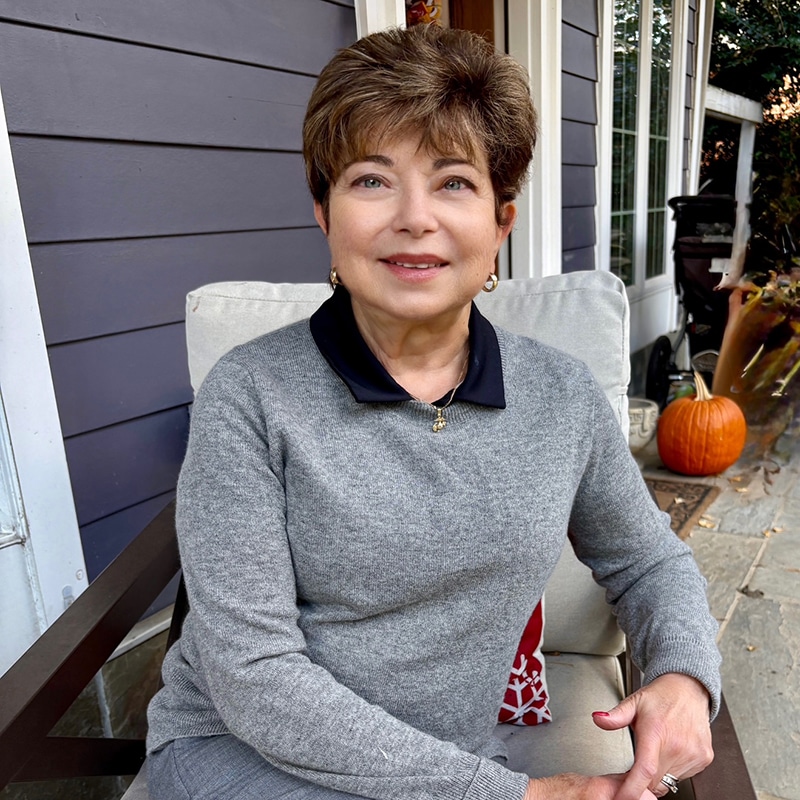
“This is a really rough business. You’ll get rejections if you stop because you got a rejection or somebody else says, don’t do this. Most agents, if they don’t want your work, they’ll say something like, uh, it doesn’t meet my needs at this time. But some of them can be really, really nasty. You just have to have thick skin and sit down every day and work a little bit and just do it.”
~Barbara Mujica
Barbara Mujica is a multi-award-winning, bestselling novelist, and a professor emerita at Georgetown University. She’s also a short-story writer, essayist, and critic. She’s been published in The New York Times, The Miami Herald, and The Washington Post. Barbara’s stories have appeared in numerous magazines and literary journals. She’s a two-time nominee for the Pushcart Prize for Fiction. And her work has been optioned for the movies and adapted for the stage.
Her latest novel, Miss del Río, which is a historical fiction about the great Mexican-American actress, Dolores Del Rio, has been optioned for a film by John Black Productions. It was a Target Book Club pick, an Apple Audio “Must Listen,” a Library Journal “Best Book of the Year” selection, and The Washington Post named it “One of the five best recent historical novels.”
I’ve read Miss Del Rio, and can tell you it’s riveting storytelling about a real-life major movie star as she lives and works in an elite world few ever get to experience. Miss Del Rio is a fascinating glimpse into many of the true characters of Hollywood’s silent era as it transitioned to talkies and far beyond.
Among Barbara’s published books are Frida, a best seller is based on the tumultuous relationship between the artists Frida Kahlo and Diego Rivera, Sister Teresa, I Am Venus, The Deaths of Don Bernardo, and three short story collections: Imagining Iraq, Sanchez Across the Street, and Far from My Mother’s Home.
As a scholar, Barbara specializes in Early Modern Spanish literature and contemporary Latin American Culture.
Barbara’s also been active in veterans’ issues at Georgetown since 2010. Her book Collateral Damage: Women Write about War was inspired by a symposium she organized at Georgetown on women and war.
And you may have seen or heard Barbara being interviewed on CBS-TV News, NPR, NBC Radio, The PBS TV News Hour, and CNN-Latino
In case you’re wondering about the intermittent snoring throughout much of the show, it is Barbara’s dog, Frankie, who was taking a long snooze as we were recording.
WEBSITES:
IF YOU LIKE THIS EPISODE, YOU MAY ALSO ENJOY:
- Mike Bodayle, Writer-Episode #408
- Paige Regan, Author-Episode #397
- Christopher Fryer, Author-Episode #381
- Qin Sun Stubis, Columnist-Poet-Author-Episode #359
- Lady Dhyana Ziegler, Author-Professor-Songwriter-Episode #354
- Sharon Virts, Author-Artist-Entrepreneur-Episode #346
- Tom Stein, Author-Episode #339
- Adam Rosenbaum, Author-Episode #336
- L.A. Starks, Author-Episode #334
- Martin Dugard, Author-Episode #328
- Jon Kremer, Writer-Episode #319
- Stephen Games, Author-Publisher-Episode #275
- Peter Smith and Laura Smith, Authors and Teachers-Episode #244
Steve Cuden: On today’s Story Beat
Barbara Mujica: This is a really rough business. You’ll get rejections if you stop because you got a rejection or somebody else says, don’t do this. Most agents, if they don’t want your work, they’ll say something like, uh, it doesn’t meet my needs at this time. But some of them can be really, really nasty. You just have to have thick skin and sit down every day and work a little bit and just do it.
Announcer: This is Story Beat with Steve Cuden, a podcast for the creative mind. Story Beat explores how masters of creativity develop and produce brilliant works that people everywhere love and admire. So join us as we discover how talented creators find success in the worlds of imagination and entertainment. Here now is your host, Steve Cuden
Steve Cuden: Thanks for joining us on Story Beat. We’re coming to you from the Steel City, Pittsburgh, Pennsylvania. My guest today, Barbara Mujica, is a multi award winning best selling novelist and professor emerita at Georgetown University. She’s also a short story writer, essayist and critic. She’s been published in the New York Times, the Miami Herald and the Washington Post. Barbara’s stories have appeared in numerous magazines and literary journal. She’s a two time nominee for the Pushcart Prize for Fiction and her work has been optioned for the movies and adapted for the stage. Her latest novel, Ms. Del Rio, which is a historical fiction about the great Mexican American actress Dolores Del Rio, has been optioned for a film by John Black Productions. It was a Target Book Club pick, an Apple Audio Must listen, a Library Journal Best Book of the Year selection, and the Washington post named it one of the five best recent historical novels. I’ve read Ms. Del Rio and can tell you it’s riveting storytelling about a real life major movie star as she lives and works in an elite world few ever get to experience. Ms. Del Rio is a fascinating glimpse into many of the true characters of Hollywood’s silent era as it transitioned to talkies and far beyond. Among Barbara’s published books are Frida, a bestseller based on the tumultuous relationship between the artists Frida Kahlo and Diego Rivera, Sister Teresa, I Am Venus, the Deaths of Don Bernardo, and three short story collections, Imagining Iraq, Sanchez, across the street, and Far From My Mother’s Home. As a scholar, Barbara specializes in early modern Spanish literature and contemporary Latin American culture. Barbara’s also been very active in veterans issues at Georgetown since 2010. Her book Collateral Women Write About War was inspired by a symposium um she organized at Georgetown on women and war and you may have Seen or heard Barbara being interviewed on CBS TV News, NPR, NBC Radio, the PBS TV NewsHour and CNN Latino. So for all those reasons and many more, I’m deeply honored to welcome the exceptional, multi award winning author, Barbara Mujica. Barbara, thanks so much for joining me on Story Beat today.
Barbara Mujica: Well, thank you so much for having me.
Steve Cuden: Well, it’s a great privilege, believe me. So let’s go back in time a little bit. How old were you when you first started thinking about words and writing?
Barbara Mujica: Oh, I was a little girl when I started thinking about words and writing, um, because I always wanted to be a writer. And my mother always said, you’ll never be a writer because what do you have to say? Anyhow, as a teenager, um, I wrote for the school newspaper and won a couple of awards. And then, uh, I went on to UCLA and worked, uh, for the Daily Bruin. Which is funny, because years later when Frieda came out, uh, and I was interviewed by a bunch of professional papers, but I also was interviewed by a writer from the Daily Bruin. And I told her, you know, when I was a kid, I wrote for the Daily Bruin. And that’s kind of how I got my start. And it was very. And it was very heartwarming for me to talk to this young woman.
Steve Cuden: Well, my graduate education was at UCLA as well, so we’re both fellow Bruins. So were you always a reader, even as a little kid?
Barbara Mujica: Absolutely. I mean, I think my generation, uh, we were all readers. We all read Nancy Drew. We stayed up, uh, you know, all night, hiding under the covers and reading. I remember reading Heidi and crying because it was over. But we read all the time. I think, uh. I don’t think. I know. I’ve actually read some studies of reading habits today, and actually, uh, people are reading much less and, um, much, much less for pleasure. And, uh, not only in the United States, but, uh, in most countries in the world.
Steve Cuden: I think it’s an interesting point that you make, which I agree with. But I also think we’re actually, in a weird way, reading and writing more than ever before. It’s just all texting and things that don’t have any literary value.
Barbara Mujica: Uh, so there’s an interesting, uh, scholar, Naomi, uh, Barron, uh, who is a linguist, and she writes on specifically this topic. And she happens to be. She, uh, happens to be a friend of mine. She’s also. She lives in Washington, D.C. as I did for many, many, many years. What she says is that she’s written, uh, two books recently on this topic. We’re reading Less for pleasure. But we are reading, right? And we’re reading, uh, a lot on the screen. And it’s a different phenomenon because we’re retaining less.
Steve Cuden: Indeed.
Barbara Mujica: We’re doing a lot of audiobooks, and there’s a discussion about whether that should count as reading or not. Children are learning to listen to audiobooks, uh, at a very early age. What I found interesting was that in Japan, where you would think that the kids would be reading a lot for pleasure and devouring books, they’re not. Uh, in some countries, Norway, kids are reading a lot. Uh, but in general, people are not reading for pleasure. I found it interesting that when they read online, it’s often for specific information. And so you can, you know, you can search information on a Kindle much
Steve Cuden: more easily than you could having to go to the library and find lots of books.
Barbara Mujica: So they get the information that they need. Um, but if they read a whole book online, they don’t retain it. When they do, uh, tests on how much people retain after they read a written book, reading it on a Kindle, they retain more when they read paper. I think that’s. I read a lot on Kindle, but I do think that’s interesting and kind of scary.
Steve Cuden: Well, it is. And, you know, for a long time, people have, uh, had the theory, or the. I guess they’ve done studies on it too, that people who write by hand somehow retain what they’re writing, like in a classroom more than if they’re typing it out in a computer.
Barbara Mujica: Right, Right. Well, so I have to say, as a professor for many years, I told the kids that they couldn’t bring laptops to school. Then one day I, uh, was teaching a course in early, uh, modern, uh, Spain, and I was talking about Velazquez the painter. And I was describing. I was talking about the Baroque, specifically, and how the Baroque uses different, you know, different images. And I was talking about Velazquez’s Las Meninas and how you think this is what you’re seeing, but that’s not actually what you’re seeing, because the Baroque. Baroque uses all these, you, uh, know, Trompe d’ oeuil, and the character that’s coming in might be going out. Anyhow, I’m describing this picture in great detail. And the students are looking at their computers and they’re actually following. They’re seeing. And I thought, you know, this is ridiculous for me not to tell them to bring their computers because they can actually understand what I’m talking about because they know what I’m talking about. So there are Some cases where the computer is such a. Such an important tool, it’s a tool
Steve Cuden: more than it is anything else. If you think of it as a tool rather than a lifeline to the world, you know.
Barbara Mujica: Absolutely. So from then on, I always had them bring their computers. And then when we talked about Baroque painting, it was so much easier. And their comments were such. Were much more pertinent because they were looking right at what I was talking about.
Steve Cuden: So when you were at ucla, did you take writing classes? Were you an English major? Or how did you train to be a writer?
Barbara Mujica: No, I did not take writing classes. And I know I’m going to date myself, I wanted to be a journalism major. In those days, women were not allowed to join the journalism fraternity. Wow. Yeah, wow. Nobody can believe that now. But, um, so I was a French major. Uh, I went on and got my master’s in French at the Sogbonne. Um, and then I came back and got a PhD in Spanish, uh, and I taught Spanish, uh, literature at Georgetown. But I speak a number of languages. I speak six languages and I use them all. I use them all in my research and in my, uh, pretty much in my daily life.
Steve Cuden: Are you fluent enough to write in all six?
Barbara Mujica: No, I would not write in. I write in English, Spanish, and sometimes in French. Um, I am fluent. I, um, mean, I speak them all. And I’m fluent enough to correct, um, manuscripts. So, for example, this book. Let me show you, because I’m quite thrilled with it. This book, um, Frida just came out in Portuguese. It’s the 18th language that it’s published in. And I checked the manuscript and that was. I mean, there are Turkish versions. Obviously, I couldn’t check that one. And, you know, there are Polish versions and I couldn’t check that one. But I did check it in, um, Portuguese, and I found errors, things, uh, that have been left out or misinterpreted or, you know, it was the wrong gender and it was so much fun.
Steve Cuden: But in other words, you can read them all and you can speak them all, but you’re not necessarily able to write them.
Barbara Mujica: I wouldn’t take it upon myself because, you know, reading this through, um, the contemporary language, the translator did an excellent job. And, uh, the language is so contemporary, and there’s a lot of slang, there’s a lot of colloquial language that I just, I recognize, but I don’t. I can’t generate.
Steve Cuden: So you are prolific as a writer. You write, uh, you’ve published quite a bit. Do you write every day?
Barbara Mujica: I try to write pretty much every day. There are. I mean, there are days when other things get in the way.
Steve Cuden: Of course, it’s called life, you know.
Barbara Mujica: It’s called life, exactly. But what I usually try to do is I take a yoga class in the. In the morning, and then, uh, then I write in the afternoon. And then in the late afternoon, uh, I play the piano for a couple of hours and. And then I. Then I cook dinner. So that’s my day.
Steve Cuden: That’s a very full day. If you’re doing all those things in the same day, that’s a lot. You play piano for a couple hours a day?
Barbara Mujica: I try to do at least an hour and a half or two hours a day because, um, first of all, it calms me down. And second of all, Chopin and Bach and Beethoven, those guys are very demanding. It just takes that long to get through it.
Steve Cuden: Well, uh, those are pretty good composers to be, uh, playing. And you’re probably getting more out of it than, you know, just by playing them. Right.
Barbara Mujica: I think it’s. Well, it’s good for me, uh, for a number of reasons. It’s good for, you know, I have some arthritis in my fingers, and playing piano has completely gotten rid of it. And, uh, as I said, it calms me down. And it’s. I love, uh. I love Scarlatti. I love Haydn. I love. It’s like doing a puzzle. I mean, it’s hard. I don’t, you know, I don’t play piano perfectly, and I. And I make mistakes and I have. That’s why it takes so long, because I go over things and I practice, you know, certain movements and measures and sections over and over again. And when my grandson asks me, you know, how was practice today, Grandma? I say, I have. I have lots of grandchildren. But this is one that always talks to me about music. He says, how was practice today, grandma? And I say, well, you know, I’m Hurwitz. And he always says, I wouldn’t want to have Hurwitz as a grandmother. You gotta love a kid like that.
Steve Cuden: Well, you do gotta love a kid like that. Do you think that music and playing music and listening to music impacts how you write and what you write about?
Barbara Mujica: I think music makes me happy, and that allows me to write better.
Steve Cuden: I see. That’s because writing. I agree with you that in a way, writing requires you to be somewhat calm. You can’t be all stressed out and manic and going 40 directions at one time. You have to sort of be focused. And that’s what I think music sounds like. At least sounds like that’s what music does for you, is it focuses?
Barbara Mujica: Yeah, it is. It’s focusing and doing something intellectual. That is not writing. It’s, uh. It’s a mental activity and a physical activity, but it’s a mental activity that kind of refocuses you and kind of cleanses your brain. I don’t know. I’m not a psychiatrist, but that’s what it seems.
Steve Cuden: So what is it about the various stories that you have set upon to spend time and energy working on? What is it that attracts you to them? There are certain themes in your work, I believe. Um, and what is it that draws you to a story that you say, okay, I’m going to spend a lot of time and energy not only researching, but then writing?
Barbara Mujica: Well, my novels have all been about strong Hispanic women. And at Georgetown I taught courses on, um, strong Hispanic women, uh, in addition to strong Hispanic men. But, uh, so I taught, um, early modern, which is 16th and 17th century literature. So I taught Cervantes, Don Quixote, uh, the great dramatist Calderon, Lope de Vega. But I also initiated a course on early modern Spanish women writers. We were just kind of, uh, as a field, uh, getting to know these writers because we were always taught that women didn’t Write in the 16th century. And, um, that’s absolutely not true. Women did write. They didn’t write for publication, but they wrote letters, they kept diaries. Some of them did write plays, stories, novels. Some of them really challenged the status quo. Uh, we were always taught women accepted, uh, the violence of the honor code and all. Uh, but when you read their writing, they didn’t. They challenged it. That was interesting. And then I also, uh, taught courses on Hispanic, um, culture, contemporary Hispanic culture. I taught a course on, um, the art of the Mexican Revolution, of course, that involved Frida Kahlo. Uh, through Frida Kahlo, I got involved with other interesting Mexican personalities, like Dolores de Rio.
Steve Cuden: Right. And Frida plays prominently in your book.
Barbara Mujica: Right. And Dolores is a character also in the novel Frida. Um, but I also, uh. Another topic that has, uh, uh, really dominated a lot of my thought is war, because everything I write happens during a war because there’s just always wars. And so, you know, so the next book after Frieda I wrote was Sister Theresa, which is about, um, Teresa de Avila. It’s not a book about religion. Teresa of Avila was one of Spain’s best beloved. Most beloved is one of Spain’s. Is probably Spain’s most beloved female saint. Um, there are more schools named after St. Teresa. Than any other saint. She was a tough woman. She stressed interiority, prayer, speaking with God within, not ritual, not standing up and genuflecting. And uh, she had it in for priests. She had to say nice things about priests. But if you really read her letters and you read what she wrote, uh, she was very wary of priests because they tried to dominate women and convince uh, women always that they make them feel guilty and make them feel wrong and they didn’t appreciate the kind of what they call affective spirituality, that is, um, personal spirituality that women tend to practice rather than the kind of spirituality that the priest tried, um, um, tended to practice, which was intellectual reading the Bible. Women, um, after 1554 were not allowed to read the Bible.
Steve Cuden: So she sounds like she was deeply spiritual but not religiously dogmatic.
Barbara Mujica: Well, you know, you have to be careful what you say about her. She was um, of course she was a nun and she had uh, to survive in a country where the Inquisition had uh, a tremendous amount of power, uh, where being accused of being a non conformist, what they called a heterodox, could be fatal. Uh, she was of Jewish background. Another thing that could be fatal if it was found out that you were practicing in secret your religion, which she wasn’t. Uh, she was uh, an honest to God, an honest Catholic and practicing Catholic. And she believed in the Catholic Church and she believed in, she believed in the sacraments and she received. She respected the priest. But at the same time she was a very strong individual thinker. Uh, and she knew when she was being manipulated and she also knew how to play that game. So when she didn’t get an answer, uh, that she wanted from one priest, she would go to another one. So she was able to start convents. If she hadn’t been. She was very shrewd. And if she hadn’t been shrewd, she wouldn’t have been able to do that. So, uh, she’s a very interesting woman. Uh, as I said, the novel is called Sister Theresa. And the reason I named it Sister Teresa and not St. Teresa is it’s about her as a woman, when she was a sister, when she got to be a saint. That was afterwards. That’s when people decided that she was, you know, that she was holy, but she was a fighter. And uh, I love that about her. So the next book I wrote was uh, called I Am Venus, which is about the painter Velazquez. So uh, a male protagonist, but the person who actually tells the story is Venus, his model. Uh, the Venus of the rugby Venus. And uh, so since I was teaching a course on, uh. Or I taught actually, for years, courses on women, Women in Early Modern Spain, I brought a lot of that into that book. That was, uh, fun. It was fun because, um, you know, when you write. When you write a book, when you write a history book, when you write a biography, for example, people always ask, why do you write, you know, bio fiction instead of biography? And the truth is, when you write biography or when you write history, um, nobody cares what kind of underwear your characters are wearing or what their bathroom habits are. But when you’re writing historical fiction or biofiction, you need to know those things. And that is fun to know. It’s fun to research. So I did a lot of research into women’s clothing and women’s leisure habits, uh, and food, uh, what people ate and how they ate, you know, that women and men didn’t necessarily eat together, uh, and the royal couple didn’t eat together necessarily. Uh, in fact, usually. And so in terms of, you know, the values that were represented, um, by, uh, their habits, by their leisure activities. So it was perfectly permissible and even almost required of men to have mistresses. They had to. Flirting was a pastime. And so even Velazquez, who was known to be a very staid character, he was not. Uh, but he still. When he went to Italy, he had affairs. We know that he had, uh, illegitimate children, so we know that about him. We don’t know a whole lot about his personal life, but we do know. We do know that. So, um, those things are all interesting. And then, uh, you know, and the same thing, um, with Frida and Ms. Del Rio, the stories begin. The stories begin during the Mexican Revolution. So that’s, uh, uh, an important period. But also, I did a lot of. I did a lot of work on clothing and how people dressed and how they treated each other and how they ate and what the table manners were like and that kind of thing. And, uh, uh, when people were still wearing bustles. I think most people have not had a bustle in their hand, but. No, but in the museum, uh, the Chicago Costume Museum, they actually had an exhibition on underwear. And I actually went and, uh, was able to hold bustles. It was also interesting to read Vogues from 1905 and what they were saying to women. And what they were saying to women is not what you would expect. They were telling women to be. This is 1905. They were telling women to be independent, to think for themselves, to, uh, not be bossed around.
Steve Cuden: Well, let’s talk about. You talk about strong women. Let’s talk about Ms. Del Rio. Let’s talk about that. Um, tell the listeners more than I’ve told them. And what you’ve mentioned already. What is the book about? Tell people who Dolores del Rio was. Because I think a lot of people have not had contact with who she is.
Barbara Mujica: Yes. So that’s one of the reasons I chose her as a subject, is because I thought that she was really worth knowing about and people don’t know about her. She was Mexico’s, um, first international movie star. Hollywood’s first Latina female Latina star. And she arrived in, uh, Hollywood at a time when, uh, Hollywood was actually looking for a Latina type Lola. Lola was married when she was 16 years old. She was, uh, married by her parents to Jaime del Rio M And she had a terrible miscarriage, was not able to have children after that. Um, most women would have been absolutely devastated. A woman in Mexico in the 20s unable to raise a family, have children, that would have been awful. I mean it was awful. But, uh, she was extremely resilient. This is something that I really admire about her. Uh, she picks herself up. She, she took up modern dance. And through that she met Edwin Carraway. Edwin Carraway was a very well known director, uh, in the United States. And uh, he fell for her right away and invited her to Los Angeles. And so she came to Los Angeles just at the time when Los Angeles, when Hollywood was looking for a Latina star. Because what happened was that in, um, 1921, Rudolph Valentino had come to Los Angeles and he had made the shake. And it was an immediate success. Everybody loved Rudolph Valentino. Uh, the men started wearing pomade in their hair and parting it in the middle. And the women were in love with him and so. And he was making tons of money for Paramount Studios. So the other studios all wanted their own Latin lovers. The male Latin lover that they chose was Ramon Novarro, who was, uh, Lola’s cousin. I’m calling her Lola. That’s Lola Risto Rion, who called her
Steve Cuden: Lola to begin with.
Barbara Mujica: All of her friends called her Lola.
Steve Cuden: Everyone called her Lola. That was just her. The way everybody thought of her as Lola.
Barbara Mujica: Yeah, everybody. It was like somebody named Elizabeth. They call them Betty. Right?
Steve Cuden: So yeah, or Liz. Yes, sure.
Barbara Mujica: Okay. So she comes to this, the stage. She’s an immediate success. Carraway makes sure that she’s, uh, in the public eye. And she is a success not only on the screen, but also as a fashion model because she’s so beautiful. A committee of so called experts, uh, Directors, um, businessmen, doctors, they all decide that she is the most beautiful woman in the world.
Steve Cuden: Well, she was gorgeous in her day, that’s for sure.
Barbara Mujica: Uh, and a fashion model and women wanted to dress like her and everybody wanted to. Uh.
Steve Cuden: But she also had a great personality. It wasn’t just that she looked great. She was a personality.
Barbara Mujica: She was also a very good comic actress. She had talent. Uh, she came to Hollywood time when she. Well, she had to learn English. She didn’t. Uh, she spoke some English, but not fluent. Uh, she had to learn English. She worked hard at it. Uh, she didn’t need English for her work because the movies were silent at the time.
Steve Cuden: Until they weren’t.
Barbara Mujica: Until they weren’t. Until 1927 when, um, the talkies were introduced. And a lot of movie stars, whether they were native born Americans or not, lost their jobs because they were not able to, uh, speak. They didn’t have good quality voices. But she managed, as I said, she was resilient. She managed to deal with that by always playing foreigners. So she played French women, she played Russians, she played, uh, Brazilians. The American public was not sophisticated enough to discern the difference between one accent and the other.
Steve Cuden: Yeah, she could play all kinds of different parts until the talkies came in. Then it was a little harder for her to play foreigners other than Mexicans or Mexican American.
Barbara Mujica: No, once the talkies came in, she never played Mexican Americans or Spanish speaking people. She played any kind of foreigner. She played French women. She played, uh, Brazilian in Flying down to Rio. She played Katusha in Resurrection, a Russian. As I said, the American public was not discerning enough in terms of accent to really, uh, say, oh, no, that’s a Brazilian accent, that’s a Mexican accent. That’s a, uh, Spanish accent. She was just foreign. And so she was able to do this. And so she was very successful at it.
Steve Cuden: Do you think she was born to be a movie star? Do you think that was her? Ah, she was absolutely born to it.
Barbara Mujica: But I think if anybody could do it, she could do it, right?
Steve Cuden: She was, she was a natural at it. She was a.
Barbara Mujica: She loved to be in the public eye. She knew how to pose, she knew how to, uh, she knew how to dance and she sang. She had a beautiful voice and she knew how to position herself in front of the camera and flirt with the camera so that the camera really captured her, her beauty. Uh, yeah, she was absolutely a natural. But what happened was then in the 1930s, foreign actors began to be labeled box office poison because one of the Reasons was that, uh, the country became very xenophobic. The notion of, of a foreigner on the screen became very distasteful to the public. And, um, I think it’s very easy to say, you know, that’s ridiculous. You know, people overreacted. But the truth was, if we think about what was happening in the 30s, people were reading about the rise of Nazism, they were reading about Hitler, they were beginning to hear about Stalin. People starving, you know, mass starvation. These stories were coming out. People were afraid of communism. They were especially afraid of Mexicans because the Mexican Revolution was very left leaning. And if you look at Diego Rivera’s paintings, you know, they’re full of hammers and sickles and red paraphernalia. I mean, uh, Communist paraphernalia. And people were authentically frightened.
Steve Cuden: And it was the Great Depression, so people were concerned about, uh, who’s going to come for me or take my job or whatever.
Barbara Mujica: Exactly, exactly. People were. Yeah, people were terrified. And so when Pearl harbor happened, uh, Lola actually went back to Mexico and she made.
Steve Cuden: How many movies did she make in Mexico?
Barbara Mujica: Oh, she made tons of movies in Mexico. She made, um. So the most important one was, uh, Maria Candelaria, because that was the movie that won the Palme d’. Or. Now we call it the Palme d’ or was the grand, uh, Prix at that time in France at Cannes. Yeah. And, uh, it won Best Film. She didn’t win Best Actress, but the fact that that film won Best film and it put her in context. She made that film with Emilio Fernandez, who was the up and coming young director. And, uh, that really put her name on the map. So once she went to Mexico, Mexico was in its golden age. This is called the golden age of Mexican cinema. Uh, and a big part of that was Emilio Fernandez. She had an affair with him. He, uh, was a nasty person. He was. He’s brutal, brutal, terrible person. But, um, a brilliant, brilliant director. These films, uh, even if you don’t speak Spanish, it’s worth seeing them because they’re so beautifully photographed. Um, Gabriel Figueroa was the cinematographer. Uh, and just the beauty of these films is just the breathtaking. So, uh, she starred in most of his films and she became the face of this new revolution in Mexican cinema. Uh, and she won prize after prize, and she made movie after movie. And so she went from being not successful in the United states in the 30s because she couldn’t. Foreigners, couldn’t get jobs. She was having trouble getting a job. Marlene Dietrich couldn’t get a job. She joined the USO and started making and started working behind the lines, uh, entertaining British, um, and American soldiers. Uh, Greta Garbo went back to uh, Sweden. So I mean they all dealt with it in a different way. But Lola, uh, went to Mexico. When she was in Mexico, she did something that most people don’t know about, but I want to make sure I mention and that is she couldn’t have children herself, but she loved children and she started the first daycare system in Mexico. Uh, it was an amazing thing because the situation was so awful and nobody had dealt with it. Thousands of women were coming in from the countryside to look for work in the cities. And Mexico City uh, attracted uh, all these women who in the countryside had a network. They had aunts, they had mothers, they had um, cousins, sisters, uh, to help care for their children. So when they had to work, uh, and they always worked, they worked in the fields or they were laundresses or whatever they did. Uh, they had somebody to help care for the kids. But when they got to the city, if they had husbands, they didn’t always. But if they had husbands, the husbands were involved with construction or other uh, kinds of jobs. And so there was nobody to help take care of the kids. So what did they do? They left them in what they called guarderias. Guardar in Spanish means to keep. And these were basically holding pens for children. And sometimes there were 40 kids, uh, in a room with one adult who wasn’t trained to take care of children. She was just there taking care of or just. She was just there with all these sometimes babies and young kids. And uh, Dolores del Rio and um, Maria Felix, uh, started raising money to start this daycare system. And um, Lola, she took it very seriously. She read Maria Montessori, she read Jean Piaget. She was interested in um, early childhood education and these ah, centers that she started, not just one but a whole system. She employed real teachers that, that nurtured these children, that taught them and took care of them and uh, gave them uh, some kind of a start in life. It was really quite amazing when you think that uh, she had no children of her own and that nothing like that existed in Mexico, nothing like that had ever existed in Mexico.
Steve Cuden: And that was at least as important a legacy of hers as the movie career.
Barbara Mujica: Absolutely. Uh, in my view it was. Absolutely.
Steve Cuden: So let’s talk about the way that you wrote this book, which I found fascinating. It is a historical fiction, meaning you’ve made plenty of things up. You weren’t in the room as all these conversations went on. So you had to make a lot of it up. I assume you did a ton of research. How much research did you do? How long did it take you?
Barbara Mujica: Well, I did a lot of research. There’s a trilogy. Um, David Ramos on, uh, Dolores del Rio. So I read that. And then Hirschfeld, uh, Hirschfeld Biography and Hall. I mean, there are a number of biographies that, uh, I read. I read movie reviews. You can find a lot of this stuff even online. Uh, and you can find it in libraries. And so that was an important thing that I, uh, did to prepare me. And of course, I had. I read also biographies of other, uh, Ramon Novatro, for example. Uh, I read a biography of two biographies of Marlene Dietrich. And I read a lot about early modern. I mean, not early modern, early, uh, filmmaking. Uh, what filmmaking was like in the 20s. And I watched a lot of these films. The important thing, I think, about how the story told is that it’s narrated by Mara, uh, Lola’s hairdresser.
Steve Cuden: Uh, and she’s totally made up, I assume. Correct.
Barbara Mujica: She’s fictional. But there’s a reason why she exists, and that is that I am very aware and believe very firmly that the, uh, author of a biofiction cannot pretend to know what another person is thinking. That the author cannot play God with the character, cannot get into the character’s head and not say, this is what the character was thinking, or this is what the character’s motives were. This is what the character wanted to do. Uh, I think that’s just not legitimate. I don’t think you can make up. I don’t think you can make up, um, historical fact. When people sometimes do that, they change history. I don’t do that. Um, but. So what I always try to do is create some kind of device whereby, uh, the reader is aware that what he or she is reading is filtered through somebody’s perception.
Steve Cuden: Yep.
Barbara Mujica: Yep. So this character is Mara. Mara is the hairdresser.
Steve Cuden: And she has her own storyline within the story.
Barbara Mujica: She has her own story. Exactly. So there’s a number of reasons why Mara, uh, is a good narrator.
Steve Cuden: Would you agree with me that she really is the protagonist of the story? That she is the hero of the story, but in fact. And that all this massive background about Lola is, in fact, background to Mara’s story?
Barbara Mujica: Well, I think in a certain sense it is. Which is interesting, because when the, uh, you know, this is, um. They’re talking about making a film of this book. Uh, and when the producer called me, he said, who do you think is the protagonist? Is it Lola? Uh, or is it Mara? And I said, well, you know, if you want to, if you, you know, if you, if you want to make a movie that’s going to attract an audience, I think it has to be Lola.
Steve Cuden: I’m not so sure I agree with you on that because, uh, you know, I’ve been, I’ve been a screenwriter for 40 years and I think that the interesting part of it is that it is Mara’s story against all of this fascinating real world background, including Lola, who would be a major player in this story. I will tell you what. I think it’s equivalent to you. I don’t know if you thought of it this way or not, but Mara is equivalent when I read it to Nick Carraway in the Great Gatsby, where it’s not Gatsby’s story, it’s really Nick’s story that we’re watching about Gatsby.
Barbara Mujica: That’s very interesting, Alex. Uh, uh, can I tell the producer that, that you said that?
Steve Cuden: Absolutely, you can tell him that because that’s how. I think others would read it that way too. So I’m not unique in thinking that, but that’s how it appeared to me that uh, the way that you tell the story, that it’s not just m. Mara narrating Lola’s story, we’re actually watching Mara’s story. That’s what’s interesting. And she has a whole mystery to solve of her own life.
Barbara Mujica: Right? She has a mystery to solve, but she also creates a context that Lola can’t because Lola is rich and famous and famous and she doesn’t have all the problems that everybody else has. Uh, and she doesn’t most of the time. She doesn’t have a husband and she doesn’t have children.
Steve Cuden: And Mara’s the counterpoint to that. She counteracts all those things.
Barbara Mujica: She has problems, she has a husband, she has children. And so when the depression starts, uh, that doesn’t affect Lola, but it affects Mara because, uh, Mara’s husband loses his job and Mara has to go back to work. And then the polio epidemic starts. I mean, we’ve just been through the COVID epidemic. We know something like what that’s like. Uh, and this is a family with four little girls and four little children that they’re terrified something will happen to. And you know, pictures are coming out of children in iron lungs and newsreels are showing this and people are really, really frightened.
Steve Cuden: You also spend a pretty fair amount of time because of this character Mara living in a socially class conscious way that she’s uh, clearly of a lower class than Lola. And so you have all these social differences in class consciousness throughout it that you don’t, I mean you don’t beat us up with it when you’re reading it, but it’s clearly there and it’s very prominent. Was that your intention?
Barbara Mujica: Yes. So this is uh, certainly a world. Uh, so both of them are Mexican. So uh, I’m not saying that we don’t have classes in the United States. We do have.
Steve Cuden: We do.
Barbara Mujica: Certainly in Mexico the class consciousness is much more overt. So I’ve lived in Mexico and I have found this to be true. That not only in Mexico, but throughout Latin America, that uh, the class consciousness is uh, much more marked. And so these two women are very, very aware of. Even though Lola keeps saying, you know, we’re like sisters, we’re, you know, we’re soulmates. But there’s a difference. Lola is from a wealthy family. Her father is a banker. Mara doesn’t even know who her mother is. It turns out that. And she’s raised by her aunt who’s a maid. Uh, so, uh, yes, there’s, there’s a, ah, definite uh, tension. Class tension. The other thing is Lola is used to working with people who were impressed with her world. And Mara, uh, you know, for Mara, putting food on the table is the important thing. Uh, and for Mara’s husband, Gabriel, he is, you know, he has worked for the studios, he’s worked as a carpenter. Totally, um, unimpressed. He’s totally unimpressed with Lola and her
Steve Cuden: world because she’s, to him, she’s just another cog in the wheel of what he does for a living.
Barbara Mujica: Yeah, exactly. And not only that, kind of a disagreeable one because she, you know, she takes up a lot of time.
Steve Cuden: Well, she’s very, uh. You present her as being fairly self centered, not in a truly bad way, but it’s all about Dolores, all about Lola.
Barbara Mujica: You know, if you’re being a movie star, I mean if you are a movie star, if that is your profession, what is important? Your body is important, your face is important, your presentation is important, your clothes are important. Uh, and Lola especially doesn’t have. She doesn’t have children. So she’s not constantly worried about other people.
Steve Cuden: And Mara is, uh, a hairdresser throughout the story, mostly M. Why hair? How did you arrive at that? Because I think that’s. It’s important because women are very well known. Most women are known for wanting their hair to look great. And so that’s a very Important feature in an actress, uh, and in this world. But how did you just decide that was how you were going to present Mara as a hairdresser?
Barbara Mujica: Because my mother’s a hairdresser.
Steve Cuden: So as homage to your mom.
Barbara Mujica: It’s a world that I know. I mean, some of the clients in the salon existed. I m mean, I know them.
Steve Cuden: They wound up in the book.
Barbara Mujica: They wound up in the book. They’re all gone now. I mean, they won’t mind. My mom is gone too.
Steve Cuden: Well, tell us also about Tia Emmy, who I thought was a very fascinating character. How did she come about?
Barbara Mujica: Well, Dia Emmy is uh.
Steve Cuden: She’s made up, right?
Barbara Mujica: She is made up, but I think she’s the closest. She’s the character who’s the closest to me in the, in the, in the book. Um, Tia Emmy is, uh, she’s, she’s shrewd and down to earth. She’s ah, she’s a woman who’s had experience. She’s uh, uh, she’s a woman who’s uh, also totally unimpressed with Lola, but who also knows how she has to behave when it’s important. And she’s also very shrewd. She knows how to save money. She knows the importance of education. Uh, she sees that, uh, getting an education is important for modest children. She actually saves money for their education, which makes it possible for them to go to college, which would not be possible otherwise, even though UCLA at that time was free. But there were incidentals and things, uh, that people had to pay for. I mean, not going to college and not working was a privilege. So for a girl to do that, especially a girl to do that, you had to have some kind of financial backing. So Tia Emi, although, you know, she starts out as a maid, but she is a seamstress and she is, she’s very clever and she, uh, takes care of all of her own needs. She doesn’t. She saves money. She doesn’t, she doesn’t spend money on things.
Steve Cuden: Another strong woman. She’s a strong woman.
Barbara Mujica: Strong woman. And uh, a bit foul mouthed. A bit hard, uh, talking.
Steve Cuden: Well, some of the language in the book and some of the incidents that you report in the book are quite salty and quite, um, violent. You don’t hold back at all. Uh, and I found that very intriguing, uh, that the language sometimes not all, I mean, not throughout the whole book, but at times the language is, uh, it’s unpleasant, which is a very good thing to have in a book.
Barbara Mujica: Well, that’s the way people talk and that’s the Way that reality of the. Of, uh, the situation. I have certainly been around that.
Steve Cuden: I. No doubt you have. Otherwise you probably would have had a hard time figuring out how to write it. Uh, what did you do in terms of. Did you outline this book? Did you know how you were gonna write it before you sat down to write it? Or did you just write it and go?
Barbara Mujica: Um. So I never just write it and go. I always. Well, um, biofiction. I mean, there always is an outline because you know how the story has to develop because you have a character who’s a real person, who does certain things that, uh. Um. But in addition to that, I m. Always make an outline, which I never wind up following. But it’s important.
Steve Cuden: But it gives you a roadmap to start, right?
Barbara Mujica: Exactly that. It gives you a roadmap to start. And then in the end, uh, I wound up leaving out entire sections because I just thought, okay, there are too many lovers here. Too many. I mean, there’s just. It was getting too long, and there was. It was too many repetition with, uh. Too many repetitions, with too many men that were doing the same things.
Steve Cuden: Well, that’s the nature of writing anything, isn’t it? You write. Hopefully you write more than you need and you pair back. That’s editing.
Barbara Mujica: Yeah, Everything.
Steve Cuden: Everything. Well, that’s. To me, that’s. That is the key to being a, uh, great writer, is that you write more than you need and then sort of sculpt it back to where it has to be, you know? Or. What was it? Was it Picasso? Who was it that said, I. I see a piece of marble and I take away everything that doesn’t belong? That’s what editing is.
Barbara Mujica: I think it was Michelangelo.
Steve Cuden: Oh, was it Michelangelo? Okay, well, that’s better yet. Uh, um. And I’m paraphrasing that quote, but that is what it is. You have this big lump of your first draft or whatever it is, and then you start making it into a piece of art. And I think you’re a very, very fine writer. And so I think that’s. I’m certain that that’s what you do, is that you write what you write, and then you refine the heck out of it.
Barbara Mujica: It takes a long time, but I always told my students, write whatever comes to you. If you’ve got a block, a mental block, put it all down on paper. But don’t think that that’s your essay. Don’t think that’s your final essay. You’ve got to go back and cut it down and cut it down and cut it down. And I mean, I think when I was in 9th or 10th grade, I had a journalism teacher. His name was Mr. Adelson. I remember him very well. And, uh, he taught us to cut out all the excess. And I think I learned that in ninth grade.
Steve Cuden: Well, it’s held you in very good stead. And in fact, that’s everything that I’ve ever known and taught, because I also taught for a long time. So that’s what it is. You have to actually remove everything that doesn’t either move the story forward or expand our understanding of character. Otherwise, it’s just fluff and it’s not of great interest to someone that’s reading it. Well, I’ve just been having an absolutely wonderful conversation with Barbara Mujica, uh, mainly regarding her book Ms. Del Rio. We’re going to wind the show down a little bit now, and I’m wondering, in all of your many experiences in writing and teaching and so on, uh, are you able to share with us a story that’s either weird, quirky, offbeat, strange, or just plain funny?
Barbara Mujica: Okay. Well, this is, I think, funny. My first big novel. My first novel was called the Deaths of Don Bernardo. But my first big novel was, uh, Frida. And when I was writing Frida, uh, there was a lot of opposition, uh, at the university to people writing fiction. You could be teaching literature, but you were not supposed to be writing fiction. You were supposed to. To be writing articles about fiction. So, um, I was writing fiction, and I had actually gone to a writer’s workshop retreat in Aspen, and I had met a publisher there, and he said, no, you’ve got to finish this book. Or. I know. It was an agent, actually. Yeah, you’ve got to finish this book. So I came back and I thought, I just. I have to finish this book. My department chair kept saying, you can’t be writing fiction, uh, if you have, uh, any fiction. And I had a bunch of article. A bunch of, um, short stories that had won prizes and all that said, don’t put it on your CV when you come up for a, uh, promotion. Don’t put it on your cv. Don’t tell anybody. Okay? All right. University politics can get pretty nasty. And they were pretty nasty at that time in my department. And there was a lot of yelling and screaming and actually a lawsuit. And so, uh, Georgetown is a Jesuit university, and at one point, the Jesuits had a retreat, a spiritual retreat. Although I wasn’t Catholic, I decided to go because it was a silent retreat. And I thought, silence. That sounds good. A week of no screaming. That sounds fabulous. So my husband, who studied with Jesuits for 17 years, said, yes, go. He says, you’ll find it very interesting. You know, you know, you teach, uh, you know, you teach Calderon and all that. You’ll, you know, you’ll love it. So, okay, so I went and it was. It was a silent retreat except for 20 minutes with a priest every, every day, which, uh, was difficult for me. So at one point I said to the priest, you know, I’m writing a novel, and my department chair is completely against this, and he’s telling me not to write it and not to continue and not to do this, but I really want to write this novel. And so the priest said, you’re old enough to do whatever the hell you want. Just do it. So I said, well, I thought about that a while, and I thought, wow, you know, he’s pretty cool. And so I said. I said, you know, it’s about a really naughty lady. And he said, well, if there were no naughty ladies, there’d be no good fiction.
Steve Cuden: And this from a priest.
Barbara Mujica: And this is from a priest. Okay. So I went home, I finished the novel. Then what happened was I sent it back to the original to the agent who had wanted it. And he said, uh, I can’t take this. He said, I. I don’t want this. I can’t take this because I already have one Hispanic last name on my list. So I could have been upset, but I actually wasn’t, uh, because now the novel was done, right? I had written. Written it. I had finished it. So I started looking for agents, and I sent it to an agent, and she, she. And, ah, she sold it right away. And so she sold it first in Germany and then in Spain and then in the States. And so that’s how I got started with Frida.
Steve Cuden: What a foolish thing for an agent to say to anybody. That’s like.
Barbara Mujica: It was way back, you know. And yeah, it was really unbelievably stupid. But for some reason, I mean, I knew it was stupid, but it, for another, I mean, just didn’t m. Matter to me because at that point the book was done, and I thought, okay, he still did me a favor because he said, you know, you have to get this book done. So I did get it done, and I’m still friends with this priest.
Steve Cuden: Well, I think that that’s great that he was able to inspire you to think forward on it rather than feeling like he had to hold back. I think that’s great.
Barbara Mujica: Yeah.
Steve Cuden: Last question for you today, Barbara. Um, Are you able to share with us a piece of advice or a tip for those who are starting out as novelists or writers or historical fiction writers? Uh, or maybe they’re already in a little bit and trying to get to another level.
Barbara Mujica: Well, I will tell you what everybody else has told you. Don’t stop. Um, you’ve got to keep going. This is a really rough business. You’ll get rejections if you stop because you got a rejection if you stop because your department chairman says, don’t do this, or somebody else says, don’t do this, or your mother says, don’t do this because you’ll never be a writer because you have nothing to say. Or, uh, an editor says, I’m not taking this because it’s awful. Uh, I had one agent tell me, uh, Frida. Not Frida, but Ms. Del Rio will never get published. Nobody’s ever going to want to publish this book. Okay? If you stop because somebody. I mean, people have different personalities. They have different perceptions, they have different ways of dealing with things. Most agents, if they don’t want your work, they’ll say something like, uh, it doesn’t meet my needs at this time. But some of them can be really, really nasty. You just have to have thick skin and sit down every day and work a little bit and just do it.
Steve Cuden: I think that’s extraordinarily excellent advice. I’ve heard similar things on the show, but, uh, I’ve also heard not too many people say it the way you said it, which is really great. You need to be able to do the work and sort of put blinders on as to what the world is going to tell you, because until that work comes out, nobody really knows whether it’s going to work or not.
Barbara Mujica: Yeah, exactly.
Steve Cuden: You need an audience. You need the audience to tell you. Well, Barbara Mujica, this has been an absolutely wonderful episode of Story Beat today. And I think anyone that’s interested in Hollywood or in, um, um, Mexican actresses, um, certainly Ms. Del Rio is right up your alley. It is a fantastic book. Uh, very entertaining, very interesting. Uh, compelling. It’s a, ah, terrific easy read. Uh, and I think that you’ll enjoy it thoroughly. I can’t thank you enough, Barbara, for being on the show with me today. I thank you for your time, your energy, and for all of your wisdom.
Barbara Mujica: Thank you so much. Thank you.
Steve Cuden: And so we’ve come to the end of today’s Story Beat. If you like this episode, won’t you please take a moment to give us a comment, rating, or review on whatever app or platform you’re listening to. Your support helps us bring more great Story Beat episodes to you. Story Beat is available on all major podcast apps and platforms, including Apple Podcasts, YouTube, Spotify, iHeartRadio, TuneIn, and many others. Until next time, I’m Steve Cuden, and may all your stories be unforgettable.











0 Comments