
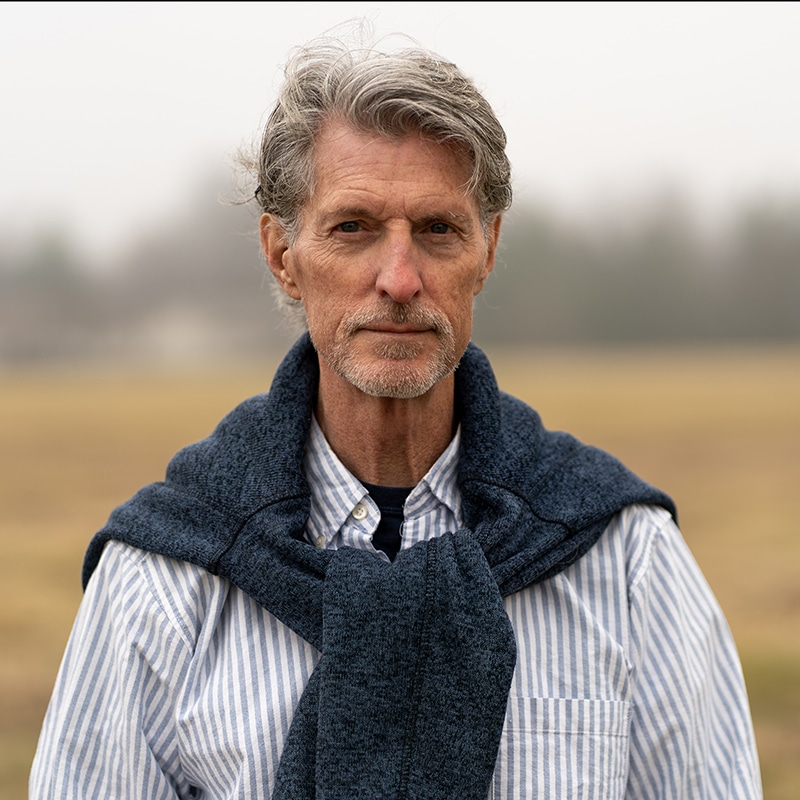
“P.K. Edgewater: You have to be curious. Just be curious about weird people. Seriously. However you define weird, you know, they’re different from you, so they’re weird. Try to understand why they behave the way they do, why they dress the way they do, what’s the background? Try to understand why did they make these choices. If you can be genuine, people will open up and you’ll learn so much. You know, not just about, you know, their experiences, experiences you haven’t had. But it’s a way to connect with people. And the more you connect with people, whatever you write, you’re going to be a better writer because that’s where the life of a story comes from.”
~P.K. Edgewater
P. K. Edgewater, a military veteran and doctor of 40 years, is the debut author of the novel Passages: A Voyage From War To Peace, which offers a timely and deeply human perspective on recovery after conflict. The book focuses not just on war itself, but on mental health challenges that follow, like trauma, grief, moral injury, and the difficult work of healing. I’ve read Passages and can tell you it’s a wonderfully well-written exploration of how lives intertwine in unexpected ways, changing our perspectives on life and how we live it, even through deep trauma. P.K.’s vividly drawn tale seems as much like a memoir as it does a fictional story.
P.K. retired in 2020 after a four-decade medical career that included working as an internist and rheumatologist, founding and managing an arthritis and rheumatology research center, and consulting on clinical trials in China and Russia.
He was named a Top Doctor by Phoenix Magazine annually from 2005-2019. He served as a clinical volunteer in numerous countries, including Vietnam, Guatemala, Peru, Brazil, and Nicaragua, as well as in Guadalupe and Phoenix. P.K. published his doctoral dissertation on short-term medical volunteering overseas.
P.K. served in the Air Force during the Vietnam War but did not see combat. Subsequently, he’s treated many military veterans during his long medical practice. He’s also taught medicine all over the world. And he’s published dozens of articles in numerous medical publications.
For the past three years, he’s been a clinical volunteer with the Lincoln County Medical Reserve Corps in Oregon. He now tends to overnight guests in a winter shelter for those who are experiencing homelessness.
WEBSITES:
pkedgewater.com
IF YOU LIKE THIS EPISODE, YOU MAY ALSO ENJOY:
- Ron Roman, Author-Episode #399
- Qin Sun Stubis, Columnist-Poet-Author-Episode #359
- Lady Dhyana Ziegler, Author-Professor-Songwriter-Episode #354
- Sharon Virts, Author-Artist-Entrepreneur-Episode #346
- Tom Stein, Author-Episode #339
- Adam Rosenbaum, Author-Episode #336
- L.A. Starks, Author-Episode #334
- Martin Dugard, Author-Episode #328
- Jon Kremer, Writer-Episode #319
- Stephen Games, Author-Publisher-Episode #275
- Peter Smith and Laura Smith, Authors and Teachers-Episode #244
Steve Cuden: On today’s Story Beat
P.K. Edgewater: You have to be curious. Just be curious about weird people. Seriously. However you define weird, you know, they’re different from you, so they’re weird. Try to understand why they behave the way they do, why they dress the way they do, what’s the background? Try to understand why did they make these choices. If you can be genuine, people will open up and you’ll learn so much. You know, not just about, you know, their experiences, experiences you haven’t had. But it’s a way to connect with people. And the more you connect with people, whatever you write, you’re going to be a better writer because that’s where the life of a story comes from.
Announcer: This is Story Beat with Steve Cuden, a podcast for the creative mind. Storybeat explores how masters of creativity develop and produce brilliant works that people everywhere love and admire. So join us as we discover how talented creators find success in the world of imagination and entertainment. Here now is your host, Steve Cuden.
Steve Cuden: Thanks for joining us on Story Beat. We’re coming to you from the steel City, Pittsburgh, Pennsylvania. My guest today, P.K. Edgewater, a military veteran and doctor of 40 years, is the debut author of the novel A Voyage from War to Peace, which offers a timely and deeply human perspective on recovery after conflict. The book focuses not just on war itself, but on mental health challenges that follow like trauma, grief, moral injury, and the difficult work of healing. I’ve read passages and can tell you it’s a wonderfully well written exploration of how lives intertwining in unexpected ways can change our perspectives on life and how we live it, even through deep trauma. PK retired in 2020 after a four decade medical career that included working as an internist and rheumatologist, founding and managing an arthritis and rheumatology research center, and consulting over clinical trials in China and Russia. He was named a top Doctor by Phoenix magazine annually. From 2005 to 2019, he served as a clinical volunteer in numerous countries including Vietnam, Guatemala, Peru, Brazil and Nicaragua, as well as in Guadalupe and Phoenix. He published his doctoral dissertation on short term medical volunteering overseas. PK served in the Air Force during the Vietnam War but did not see combat. Subsequently, he’s treated many military veterans during his long medical practice. He’s also taught medicine all over the world and he’s published dozens of articles in numerous medical publications. For the past three years, he’s been a clinical volunteer with the Lincoln County Medical Reserve Corps in Oregon and now tends to overnight guests in a winter shelter for those who who are experiencing Homelessness. So, for all those reasons and many more, I’m truly privileged to welcome the respected military veteran, doctor, and now author, PK Edgewater to Story Beat today. Pk, welcome to the show.
P.K. Edgewater: Thanks, Steve, for that introduction. Uh, it’s a pleasure to be here.
Steve Cuden: It’s a great pleasure to have you. So first off, let me say thank you for your service to the country.
P.K. Edgewater: It’s a pleasure.
Steve Cuden: So you’ve been a doctor for decades, but. But when did you become interested in storytelling? Does it go back before you had an interest in medicine?
P.K. Edgewater: No. Um, the straight answer to that is. As I was winding down and planning my retirement, I thought about what made my career feel so abundant and briefly. It was the opportunity to watch so many just ordinary people facing really incredible challenges with courage and to help them and watch them, uh, go through the process of getting on track. I was fascinated, and my colleagues asked me what I was going to do when I retired. And I thought, I think I’m going to write stories about people showing courage and getting through tough times. And, uh, that’s where the idea came about.
Steve Cuden: But what was it that triggered your interest in telling this story?
P.K. Edgewater: I’ve met so many interesting people in my life and in my practice. I don’t know if this came through before, but I was fascinated by just ordinary people, many of them vets and others, civilians, that just showed, uh, so much courage. And I thought I would enjoy trying to tell those stories. I thought it might be good for me as well. But if I could convey how some of those discussions go and where we try to go with them, I thought that might be helpful to, um, vets and people, other people, um, that are not vets, that are going through a tough time.
Steve Cuden: Well, obviously, as a doctor, you’ve done a lot of reading and writing, but a lot of it will have been in some way technical, not fiction.
P.K. Edgewater: You’re totally right. I mean, um, you know, in my career, if I had time to be reading, I had my nose in the journals, in my specialty and in practice management and in, you know, research and in global health and even political economy. Before I would read fiction, I just wasn’t a fiction reader. I tell you what, when I wanted to relax, I wanted to get away from print, whether on a screen or on paper. And I just. I just wanted to get the screenwriters to work for me, put actors up there in movies and stage and take me away.
Steve Cuden: All right, so then how did you know what to do when you started to write a book if you were not a book? Reader, uh, a regular book reader. And if you, uh, had never written before, and I’m assuming you never took classes in it, how did you know how to do this?
P.K. Edgewater: I took one of those great courses online. I think I paid 75 bucks for it and ran about 16 lessons or something like that.
Steve Cuden: Well, you got your money’s worth.
P.K. Edgewater: I thought, well, I understand what he’s saying. I can do this. But I landed in a neighborhood in retirement. It was just the right spot. In our neighborhood, I interacted with and made new friends with a writer of historical nonfiction, a zealous genre fiction writer, and even a very good poet. And so they kind of looked at my stuff and said they really reinforce the basics of storytelling through literary fiction. You know, the details, like, you know, miss all the technical jargon. You know, don’t use too many adjectives and adverbs. You know, stick with your point of view and your characters and all that stuff that is essential to fiction writing and has no place, it’s not even relevant to technical writing.
Steve Cuden: I couldn’t tell that you had had no training as a fiction writer. It read absolutely, uh, flawlessly and seamlessly. The characters were crystal clear and well defined, uh, three dimensional, and it was entertaining to read. So I think those folks held you in good stead by doing that. And here’s the question that I have in all of your work, your medical research and so on. My assumption is that you were constantly seeking to find the truth in whatever it is you were searching out. Do you think that there was a similarity in your approach to telling this story, that you were seeking some kind of truth?
P.K. Edgewater: Um, yes. I think most of the truths were laid out for me. I’ve been asked before, you know, you’ve had all these various experiences in life, and that’s true. And I’ve absorbed a lot. And so how do you write a cohesive narrative from that? And that’s to good thing about storage, why it’s an art form, causes you to get away from that compartmentalization. What you got in formal education, what you learn through your own research, what you learn through your own experience to create that meaningful narrative for a reader. I mean, you pick from those and you’re selective. You get just enough information from each of those buckets to carry an idea, to carry a message, and no more. Don’t overwhelm the reader with things that are not telling the point.
Steve Cuden: Right. Well, correct me if I’m wrong. When you would sit down and write, uh, an article for a medical journal, or when you’d Write something for your business practice or whatever it is you were writing. You needed to have a narrative of some kind that people could easily follow. Am I correct in assuming that? Sure.
P.K. Edgewater: And when you publish in what are called refereed journals, you know, you have to have all your evidence in a row. You have to state your objectives right up front and methodology, you know, and you do all this in an abstract at the beginning, but in the paper, you know, you. You have to stick to the point very tightly. And I got used to that, uh, sort of approach. It was required, you know, and when I wrote my dissertation, you know, actually, that’s a book, but it’s not a novel. You wouldn’t want to sit down and read it and try to go to. Well, it would put you to sleep, probably.
Steve Cuden: I might not, but someone in your field probably would very much like to
P.K. Edgewater: read, you know, some. Yeah, a lot of people liked the parts of the dissertation because they were all published as independent articles. But that’s clean and precise. There’s methodology. What, what you’re dealing with in refereed journals is you’ve got critics that are keeping you to the point, and they have to believe, um, what you’re writing is substantiated by your methodology, and, uh, your conclusions are supported by correct methodology and correct data. So you really held to your feet, are to the fire, you know, writing fiction, you’ve got much more laterality. You don’t have to, you know, have a reference for each, you know, notion, each paragraph, each sentence, each clause. So it’s. It’s really different. It has a different feel. And, you know, I’m really enjoying the change. I. I had a great career. It was packed. Uh, and I’m, um. I was ready to do something else when I took retirement.
Steve Cuden: So writing fiction is liberating to you. It’s not.
P.K. Edgewater: So.
Steve Cuden: It’s not so tightly bound. Uh, you. Obviously, when you write an article in the medical world, you still have to structure it in a way with a beginning, middle and end, and clarity throughout. It can’t just be random stuff, I assume. So that’s. I think that, um, training for decades actually, uh, held you in good stead when you sat down to write this book.
P.K. Edgewater: I think you’re right, because it’s almost a compulsion to make sure that everything ties together tightly. So, you know, I’m used to that kind of discipline. But this is still more fun.
Steve Cuden: Well, I imagine it is a lot more fun because that’s technical work. And unless you find technical work extremely entertaining, which I imagine some of you. Uh, but if you’re writing a novel like you did, um, it’s freeing. You become the God of the world, and so that’s freeing. Uh, do you think of yourself over all these years with all the various patients you’ve had and all the work you’ve done and as an observer of people and character?
P.K. Edgewater: Yes. You have to be. You have to. You know, when you’re trying to make a diagnosis and apply appropriate individualized therapy, you have to listen for all the information you can get. You know, because your visits are in a confined time space, and you’re. You’re observing everything. You’re watching gait, you’re watching mannerisms, you’re watching facial movement, you know, and you’re digging with questions to get to as much information as you can in the shortest time possible. And, you know, the fact is, most doctors would agree, you know, if you can’t get to a diagnosis 90% of the time within the first two minutes, you’re not gathering information correctly.
Steve Cuden: Wow. In the first two minutes.
P.K. Edgewater: In the first two minutes. Because you’re going to use the rest of the visit, you know, getting more data through a physical exam, you know, maybe reading through some data from the lab or from imaging, and then you’re going to tell the patient what you think and what that takes the most time. Having the patient understand how much you crystallized or how much you haven’t and why you need certain other steps to get to that diagnosis. It’s a very formal process, but for, you know, patients don’t read the textbook. You know, everyone is different. You know, I don’t. I don’t know why, but everybody’s different. They express themselves differently, they receive information differently, and you got to make sure that you’re connected with them.
Steve Cuden: Um, do you think that your ability to observe someone quickly and assess them quickly was very useful in terms of developing these characters so that we could see that that character shine through?
P.K. Edgewater: Yes. Thank you. That’s a helpful component. I, uh, When I wrote these characters, you know, I could visualize them in my mind, and I said, what. What is the essentials of what I’m seeing? You know, you got to get into the mindset of, you know, what’s that expression in the room where it happened? You know, you close your eyes and you see the characters that you want to, and you. You give essential information so that others can form a picture of them. And then you think about, how would this. How would this interchange take place realistically, and what would this person say and what would the interlocutor respond, how would they respond? What would be their initial reaction facially? Because everybody speaks with their face first and then their mouth. You just try to look at the, you know, what would the mannerisms be? Would they be scratching their head, wiping their nose? Would, you know, would they look up at the ceiling? Look around, you know, and that’s. You put people in the room where it’s happening. And that’s the technique that I used, you know, outdoors, you know, it’s a different room, obvious, but you do the same thing.
Steve Cuden: So tell us a little bit, tell the listeners what passages is actually all about. Much more than what I just described briefly in the opening. Um, tell us what happens in passages.
P.K. Edgewater: So you described it very well. It’s a book that I’m trying to discuss relationships, passages, um, healing and trauma. So picture the police dragging a aging, uh, drunk Vietnam naval combat vet into a public hospital, big public hospital, uh, to get a psychiatric evaluation. And he gets matched up with young psychiatrists in training from another country. So you might think there’s going to be a nidus for xenophobia or you know, maybe it’s a clean slate, deforative pre existing bias. So through their encounters over time, the reader learns about the rites of passage that each of them has been through to get to this point in their lives and then why the vet had a single round in the chamber of his weapon when he was arrested. So I, in starting out that way and going through their interactions and the interactions of a couple of other characters, I dragged the reader backwards through the hedge. So to speech, so to speak. You know, to think about trauma, think about healing, think about relationships and really think about their own transitions. And I think some readers will thank me for it because I don’t think we do that often enough. You think about a hard time, the next thought you should have is, what did I learn from that? How did that change me? It’s just the same process as writing the story. You have a character who wants something, they need something, and they encounter resistance from the world.
Steve Cuden: Well, that in and of itself is the essence of storytelling. You just said it in a nutshell, which is a character who wants something. There are obstacles in the way, which is conflict, and how do they resolve it? And so I’m curious, you, you practiced as an internist and a rheumatologist, but you didn’t practice as a psychologist or psychotherapist, did you?
P.K. Edgewater: I did not. You know, I got lots of help from psychiatrists and clinical psychologists for my patients. And I listened and watched. You know, I have to go to continuing education all the time, and I had enough of a long career dealing with some difficult personalities, um, you know, substance abuse, you know, chronic pain. Uh, so you get, you have to become somewhat of a psychologist. You know, I didn’t. This, I didn’t intend this to be a how to book, you know, or a self help book. There’s lots of psychiatrists and clinical psychologists out there with, uh, all the certifications you need writing books like that. I just wanted to tell a story. But I think I had enough experience and training to, you know, see through the eyes of a novice psychiatrist doing psychotherapy.
Steve Cuden: So that was the key for you, is that you took on a character who didn’t have years and years of experience so you could maybe put yourself into his mindset.
P.K. Edgewater: You nailed me. You know, I described his, a, uh, little bit about his internship, uh, experience which, you know, sort of extracted from my own interview. Internship was really, you know, um, a rough and tumbled year. Um, the rest of that comes from the time of experience, you know, and I, you know, I know how it is to be a young clinician. You’re not sure of yourself, but you grow every day with every patient interaction, every experience. Day by day, you’re building your trove of knowledge. You’re dealing, you know, you’re developing your confidence, you, you’re developing the ability to interact with each different patient on their own terms. You have to be somewhat of an actor. I kept thinking then in my first decade or 15 years, I thought, my God, one day I’m a country bumpkin to talk this guy’s language. And the other day I have to be the most sophisticated, well dressed son of a gun to impress somebody about my credentials. You know, I think all of us, when we were young, we grew a mustache to look older. But you get, you get past that and you get used to adjusting to the person who’s in front of you. Otherwise you might as well be an AI doctor.
Steve Cuden: Well, your, your protagonist, Mikko is going through that learning curve with AJ who becomes his patient.
P.K. Edgewater: He’s trying to fake it till he can make it.
Steve Cuden: And, uh, how important do you think your years working in the military helped you to tell this story of this military vet? Was it critical for you?
P.K. Edgewater: It helped a lot. At the Air Force Academy, I had some pretty tough training up front. Realistic, ah, training through Syrian survival experiences. Uh, and I knew military frame of reference and thought process, so that was very helpful. I leaned into my family. I had four brothers in The Navy and a sister in the Marine Corps. And, you know, we all talked about our experiences. The four brothers in the Navy all saw combat, uh, off the coast of Vietnam, ah, occasionally shore duty. But, um, even though I didn’t have direct combat experience, uh, I got a lot of insight from them. My oldest brother was instrumental in telling the combat aspects of the story. Some of it is, you know, really historically accurate, and that was very helpful.
Steve Cuden: Was that your research was talking to your brother, or did you do other forms of research as well?
P.K. Edgewater: Yeah, um, my own experience in the military academy, uh, and dealing with vets in my practice and then my siblings, who. We were all an open book at home. You know, that sort of exposure demonstrated, you know, certain aspects of the psycho emotional effect of war on young people that most readers are not well aware of.
Steve Cuden: Well, I think they will, uh, uh, because that’s what you delve into quite deeply. Um, do you think that, uh, you were able to do this in a, um, I guess in a remarkable way without doing any other kind of deep research? I’m always fascinated by people that can write from their own experience. You didn’t, from what I’m hearing, you didn’t read dozens of books. You didn’t go and interview hundreds of people. None of that. You just. It was coming out of your own experiences.
P.K. Edgewater: Yeah, basically. Uh, and I was lucky that way. I. But, but, you know, this. I think the story was in me for a long time.
Steve Cuden: Well, had you been in Greece before and. And on a boat?
P.K. Edgewater: Well, I haven’t fished, actually, off the Greek. Greek coast, but I’ve been in a boat on the Greek coast. Yeah. And, you know, I’ve been to Vietnam and I’ve been to other, you know, uh, Southeast Asian countries and Latin American countries and African countries. You know, you get the feel of what it’s like and, you know, when you’re around a lot of military people, you know the language. So that’s. That’s helpful. I mean, I read stuff, you know, on websites, uh, of veterans, but I had so much opportunity to live alongside them, uh, and I think I was ready to write this book.
Steve Cuden: And how many of those people that you have known over the years, both patients and folks you’ve worked with, uh, how many of them do, you know, and you don’t need to name names, obviously had suffered from PTSD or some kind of trauma from. From being in combat? Was it a lot?
P.K. Edgewater: Oh, yeah, yeah. I, you know, I, you know, I, I think everybody in combat comes away affected by it.
Steve Cuden: In what way? How so?
P.K. Edgewater: You’ve got to imagine that, you know, while it’s a peak experience and, you know, runs your adrenaline at high speed, you know, what you see and what you have to do to stay alive is foremost in your mind. You know, you’re grateful thereafter for every day that you wake up and nobody’s shooting at you. So it’s got to have an effect on you. You know, PTSD is not directly addressed in the book, but, you know, Vietnam vets are associated with the bulge of our knowledge about PTSD that occurred in that era. You know, it’s very intrusive when certain physical stimuli, certainly noises or words or even situations, will trigger a desire to become violent or dive under a table
Steve Cuden: out of a survival instinct, correct?
P.K. Edgewater: Yeah, yeah, it’s purely survival and, uh, you know, part of doing your job and. But, you know, from that experience, you know, people who deal with veterans and ptsd, as well as non veterans who have had other kinds of trauma dealing with ptsd, they have learned so much. I mean, I was just reviewing and a book today about art therapy and what an impact it’s had on anyone with ptsd. You know, dance forms, art, drawing, painting, um, you know, role playing through plays, you know, singing, music. It’s really a powerful force. It just brings the mind back and in an expressive way to normalcy.
Steve Cuden: My reading tells me, not just in your book, but other reading, tells me that our memories, what we remember, I. E Something that’s traumatic or even not traumatic, our memories are as powerful as if we’re experiencing them for the first time. We’re hardwired. And so when someone then focuses on that past trauma, it’s just like they’re living it again. For real.
P.K. Edgewater: It is. And if they’re aware of what they’re going through in those moments, they can process it in a different way, or at least attempt to. And that’s where therapy is advanced. I’ve got a website, and this may be a little bit offbeat, but I was thinking about how can you explain that to a civilian or someone who hasn’t experienced the type of trauma that provokes ptsd? And I remembered and I put it on my website. I remembered when I was a kid, 13 years old, I was catching a bus home from the seminary in ninth grade for, I don’t know, Thanksgiving or something like that. And I was sitting in the cafe of the bus station and looking out the window where all the buses were lined up. And there was this elderly man who was standing opposite me across the window, and he staggered and went to the ground, started having all kinds of motions, and then he just stopped. And, uh, crowd gathered around. And, you know, by then I was about to get on my bus as the ambulance was coming, and I thought I’d seen a man die. I thought I had seen my first death, actually seeing it live. And this is at age 13. And I tell you what, for the next several years, I didn’t. I made a point of not being around old people. I was so afraid of that experience. Again, I would avoid old people. Uh, at least I wouldn’t be around them by myself. And, you know, later on, you know, you go to medical school and you learn, okay, you know, this guy probably had a seizure and he probably survived it, you know, but. But then after then you’re in your training and in your experience, you can see countless people die. You try to save some of them. Uh, you know, sometimes you succeed. And it. And reviewing that, you know, when my own father died on the. On a hillside near my home, just had probably a cardiovascular collapse, you know, and I couldn’t resuscitate them. You know, we carried him back to the house on a fireman stretcher and put him down. And I had. My sons at that time, were seven and four, and I brought them m. In and, you know, they been visiting with grand grandpa the day before. And so we sat down and I showed him, had them touch him, and, you know, put a hand on his chest and see how it wasn’t moving. And we just sat there and we talked about my father, their grandfather, and I told stories about him when I was their age. And I think they really processed that. So, you know, you have these experiences and they can have, you know, a weird effect on you, but you can modify that. You can get over it, you can get through it. That was a tiny taste of that sort of phenomenon.
Steve Cuden: Do you think that putting your children through that, that experience helped them to go past dealing with it as a traumatic event?
P.K. Edgewater: They saw the cycle of life in their eyes at a very early age. And I was able to more or less normalize that for them. They were fairly quiet. But, you know, later on they said, you know, I remember that. And I, you know, it just. It didn’t hit me very hard. You talked us through it. And so, uh, you know, if you can gather yourself when things like that happen, you can be a valuable asset to someone if you can help them go through it calmly, it seems to me.
Steve Cuden: And I’m, um. You know, I certainly don’t know. I’m no Expert at all. I’m not. Not qualified. But it seems to me that you were actually helping them to heal in that moment before they got damaged in some way.
P.K. Edgewater: Yeah. You know, I think if. If I just said, your grandpa’s gone, and the next thing they see is him, you know, in a casket, they say, how did this happen? They would think, you know, we just, you know, so they knew that he went out for a walk every morning, and then they’d come home and fix breakfast and so forth. So we didn’t come home for breakfast. I brought him home on a stretcher. And, um, we just talked through it, and, yeah, it went well.
Steve Cuden: What advantages do you think you have had in writing passages as a fictional book, in discussing trauma? What advantages were there in having it be fiction, not a true story about someone?
P.K. Edgewater: It was an enormous advantage to have a background with people in all stages of life and death, uh, to write that. You know, war stories are very popular. You know why? Because it’s the most dramatic, um, evil that we heap upon each other. And there’s droves of true material to
Steve Cuden: draw from thousands of books.
P.K. Edgewater: Yeah. And it’s very provocative and, you know, sells like crazy. But I think you can convey a lot about trauma in general and about healing in general and about loss of life through suicide. You can. You can get people to see it in a different way than, um, maybe typically the feelings that they’ve had before in.
Steve Cuden: In a fictional way.
P.K. Edgewater: You can.
Steve Cuden: You can express that, you think, um, more powerfully through fiction, rather than trying to relate it as a journalistic tale.
P.K. Edgewater: I don’t know. This is my first book. I have written a story, you know, about Marines getting blown away, you know, on a hill, um, and I wasn’t there. So I’ll never know if it’s easier or if it’s. Has more quality of conveying the emotions or the idea. But I think it worked out in this novel.
Steve Cuden: I think what the huge difference, at least from my perspective, is that, uh, if you’re writing a story as a journalist and you’re trying to tell the truth and get to the facts and so on, it’s a rare journalist who can make that feel emotional. It tends to be a little more clinical, uh, as opposed to, you write this as a fiction and you can get as deeply emotional as you want, and people will not think twice about it because you’re not trying to be as accurate as a journalist theoretically would be.
P.K. Edgewater: The journalist is held to a higher standard of factuality, that’s for sure. Okay. And I’m I’m creating, making up facts for the point of making. I don’t want to be preachy, but, you know, make a lesson about other than the shock reaction or once you get over the shock, you know, how, you know, options for dealing with the emotions, the viewpoint behind the emotions you’re feeling can, can be altered. And I’ve had those kinds of discussions with many people, and they prove fruitful. I’ve had patients come back to me after I’ve talked with them about not the disease I was treating, but about a loss of a loved one or a breakup or a suicide in their family. And there are some things that there’s some ideas that you can plant that really do help people get through that transition and come out well on the other end, not permanently scarred.
Steve Cuden: All right, so you’ve, as we’ve said, you’ve never written a book before. This is your first one. What for you were the biggest challenges that you faced while you were doing it, and what did you do to overcome those challenges?
P.K. Edgewater: Well, the biggest challenges, like I said, we’re getting used to how fiction is written rather than technical stuff. I, you know, as I mentioned, all my friends around me sort of schooled me. Uh, I was using way too much technical knowledge and approach and way too much description. And they, you know, I learned to narrow that down. The obstacle was having the patience to go through the manuscript over and over again to get it to smooth without removing what I wanted, what was messy, that I wanted to stay. And some of that is in the interactions mainly between the two main characters, the, the vet and the psychiatry resident. Um, I wanted to make that as realistic as possible. You know, you read some of the Revets and it just sounds real messy. Well, that’s the way it is. That’s the way it is. You know, the clinician is trying to get, as I mentioned before, trying to get as much meaningful information, um, in the shortest period of time as they can and may seem like they’re dancing around. They’re not dancing around at all. They’ve got a map that they’ve got to create in their interaction with a patient. Patients, you know, wonder, why are you asking me that? Well, you know, what does that mean? So, but the clinician is, is trying to get to the right diagnosis and understand the patient, preface a prescription. That’s going to probably work better for this patient, uh, than this other therapy. So, um, I wanted to make that seem realistic. If it seems jumbled, good. That’s, that’s the intent.
Steve Cuden: So tell us how you developed meco, your. Your psychiatrist in training or going through, uh, his beginning parts of his career. Uh, and, A.J. tell us how you developed them. Why these two characters and how did you get to them?
P.K. Edgewater: That’s a good question. You know, uh, the point of that was, what does an aging, drunk veteran, you know, the police are dragging him. What does that look like? You know, he’s no longer in uniform. He’s not saluting anybody. What does that look like? You know? And, um. And then the young physician. What does that look like? How did he get there? You know, So I described his training, particularly the internship, which is usually one of those flexion points that are really dramatic for physician. Ah, in training. And then we went through, you know, certain aspects of the vet’s training from boot camp clear through till he was head of the CIC on his destroyer. I wanted to get people to see that transition, and these people come together. So Mikko, the psychiatrist, uh, just looked at a young man who’s going through the process.
Steve Cuden: Was he based at all on, uh, you going through the process of becoming a doctor?
P.K. Edgewater: There’s no doubt that some of my feelings, some of my reactions are buried in that character. When you’re up all night and you have to take care of this guy who’s in your hands now because of his own failures, you know, you have to just buck up. You have to step up and, you know, treat him like any other human being, that you’re going to have to find a pathway to help him. And, yeah, the emotions that come up, you know, am I adequate for this task? You know, what do I know, and how do I. How do I apply it? You know, put your pants on, put your boots on, and go after it. Um, and the vet, you know, kind of bewildered, you know, doesn’t know the medical system yet. He knows he needs some help, and, you know, he’s looking for help. And that’s. That’s the way the two characters to get together. They both need something from each other. The doctor needs to learn how to manage illness and how to get people better, and the vet needs to know how to get better.
Steve Cuden: It’s fascinating to me, uh, not only in your story, but in other stories that I’ve, you know, read or seen over time, when you get two characters that could not be more different. In this case, they’re two. They’re definitely very different people. And yet somehow they come together and join to make a single, uh, forward motion, and that they. That they are actually helping each other, even though they don’t set out that way. And now was that your intention? Were you hoping we’d get to that point as a reader?
P.K. Edgewater: Yes. Thank you. You know, I, uh, think what I wanted to demonstrate, you know, if the reader reads the whole story, they’ll get the sense that, you know, these two men are really not even aware of the, um, tacit dimensions of their relationship that are unfolding. They’re sort of growing up together again. They’re renewing each other through each other. And that creates a special bond. You know, the therapeutic bond is on both sides. You know, the patient and the physician or whatever. Clinician, clinician, they both gain from it. So I, I think I wanted to display that in some way.
Steve Cuden: Well, I think you did quite well. So kudos to you for doing that. It’s always a fascination for me when two characters clash, but also come out of the back end of the clash. Uh, they’ve both grown from it, they’ve both learned from each other. It’s not a one way street, it’s a two way street. That’s life and that is life. I think that’s quite fascinating. Okay, so how did you develop this? Did you start with figuring out the characters before you started, or did you have a plot in mind before you started? How did you develop the story?
P.K. Edgewater: If I remember correctly, you know, I started with, okay, let’s, let’s, uh, what we wanted to explore was what happens to vets and who better to than, you know, a physician, psychiatrist, psychologist, you know, interacting. And you know, the young psychiatrist in training, you know, really was a clean slate. And you know, he was a Greek guy, you know, you know, the Vietnam war was, you know, 20 years before he was born. He didn’t know. He had no prejudice about this Vietnam vet. He had no understanding of war. He’d never been in the military. The way I constructed this story was started with the vet, started with his issues. And I guess around that, some issues I wanted to express in writing some difficult situations that people encountered. Some people are just terrified to go to the doctor and terrified of hospitals. They don’t know, you know, why does this guy know so much and why does he think, you know, I should listen to him? You know, you can kind of paint that in the background and get to that therapeutic encounter, make a story out of. So people see examples that maybe they’ve had something close to that, or maybe they have nothing near that, but see what other people are going through. And the disparate ends of life of this, I think gave me more leeway, more Latitude to play with those concepts.
Steve Cuden: And again, I think quite wonderfully well. Uh, was there a point in the process when you thought to yourself, this is actually working. I’ve got story and character, and they’re working wonderfully well. Was there a point where you reached that moment?
P.K. Edgewater: There was. If you write down notes about what your thoughts are and how you’re going to get there, it came together. You know, there. There’s a little bit of a medical, physical, metaphysical quirk to the story, if you know it. I use that as a mechanism to tie the ends together and sort of make it feel philosophical as well as factual and accurate.
Steve Cuden: Well, I won’t give it away at all, but suffice to say you have definitely put together wonderful bookends and that it ties up and dovetails. And when you’re first reading the book, you think, well, what was that all about? And you really don’t think about it for a long time, and then suddenly it all comes together at the end. That’s the mark of good storytelling to me, is that it all pieced together at the end. Um, and I think that’s a little bit what you’re, ah, alluding to right now. Um, so would you call a lot of this book then, autobiographical? Even though it’s not an autobiography?
P.K. Edgewater: Uh, it’s not at all an autobiography. It takes from my experience and it takes a lot from my brother’s combat experience, and it draws from a lot of different people facing questions, uh, that arise from their military experience or. Or other traumatic experience, you know, how they’ve lost people and how they deal with it. There’s a. This novel gave me a lot of, as I said, a lot of latitude to play with some ideas that, um, I wanted to. You know, when you’re. When you’re in practice, one of the things that kind of grinds on you, and it shouldn’t, is how many times you repeating yourself when you’re explaining to patients what you believe is going on wrong and why you want them to do this behavior change and why you want them to go in this therapeutic regimen. You feel like you wish you just could put a disc in and let them listen to it a thousand times, but you can’t, because they need to hear it from a human. There’s this whole expression, I’m sure you’ve heard a thousand times, that a patient doesn’t care what you know until they know that you care. That’s where the humanity comes across, you know, finding how to effectively communicate with a patient and tell them In a way that they’ll understand. Don’t sugarcoat anything. That’s what makes that kind of environment very rewarding.
Steve Cuden: I have to imagine that the, uh, repeating that you’re talking about, where you’re repeating the same messages over and over again, are not just within one patient, but within all of your patients.
P.K. Edgewater: Yeah. Uh, almost everything. Unless you’re seeing some weird disease for the first time. But you know you’re going to be repeating yourself. You know, and sometimes you can farm it out to, you know, a clinical nurse, you know, nurse practitioner, pa. Somebody to carry on some of that training, Teaching, you know, conveyance of information.
Steve Cuden: Well, I think doctors are always teaching at the same time that they’re curing it.
P.K. Edgewater: You’re right. You know, the doctor is Latin for teacher. None.
Steve Cuden: I did not know that. That’s great information. Doctor is Latin for teaching.
P.K. Edgewater: Yeah. Docere is the verb. Um, doctorus is, um, teacher.
Steve Cuden: How fascinating. Well, thank you for saying that. I learned something really new today. One of the things that I think you did extraordinarily well in the book is you, uh, write wonderful dialogue. And that’s not necessarily an easy thing for most writers to learn. It’s either a natural gift or it’s a long developed, ah, thing. Um, what do you think that you did? Do you think that you’re just a really good listener and that you have retained what people, how they talk and what they say? How did you learn to write such great dialogue?
P.K. Edgewater: I don’t know how I learned to write it, but I’ve sure had a lot of dialogue. Um, now, I, you know, as I mentioned before, I, when I try to write dialogue, I, I, you know, I put myself in the room where it happened, where I’m imagining it happening and thinking realistically from my experience, what would this person ask and how would this person respond, and how would you expect it? You know, you can, you can make up all kinds of stuff if you make it genuine. And I guess that’s the best word is just genuine. You try to make the dialogue genuine, even if a reader is not used to that kind of non slick, non fancy, non quick interchange. Just make it real.
Steve Cuden: Do you see the scenes play out in your mind’s eye like a movie playing in your head, and then you’re just sort of reporting it from the field in writing?
P.K. Edgewater: Absolutely. Yeah. The scene is happening in front of me and, um, I’m recording it, more or less.
Steve Cuden: That’s how I’ve always seen what I do as a writer, is that I’m imagining it happening in front of me, and then I’m acting in an odd way like a reporter and reporting it.
P.K. Edgewater: So here’s the mystery about this interview, Steve. You know, you’re asking me all these questions. Yes. And you’re the guy with the career, long experience in doing all this.
Steve Cuden: Yes. But that’s just me from my own personal perspective. I’m fascinated by everyone else’s perspective on how this works. That’s why I do this show, is to dig into. I’m not the only one that’s ever written and made money at it. Um, how do other people do it? That’s always interesting to me. And there are many, many commonalities throughout all of the conversations I’ve had, had. And there are many, many differences. And I’m, I’m fascinated by both. So that’s why I’m asking. And yes, to me, especially if you’re a screenwriter, particularly, or a playwright, uh, it’s better if you can imagine it happening as opposed to you’re just, you’re just having a conversation in your head, but you’re not seeing it. You’re saying you see it in your head.
P.K. Edgewater: I see it. And you know, I’m one of those oddballs. I read slowly, um, particularly fiction. I probably read technical stuff faster, but there is this little voice in my head that’s speaking for the characters. And so I have to imagine the scene and what they’re looking like and hearing the words from this little voice in my head. And I’ve told that to some people. Even a guy who’s great with, you know, non fiction historical writing, he says, I don’t do that. So. And you, I mean, you’re so obviously curious. You’re curious about, well, how does this guy do it? And exactly what’s the trigger? You look like you’re having a great time.
Steve Cuden: I always have a great time when I’m chatting with people because I’m learning things at the same time that I’m actually, uh, finding that my process is also like other people’s process. That commonality is comforting to go, well, I’m not in a void by myself. Other people are doing it similarly because it is an act, as you well know, that you do, by and large, by yourself in a room with nobody helping you. It’s not your medical practice where you’re talking to a patient. You’re actually doing it alone. So that makes it a little different. What would you say? Is there a mistake you can think about that you made during the process that, you know, if you write another Book you will not repeat. It doesn’t have to be a mistake, by the way. It could just be this is not the right way to do it.
P.K. Edgewater: I could have curtailed some of the, um, battle information and not lost effect. I’m not sure why. I think that because there were a number of people who left reviews and said that was the best part of the book, was that combat and others, you know, just blew through the combat and really liked the personality. So I, I, if I could have cut down on the combat, it might have been better, but it’s neither here nor there.
Steve Cuden: Well, you already said before that one of the things that you went through was the constant revision of the pages of the book. And by the way, that is exactly how it works for most people. The first draft is the, in my opinion, is mostly a craft kind of thing though. Craft continues through the process. But the art, this, the real refinement happens in revision after revision where you peel away the things that, you know are rough edged or don’t work right or need to be either expanded or contracted. Uh, that happens in revision. That’s the process. That is how it works.
P.K. Edgewater: To carry that point a little further, it’s really that way in technical writing or giving lectures.
Steve Cuden: Sure it is.
P.K. Edgewater: You know, you want to look sharp and you want to look knowledgeable and you want to throw all of your information, all of your knowledge.
Steve Cuden: Uh, it’s very much about paring it down to what is necessary and purposeful and not everything because nobody really cares about all of it. They just want to get to the essence of things in an entertaining way. Hopefully it’s entertaining. Um, I did want to point out, I have lots of questions. We’re almost at the end of our time, but I wanted to point out at least one line from the book that there were many lines that I, I very much admired. But this particular line I thought was terrific. You write that a, uh, rolling sea counts cadence at the shoreline. Men count the seasons of their lives with similar significance. That’s poetry. That’s wonderfully written. And I’m not exactly sure how that plays out for you. I. Everybody’s going to read that a little differently, I think, because it is a, a form of poetry. But that men count the seasons of their lives with the similar significance of the rolling sea. I think that’s a, uh, great truth. Well, we came from the sea, didn’t we? Did you know when you were writing that, that you were writing poetically?
P.K. Edgewater: I know. Not really. You know, let me turn you here. I’m Right next to the sea here. Uh, and, you know, you know, I’ll look out there and watch the waves roll in, roll out. I guess my point in that was, you know, there’s a cadence and it’s unending. And the days of our lives go by, months, the seasons, you know, and we think, you know, what does that mean? You know, it doesn’t mean much. We just keep going through each one of them.
Steve Cuden: It means something different, I think, to each and every one of us.
P.K. Edgewater: Sure.
Steve Cuden: And how we experience life. And there’s no way for me to ever experience your life, nor you mine. Uh, and. And that’s what makes humans kind of fascinating, because we’re sharing things, but we’re seeing it very differently. Well, I have had. I’ve been having the most wonderful conversation with P.K. edgewater, the author of Passages, uh, for a little while now. And we’re going to wind the show down a bit. And I’m wondering, in your experience with writing the book, or even in your experience with writing medical articles or in being a doctor, can you, uh, share with us a story that may be weird, quirky, offbeat, strange, or just plain funny?
P.K. Edgewater: I don’t know. The weirdest thing is that I wasn’t, as I mentioned before, I wasn’t a fiction writer. So doing this was kind of weird. It’s funny to me. Uh, I don’t know. You know, when I got into medical school, some quirky things that happened. I didn’t have any money when I got accepted to medical school, and when I started out, I was working three jobs, and one of them was being a nude model in an art class.
Steve Cuden: Wow.
P.K. Edgewater: You know, I’d do anything. I’m, um, you know, within reason.
Steve Cuden: And.
P.K. Edgewater: And then I got my A, uh, great break when I got a loan from a local bank, you know, to cover my tuition. I was in a state university, so that was a break as well. I was introduced to this banker by a character, a real life character, who was a cop that I knew. And I think. I think, um, he was calling in a debt when he got this guy to give me a loan. Just, you know, just quirky things like that that you. I was young and naive, and I really didn’t know what was going on. But it worked out in my fair. The cop, um, you know, got in trouble. Later on, I couldn’t help him out. He was already in too deep.
Steve Cuden: All of us, when we’re very young, have things that we go through that we are experiencing for the very first time. And frequently we have no idea what the ramifications will be or whether it’s okay or not, or whether it’ll work out or not. So I think that is kind of one of those quirks that you probably survived through it and didn’t realize you had.
P.K. Edgewater: Yeah, exactly. It was done by the time I realized what happened.
Steve Cuden: All right, so last question for you today, P.K. um, you’ve given us quite a bit of very interesting advice to chew on throughout this whole show, but do you have a piece of advice that you might be able to share with those that are. Maybe they’re starting out to write their very first novel, or maybe they’re just getting in the business of being a doctor. Do you have a tip or a piece of advice that you can give those who are trying to figure out how to make this thing work?
P.K. Edgewater: I think the biggest advice is not original, and it’s what Steve Cuden does best. You know, you’re. You have to be curious. You know, I think what would be helpful if a writer hasn’t developed this attribute before. Just be curious about weird people. Seriously. However you define weird, you know, they’re different from you, so they’re weird. Try to understand why they behave the way they do, why they dress the way they do, what’s the background of that? And ask, you know, try to understand, um, why did they make these choices? If. If you can be genuine, people will open up and you’ll learn so much, you know, not just about, you know, their experiences, experiences you haven’t had, but it’s a way to connect with people. And the more you connect with people, whatever you write, you’re going to be a better writer, because that’s. That’s where the life of a story comes from.
Steve Cuden: Well, I think that that’s very, very wise advice. You know, the old cliche is curiosity killed the cat, but that’s not true for the creative person nor for someone in the medical field. You have to be curious, or you’re not going to get anywhere.
P.K. Edgewater: So it’s so enriching to your life. Just go after it.
Steve Cuden: Well, I thank you for saying that. I think that’s very, very wise advice. PK Edgewater. This has been an absolutely wonderful timeline Story Beat today, and I can’t thank you enough for your time, your energy, and for your wisdom in all this. Thank you so much.
P.K. Edgewater: Thanks, Steve. I’ve enjoyed it immensely. It’s a privilege.
Steve Cuden: And so we’ve come to the end of today’s Story Beat. If you like this episode, won’t you please take a moment to give us a comment, rating or review view on whatever app or platform you’re listening to. Your support helps us bring more great Story Beat episodes to you. Story Beat is available on all major podcast apps and platforms, including Apple Podcasts, YouTube, Spotify, iHeartRadio, TuneIn, and many others. Until next time, I’m Steve Cuden and may all your stories be unforgettable.










0 Comments