
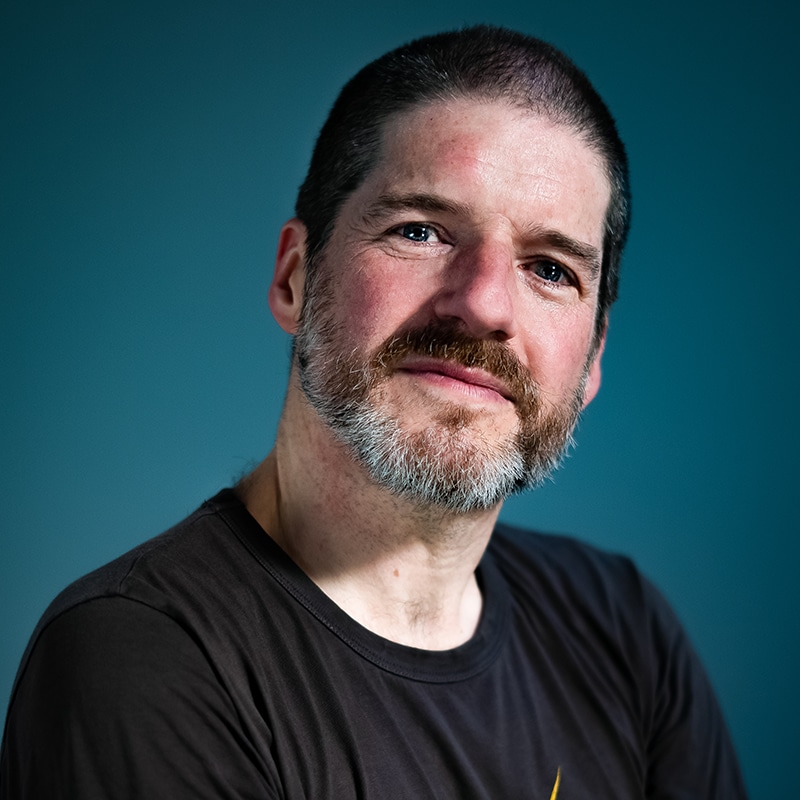
“It’s always good still to go to various events, conventions and things like that. As great as it is to have, obviously social media and the Internet and everything nowadays to broaden your work and get it seen more, to make eye contact with a potential employer collaborator is infinitely better than some, random email, science, social media post or whatever it might be.”
~ Charlie Adlard
Charlie Adlard has been a veteran of the comics industry for over 25 years. From 2003 to 2019 he spent the majority of his time drawing The Walking Dead through the conclusion of its run as a comic book series. He received many industry awards for his work on the series, culminating in winning the 2019 Sergio Aragonés International Award for Excellence in Comic Art.
In his time as a cartoonist, Charlie has worked on many other projects as far-reaching as Mars Attacks, the X-Files, Judge Dredd, Savage, Batman, X-Men, and Superman.
He’s also drawn many creator-owned projects closer to his heart, like Astronauts In Trouble, Breath Of The Wendigo, Codeflesh, Rock Bottom, Vampire State Building, White Death, Damn Them All, Heretic, and Altamont.
WEBSITES:
- charlieadlard.com
- Instagram – @charlie_adlard
IF YOU LIKE THIS EPISODE, YOU MAY ALSO ENJOY:
- Scott Christian Sava, Artist-Animator-Illustrator #372
- Tom Ruegger, Animator-Producer-Writer #369
- Tim Quinn, Author-Editor-Manager-Session-2-Episode #362
- Steven L. Sears, Screenwriter-Producer-Author-Episode #351
- Laila Robins, Actress, The Walking Dead #341
- Mark Arnold, Comic Book and Pop Culture Historian-Episode #327
- John Cerney, Muralist-Episode #318
- Ken Fallin, Broadway Artist-Episode #249
- Tim Quinn, Writer-Editor-Artist-Manager-Episode #231
- Robert Shields, Legendary Mime-Artist-Episode #180
- Mark Simon, The Godfather of Storyboarding-Episode #175
- Renee Hoss-Johnson, Wheel Of Fortune Production Designer-Episode #167
- L. Scooter Morris, Artist-Episode #165
- Jeff Keane, The Family Circus Cartoonist-Episode #161
- Bob Goodman, TV Writer-Producer-Episode #105
- Marv Wolfman, Legendary Comic Book Writer-Editor #35
- Peter Telep, Novelist and Screenwriter (Tom Clancy) #22
- Marty Schiff, Actor, Dawn of the Dead, #7
- Wendy Pini, Creator-Writer-Artist of Elfquest #1
Steve Cuden: On today’s Story Beat.
Charlie Adlard: It’s always good still to go to various events, conventions and things like that. As great as it is to have, obviously social media and the Internet and everything nowadays to broaden your work and get it seen more, to make eye contact with a potential employer collaborator is infinitely better than some, random email, science, social media post or whatever it might be.
Announcer: This is Story Beat with Steve Cuden. A podcast for the creative mind. Storybeat explores how masters of creativity develop. And produce brilliant works that people everywhere love and admire. So join us as we discover how. Talented creators find success in the worlds. Of imagination and entertainment. Here now is your host, Steve Cuden.
Steve Cuden: Thanks for joining us on Story Beat. We’re coming to you from the Steel City, Pittsburgh, Pennsylvania. Well, my guest today, Charlie Adlard, has been a veteran of the comics industry for over 25 years. From 2003 to 2019, he spent the majority of his time drawing the Walking Dead through its conclusion as a comic book series. He received many industry awards for his work on the series, culminating in winning the 2019 Sergio Aragones International Award for Excellence in Comic Art. In his time as a cartoonist, Charlie has worked on many other projects as far reaching as Mars Attacks, the X Files, Judge Dredd, Savage, Batman, X Men, and Superman. He’s also drawn many creator owned projects closer to his heart, like Astronauts in Trouble, Breath of the Wendigo Code, Flesh, Rock Bottom, Vampire, State Building, White Death, Damn Them All, Heretic, and Altamont. So for all those reasons and many more, I’m deeply honored and truly thrilled to have one of the greatest cartoonists ever. Charlie Adlard joined me on Story Beat today. Charlie, welcome to the show.
Charlie Adlard: Thank you, Steve that was amazing. Thank you. I feel very, my ego has been buoyed now nicely. Thank you.
Steve Cuden: Well, we’ll, we’ll try to keep boying it as we go. So let’s go back in time just a little bit to where all this began. Am I right that you started out initially wanting to be a filmmaker? Is that correct?
Charlie Adlard: not, no, not wholly correct. A bit of it, yeah. I mean, I, I, that’s what I did at univers. Well, art, college. And that’s kind of what I tried to do very briefly afterwards. But from the age of about 6 up till about 18, all I wanted to do was be a comic book artist.
Steve Cuden: Okay, good, good. And so you were about six when you first got into it. What was it that brought your attention to it in the first place?
Charlie Adlard: Two things really. and they are kind of One of some of my earliest memories, one was I was very lucky because my dad, well, my dad was instrumental in both these things. But my dad owned a, ah, few shops, one of which was a newsagent. And one day he came home with something behind his back which was a copy of Mighty World of Marvel Number one, which was the British reprint. Obviously this is back in 1972. This was a British reprint of obviously the classic Marvel comics. And it was anthologized like all great British comics were at the time. so very different format to obviously American comic books. And within the pages was Spider Man, Incredible Hulk and the Fantastic Four. I remember gravitating at the time mainly to the Fantastic Four because.
Steve Cuden: Right.
Charlie Adlard: Even at 6 I was a kind of a bit of a sci fi nut I think. So obviously that was, you know, it wasn’t the horror of the Hulk or the sort of teenage angst of Spider Man. This is you know, kind of as hardcore sci fi as Marvel could probably get at the time. So I remember really loving that. And I think I was drawing before that, as a young kid, but of course you know, unfocused. And I think post that all I drew were comics and genre stuff. And also at the same time my dad took, well my dad used to go and fill up at this gas station and ah, yeah, they were running a promotion at this, this petrol station we were filling up at. And you know once you got a certain amount of points you could get a free asterisk book.
Steve Cuden: Okay.
Charlie Adlard: And I remember the four you could get, you could get Asterix the Ghoul, Asterix the Gladiator, Asterix the Legionnaire and Asterix in the Big Fight. And I absolutely devoured those. I used to pester my dad to constantly go to this petrol station to keep filling up so I could get these books. So I didn’t realize at the time as a six year old I was being fed American comic books on one side and of course as we call them, you know, French, Bond design. Obviously I didn’t realize that was what it was then. on the other, did you start.
Steve Cuden: To imitate that, those styles by drawing what they were doing?
Charlie Adlard: Oh absolutely, yeah. I remember mainly drawing sort of superhero stuff. But I do remember trying to imitate you know, say Udo’s drawings for Asterix. And I also remember, you know, when I was pretty young trying to imitate Schulz’s stuff for Peanuts as well, trying to capture what he could do in three lines. And I think at that early age I probably learned how less is more with cartoons.
Steve Cuden: Well, isn’t it amazing that that’s really challenging to do a, four panel comic or a one panel comic and make it impactful? That’s really hard to do.
Charlie Adlard: Oh, absolutely. You know, and I think someone especially like Schulz was sort of teaching me that because, you know, I can’t. I couldn’t draw Snoopy, I couldn’t draw Charlie Brown. But to my, you know, young brain, it was like, why can’t I do this? Because it’s just a couple of lines. I can do a couple of lines. Look. And m. It never looked. Yeah, obviously it just never looked as good. And you know, you kind of realize that my young brain is sort of working out. That’s the skill of a, you know, a brilliant cartoonist is. Is to do something that good in as little, you know, sort of mark making as possible.
Steve Cuden: Do you think of yourself as a cartoonist or graphic illustrator? Do you have a specific thought in your head as to what you refer to yourself as? Is it cartoonish?
Charlie Adlard: Yeah, I always call myself a cartoonist because I believe we all cartoon. It’s as simple as that.
Charlie Adlard: Going back to shorts again, it’s like he just does it to more of an extreme than I do. you know, I’m obviously more based in the, shall we say, the reality, side of it. And Schulz is kind of the other side of it, which is almost based in the kind of, well, I don’t know what you call it. The surreal Arab. Can’t even say the word.
Steve Cuden: it’s more fantasy and childlike. Yours is much more realistic and natural and impactful as an adult. And his is more, I think, more impactful on a little kid.
Charlie Adlard: Small children as. Yeah. First impressions. Yes. And then you realize how mature.
Steve Cuden: Oh, oh. It’s way beyond as an adult to go back and look at Peanuts, that’s for sure. do you know if it was Schultz? Was that what got you to go forward or it was really going back to asterisks and the Marvel comics. Is that what did it?
Charlie Adlard: I think it was the first two definitely were the big influences. Well, kind of like what you said as a kid. I just gravitated towards stuff like Peanuts just because of its childlike. Well, the things that attract you as a child. It’s simple as that, that sort of simplistic cartooning.
Steve Cuden: Did you realize early on that it was all about really storytelling more than just images?
Charlie Adlard: No, not, not no, not when I was a kid. that’s probably, that’s probably why it was easier, ah, to I suppose, for want of a better word, except Marvel Comics or, or you know, asterisks even. Because even though asterisks is that sort of classic cartooning, I mean what that was doing was imposing, which is a very classic sort of French way is imposing sort of cartoony figures in highly realistic backgrounds, kind of. Which I appreciated because that’s how I liked, you know, how I watched Disney cartoons or things like that, you know. But the background’s beautifully watercolor painted so it had that kind of impact again. But Asterix especially, I mean, I still read Asterix. I mean I have every single Asterix book. I’m massive Asterix. Wow. And you know, I even have the ones that Gossini, you know, after Gossini died, you know, Udizo took over and did some really good ones and then when he got older they weren’t so good and I still have those and you know, now there’s a new creative team and you know, they’re getting better. So yeah, I’m still, I’m still in there with with our Gaulish friend.
Steve Cuden: And on the American side too, because that’s real. I think that’s very fascinating. Of course you grew up in England, so your influen would be from, that perspective for sure. But you were also being influenced by American authors and artists as well. Who were you looking at at that point? Was it the Jack Kirbys and the Steve Ditkos of the world? Is that who you admired?
Charlie Adlard: Well, I mean, I can’t deny their influence because that’s who, you know, again, as a six year old, that’s what I was reading. Yeah, I didn’t know who these people were at the time. the first artist I remember, seeing and kind of thinking, oh, I like this artist’s work. I need to seek out more of. This artist was back in the UK and I wasn’t reading American comic books in their actual American comic book form probably until I left school, but up until then. So I was, yeah, I was getting into my sort of, you know, late teens before I really started reading the proper source material stuff. so it was all Marvel UK. I mean like saying Marvel UK were canny enough to produce this stuff for the UK market, whereas DC weren’t. So I’m not as familiar with the DC stuff purely because I didn’t read any DC up until I was in my, probably in my 20s, really.
Steve Cuden: So you. You were only really looking at Marvel until you were in your 20s then?
Charlie Adlard: Yeah, I mean, I was obviously aware of DC Comics and I was aware of the characters and things, but m. Marvel produced stuff for the uk. It’s as simple as that. It was a, I think, a really clever business decision at the time. But of course, everything was anthologized, as I said before, because that, was, you know, the kind of the. The way comics were accepted over in the uk. So. But what I was going to say was, Obviously back in 1978, Star Wars Weekly came out, obviously serializing all the Star wars comics. but in the backup, they had a strip called Micronauts, which was based on the Toy series at the time. But the artist was a guy called Michael golden. And, he’s the first artist. I actually sort of, I suppose inverted commas noticed primarily because the UK comics were produced cheaply, so most of them were mainly black and white. And Golden’s artwork stuck out because he was a brilliant black and white artist. You know, he used strong blacks, you know, nice contrast, that, sort of chiaroscuro effect and everything. So, yeah, I just remember just absolutely lapping the Micronauts up and looking for this one particular artist afterwards. And that was probably my first artist that I got into.
Steve Cuden: You. You bring up the black and white, and we’re going to get more to the Walking Dead in a little bit. But, you. Most of all of the Walking Dead that you drew was black and white, correct? Yeah. And so that’s. It’s, shadows and light and positive and negative imagery and all the rest of it. why black and white? What does that do? What does that do for the reader, for the viewer?
Charlie Adlard: I mean, I don’t know why I gravitated to that more than sort of line art, you know, because it could be going back, like I say originally, to reading all these comics when I was young, because they were all printed in black and white. And if you saw Kirby’s stuff or Ditko stuff stuff, or John Basema’s stuff or whatever, it was great. But it was a bit very open because there was no color in it. whereas, like, say something, somebody like golden comes along, when he does these strong blacks, you kind of go, oh, this works on the page. So I don’t know why I fell in love with very. That sort of strong contrast sort of artwork. But, yeah, there’s a lot of artists out there, you know, that I really admire that are really strong with with that kind of effect.
Steve Cuden: That’s your preference to draw as black and white, I assume? Yes, it was.
Charlie Adlard: I mean, I’ve recently, I’ve done a lot more color work and you have to temper your style, obviously a bit to accommodate that. But, yeah, I mean, my. I’m very lucky because I’m probably one of the very, very few artists that have worked for, you know, the American industry that’s made a decent living out of drawing comics that haven’t been colored. Because the general perception, especially in American comic books, is, you know, it’s not going to sell unless it’s in color. So we slightly disprove them. Wrong with the Walking Dead?
Steve Cuden: Well, slightly. I mean, it’s a massive hit. It was a massive number one hit for quite a long time. And then of course, the TV series and virtual spinoffs from the first series have been gigantic, especially for American audiences and around the world. I’m going to ask you a question. I ask lots of guests. Frequently it’s about story, but in this case I’m going to ask you about imagery. What for you, makes a great image? Great. Ooh.
Charlie Adlard: an eye for design. That’s what I’d say. You know, over the years I’ve sort of really come to appreciate design in any art form. You know, there’s a. A lot of comic book artists rely on, obviously, you know, the impact that especially, again, especially in American comic books. It’s that big sort of splash of action or whatever. You know, it’s fine. I’m perfectly happy, with people that gravitate towards that. But for me, a great cover, is. Doesn’t have to be something that’s taken, you know, days to draw. You know, it’s just that single, some image that just works well.
Steve Cuden: There are certainly lots of images that are kind of. And you have a lot of them in your work where it’s kind of raw feeling, it doesn’t feel overly refined. And And I think that there’s an energy in that that’s very attractive. Is that what you’re talking about?
Charlie Adlard: Yeah, sort of. I mean, I was cite an example of, an artist that I absolutely adore, and he’s not a comic book artist at all. But I love the work of Saul Bass.
Steve Cuden: Oh, sure, yeah.
Charlie Adlard: The great movie title film poster designer.
Steve Cuden: Yeah.
Charlie Adlard: And he just had that ability to take an image and break it down to. It’s such a utter simple components, especially in a period in the sort of the late 50s, early 60s when he was doing all the, you know, the Hitchcock stuff and everything, you look at it and just go, wow, this is just so different to everything else. And he’s created such iconic imagery. And I think. I think a problem a lot of us, especially comic book artists and illustrators have is. Is trying to cope with the sort of thing, if you’re doing a cover and it takes, say, half a day to do, but it’s a great design, you always feel like you need to overwork it because you don’t feel you’re justified in the cost of what you’re being paid, over the time taken. But I can’t remember who said it, but somebody said at some point, you know, it’s not the time it takes to do an image, because it’s that 30 years of learning how to get.
Steve Cuden: That’s exactly right. Well, it took Einstein quite some time to come up with E equals MC squared. I mean, it’s a very simple formula, but it’s the entire universe, basically. and you can look at, the work of, for instance, Fred Astaire in movies. it took him hours and hours and hours and hours of practice to get it to look like it was effortless. And that’s what I think is ingenious. The genius is to make it look like you just tossed it off.
Charlie Adlard: It was the genius to make it look like anyone could do it.
Steve Cuden: Right.
Charlie Adlard: I mean, that’s literally. Yeah, that’s literally going back to Peanuts again, isn’t it?
Steve Cuden: It is.
Charlie Adlard: Schultz, he makes it look like, oh, that’s just a couple of lines. That’s really easy. And it’s probably makes it more relatable then, because people do think, oh, I could draw that, you know, and it’s instantly iconic as well, of course.
Steve Cuden: And all you have to do is say, go ahead, draw it. See if you can do it. And of course, most people can’t.
Charlie Adlard: And then you can’t.
Steve Cuden: what do you do in your mind’s eye to take, I guess, other people’s words, or. Unless you create a story and turn that into a story in a panel or several panels, how do you interpret the words into a visual story? Because that’s what you’re doing.
Charlie Adlard: Yeah. it’s one of those questions that’s really hard to answer, because I just do it, you know, I’m.
Steve Cuden: It’s natural for you.
Charlie Adlard: Yeah. I mean, it’s. I am the world’s. One of the world’s most uncoordinated people, really. Give me a ball, and I can’t Kick it. I guarantee you that, it’s like asking a footballer, how do you, you know, how do you kick a ball or whatever? And for me it’s magic. But for the footballer, it’s just this, the most natural thing in the world. So I can’t understand how somebody can’t do what I can do because, you know, because I just.
Steve Cuden: I tell you what, I, I can’t.
Charlie Adlard: But you know, we’ve all got hands, we all can move the same way. Do you know what I mean? You know, I do. It’s. It’s one of those really, really odd things. So I, I just see, as soon as I get a script, I just see the imagery in my head. I do sort of treat it like a movie. I see it kind of like a movie. and that’s how I get the storytelling. Right, is it, you know, you sort of just think, well, how would it look visually? How would it look? How would it work? And I just sort of see the stages that, you know, the script tells me is happening. And you know, and some scripts are highly detailed. some scripts, like Robert script for the Walking Dead, were not detailed at all. But, you know, you worked for 16 years with somebody, you know, you’re going to use a lot of shorthand. M. Of course, yeah, I just saw it. It’s. That’s all I can say.
Steve Cuden: So, so it’s, you’re seeing the, the script come alive in your mind’s eye and the visual imagery is in your mind?
Charlie Adlard: Yes, pretty much, yeah. I mean, I always, People will say, oh, how’d you work from, you know, the blank page? I go, well, I haven’t got a blank page, have I? I’ve got a script. I have the inspiration. That’s my jumping off point. I would struggle to be a fine artist. And I always say the only difference between a fine artist and, and an illustrator is a fine artist can go in their studio and just literally just go, what can I do today? And just literally start to paint, sculpt, whatever. Whereas an illustrator, exactly the same level of talent, skill, whatever, but we need some impetus, we need some inspiration. We need, you know, we need a project, basically. I mean, a good example is when I was a, few years back, I was doing life drawing quite regularly with, another comic artist friend.
Steve Cuden: And there are beautiful examples of that on your website. Absolutely wonderful examples. Thank you.
Charlie Adlard: Yeah, well, I kept going back for at least two or, at least three or four years. Primarily because after about the second or third time going there, I Suddenly thought, oh, I can get a book out of this. And, that kept me going back. A project, you see, I turned it into a project. And yeah, I did. I did a very small run of a life drawing book, you know, and Vanity publishing, you know, 101 this is. But yeah, I did it. And. But the crazy thing is as soon as I did the book, I haven’t been back again.
Steve Cuden: You got it out of your. You got it out of your system kind of.
Charlie Adlard: Yeah, yeah, exactly.
Steve Cuden: So your work, I think, is a form of fine art, believe it or not. That’s just the way I see it. But that’s my admiration for what it is you do now. You’re. I think that your work is light years ahead of what we would think of in movies as a storyboard. But you’re kind of making storyboards as a comic book, isn’t that true?
Charlie Adlard: Yeah, yeah. So, I mean, I mean, doing storyboards is incredible. I mean, I’ve never done them per se, but. But, I think doing storyboards, there’s less left to your imagination. Between the panels, everything is, boom. Yeah, this happens. This has to happen. This has to happen. This specific. Yeah, I think comic books, you do have to have an element of learning how to read them. It’s as simple as that. I don’t think with storyboards, you don’t.
Steve Cuden: So you raise a really great question for me, which is how do you. And again, you’re going to say you do it naturally, but there has to be a decision making process to add a panel and to add an image, but to leave something out so that it is for the reader’s imagination. How do you make that decision? Is it just what you’re seeing in your head and that’s it, or is there a decision making process?
Charlie Adlard: Well, there is a bit of both. It’s what I’m seeing in my head, but obviously my mind is made up that decision. Yeah, I’ve always been a, The first idea is generally the best idea. The one that comes naturally. Like, like that, is. Is the one I tend to go with. Hm. So there’s not much procrastination and there.
Steve Cuden: Can’T be in your business. You have to move, don’t you?
Charlie Adlard: Back in the old days, I did. It’s a bit more relaxed nowadays, but. Yeah, yeah, yeah, yeah, yeah, yeah. Well, absolutely. Yeah. You really had to move fast as well. It’s not a. It’s not, it’s not an industry for, you know, mulling over your, your work and constantly refining it. Because there just isn’t the time to do something like that.
Steve Cuden: So I come at the. I come at all of this from a. From a similar but different perspective entirely, which is I’ve written 90 cartoons for. For kids animation. I’ve written 90 animation scripts. And you have to work very fast in that industry too. You can’t dawdle and dwell. You have to churn it out because it’s for tv, so it has that similar thing. And I too, see the story in my mind’s eye like you do. But I then am always surprised by what the artists do with my words. Are you ever surprised by how people come back and interpret your work to you?
Charlie Adlard: Well, I mean, a lot of writers that I’ve worked with, obviously in the past have all said how.
Steve Cuden: What.
Charlie Adlard: How. What a great job it is as a writer because it’s so great to see their ideas visualized, you know, and it’s always an excitement. It’s always a kind of a thrill to see their script sort of being given. Yeah. Inverted comms, life. So, I’m only going by what my partners in crime say, but,
Steve Cuden: Yeah, yeah. Are you drawing for a certain audience in your mind’s eye, or are you drawing for yourself?
Charlie Adlard: No, I draw for myself. I think if you try, it’s. I think most people would say this. If you try and please a certain, you know, demographic, you’re. You’re on to a, Ah. yeah, a losing streak, aren’t you? So, no, I always say it’s, it’s. It’s better to draw for more, you know, for thousands of people than it is to draw for a couple of people. I don’t do many commissions at all, primarily because I don’t like the idea of pleasing that one person. Because then the pressure’s on, to please one person. Whereas, you know, when you’re drawing for a comic that might sell, I don’t know, for the sake of argument, 40,000 copies, you know, you know, going in. You’re not going to please 40,000 people at the same time. So you might as well do what pleases you, right. And hope that at least half of those 40,000 people will quite like what you do. And then the best, the best work comes out of it because it’s your thing, it’s what you’ve wanted to do.
Steve Cuden: It’s. That’s what the audience really wants. They want to find out what it is that makes you tick. And then they get turned on by that, usually if that’s. What. If you’ve done good work, which most of the time you have. do you ever come across stories that come your way that stump you that you can’t get a vision on them? Does that ever happen?
Charlie Adlard: no. I know it sounds crazy. I don’t think I’ve ever had a kind of. I mean, there’s been storytelling challenges.
Steve Cuden: Give us an example. What’s a storytelling challenge?
Charlie Adlard: I mean, most of the challenges. It sounds awful. Come. Come from a writer, not knowing their craft as well as they should. just because they’re saying, you know, giving a character two things to do, but it’s in one panel. Something like that. I’m going to have to split this panel in half because you can’t show that, and that happening. Yeah. At the same time, that’s. That’s not comics.
Steve Cuden: Well, that’s like trying to give an actor direction that has two totally separate emotional moments in one. And they can’t do it. They can’t do it.
Charlie Adlard: Yeah, exactly. Yeah.
Steve Cuden: So.
Charlie Adlard: So a bit of it comes from that. I, you know, I can’t really. I can’t really think of an example beyond that.
Steve Cuden: That’s a good example. I mean, that. That makes sense. If you. If somebody writes a script and they give it to you and it’s instructing you to do two separate things in one panel, well, how could you do it?
Charlie Adlard: Well, it’s impossible. I mean, I tend to. Like I say, I tend to just rough out the page anyway and add an extra panel and just say, look, I’ve divided this up into two panels because it makes the storytelling a lot clearer. But, you know, it’s a fairly obvious thing to say, but I don’t think sometimes comic book artists tend to, ignore it. But story is king at the end of the day.
Steve Cuden: I have said for a very long time that the greatest special effect in movies is great storytelling.
Charlie Adlard: Yeah, absolutely. Yeah.
Steve Cuden: And that’s the same for you, isn’t it? Yeah, great.
Charlie Adlard: Great storytelling, great characters which sort of goes in with the same. Not invested in either of those. You’re just. What’s the point?
Steve Cuden: Well, that’s what’s drawing the audience in. So it draws you in. You’re part of the audience, I’m part of the audience. And if we’re drawn in, then there’s a chance that others are drawn into it. do you ever also write the stories that you draw, or are you always just drawing?
Charlie Adlard: No, no, I can’t write. It’s as simple as that. I’d freely admit that no I’ve never had the. I’ve never had sort of inspiration to do so. Never really come up with an idea that I thought, oh, I could write this or whatever.
Steve Cuden: Have you ever. Have you ever come up with an idea and gave it to someone else to write for you?
Charlie Adlard: Yes, twice. But the very bare bones of an idea, once was the book called White Death. I remember approaching Robbie Morrison, my friend that wrote that. And Robbie and I go way, way back. We’ve known each other for decades. And I said to Robbie at the time, I said, I’d really like to do a book set in World War I. And. And I want to do it in these specific materials, which at the time was charcoal and chalk on gray paper, which was, you know, quite sort of experimental, obviously. But, yeah, that, that. That was because I’d just finished the. My run on the X Files and hadn’t had a particular particularly great experience with that. So I kind of wanted to almost go completely the other way and. And do something quite experimental. And then Robbie came up with the story of White Death, because of that. So that was great. And my most recent project, which was Altamont, that again was myself talking to the writer and saying, I really want to do a book, hopefully set in the 60s, because I want to do something along those lines and never done anything historically set in that time period. And I want to do something about music. And preferably could we set it at, a festival? So. And I think. No, actually, no, I came up with doing. Actually, no, I. It was more detailed than that. It was. I. I had decided I wanted to do Altamont because I was quite interested in, you know, sort of the end of the 60s and how the hippie ideal was sort of, you know, basically destroyed by that and the Manson murders. And I kind of thought the Manson murders had been done to death, no pun intended. Whereas Ultima, you know, was. Was the lesser known of the two. That was the significance, sort of. Yeah. End of. End of it all. so, was it.
Steve Cuden: Was it then fictionalized? I’ve not read Ultimon, so I don’t know. Is it, Is it fictionalized?
Charlie Adlard: Oh, no, no. Well, Ultimon. Have you heard of Ultimon?
Steve Cuden: Sure.
Charlie Adlard: Yeah. We’re telling a fictional story against the backdrop of the Ultimon festival.
Steve Cuden: Got it. That was the Hell’s Angels, right?
Charlie Adlard: Yeah, that’s the one.
Steve Cuden: Yeah.
Charlie Adlard: So, yeah, I didn’t want to do Ultima the story because a. Doing music in comics is probably the hardest thing to do. Because there’s no sound.
Steve Cuden: Yes. That makes it challenging to have no sound and be about music.
Charlie Adlard: Exactly. So you’ve got to sort of do something else to make it work. So, you know, we figured out that the best thing to do was to tell the story about another group of kids that, that go to Altamont Festival and have their own sort of, shall we say, heart to darkness story that goes on with the backdrop of Altamont going on. So you’re constantly cutting back to the certain events happening. But it’s more background and it’s great because then you don’t really need to concentrate. I’ve always wanted to do a book about music, but not specifically like lots of shots of bands or whatever playing because again that just seems just. Just something that doesn’t work in comics.
Steve Cuden: No. Music does not usually take a still image. You, you can get, you can get really beautiful images, photographs and so on of a musician playing. But there’s not. You’re not going to get much story out of it.
Charlie Adlard: No, exactly. and actually the visuals, if you. Anyone out there that they want to Google, you know, Ultima, the visuals speak for themselves anyway because, you know, it was you know, visually it was a hell of a thing. So, you know, it’s just mad this, this, this almost 200,000 people free festival where, where there’s a stage where you’ve got the general public just hanging around on the stage and it’s insane.
Steve Cuden: It is insane.
Charlie Adlard: Yeah, absolutely insane. It just. The bands must have felt so claustrophobic on those stages.
Steve Cuden: Well, would never happen today. You know, it was something that they’d get nowhere near there today. does that require a lot of research on your part before you start to draw?
Charlie Adlard: Yeah, I mean my last few projects actually have all been very, very research heavy. You know, Heretic as well, which was written with my friend Robbie as well, which was a book set in 16th century Antwerp, all about the sort of the Spanish Inquisition and you know, witch trials and things like that. So obviously a lot of research required for that one. I mean, originally Robbie and I were making plans to actually go to Antwerp and take photographs and stuff. But unfortunately we started the book around about early 2020. Well, what happened in 2020 which prevented.
Steve Cuden: Us from just, just a tiny worldwide pandemic.
Charlie Adlard: So, so I had to rely on a lot of Google image search unfortunately with stuff like that. And yeah, Ultimom same. I mean I’m very. Again, it all goes back to my love of French Bon desine as well. Because, you know, the big difference between the European comics industry and the American stroke British comics industry is the. The Americans rely on sort of impact and big visuals and sort of action and that sort of stuff. Whereas, yeah, I’m very much talking in general terms here, but whereas the French industry sort of relies more. It’s more. It’s karma. it. It relies more on a sense of place. so there’s a lot more research done, things like that. I mean, you know, just. Just goes to, you know, if you think of the comparison between. Going way, way back, as I was talking about, between Asterisk and, you know, the Marvel comics I was reading at the same time, the difference is incredible. You know, as. As cartoony as asterisk was, the research in it is just unbelievable, you know, and all the backgrounds are, impeccably researched, and I kind of love that. so Ultimo, which originally was a Bond design, a comic, it was French, and it will be actually next in December. It’s finally coming out, in English from Image Comics.
Steve Cuden: Nice.
Charlie Adlard: So there will be an English translation. It’s a bit weird telling an American story, but it’s not the first time.
Steve Cuden: And the Americans, have told lots of stories from all over the world that have nothing to do with America. So it works.
Charlie Adlard: No, absolutely.
Steve Cuden: Storytelling is storytelling, isn’t it, Charlie? It’s people in conflict with other people or their circumstances. That’s what it boils down to in all, almost all great, memorable, popular storytelling. And it’s. In your case, you’re famous for having drawn a comic book for a long time. the series the Walking Dead, in which it’s ordinary people in extraordinary circumstances, not superheroes, but normal people that become heroic.
Charlie Adlard: Yes, absolutely. That’s why I did it. It’s as simple as that. I remember. I can’t say I had the. There was no way I had the foresight to see how big it would become. But when Robert first asked me whether I’d like to draw this little zombie comic, as if we referred to it at the time, I was in between jobs, so, you know, I was a journeyman artist at the time. So I kind of just went with it and said, yeah, okay, I guess I’ll do that for a bit. And then when I got the first issue, the first script of the first issue that I was going to draw, I remember thinking, oh, this is a bit different. This is not just zombie mayhem. and I think if it was literally just zombie mayhem, we might have lasted 12 issues maximum 20.
Steve Cuden: Sure.
Charlie Adlard: Or something like that. And then we’d have been done. Yeah. People have lost interest. So, you know, the whole point of the Walking Dead was exactly as what you said. It’s ordinary people in extraordinary circumstances, which just happens to be the zombie apocalypse. I’ve always said, you know, it’s the biggest MacGuffin in the book are the zombies.
Steve Cuden: Well, the zombies are just a backdrop at this point, you know, and they started off, they were important, but now they’re still important as an impediment for your characters to get to their goal.
Charlie Adlard: But, yeah, it’s to get the character from A to B. Yeah. It’s as simple as that.
Steve Cuden: so. So forgive me if I use a term. I don’t mean it to be insulting in any way, shape or form, but from a storytelling perspective, it’s kind of like a zombie soap opera.
Charlie Adlard: Yeah. Yeah. Well, it is. I mean, Marvel comics, you know, they’re soap operas.
Steve Cuden: That’s absolutely right. It’s characters with all these extraordinary things happening to them. And. And what it boils down to is how do they resolve whatever the objective is? That’s that they’re trying to get to whatever that goal is. And so a, serialized story like the Walking Dead becomes one goal after another after another. What’s interesting to me about the Walking Dead is I never, ever, because I’ve watched every episode of every one of the series as well, and I still, to this day, don’t know what the ultimate goal is beyond survival. But that’s an important goal, to stay alive. And so there’s all these obstacles in the way. That’s what the storytelling is for me in that show and in what you created. Can you think of a goal beyond that? That’s in there, beyond survival?
Charlie Adlard: Surely to survive is everyone’s. Is everyone’s ultimate goal. Yeah, it’s just they’re a bit more, precious about survival as we might be. well, no, it just. And of course, you know, sticking them in that sort of situation heightens the emotion as well. So,
Steve Cuden: Well, so now there’s lots of death. Obviously. It’s called the Walking Dead, and there’s a lot of dead people walking around. And by the way, I’m talking to you from Pittsburgh, which is the beginning of the zombie, apocalypse, basically through George Romero.
Charlie Adlard: George Romero’s hometown.
Steve Cuden: Absolutely correct. And I’ve met George. Never worked with him, but have met him. And so I’m just curious, what is it when you read that, when you read Robert Kirkman’s work What was it about the death part of it that attracted you? It’s a weird question, but you spent a lot of time drawing death.
Charlie Adlard: Yeah, yeah. it didn’t attract me. I know it sounds crazy. That’s the thing that didn’t attract me. I was never a, always sounds slightly disingenuous when I say this, but I was never a big zombie fan, before the Walking Dead or even after it. I mean, I like horror movies as much as I like dramas or sci fi or whatever. you know, I’ve watched my fair share of zombie movies. I’m a child of the, you know, kind of in the UK anyway, of the video nasty generation, you know, So I watched a lot of gory zombie movies in my late teens, but I didn’t perceive them as, oh, great, I’m going to draw zombies for the next X number of years.
Steve Cuden: You know, it didn’t turn you off, but it wasn’t something that drew you in either.
Charlie Adlard: No, no. And people expect me to be this amazing zombie expert as well just because I’ve drawn them for so long and I’m not. You know, it’s as simple as that. And I. Look, don’t get me wrong, it’s not like I don’t like drawing them at all. But like I said to you at the beginning, as we both agreed, they are literally a way of getting the characters A to B.
Steve Cuden: Sure.
Charlie Adlard: And, it’s kind of that the apocalypse could have been any apocalypse. It just happened to be a zombie.
Steve Cuden: They are, they are a source of what is indispensable and great storytelling. And that’s conflict. They are a source of conflict. And because it is in the title of the entire series, you have to keep coming back to those characters.
Charlie Adlard: We have to put in the old zombie here and again.
Steve Cuden: And people are freaked out about them so that it keeps bringing people back to go, what’s going to happen? How’s that going to work? How are they going to survive? So that’s exactly what it is.
Charlie Adlard: There is actually a moment in the Walking Dead and I can’t remember what issue precisely, but we’re probably about 2/3 of the way into the whole run where the characters do actually have a discussion amongst themselves about actually the zombies aren’t that much of a threat anymore because we’re all so good at killing them. It’s true that they aren’t. They literally have that conversation. And you know, Robert has certain ways of always of surprising us with, with various sort of confrontations with zombies. They’re never just kind of put out to pasture. That’s it. but, there is an element where they become less of a threat actually.
Steve Cuden: We, the audience though, we get thrown for curves, loops because occasionally someone that we’re invested in does get bit or, and winds up dead and that throws us for a loop.
Charlie Adlard: Yeah, that’s the drama, isn’t it? I mean the great, you know, it’s always great to have a drama where you’re never sure who’s going to survive as well.
Steve Cuden: Well, that’s it.
Charlie Adlard: I mean, that’s great drama. You know, we’re, we are now, you know, well, thanks to, not just streaming but, you know, TV channels like, I don’t know, the original HBO and things like that where, where suddenly TV shows didn’t cease to become, you know, the episode of the week and the case was solved or the monster of the week and all the characters remained unchanged. And there’s never any kind of threat to the core characters which added, you know, less drama to the whole thing. When you knew A, B and C were just going to live to the end of whatever. now, now you’re in a completely different landscape where you’re really not sure sure who’s going to, you know, and it only takes a TV show or a comic or whatever it is to kill off a core character. And the most unexpected way, you know, Hitchcock was the first to do it, wasn’t he? So, yeah. Which, which utterly throws you off course.
Steve Cuden: So this is all about cliffhangers and drawing you into the next episode, the next book, whatever it would be the next. That’s where you’re keeping the audience coming back. And that I think, I think goes back to Dickens and Penny Dreadful novels where you’re, you get stopped at, at the end of this week’s episode, what’s going to happen next? So that’s part of where it goes back to. But yes, it’s now more open ended and you don’t know who’s going to make it. And that, I think is what people really get, drawn in by, How hard was it for you to stick with Drawing the walking dead for 16 years? How did you keep at it?
Charlie Adlard: Well, I know it sounds crazy to say it, but it seemed quite easy just to keep doing.
Steve Cuden: Wow.
Charlie Adlard: well, I, I used to moan to, you know, my contemporaries and stuff that, oh, I’m never on a, never been put on a regular series because I’d be really good on a regular series because I’m very efficient. I’m Very fast. Or was. Anyway, you know, I’ve kind of. My lifestyle is a bit, you know, I’m a routine sort of guy, you know, so it all fits in with my kind of, the way I work, the way I live. So as soon as I got on the Walking Dead, obviously it was brilliant because I had a regular thing. it’s testament to Robert’s writing. The man can write amazing stories. And he just kept pulling me in the. The odd time. I might have thought, oh, this is all getting a bit stale. He’d do something thing which would just pull me back in again. So it’s testament how great the characters were. Great the plots were. and also I did. I know it sounds crazy because a lot of people can’t believe this when I say it, but I generally would do. You know, I had to do 22 pages a, month, plus a cover. And, I find it quite easy. I always had spare time.
Steve Cuden: Wow. Wow.
Charlie Adlard: It wasn’t like I was working and burning the, you know, sort of both ends of the candle or whatever and just working 18 hours a day just trying to get this thing done. That’s probably a good reason why I kept doing it as well, because it wasn’t that hard.
Steve Cuden: So it stayed. It stayed fresh for you?
Charlie Adlard: Yeah, it stayed fresh. And there were certain techniques I used as well that kept things moving at, a pace.
Steve Cuden: Like what?
Charlie Adlard: Well, two things mainly. we got about 20 issues in when I suddenly reduced the page size because generally speaking, most comic book artists draw double size up. because that’s just what you do. And obviously this, this is pre digital. When I started the Walking Dead, so I’m physically drawing it, I reduced the size. I literally drew almost to the same size the comic. 20 odd issues in, something like that to, save time, you know, literally less space to fill.
Steve Cuden: Right.
Charlie Adlard: It’s a practical thing. And, and the other thing I used to do was I’m. I’m very. Yeah, sort of goes with my kind of routine sort of personality. You know, I, I literally started from page one, worked through to page 22, top start, top left, work to bottom right. You know, I never deviated that. I think that keeps the story flowing. But also, as soon as I finished a page, I put it away. I wouldn’t look at it again.
Steve Cuden: Ever.
Charlie Adlard: Yes. And regret it. Because the next time I look at it, it’d be printed. Yeah. that, that’s the, that’s how you have to do it, though. I’m sure you say the same thing. With writing scripts from animation shows.
Steve Cuden: So. So you’re not a. You’re not a revisionist. You don’t draw something and then come back and revise or eliminate something or take a panel out or add a panel. You’re not. That’s not how you operate.
Charlie Adlard: Well, I do more now, obviously, because I’m in a nice lucky position. I can afford to do it. But back then, no, I wasn’t a revisionist, so to speak. But that was because of the practicalities of doing 22 pages every month. And I just knew if I just put it aside, because if you don’t put it aside, you’re just going to constantly go back and refine it, and there’s just not the time to refine it at all. At the end of the day, when you’re doing a regular comic book like that, you know, as much as. As an art form, it is, it’s still the comic book industry.
Steve Cuden: Sure.
Charlie Adlard: And you’ve got to. You’ve got to deliver. And you’ve also got to remember that 99.5% of people that are going to read your book aren’t that fussed about the artwork, in terms of, you know, whether this head’s too big on this character or do you know what I mean? All the stuff that you would refine and go back and adjust because you just don’t like the technique you’ve used on it, or you don’t like this figure’s a bit wrong or whatever. So you’ve got to accept the fact that most people think you’re an utter genius.
Steve Cuden: But I’m gonna guess you don’t think you’re a genius.
Charlie Adlard: No, I don’t. No. I’m far from a genius. I think the word genius is used.
Steve Cuden: Very lightly, I think, and you correct me if I’m wrong. I think most artists, and I’m talking about all forms of art, Dancers, choreographers, writers, et cetera. I believe most artists, as they work, know where all of the seams are and know where all the mistakes are. And they see it. And the. The people that are observing it as an audience, they’re not noticing any of it. They’re just seeing the finished work. So you don’t. You feel like my work’s not perfect, it’s not that great. I know what I did, and it took me a while to do it, and I. I made these mistakes and I got there and I’m okay with it. I think most artists are like that. Don’t you think?
Charlie Adlard: Yeah. Ah. I think I think if I did the perfect page, I give up. no, seriously, because, Because I think the reason we as creative people and like I say, I’m referring to literally everyone in the creative industry. I think if you get to a point, the whole point you carry on is because you want to achieve that almost unachievable goal.
Steve Cuden: Sure.
Charlie Adlard: That’s your inspiration. You want to constantly get better and get better and get better and then get to a certain point where you just go, well, that’s it, I’ve done it. I’ve achieved my perfect.
Steve Cuden: Whatever you’ve achieved, then your life is over.
Charlie Adlard: Your life is over. Where’d you go from the perfect page? I mean, no one, no one achieves it. That’s. That’s the thing.
Steve Cuden: It’s all about the journey to get to that. It’s that.
Charlie Adlard: Exactly that. That’s what makes m. That’s what makes it so fun.
Steve Cuden: I agree with you. So tell me a little bit about some of your original stuff. You’ve already told us about Altamont and Heretic and so on. Do you find that to be more fulfilling because it’s your original stuff rather than you’re working under someone else’s shingle? Ah. So to speak.
Charlie Adlard: Yeah, well, I mean, my career literally is divided into two completely separate parts really. There’s obviously pre Walking Dead and post Walking Dead, I, mean basically the Walking Dead, because that was obviously creator owned anyway, has enabled me to, you know, kick back, relax.
Steve Cuden: Sure.
Charlie Adlard: I’ll never not be busy because I love doing what I do. It’s as simple as that. but so to you, it’s.
Steve Cuden: It’s not a job, is it? It’s just what you do.
Charlie Adlard: I am at my most relaxed when I’m sat here drawing.
Steve Cuden: There you go.
Charlie Adlard: yeah. So no, it’s not a job. I love doing it.
Steve Cuden: Yeah.
Charlie Adlard: I wouldn’t do it. It’s not the sort of thing you do to torture yourself.
Steve Cuden: So.
Charlie Adlard: Yeah, I could think of much, much, much easier things to do. But, yeah, so post Walking Dead, I found myself in the enviable position that I could just pick and choose what I wanted to do. So why would I want to do other people’s characters? People always ask me, you know, especially in the American sort of comic book industry, they will say, what character would you like to work on next? Or whatever. And I just go, well, my own. It’s as simple as that. I’m not interested in, oh, I’d really like to do Spider man or, you know, I’ve sort of done that anyway.
Steve Cuden: Right.
Charlie Adlard: and that. That’s where I get the most how. How I’m most fulfilled. It’s just owning your own stuff. But you get to create everything then, and you own it, which is. And I’m not talking about in just a monetary way in terms of, oh, you know, we could have a Hollywood deal here or whatever. It’s just great because you’re in complete control of what you do with it. and you never are with, obviously, other people’s characters. That’s why in our industry, you get. If you work for the. Well, especially if you work for the, you know, the two big American companies, Marvel and dc, you get paid rather relatively handsomely, especially if you’re fast, you know, per, page. Because they’re basically paying you off.
Steve Cuden: Yes, they are.
Charlie Adlard: That’s what they’re doing. You know, they’re just saying, well, we’ll give you all this money, but you’ve got absolutely no claim on what you’ve just drawn. It’s as simple as that. so you go, okay, I’ll accept that. You can’t really not accept. So you have to just go with it. I mean, was it a couple of years ago, I did, Well, less than a couple of years ago, I did a, what they call a Batman black and white, which is. It’s. I can’t remember which Batman comic it is now. but they. They kind of go in the back as a backup strip to certain Batman comics. And it’s what says what it says on the tin, just black and white. So kind of perfect for me. And, yeah, I’ve drawn Batman before. He’s one of the people I do sort of enjoy drawing. But it was, eight pages long, and when I finished it, I thought, yep, that’s, just about as much Batman as I’d like to.
Steve Cuden: You got. You got your fill of Batman in eight pages?
Charlie Adlard: Yeah, I got it. That’s it. I don’t want to commit any more than that. I don’t want to commit, you know, a year, two years of my life. to say that sounds awfully fatalistic, this. But, you know, I will be 60 next year, and in the twilight of.
Steve Cuden: My career, you’re still a very young man with a long way to go. I have to ask you about the cosmic rays. You’re also a musician, and, you’re a drummer. And I don’t know if anybody’s ever said this to you before or not. Perhaps they have. Perhaps you’ve thought it yourself, but I think the fact that you’re a drummer shows up in your artwork.
Charlie Adlard: Oh, okay.
Steve Cuden: Interesting because there are, there is a rhythm and a beat to the way that you lay out the imagery and the way that things come out on a page. It has, I don’t want to. It’s not a drum beat like thing, but there’s a rhythm to it. And as a drummer you obviously have to have pretty good rhythm. How long have you been drumming since you were a kid?
Charlie Adlard: I picked up proper drumsticks around about 16, 17. A friend of mine when I was at school, I was always kind of envious of people that were in bands at school. And well, he’s my oldest friend actually. He played he was a multi instrumentalist. I think he was learning violin at school but he could play guitar and keyboards and things as well. His family were really musical and he just saw me just tapping away. I used to tap away at my desk all the time, you know, to music. And he said, well why don’t you come to the school music buildings and we can see. Sit at the school kit and see, see if you can hit, hit it right. And I kind of sat down and I could instantly do ah, a very basic beat. So within two weeks I was in a band with him. Just wow. Just doing. Funny enough, it ties in with the creator own stuff. I’ve always been in bands that do original material as well. Even from that age we were, we were writing songs.
Steve Cuden: Do you think, do you think that your music influences your drawing and your drawing influences your music?
Charlie Adlard: I think. Well if they do, it’s very slight. I’ve never noticed. I mean after just saying what I just said about, you know, I’ve always been in original bands and, and I’m, I’m here, sat here advocating for you know, sort of creator owned material. I’m thinking ah, there’s a similarity there. You know something I’m interesting. I’ve never been interested. Well I’ve done the old cover span but it’s always been very light and sort of temporary. You know, it’s always been with a goal for doing a gig or something like that and then that’s it. But yeah, interestingly, yeah, it’s kind of. Why would I just be interested in original stuff as I’m also interested in you know, original comic book material. So I mean beyond that, I mean it’s interesting. You say you’ve noticed the, the rhythmical patterns to my storytelling. I never noticed myself but I think it’s One, one thing, perhaps a, person that’s obviously a bit more, objective.
Steve Cuden: As soon as I saw in your bio that you were a drummer, it then became very obvious to me in the drawings that you make that there is a rhythm and a pattern to it. Especially in the multi panel stuff where you’re working, some kind of action out over multiple panels. I think that the rhythm, the beats feel very natural and musical in the way that you do it. So I think that that’s evident now. I might not have guessed that. I might not have guessed, oh, he’s a drummer. But once I knew you were a drummer, then I could see it.
Charlie Adlard: Right, I’ll take that.
Steve Cuden: Well, you should. I’m curious. You’ve been a collaborator your entire career in both art and in, music. What makes a good collaboration? Work?
Charlie Adlard: Personalities. Oh, God. Look, I’m now coming up with connections. Now you’ve said all this sort of stuff. I’m now coming up with connections between music and comics now, you know. Yeah, both of them are collaborations as well. Yeah, I can’t do either without somebody else involved.
Steve Cuden: There you go.
Charlie Adlard: Especially as a drummer. I mean, we are the most reliant on other people than any other member of a band. Yeah, that’s, that’s kind of interesting. yeah, sorry, I forgot. What was the question?
Steve Cuden: the question is, what makes a good collaboration?
Charlie Adlard: Oh, yeah, yeah, yeah. I think, yeah, just personalities. Well, funnily enough, going back to playing music, I always used to think, you know, the best bands to be in as a collaborator were where you share similar tastes in music. But actually I’ve, been proven so wrong so many times because the best bands I’ve been in are the ones where we’ve all gotten on as friends. The best. Yeah, there’s just been really good sort of connection with the, with the people rather than, oh, we all like the same music. So therefore, you know, let’s just. Because at the same time, when you’re just in a band because you all like the same music, what sort of music are you going to produce? The same as the music you like, which isn’t that exciting. But if you’re in a band with a group of people you just enjoy the company of, but we’ve all got, you know, different tastes or slightly different tastes or whatever, the actual sound that comes out is a lot more interesting because it’s a combination, of all these other different influences and it’s probably the same comics. You know, my Rob, interestingly, Robert and I share Very different tastes in our comic, book influences. Now, I don’t know whether that’s because of our age, because I’m over 10 years older than he is, so he’s come up through a different sort of, you know, bunch of comics than I have, you know, and yet we have formed this amazing 16 year partnership. And we certainly didn’t split up acrimoniously or anything like that. We just finished the book because that’s what we wanted to do.
Steve Cuden: Right, sure.
Charlie Adlard: At the beginning.
Steve Cuden: Sure.
Charlie Adlard: And, we still talk and who knows, we might work together again at some point in the future. That’s no big spoiler. I’m just, you know, let’s not.
Steve Cuden: The door. The door is open.
Charlie Adlard: Yeah, of course, yeah, yeah. We still chat occasionally. It’s not like we never talk. So, yeah, there’s kind of core values there, I think in, in a good, in a good collaboration. But at the end of the day.
Steve Cuden: It needs to be frictionless in some way. Yes.
Charlie Adlard: Oh, of course, yeah, yeah. But there again, a nice bit of friction always pays dividends, doesn’t he? That’s the art of collaboration, surely.
Steve Cuden: Well, that’s that old cliche that it takes a grain of sand irritating the, the oyster to make a pearl. So there’s, it has to be a little bit of friction, but not a lot of friction. Too much friction means people are going to run away from each other, but a little bit sparks, you know, innovation or creation or whatever. I think that that’s, I think what you’re saying is absolutely right, that it’s, it’s people having to get along. It’s like a marriage. You were in a, in a work marriage with Robert Kirkman for 16 years.
Charlie Adlard: Absolutely, yeah. Yeah. Through all the trials and tribulations. Yeah. There were, I mean, there was never a time where we were shouting at each other, but there was a couple of times, inevitably after 16 years where things got, I wouldn’t even say heated. But you know, there was a kind of slightly aggravating situations here and there. just, just literally one or two, but God, it’s not bad for.
Steve Cuden: I don’t know how anybody goes 16 years and not has a disagreement of some kind.
Charlie Adlard: Absolutely. Yeah.
Steve Cuden: Yeah.
Charlie Adlard: And probably at the end of it, I think something better emerged out, of the disagreement.
Steve Cuden: And there you go. There you go. Well, I have been having so much fun for a little more than an hour now talking to Charlie Adlard, about his work and the process that he uses to create and the way that he thinks. I think this has been absolutely fantastic and we’re going to wind the show down just a little bit and I’m just wondering, you’ve told us a huge number of really great stories along the way, but can you share with us a story throughout your career that’s either been weird, quirky, offbeat, strange or just plain funny?
Charlie Adlard: Well, I mean I work in the comics industry so shall we say the fans are unique in their own, in their own little way and you know, God bless them for it because I’m bloody unique as well in my own little way as well. So you know, I completely come from their same perspective. So. Yeah, I know it sounds crazy to say it but there’s never been a time where I’ve like a real hair raising moment or anything like that. I do recall quite recent lower moment. I was in Helsinki doing a big show a while back, literally earlier this year. And I was doing all my I’m a big Greenpeace supporter. So I was sat with a person from Greenpeace because we were sort of doing everything for, for that organization. So I had someone to talk to throughout a rather empty show. And this one guy came up to me and he had a load of stuff and he didn’t say a word. He just sort of spread it all out in front of me very, very precisely. And I sort of looked at him and of course you know they all speak brilliant English there but you know, you never 100% sure. So I sort of looked him and went sign all these. Yes, like this. And he didn’t say anything, he just sort of vaguely nodded so dutifully signed everything and then he just silently gathered it all up again. Took a, took a long time, sort of go. And then just walked off and I just, I just turned to my palette Greenpeace and we just went what the hell was that? And he was just like whoa. He’s just like. So. I mean I’ve had numerous little encounters like that where you just think wow, that was just really, really. I mean there was a guy. I mean this is, this is quite endearing. There’s a, I have a mega fan in France, like a super fan. He literally buys everything I do and, and when I say everything, you know, not just comics, anything I will draw on, he will try and he’ll either get or. Anyway, first time I met him, I’ve met him a few times when I’ve been in France and there’s an amazing show in, in France called angelam which is the Biggest show in France. And, and it’s great because it’s got. It’s literally pure comic books. And mainly it’s 90 bondes as well, but it attracts over a hundred thousand people. It’s massive and it’s a small town and it’s all about comic books. Imagine that, you know. anyway, so last time I was at Ongolem, this guy came up to me, I hadn’t met him before and the first thing he spreads out were four coasters that I’d illustrated literally the Christmas before. Because I. There’s. There’s a local art center, that I do that I’m a patron of here back in town. And every year they, I do a Christmas card or something like that for them to, you know, it’s obviously make a bit more money for them because it’s a charity. And last year I did the Bridges of Shrewsbury because we’re on this, we’re on the. This river, it loops around town so we’ve got quite a few bridges. So I did that and they said to me, oh, we’re gonna do a print, we’ll do some cards and we’ll probably even try and do some coasters. I was like, okay, cool. And they said to me afterwards, oh, we sold out all, you know, the coasters, you know, even there’s been. Even a couple have been bought by, you know, people, you know, not in the uk. It’s like, oh great. And of course what happens, I go all the way to Angela and the first thing, this guy sort of spreads out these four coasters and I’m like, the Bridges of Shrewsbury. Where the hell did you get these from?
Steve Cuden: You know.
Charlie Adlard: And he, cause he, his English was a bit broken, but he said, oh, I got them from this website. I was like, all right. And then he was in my queue. Every day Ongulam’s a four day show and you have a set number. You sort of sign at your publisher. It’s a slightly different to us shows and there’s a set number of people. Q He was there literally every day with something as. Or as much as he was allowed to bring every day. And since then I’ve, you know, sort of know, known him M as, you know, my massive, massive French fan. But yeah, it’s just weird to see the weirdest stuff put in front of you where you just don’t expect. You think this stuff you’ve got done years ago has just gone into the ether. You never see it again, right? It rears its ugly head and there.
Steve Cuden: It Is again, I had the, the great Privilege of spending 80 minutes interviewing William Shatner on stage in front of a huge crowd. And, you know, there’s the prime example of fans that come out of the woodwork at a guy forever. He doesn’t know, doesn’t remember, but what he did 50 years ago on Star Trek. But they’re all asking him questions about it. That’s kind of what you’re talking about, where they’re bringing stuff up that you’ve probably forgotten about. Yeah.
Charlie Adlard: Oh, totally. It’s always quite surprising. I mean, that was probably the biggest surprise. I mean, loads of people come up and they’ve got an old comic and stuff, and you just sort of go home seeing that for a while, you know, sort of thing. But Bloody Ghost.
Steve Cuden: And you signed them, I assume, of course. Well, that, that’s, Yeah, that’s. The fans are. God bless the fans, as you say, you really need the fans, so. All right, last question for you today, Charlie. you’ve given out a pretty significant amount of advice throughout this whole show just on how to think about the way to be in this business. but I’m wondering if you have a solid piece of advice or tip that you like to give to those who are starting out or maybe they’re in a little bit trying to get to that next level.
Charlie Adlard: I think, I think the biggest bit of advice, especially in probably my industry, because it’s so, relatively small, is it’s always good still to go to various events, conventions and things like that. You know, you might not meet an editor or something like that, be my. To be in the very presence of fellow creatives, you know, especially if you’re only skilled in, like I am in, in the one discipline, you know, you, you need a writer to work with, for instance, or vice versa. So, as great as it is to have obviously social media and the Internet and everything nowadays to, to broaden your work and get it seen more, which obviously I didn’t. But I was very lucky when I was breaking in that American comic books were huge at the time, right? So all the major companies in America could afford to send their editors to the few conventions we had in the uk, basically to cherry pick from creatives to come and work for, you know, whether Marvel, DC or whoever. And I saw the benefit of that, the benefit of, you know, excuse the phrase, pressing the flesh, basically, you know, because to make eye contact, I think, with a potential employer, collaborator is infinitely better than some random email, you know, social media post or whatever. It might be because you get a proper idea of whether that person is interested or not. And, you know, I do think a lot of people kind of ignore that and try and make it solo, sat there solo in their studio and whatever it is, and just hope and pray that somebody might notice their latest post or whatever. And I’m. Don’t get me wrong, I’m sure it’s worked in the past for certain people. But generally speaking, I, think you remember, you remember people obviously. Talent obviously is quite useful as well. But if you, you meet somebody that’s personable and, talented, you will remember them and you will probably go to more of an effort, you know, as an editor or another fellow creative to see them through, to achieve what they want to do, rather than just some sort of random guy on the Internet saying, would m you want to read my script? Sort of thing, you know, So I still think that’s really important. And you’ve got to be good and you’ve got to be committed. Commitment is. Sorry, I know it’s a really obvious thing to say, but commitment, you know, if you really want to do something like this, you’ve got to, A, love it. And B, you don’t just draw for an hour a week. You know, you’ve got to keep drawing, draw, draw, draw, draw. But you will draw because you love drawing. So, you know, the one thing fuels the other. Hopefully. If one of them isn’t, perhaps not be in this industry and look for something else.
Steve Cuden: I think that, that’s two pieces of very wise advice and they’re kind of linked a little bit, if you think about it, because, the people who are draw, draw, drawing sometimes become shy and inward and don’t want to go meet people at events or conventions or wherever. But you have to, because that’s the business of being in the business. And, if you don’t press the flesh and meeting people in person, there’s no substitute for it. This conversation we’re having is over the Internet and it’s lovely to see you, but it would be very different were we in the same studio together. It would be a different vibe. And so I think that’s extremely wise advice. You’ve got to keep doing your business of being a writer, an artist, painter, or whatever it is that you are. But you also have to be able to get out and make the business work. Absolutely.
Charlie Adlard: Steve.
Steve Cuden: Well, I think that that’s just truly tremendous advice. Charlie Adlard I cannot thank you enough for being on the show with me today. I can’t thank you enough for your time, your energy, and for all this wonderful wisdom and for this tremendous art that you’ve left the world. I thank you kindly.
Charlie Adlard: Oh, thank you.
Steve Cuden: Well.
Charlie Adlard: My ego is full to the brim now. Thank you, Steve.
Steve Cuden: And so we’ve come to the end of today’s Story Beat. If you like this episode, won’t you please take a moment to give us a comment, rating, or review on whatever app or platform you’re listening to? Your support helps us bring more great Story Beat episodes to you. Story Beat is available on all all major podcast apps and platforms, including Apple Podcasts, YouTube, Spotify, iHeartRadio, TuneIn, and many others. Until next time, I’m Steve Cuden, and may all your stories be unforgettable.









0 Comments