
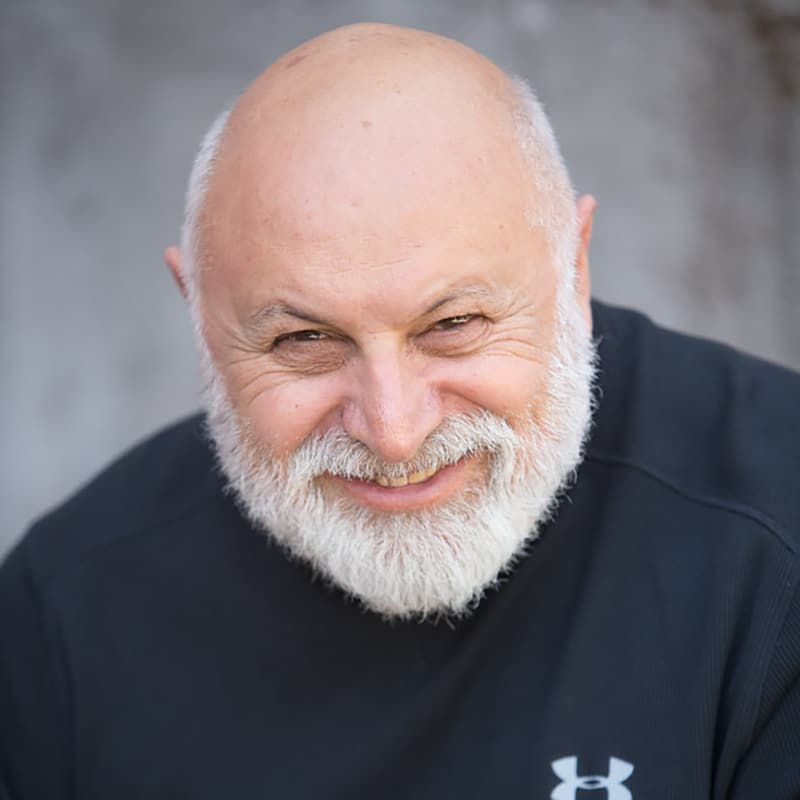
“All you need to succeed, really, is talent, for sure. And talent requires a lot of sweat and a lot of work and a lot of failure. And you need courage and you need to be real. And you need not to think you’re owed anything because you’re not.”
~Barry Greenfield
Barry Greenfield is making his second appearance on StoryBeat. He’s a working musician and songwriter whose career spans from 1968 to the present. His 12 CDs have enjoyed global sales. Barry’s written three number-one songs and had twenty-plus songs covered by other artists. In 2025, his music was selected by HBO, BBC TV, and Australia Films for their original programming.
Barry’s also an author. His first book, a memoir, My Journey to Blue Sky, was published in March 2025. He and I chatted about My Journey to Blue Sky during our first conversation. You can find that episode on storybeat.net, wherever you listen to podcasts, and on YouTube.
Barry’s second book is a novel called All You Need Is Courage, which I thoroughly enjoyed reading. It tells the fictional tale of a young songwriter who meets and works with his heroes, The Beatles, during their heyday. The saga has more than a few parallels to Barry’s own history. If you enjoy stories about hardworking artists triumphing in the music business, I highly urge you to read All You Need Is Courage. You may find it to be truly inspirational.
Barry’s also written music for a documentary he produced called My Day in Auschwitz. A selection from the film, The Gate, was published in the Yad Vashem 2025 coffee table book, Lessons from the Shoah.
Please stick around at the end of this episode because Barry has generously lent us his fantastic song, The Beautiful Band, which we’ll play for your listening pleasure.
WEBSITES:
- Website – barrygreenfieldmusic.com
- Barry’s new novel:All You Need Is Courage
- Barry’s autobiography – My Journey to Blue Sky
IF YOU LIKE THIS EPISODE, YOU MAY ALSO ENJOY:
- Sören Sulo Karlsson, Rock Musician-Author-Episode #367
- Doug Besterman, Orchestrator-Arranger-Composer-Episode #363
- Michael Mason, Musician-Session 3-Episode #340
- Carl Canedy, Rock Legend and Phillip Doc Harrington, Author-Episode #322
- Jon Kremer, Writer-Episode #319
- Jimmy Roberts, Composer-Lyricist-Poet-Episode #287
- Amy Powers, Author-Songwriter-Producer-Coach-Episode #262
- Steve Maher, Musician-Singer-Songwriter-Episode #261
- Jimmy Ryan, Musician-Composer-Producer-Author-Episode #245
- Mike Byrne, Creator of The Beatles Story Exhibition-Episode #239
- David Pomeranz, Singer-Songwriter-Episode #230
- Bill Mumy, Actor-Singer-Songwriter-Producer-Episode #227
- Michael Wolff, Jazz Pianist-Composer-Bandleader-Episode #225
- Suzi Quatro, Rock ‘N Roll Superstar-Episode #224
- Douglas Levine, Composer-Pianist-Music Director-Educator-Episode #194
- McCuistion-Ritmanis-Carter, Composers-Episode #191
- Robert Miller, Singer-Songwriter-Musician-Episode #189
- Adam Hawley, Jazz Guitarist-Producer-Episode #185
- Megon McDonough, Singer-Songwriter-Episode #178
Steve Cuden: On today’s Story Beat,
Barry Greenfield: All you need to succeed, really, you need talent, for sure. And talent requires a lot of sweat and a lot of work and a lot of failure. And you need courage and you need to be real. And you need not to think you’re owed anything because you’re not.
Announcer: This is Story Beat with Steve Cuden. A podcast for the creative mind. Storybeat explores how masters of creativity develop and produce brilliant works that people everywhere love and admire. So join us as we discover how talented creators find success in the worlds of imagination and entertainment. Here now is your host, Steve Cuden.
Steve Cuden: Thanks for joining us on Story Beat. We’re coming to you from the Steel City, Pittsburgh, Pennsylvania. My guest today, Barry Greenfield, is making his second appearance on Story Beat. He’s a working musician and songwriter whose career spans from 1968 to the present. His 12 CDs have enjoyed global sales. Barry’s written three number one songs and had 20 plus songs covered by other artists in 2025. His music was selected by HBO, BBC TV and Australia Films for their original programming. Barry’s also an author. His first book, a memoir, my Journey to Blue sky, was published in March 2025. He and I chatted about my journey to blue sky during our first conversation. You can find that episode on storybeat.net, wherever you listen to podcasts and on YouTube. Barry’s second book is a novel called all youl need is Courage, which I thoroughly enjoyed reading. It tells the fictional tale of a young songwriter meeting and working with his heroes, the Beatles during their heyday. The saga has more than a few parallels to Barry’s own history. If you enjoy stories about hard working artists triumphing in the music business, I highly urge you to read all you need is Courage. You may find it to be truly inspirational. Barry’s also written music for a documentary he produced called My Day in Auschwitz. A selection from that film, the Gate, was published in The Yad Vashem 2025 coffee table book, Lessons from the Shoah. Please stick around at the end of this episode because Barry has generously lent us his fantastic song, the Beautiful Band, which we’ll play for your listening pleasure. So for all those reasons and many more, I’m truly honored to welcome back to Story Beat the deeply talented singer, songwriter and author, Barry Greenfield. Barry, thanks so much for joining me again.
Barry Greenfield: 100%. My pleasure. I’m honored to be here and I truly enjoy working with you.
Steve Cuden: It’s great to chat with you, Barry. You’re an easygoing, wonderful guest. So, uh, we’re going to talk a lot about your book here today, but since we last spoke, are you continuing to write songs as well as, uh, prose?
Barry Greenfield: Oh yeah, daily, if not weekly. Um, the last two songs I’ve written have been sort, um, of unique. Uh, uh, I wrote a song about the monarchy. I had very little English interest in the British monarchy. But with the downfall and the uh, disaster that Andrew, uh, Mountbatten has become, I found that fascinating idea for a song. So my second to last song was about the monarchy. And over the last um, five years, but certainly the last three years, I’ve been dealing with uh, heart issues. And I’m um, uh, debating with the cardiac surgeon actually next week whether we can go to surgery. So. So I wrote a song called Coronary Artery Disease. Now these are not the same kind of songs as Save the Last Dance for Me or uh, no Reply, but they’re still three, four minute songs with a story. And yes, in answer to your question, I am still writing songs and I try to write songs that uh, make people think more than tap their foot.
Steve Cuden: I assume then you’re still passionate about writing music and writing in general.
Barry Greenfield: It’s not a choice. It’s who I am. Uh, I’ve collaborated with some of the great songwriters of the planet and one of them looked at me one day across the room and said, uh, you know, songwriting to you is oxygen berry probably 20 years ago. And I think that’s a quite an astute, uh, observation of uh, all the great songwriters. Um, I’ve had songs that have done extremely well but managed to live a life in the shadows, uh, by choice. And I’ve never had to follow ah, uh, in the Air Tonight as Phil Collins did. So it’s always been easy for me, um, to keep on trying to top myself because I’ve never had that uh, Grammy winning or Oscar winning song. And I think that’s almost a blessing for an artist because all an artist needs to do is make art. And I’ve been able to do that since age 15 and I’m 75 now.
Steve Cuden: And that passion has been the same for all these years or has it changed in some way?
Barry Greenfield: I still get nervous when I perform. I do two concerts a year, uh, both two and a half hours long, uh, without stop still, um, going to the studio most every year. I love that, uh, the passion, uh, is not really increased and not really decreased. I have a very, very good memory and I remember uh, going to Apple in 68. I remember working in Hollywood in the 70s and I remember my early, uh, work in Nashville, which lasted about two years in the early 2000s, 2008, 2009. And they all were fascinating, uh, chapters of, uh, adventure, excitement, growth, uh, and uh, making art that came from my heart. I’ve always made sure that the people in the room, where possible, were super, super talented. And that brings me up to another level because of the uh, surrounding environment. That’s very important. You’re as strong as your weakest link when you make music.
Steve Cuden: Mhm. You clearly are not the same human you were when you were a teenager. You have grown, you’ve changed, you’ve had a family, you’ve ah, done work in all sorts of different ways. So you’re not the same person. No one is. Over time, everyone changes. What do you think is different about you today as an artist than when you first started? Other than you’ve obviously had experience, but what is different about your abilities, your passion, your art, your creativity?
Barry Greenfield: I have a deal with my daughter. I have, uh, three daughters. Uh, the oldest one is 42. Her name is McCartney and she comes to every show. I say that with some disclaimer. She might have missed one or two over the decades, but we have a deal that when I can’t cut it or the voice falters, uh, I’ll let her tell me and then I will make the adjustments of probably not doing them, I think. Um, so with risking the chance of sounding a little bit sure and confident, um, I think my shows are getting better. I think my storytelling is getting better. I’m um, very new to this writing stuff, this making of books, so I can’t really judge that. I’ve done three books now. Two of them have been published, the other one is still being worked on. Um, I’m just getting better. And um, I think maybe my great songs are written maybe in the 70s, but every so often I, I hit the mark again. And um, I’ve not written 80 great songs in my life. I’ve written probably 12, maybe 15. But I’ve written probably hundreds of good songs. But great songs like, um, hey Jude, I’m not in Love, um, Purple Haram’s song, the Wider Shade of Pale. They’re few and far in between.
Steve Cuden: Yes, well, the Wider Shade of Pale for me is one of the great glorious songs of all time, that’s for sure.
Barry Greenfield: Um, absolutely. And 40 years ago Paul McCraney said it was his favorite single of all time. I’m not sure if that’s true today, but it’s a fantastic piece of art for me.
Steve Cuden: It’s it’s, um, the Beach Boys. God Only Knows. That’s. To me, that’s the greatest song ever written. The Beatles are close. There’s a bunch of stuff in there that’s close.
Barry Greenfield: If you ask me what my favorite three or four songs are ever written, God Only Knows, uh, is in that list. Uh, there’s two I can think that mean more to my heart. Day in the Life. I really like that. And I really have a very hard place for Jumping Jack Flash. I think Jumping Jack Flash is a masterpiece. Uh, I love the lyrics. And it wasn’t until I was in my mid-50s that I realized that what Mick does a lot is he draws a list. I was raised by a bearded, toothless hag. I was schooled and strapped right across my back. He does my back, he does a list of lines. And, boy, is that an easy way to write a song.
Steve Cuden: Explain to the listeners why that makes it easy to write a song. Explain that.
Barry Greenfield: Well, if you’re making a list, there doesn’t have to really be much continuity between the lines. You don’t have to go A, B, C, D, where A, B, C, D are related. All you have to do is give it three or four images, and it’s a cheating style that works some of the time, but because it’s easy, it sometimes doesn’t work all the time. Radar Love is another great song with a list. John Lennon never uses lists. He uses a straight line, a literary line that tells a story, be it a ramble or not. But Jumping Jack Flash is a list. And, um, what’s the other one? There’s lots of Rolling Stone songs that are list. Um, you kind of get what you want. Gives different images, you know, a list of what happened in London that week, you know, went down to the Chelsea drugstore to get your prescriptions filled. It’s a really, um, satisfying way to write a song. And to the young songwriters out there, try it. Don’t try and tell a story. Just try and make a list. Um, if I may, um, I read a really fascinating, um, story about how David Bowie and, um, Queen wrote, uh, under Pressure. And, uh, they wanted to collaborate together because they were always looking for ways of making money and spreading their brand. So they thought if you put the two brands together, it’ll probably work. So they go in the studio, and Bowie is very, very confident. All the Queen guys are really nervous. And Bowie says, well, here’s what I want to do. Uh, John Deacon had the riff for Under Pressure. We’ll just use this riff. And he Gave them all a piece of paper and he said just write down four lines, they don’t have to make any sense together and just write down four lines. And they all did. Freddie Mercury, Brian May, John Deacon, and then Bowie just took the four pages, got Freddie Mercury to go na na na na na. Like beginning of the song you’ll hear him go na na na na. And then he just read these lines. Now they weren’t congruent and they weren’t done by the same person done by four different people, but it became a song. And I thought he probably said he does it all the time to them. And I thought that was another interesting little trick that I’ve used. There’s many ways to get the top of the mountain without Save the Last Dance for Me being the root.
Steve Cuden: Interesting. You know, you’ve given me whole insight here that I had not really thought through. I know about Liszt songs and pattersongs and that kind of thing, but I had not thought of what you’re talking about before the way you just described it, which I think is really a marvelous way to think about how to write a song that um. If the music is catchy then the lyrics should be kind of interesting as well. If the music is catchy.
Barry Greenfield: Let me add you a fourth song to our list which is Jumping Jack Flash and Day in the Life and God Only Knows and Pokel Harem White is Shade of Pale and this one is in that League and that’s Life on Mars. It’s a God awful small affair to the girl with the mousy hair. Um, then he gets talking about sailors in fights and policemen. I’m sure it’s one of those songs where he took strands of air, strands of lyrics from his book that thoughts that he had wrote down and. But the bed that they sit on, the Proko harem bed of white, a shade of pale. The um, beautiful, beautiful acoustic guitar and piano in Day in the Life the phenomenal ah, riff of Jumping Jack Flash that Bill Wyman says was stolen from him by Keith. Keith gave him no credit for it, uh, are enormously comfortable feather beds. So if you have, like you said a second ago, a really sort of solid, comfortable, warm, uh, understood feather bed, the lyrics sit on it and as long as they’re smart they don’t have to rhyme, they just have to have a melody that’s good and fits the tune. And Life on Mars is a wonderful example of that.
Steve Cuden: When Bowie died I played that song I don’t know how many times over and over again because it’s just such a rich and beautiful song. Both the lyrics and the melody with which. You need both of those, don’t you? It can’t just be a beautiful melody with meaningless, ridiculous lyrics. Those also have to work. But if you have beautiful lyrics and the music is not listenable, then it doesn’t work either. You have to have both married together, don’t you?
Barry Greenfield: You’re as strong as your weakest link with a song. So if you have a, uh, Bass City Roll, a lyric with a catchy tune, it might be a hit, but it won’t live. But if you have a phenomenal lyric and a phenomenal tune, like bands like yes had and My Girl by the Temptations, uh, I think it’s a smokey song, but I’m not sure. Or Ball, um, of Confusion or, um, Cloud 9 or Papa was the Rolling Stone by Norman Whitfield, the Motown guy. You’ve got a gem. And that’s why frequently there’s partnerships. There’s lyricists like Kyle David and melody writers like Burr Bacharach and Rogers and Hart. But then you have the guys like Cole Porter that can do it all and Bob Dylan that can do it all. But I just like to share a personal note. And that is the night that you played Life on Mars, when we didn’t know each other. I wrote a song called Bowie. I wrote it, started it that night and I finished it that night. And I recorded it that week, uh, the day he died, 2016, just after his birthday. And about 10 minutes ago, I was drawing up a set list for my next show and not knowing you were going to mention that song. Anyway, I added Bowie, which I haven’t played for a decade, uh, into the set because it’s one of my favorite songs. And of course, before I play it, I tell the story that I love Bowie. I think Bowie’s the best solo act ever. Life on Mars is a masterpiece, as is all of Hunky Dory.
Steve Cuden: Well, let’s hear it for Synchronicity. That, um, it just came up and you just, uh, you know, you just thought about it. That’s interesting. Interesting. Well, let’s talk about your book, all youl Need Is Courage. Um, tell the listeners what all youl Need Is Courage is all about. More than what I described in the
Barry Greenfield: intro when I was, um, 17 years old, uh, in May 1968, Joe Garrigiola and Tallulah Bankhead, who were the co hosts of the Tonight show, uh, interviewed Paul McCartney and John Lennon. And it was one of the most amazing nights of my life. And I was only 17. But uh, John and Paul came through the curtain at midnight. Tallulah, uh, Bankhead was drunk. Joe, ah, Garagiola was just completely out of his depth. Didn’t have a clue how to interview anybody. All he could do was catch a baseball, I guess. Sure, a very nice man, but not an interviewer of Johnny Carson’s ilk. And it was a terrible, terrible interview. It lasted 22 minutes. But it was just perfect for me because I saw John and Paul do something they didn’t do, which was talk about this new invention they had, which was called Apple Records. And John said to me, the 70 year old kid in Vancouver, Canada, we want you to come to London, you know, we want you to bring your songs and your poems and there’ll be no one in a suit wasting fear. So I had $800 in the bank, which I had worked for packing groceries to pay for my first year of university. And I took it out of the bank and I bought a ticket on M BOAC and I flew to London. And that was a lot of courage to do that. I was scared. I’d never really left my parents home. I’d never really done anything musically, but I believed in my songs. I’d been writing for two years since age 15. And I walk into Apple and I walked up to the receptionist and I said, I’d like to meet John Lennon. And she was freaked out. And I did meet Derek Taylor and I played Derek Taylor 10 of my songs who then introduced me to John and Yoko. And he loved the songs. And it led to a three day experience in Apple in 1968, May, which resulted in me being offered uh, a recording contract for Apple to release a single which was two songs, Love Is for the Young and Old and with this New Girl. So I still have a copy of the with this New Girl demo which you’re uh, listeners can find on YouTube under Barry Greenfield. With this New Girl the demo’s there. And I couldn’t believe they offered me a recording contract. I didn’t want a recording contract. I wanted to be a songwriter. I had no interest in singing. I couldn’t really tune my guitar. I certainly had never played with another musician by age 17. And uh, so I went to Hyde park and I wandered around and walked in and said I can’t do it. I just, I don’t want to do it. I don’t want to be famous, I don’t want to sing, I just want to write songs, Songs. And they understood and they said thanks for coming. I can’t believe you walked in the door. Nobody else did or has at that point. And I came home and so I’m now 75. So that’s what, 60 years, 58 years. And uh, I’ve always wondered, I’ve never regretted the decision. It was the right decision. Because I wouldn’t be here today if I would have accepted it, I believe. But I’ve always wondered what would have happened if I walked, would have walked through door number three and said yes. And that’s what the book all you need is courage about. But a fictional 19 year old kid called Adam Bond. I was 17, he’s 19 in the book. Felt more real to me to be 19. And what happened because he said yes to John Lennon. And the story goes from there. He signs the contract, he makes the single. Ah, he has John Paul Jones as his producer. And there’s a reason for that. And then the next 300 pages is, um, uh, ah, the story of what happened because he had the courage to do it and the courage to say yes. I didn’t have the courage to say yes.
Steve Cuden: And the title comes from you having had that courage in the first place to get on the plane and go
Barry Greenfield: over there and walk up the steps and walk in the door and be normal around John Lennon. I wasn’t uh, in awe and I wasn’t stammering and I didn’t sweat. I was talking to him. I had the ability, even though I’m nervous and shy and introverted, all those things you can’t imagine. I am blabbing away here. I can rise the occasion. I’m not famous. Never awed me, ever. And I’ve used it my whole life to introduce myself to Kenny Rogers, to Sheryl, uh, Crow, to all these people, because David Grohl, Sonny and Cher. Yeah, all of them, uh, and they all love it. All they want is for you to be normal. They don’t want you to say, oh yes, Mr. Buono, I really liked. I got you babe. They don’t want that. They want. How do you like Vancouver?
Steve Cuden: You know, well, exactly, you know, um, I assume that courage is what has sustained you in whatever career that you’ve had over these years.
Barry Greenfield: Having children, getting married, you know, travel. I’m scared all the time. I get scared at airports, I get scared in traffic jams. You know, I’m an an dude, but I don’t surrender. I have the courage.
Steve Cuden: So what, is there something that you tell yourself or something that you do to give you that courage when you’re in that moment and you’re nervous and you’re trepidatious. Is there some mantra that you tell yourself? Is there something you do?
Barry Greenfield: No sir, I just think of a. I mean I don’t do this consciously but now that you bring it up, I think of a guy in the trenches in World War II or I think of uh, the woman that’s uh, going through Harvey Weinstein’s world. The courage it takes to take on those battles. And the battles that have come my way have been very little. Um, I lived in rhodesia from age 7 to age 13 and then South Africa from age 15 to 17 before I get Canada. And I witnessed apartheid and racism firsthand every day. And it took me about five years to realize that it was wrong. First it just seemed normal. You just, it’s so easy to be superior. And I Suddenly at age 12 realized how wrong it was. And I think that really influenced my life that I had realized that no one’s better than me and I’m not better than nobody and we’re all descendants of monkeys. And I’ve always felt that I’m not better than you and you’re not better than me. So it doesn’t really take a lot of courage. But fear is just false evidence appearing real. So don’t surrender.
Steve Cuden: So at the top of your book you have a wonderful quote from Seneca, the philosopher, the stoic philosopher from a couple thousand years ago. And the quote is, it is not because things are difficult that we do not dare, but because we do not dare things are difficult. Is that your life philosophy too?
Barry Greenfield: Well, I took that quote, I’ve known that quote for a long time. And it’s really about courage as well. But like John Lennon and Paul McCartney on the Tonight show were uh, probably watched by 15 million people that wrote music and living in Chicago, living in Adelaide, living in Detroit, living in Toronto. But according to John, nobody came like all the acts that the Beatles signed for, uh, Apple didn’t walk in the door. They were all like referred or something like Mal Evans bought Badfinger. Jackie Lomax was a friend of the band from Liverpool. Mary Hopkins was Paul Sor on the Opportunity Knocks television show, which is the earliest version of American Idol. Um, so nobody walked in the door even though John said come, come one more, you know, nobody did except for this 17 year old skinny little ordinary songwriting guy who had courage and yeah, that’s why David used that quote.
Steve Cuden: As you said, uh, a few moments ago, uh, your story with the Beatles, your literal story stops after a few days in England. But Adam’s story goes on well beyond that. How much of the, uh, what percentage would you say of the book is based on your truth, your experience, versus you’ve made it up whole cloth?
Barry Greenfield: A lot of it is based on my experiences inserted into his experiences, like my developing my friendship with Mary Hopkins. I had the same with another artist, um, my working in Trident Studios with, uh, Nicky Hopkins and the English top session people that were called, uh, the Wrecking Crew. The London Wrecking Crew. Thank you, brother. Um, in la, I worked with Larry Cotton, Joe Osborne, Jim Gordon, Larry, uh, Mahobrak, um, Dean Parks. They were the American Wrecking Crew. And so I just. The relationships I built with Jim Gordon and with Larry, uh, I just inserted as if they were them. So there is a basis of reality to the whole book. When I go on tour with Joan Baez, when I go on tour with Donovan, the hotels, the sound checks, the live shows, the reactions are, uh, closely, closely, closely. Parallel to my tours with Supertramp and John Lee Hooker and many others. I toured with lots and lots of people.
Steve Cuden: So that’s based on your experience, but you’ve changed names. Is that the way it went?
Barry Greenfield: Well, I couldn’t use Supertramp because they didn’t exist. In 1968, I did a concert, an imaginary concert in St. Paul’s Cathedral with Mary Hopkins. Now, Mary Hopkins did that concert, so she sang three songs in St. Paul Cathedral, uh, after she had the hit those Were the Days. So all I did was add myself to the bill and I sang four songs. And then I got from that the opening slot on the New Yardbirds, uh, doing a show at the New Marquee, which was true. The dates are accurate in the book. The New Yard Bridge, which became Led Zeppelin a week later, their first live gig as a band, the New Yard Bridge with Paige Plant, Barnum and Jones, was at the New Marquee. So I just. I worked out how big the marquee was. I found out the crowd, I found out the set, what they played that night, and I added myself as if it existed. So even though I wasn’t there, it appears I was there. And it feels believable because it blends in. And the three songs I played, uh, that night at the New Marquee were the three songs that I close with when I played the 12 Bar Club in London in 1974. And that was my best evening on stage ever. 1974 in London. I headlined it at a really, really, really famous club called the 12 Bar that Dylan and Stones had played at. And the reaction from the 350 sold out crowd was like, um. It was unbelievable and I’ll never forget it. And I killed because I really shone because I was so scared to be in London performing. It was just so scary. But I did well. And that’s what Adam does at the new Marquee.
Steve Cuden: You must be very good at not showing it.
Barry Greenfield: Brilliant. Absolutely brilliant. I hear all the time, Barry, you look so great up there. You look so relaxed.
Steve Cuden: Shit myself, we have that in common, Barry, because I’m pretty cool looking on stage. I’ve done a number of things in front of people. I’ve interviewed some huge names in front of crowds. And I think I come off as being cool, calm and collected. But inside it’s like total cacophony.
Barry Greenfield: Makes perfect sense. I once read, and I hope it’s true, Don Rickles threw up every night and he comes out there. Who’s more confident than Don Rickles? You know, um, I’ve done the last three concerts I’ve done which goes back 18 months. Two of them I’ve walked off into an ambulance and gone to hospital because I just. Because of my heart is so weak. And I get to the point in the set, the last one was about one hour and 40 minutes in when I realized I can’t breathe, can’t get my breath. So I just do the last one, which is always needless close tonight. And then I, uh, walk out and I was so weak that my wife put me in an ambulance and I was in. Yeah, but when you’re there and performing, I don’t care if you’re Steve Cuden or If you’re um, McCartney, you have to climatize it’s a different person in a way.
Steve Cuden: Well, you know, you can either at that moment, see if you agree with me at that moment, you can either fold or go forward with some degree. You’re there for a reason. You’re not. You didn’t. They didn’t book you at that, uh, venue because they knew you’d be terrible. So they are. The expectation is that you know what you’re doing and then you’re just doing your best to um, not show your nerves and get through it as um, the pro that you are. That’s how I think of it.
Barry Greenfield: I think of that exactly the same way. And to add to it, there’s a commitment involved here. Like these people sometimes, usually are paid and they’ve driven and they’re parked and some of them find it hard to find the 80 bucks, you know, um, so there’s a promissory note between you and the lady, the gentleman, the teenager, the retiree in the audience to don’t, don’t. Don’t steal the money. You know, um, they’re paid to see a professional and act like one or don’t take the gig.
Steve Cuden: And so how many people that are in the book that are real? You have two lists in the book. One of the actual humans that the world knows that are in list are discussed in the book, and a second list of those that you made up. Um, how many of the people that are listed in the book that are real were people that you’ve actually interacted with? Most of them.
Barry Greenfield: Everyone, I would think.
Steve Cuden: Every one of them. Because it’s huge. The list is huge, and it’s impressive. Are all the people that you talk about at Apple actually people that are at Apple? I know that.
Barry Greenfield: Uh, no. Uh, well, obviously Derek Taylor is. And obviously the receptionist was. I made up her name.
Steve Cuden: Jillian and John Lennon.
Barry Greenfield: Yes. And Gillian and George Harrison and Patty Harrison and Paul McCartney. And Linda Eastman comes in towards the end of the book because that’s the date that she arrived. When Paul McCartney comes backstage to congratulate me at the marquee. It was the night that Linda and him first met in London. Yeah. Now, he didn’t go to the marquee, as far as I know, but I let him come to the marquee. So she comes walking in, and she’s wearing an oversized jacket that soon was Paul’s. And he says to me, um, congratulations. I couldn’t believe that you could pulled that off. He was so mild and was so aggressive up there. Uh, we have to leave because our, uh, chauffeur, which is correct, his name, uh, is taking us home. And then we’re off to New York tomorrow. What he didn’t tell me, but I knew from my research, was they were off to New York to meet, um, Linda’s family. When it says in the book that George is in, uh, California and then in Woodstock, New York, with Bob Dillard, those dates are accurate. That’s where he was. So. So I said to, uh, Derek, you know, I really miss George. I haven’t seen him for 10 days. George and I are quite close in the book. And he says, oh, well, he’s in California. And that trip to California and Paul’s trip to New, uh, York coincide with the end of the White Album. So they finished recording. They’re sick to death of seeing each other. They’re sick to death of working. So they all fly away. And John was the only Beatle in Apple. When I went there, the others were away.
Steve Cuden: Interesting. And yet in the book, Adam confronts all of them at Apple and then beyond. Um, you do tell this tale in the first person, so then it feels autobiographical or biographical that you’re telling it in the first person. Was that an easy decision for you to make as opposed to telling it in the third person?
Barry Greenfield: I think the answer is there was no decision. I just did it because I am Adam Bond, like Adam Bond is. If I would have said yes, that’s how I would have imagined it went. I don’t have the ability to imagine it being the Jackie Lomax story where it was like, I’ve read a lot about Jackie Lomax. He was not cool, he was aggressive and demanding and with Mary was really shy and couldn’t scared of London because she was from a little town in Wales. So I didn’t really have much choice. In order for it to work, it had to be first person for me because that’s how I wanted to live the tale.
Steve Cuden: So it felt like you uh, were reading a personal diary is the way that it felt like a journal, which is a very effective way to write a book. I, uh, was just curious if there was a decision process and you’re saying no, this is just the way it had to be.
Barry Greenfield: Uh, that was the default. I didn’t think of the other option. Uh, never crossed my mind because it was just, it began in truth, which is unusual for a novel because I did go to London. Uh, and this is just what would have happened if I would have taken door number three instead of door number one.
Steve Cuden: How many of the song titles that you have Adam creating in the book, how many of those are real songs?
Barry Greenfield: 100%.
Steve Cuden: 100. They’re all your songs?
Barry Greenfield: Yeah, all my lyrics. So, you know, when I’m in Paris I meet this woman, this teenager called Laurie. Well, Laurie’s my wife and she’s five feet from me right now. So even though I didn’t meet Laurie Until I was 63, this 19 year old Adam meets Laurie. And there’s a song in there called Paris France that I wrote for Laurie. And all the lyric in the book, it’s exactly what the song says. And um, so there’s a lot of truth in the book in between the fantasy and the dreamlike quality of some of the stories that obviously I never met George Harrison, I never met Paul McCartney, but if I would have, because I know who they are and what they’re like, I spent 50 years studying them, uh, this is what I think would have happened, but we don’t really know.
Steve Cuden: Well, you know, uh, one of the great admonitions that, uh, writing teachers give to their students and writers will share with other writers is to write what you know. And I have long said that, um, writing what you know really means write what you know in your heart, not necessarily what you’ve personally experienced. And I use as an example of that, um, James Cameron, when he wrote the Terminator, had never actually met a Terminator. Straight people that write cartoons, uh, don’t actually know cartoon characters. They just know people. And so you, uh, actually wrote a book that you do know.
Barry Greenfield: Yeah, I’m not gonna write. Yeah, I did. I’ve lived studios, I’ve lived record. I might not have said yes to Beatles, but I did say yes to Burr Bacharach’s publisher, and I did say yes to the manager in New York, and I did say yes to David Kirschenbaum and the head of rca. I did say yes down the road. So all of these things happened to me, uh, when I said yes to other people. So it is. There is a foundation in the book of, um, what I lived in my life. And I just want to add to what the Terminator line. That’s fabulous. The other one that comes to mind is I, um, very iffy about Bruce Springsteen. There’s things I really like about Bruce Springsteen and there’s things I really don’t. But mostly it’s his band that I like, E Street Band. But he did a TV show from Broadway called Springsteen on Broadway three or four years ago. Did you ever see it?
Steve Cuden: I did not see it, but I know about it.
Barry Greenfield: It’s on Netflix. And, um, with Bruce Springsteen, I can only last 20 minutes. So all I watch is the first 20 minutes. And he’s so talented, but just not my cup of tea. And he says in his way of being honest, and it’s not, he’s not ad libbing. The whole show is scripted, all the stuff between each song, and each song is planned. He says, um, I wrote songs about motorcycles, I wrote songs about blue collar jobs. Uh, and the list goes on. And I never did any of that stuff back then. So he was writing about the Terminator as Barry Greenfield is writing about Harrison and Patti and their house. But when I go to their house, you can now find out what their house looked like and where the swimming pool was and what was on the walls and all of his guitars and going to his guitar tech together. Ah. When he Bought me my guitar when I went to the guitar tech as he was fixing George’s sg. It’s all based upon the actual guitar. So the, um. The things that, you know, the humbuckers and stuff are all what he had in his guitar. He had three humbuckers and the heads. I got the names of the heads and they’re all described correctly. And his guitar tech is. His guitar tech, who is Clapton’s guitar tech and Bowie’s guitar tech. And I got where he lived, where his office was, where his studio was. And we go there, we walk in and, uh, it’s all. There’s always. It’s not bullshit coming from the sky. It’s based on. Upon what happened in 1968 with George Harrison walking through the street with his hat on. How he won’t go into a cafe because it never works, but he can walk down the street as long as he walks fast and he has his collar up. And I read all that and I made out. He said it to me.
Steve Cuden: So it’s a personal reflection throughout the book. And I suppose you could also call it, uh. There’s a term called historical fiction. And in a way, this is historical fiction. In a way.
Barry Greenfield: In a way. But it’s not really true because I didn’t say yes to John. It’s. If I said yes to John.
Steve Cuden: Well, that’s what happens in historical fiction is it’s history, but it’s also fictional.
Barry Greenfield: Okay, I’ll buy it then. Okay, I’ll use that label too. I’ve learned two things today. Yeah, I thought it was just a novel, but now it’s historical fiction.
Steve Cuden: Before Barry and I started the show, we briefly spoke about that. This book could technically be called a Romana Clef, which is, uh, you know, it’s. There’s truth. It’s. The story’s based on a real story, but you’ve made up fictional characters and so on in it. And that’s what Barry has done. And it’s. It’s thoroughly enjoyable to read, especially because you’re, um, closely, uh, following the actual Beatles and having, uh, experiences with Adam Bond in it. It’s very interesting. Adam is first produced in the book by, as we spoke earlier, John Paul Jones from Led Zeppelin. Were you produced by John Paul Jones?
Barry Greenfield: No, but my great dear friend Graham Goodman from 10cc was. And, uh, his first solo album, the Graham Goodman Thing, was produced by John Paul Jones. And John Paul Jones did a lot of production. He produced a lot of Donovan songs, Dusty Springfield. He was also in the shadows for a While when Bruce Welch left. So John Paul Jones had a presence in London, but the people in the street didn’t know it. But the studios knew it, and Jimmy Page knew it, and Dusty, uh, Springfield knew it. So when John wanted me to go in the studio, he. Just to do the single. Because we start off with just doing the two songs. He said, I’m gonna hire John Paul Jones. So he said to Derek, Derek, phone John. And then John comes walking to Apple three or four days later to meet me, uh, to produce the single. So I found out how tall he was. I found out how old he was. I found out his wife. I found out when he got married. Uh, and he comes in with a leather satchel, which who knows if that’s true or not. And we then work together, and he helped me the way he helped Graham.
Steve Cuden: Very interesting. Very interesting. Well, you know that, um. Uh, you also write in the book that Lenin respected courage, belief and action Talk minus action equals zero. All you need is courage. You wrote that in the book. Did Lennon ever say anything like that to you?
Barry Greenfield: Yes and no. No, he never said that to me. But what he did say to me was, I can’t believe you did this. Like, you flew from like he said. I think he never asked if I had any money. But I was pretty obvious. Most kids didn’t. Right. I wasn’t dressed, like, in wealthy clothes. I had the shirt that I got for Christmas when I was 16 on when I walked in, it was a blue shirt. There’s a picture in, um, the Blue sky book, taken that day, where I have a jacket on with the Union Jack pin on it. So he could tell I was a student. I guess I look like Canadian student, American student. And, uh, he was, like, dumbfounded. So, like, they were. Also, there’s an English word, which I hope you understand. It’s called gobsmacked.
Steve Cuden: Yes, I know. Gobsmacked.
Barry Greenfield: Well, I might be exaggerating because it was a long time ago, but I got the feeling that they. When I left the room, John turned. I don’t know if this is true. John turned to Derek and said, that motherfucker flew from Canada and just walked in the door. Because what people don’t understand is that there was no security. There was no guard outside.
Steve Cuden: Well, you couldn’t do that today.
Barry Greenfield: No, no, no. You couldn’t phone Sonny and share in the hotel room today. It was a different world.
Steve Cuden: Yeah, totally. If you, you know, if somebody gets the gumption to say, I’m going to go meet Taylor Swift, um, you’re going to be met with very big men, usually packing each.
Barry Greenfield: You have no chance. Like, it’s not like you have a. If you’re charming or if you have a note or if you’re kind or if you bring their flowers, you have no chance. They have a zero tolerance policy for closeness to a star. That’s what they pay for.0. And I walk in the Apple building and inside the upper building was four people. The receptionist who was 18 year old, Carnaby street lady, John Lennon, Yoko Ono, harmless people. And Derek Taylor, who was the most sort of focused and centered kind of business guy who said to me, would you have a cassette to give John? And I said, oh, I’ve never made a cassette. I’ve never recorded any of my songs. Well, Barry, how do you plan on showing your songs to John? And I picked up my $25 guitar because that’s what I had in a plastic case. And I said, uh, on these, on this. And he said it made perfect sense. It was a straight line. So I guess he looked my eyes and said, well, the guy’s come from Vancouver, Canada. It’s a 12 hour, uh, flight back. Then let me be kind enough.
Steve Cuden: And he listened to your stuff.
Barry Greenfield: He loved them. He was gobsmacked. And he took me to John’s office right after he said, this guy’s great. And they were looking variety. So it wasn’t like I wasn’t invited.
Steve Cuden: Well, you were invited off of the tv.
Barry Greenfield: Yeah, I was invited. It wasn’t like I wasn’t. I wasn’t invited.
Steve Cuden: It wasn’t a personal invitation. But you took it personally.
Barry Greenfield: It was a personal invitation. He’s talking to me. It felt it, Steve. It really felt like. I m really felt like he was. It came through. I felt his eyes, I felt his energy and I felt, I mean I went because it felt really good.
Steve Cuden: Well, I think most you’re unusual, really unusual in the sense that you took it as an invitation to go. Most people would have said, uh, I can’t go over there, I can’t do that. But you had the courage and maybe a little bit of insanity to get in a plane and go do that.
Barry Greenfield: I totally think both those words apply. But you know, Bowie had like two or three albums that did nothing. He didn’t stop. He went on and on and on. And then he heard, um, uh, Rocketman by Elton and he wrote Space Odyssey, you know, and that opened up all the doors for him. And Elton was always pissed off at that. He thought that Bowie stole his song and he didn’t. They’re completely different songs.
Steve Cuden: I think of David Bowie as, um, maybe the ultimate artist. He was a true artist. He was not making music for the public. He was making art. And that’s how he operated. And I think a lot of, uh, artists today, and maybe throughout much, uh, of history, uh, do it because they’re trying to make a living. And I think he was a true, um, grounded artist.
Barry Greenfield: Couldn’t agree more. And they’re not doing it because they want to make a living. They’re doing it because they want to get rich once you start making art. Because, like, I produced a lot of bands, mostly, uh, young bands. And after about two hours with those incredibly $8,000 speakers and the right walls and the guy playing with the desk and making them sound better before Auto Tune and all that, the thing that was almost constant was, this is very Beetle ish. This is very Beetle ish. No, it’s not. It’s not in the same ballpark as the B word, you know? Um, but Bowie was my favorite because of what you just said and his tenacity and his courage to do Ziggy Stardust. He never stayed on the same train. He changed trains for every station. And I’ve done that with my songs. They’re all different. You asked me, uh, am I still creating, still writing? Well, Bowie’s last album with Lazarus on it, was it called Black Star?
Steve Cuden: Black Star.
Barry Greenfield: It’s a monstrous album.
Steve Cuden: Oh, it’s fantastic.
Barry Greenfield: Yeah. And it’s not a kid’s album. It’s cranked up with Tony Visconti and it’s kicking ass. And every song is just, whoa. And he’s dying, my friend. If you watch the video of him dying, where he comes out of the closet like a coffin, I mean, this man, I just want to shake his hand. I want to say, david, the song Bowie, which I’m going to send you when we hang up. Uh, um, I’ll send you the long version, which has two versions, has the acoustic version, and then the band version, because I’ll bore you for six minutes. Because I’m willing to take the risk. Because I have the courage to lay it on you. It’s just. I was so sad that he died. I think I was surprised. I don’t think I knew he was sick. But you never think these guys are ever going to go. But all the Money in the world, which I wrote a song about, uh, can’t save you. All the money in the world can’t save you when you’re sick. Like Linda McCartney, David Bowie, um, Dave Mason, you run your way.
Steve Cuden: No one that I’m aware of, neither fame, nor fortune nor power has ever saved anyone from that ultimate demise.
Barry Greenfield: Uh, and never will.
Steve Cuden: And never will. Well, I don’t want to say never, but it’s unlikely, let’s put it that way.
Barry Greenfield: I’ll give you that.
Steve Cuden: They’re now talking about, you know, capturing your soul, your brain, your thoughts, whatever it is that they’re trying to capture in a digital form so that you can go on and on. It’s a little science fictiony to me.
Barry Greenfield: There’s a huge amount of money being spent on taking humans to Mars and a huge amount of time and investment that people are being paid 400 grand a year to look into. And there’s another school of thought that says it’s absolutely impossible, possible to send a human to Mars because their body will disintegrate so much in the two years before they get there that when they get there, continue to disintegrate, so you can never leave. And going to Mars is just as stupid as saying, I’m going to catch a fart in a bucket. It’s never going to happen.
Steve Cuden: It’s a fool’s errand is what it is. You write a wonderful line in the book that goes, time is linear. We are all one. What does that mean?
Barry Greenfield: Borrowed from my wife Lori. Um, it hinges on what I said earlier about Steve Cuden isn’t better than me, and I’m not better than Steve Coulden. And Yoko Ono isn’t better than me, and I’m not better than Yoko Ono. We’re all one. Like, we’re all. There’s no every. We’re all. We all have our foibles. We all have our craziness, uh, mishigas. All of have our weirdness. Uh, um, we all have our, like you said, pardon Saturday to get in that plane. Well, I’m no more insane than you. I’m no less insane than you. I’m, um, just me and you’re just you. And, uh, as long as you have an openness to not be judgmental and to just love, uh, which I fail a lot of the time to do, you. You’ll get by.
Steve Cuden: You cannot succeed, in my opinion, without failing. You have to fail to succeed 100%.
Barry Greenfield: And you learn more from failure than success. And Frank Zappa said, uh, failure is never final. And success. Failure is never fatal. And success is never final.
Steve Cuden: That’s very good. That’s very wise. You’ve spoken a couple times in this, uh, episode about the great Nicky Hopkins. For the listeners who don’t know who he was, tell them who Nicky Hopkins was.
Barry Greenfield: Nicky Hopkins came on the British music scene in 65, and just everybody loved him. So to give some examples of his art, he played the electric piano on the Beatles Revolution, which sure as hell helped the song as much as Billy Preston did down the road. He played the piano on so many stone songs, and the most famous one, I suppose, is She’s a Rainbow. And he wrote what’s called the Returning Lick. So it starts off with a lick, then he plays the chords, then he goes back to it. And of course, didn’t get paid for it, just like Larry Neckel didn’t get paid for Bridge Over Trouble Warners, even though there’s such an integral part. Larry told me that himself. Um, there was nobody with more sensitivity. I’m thinking maybe you can verify this or tell me I’m wrong. Did Nikki play Angie?
Steve Cuden: I think he did play Angie.
Barry Greenfield: Sounds like him. So if you listen to the piano and Angie, of course, Keith’s guitar is fabulous because Keith’s an amazing guitar player. Acoustic especially, everything. But Nikki brought so much feel to, uh, Angie, uh, we love you. Like, he just knew how to drive songs. So when I go to do my first two songs with John Paul Jones, he hires the band, which is the London Wrecking Crew, which is three guys, old guys. They very staid. I fired them after the session. I won’t work with them again. But I kept Nicky because Nicky, I found out how. If you look at any picture of Nicky, he’s dressed like Rod Stewart, he’s a rock star. He’s got a scarf on, he’s got boots, he’s got high boots, he’s got really tight pants, he’s a stud. And he’s got the, um, the haircut of Jeff Beck. He looks like a rock star, whereas the other guys look like plumbers. And, um, Nikki added so much to me that he added to the Stones and to the Beatles and to the Kinks and to the who. He played on My Generation, For God’s sake. My Generation. I don’t even know what the piano sounds like in that, but he was there playing on it. So Nicky Hopkins was one of the most successful. Uh, he played electric piano and organ, but mostly electric, mostly acoustic piano, grand piano. And so I used grand piano on six of the 12 songs from the Adam Bond album. And then I did one with Just Me and Nicky, which John really liked a lot, because I’ve always liked that one voice, one piano uh, one voice, one guitar. Um, and he was just a gentleman and a scholar. And I learned that from, um, reading about him. And I spoke to a gentleman who did, uh, an autobiography of Nicky Hopkins who’d been studying him for a decade. So if he was a badass guy and late and drunk and stoned and stupid, he wouldn’t have worked with the Beatles and the Stones. There’s a line in the book where Adam, uh, Bond gets arrested by the police. And he gets arrested because the guy he’s eating breakfast with tries to sell him drugs. And he doesn’t buy the drugs. And then the guy asks him for referrals. He doesn’t give him any leaves to sell drugs to. But the police are photographing the meeting. Adam doesn’t know. And so Adam goes to the police station. He’s there for a few hours, and he gets interrogated. They let him go because he’s not guilty of anything. And when Adam gets the tube back, he phones Derek Taylor. Derek Taylor gives him a referral that, no, no, Barry would never do that. Adam, uh, would never do that. And so it takes an hour to get back there. And he’s scared he’s going to be fired from Apple. And he walks into Apple and Derek Taylor’s waiting for him with a cup of tea and a sandwich that Sheila, the lady who plays a big part in the book, makes for them. And, uh, Adam says to Derek, um, I hope you guys don’t find me. And Derek says to Barry, you know, the Beatles are really, really smart. Uh, they’re not only the hardest working band in show business, they’re the most clever man in show business. And they don’t make very many mistakes. And no one gets through that front door and is accepted without them approving it. And everybody that works in here, from me to the chauffeurs, to the guy who changes light bulbs, is vetted to make sure that they’re the right type. And, um, Mickey Hopkins would have not gone in the room for more. They would have not used his first part if they hired him. I’m sure Mick said this Nicky is just incredible. And John brought him in for Revolution. I mean, they didn’t need him on Revolution, but the party at it made the song historic.
Steve Cuden: Well, he’s one of the greatest, what’s known as a session, uh, pianist ever session keyboardist. Uh, and there are people who are very well known in the music world for their session work, but are not known outside by the general public. He’s one of those kinds of people.
Barry Greenfield: He’s the creme of the creme, the
Steve Cuden: creme de la creme.
Barry Greenfield: So, one thing I just want to. I’ve always said it, I think, in this interview. But working with Larry Carlton, who played with Steely Dan, who’s considered the greatest guitar player by many people in American studio history because he’s a session player, did have solo albums, but Steely Daddy never used his name. They just used his guitar and gave him one little line on back of the album. He was Nicky Hopkins, but on the guitar in America. So everything about Nicky Hopkins professionalism was what I Learned from working 3 weeks, 6 days a week with Larry Carlton. And Larry Carlton and I became best friends for that three weeks. Never seen him since. But he was being paid handsomely, but had nothing to do with money for Larry. He really liked my music. And that’s where Nicky fits into this book. Obviously, he’s being paid, but he’s not coming back for more because he gets paid. I’m sure he does that. I’m sure they all do that. But he’s coming back for Barry or for Adam. Excuse me. The second time I made that slip, he comes back from for Adam because he liked the energy and the music and the songs.
Steve Cuden: What do you think that is, if you have any idea, because I don’t really know what it is that separates a Nicky Hopkins and a Larry Carlton from becoming superstars in the public eye where they’re famous and they’re touring and they’re known. What is it that they don’t have that then a, uh, John Lennon does have?
Barry Greenfield: The only answer I can give you because I don’t know. The answer is some people are not designed to be Rod Stewart. Um, some people not designed to be silly. Uh, Madonna. Uh, some people are not designed to be Adam Lampert. They’re just. They’re designed to make music. And when Nicky Hopkins puts his soul into Angie or She’s a Rainbow or Revolution, he walks out of there just as happy with a Cheshire smile and the love that he got from his people that he knows who retaliated. I think it’s just goal, desire, ability, uh, and happiness with your lot in life. Um, as Donovan said, it’s not your lot in life, Lalania. I think it’s not your lot in life, Nikki, to be the Elton John. Elton John was as good a piano player as Nicky Hopkins. Elton John on, uh, Blue Moves and any of those records Don’t Shoot Me Equal. But Elton John had the missing DNA part that said, hey, I’m not Reg Dwight. I’m Elton John. Nicky Hopkins didn’t say. I’m not Nicky Hopkins. I’m Sam Shepard. And goes off and plays piano and stands up and kicks the things and wears a duck outfit. Uh, some of these guys will do anything. And the exception to the rule is Bowie. Bowie didn’t chase fame. Fame chased him. Elton chased fame. The Beatles chase fame. Mick still chasing fame at 86. Whatever. He’s 83. It’s just ridiculous. Um, I’ve never wanted fame. I’ve turned it down. And, um, it’s just. It’s a wild animal. And if you don’t want to be in the room with a tiger, you shouldn’t walk into a room with a tiger.
Steve Cuden: That’s for sure. I think in that era, maybe a little ahead of Nikki Hopkins, but, um, I think of Keith Emerson, that Dickie Hopkins is like Keith Emerson, uh, in a way, but Emerson. Actually, Emerson did not really become famous as Keith Emerson. He became famous in a band called Emerson, Lake and Palmer, but not as Keith Emerson.
Barry Greenfield: Yeah. Keith Emerson died recently and couldn’t play piano for many years because his arthritis was so bad. And his fingers broke my heart when I read that. Emerson, Lincoln, Palmer. Not my cup of tea, but I understood what tea they made, you know.
Steve Cuden: Right, sure. Well, that’s the first. That’s the actual first rock and roll band I ever saw in concert.
Barry Greenfield: Oh, it must be an amazing night with the spinning piano and all.
Steve Cuden: I’ll never forget it. He actually. And it was part of the act. He actually would get under the piano and bring the keyboard down on him and hump the piano. And it was like, wow, that was like. You know, I was a kid. I was all of, like, 12 years old or something like that.
Barry Greenfield: But I don’t think Nikki Hopkin would have humped a piano.
Steve Cuden: No, no. Absolutely not. 100% not. I was going to say you have a chapter in the book called Thought is the Enemy of Flow. I love that. Explain.
Barry Greenfield: Don’t think too much when you’re making art. There’s a great line, uh, that Quincy Jones put on the studio door when he’s recording the Other World. And that is leave your ego outside studio or something. Or leave your ego at the door. I think it was so he. If you’re thinking too much, you’re thinking with your ego. If you’re not thinking, you’re following your heart. Um, I’m not a great guitar player, um, but I’m a very unique acoustic guitar player. And there’s a lady who came to one of my shows and she said, you’re the sickest guitar player I’ve ever seen. And it’s because I just don’t play like anybody else. I can’t think of pick like Gordon Lightfort. I can’t think of pick like Bob Dylan. I can’t play a lot of the chords that, um, Paul McCartney plays. So I just do what I can do. And I have weird tunings like Keith Richards and Joni Mitchell. And I have, um, notes. Single note stuff that I do. So I have a developed art which is not with thought but with flow. So when you’re making music, you’re in a canoe and you’re going down the river, and the best way to go down the river is to lay back in the canoe and let the current take you. And if you’re paddling all the time, you’re thinking too much about putting the paddle in the water. You know, Um, I just like to go with the flow.
Steve Cuden: You are your. You have your own voice. And that voice is clearly and distinctly yours. I mean, that’s. That’s what that. Eventually, I think that’s what that means in terms of the art that you’re creating. It has to come from you, flow from you, and not be contrived.
Barry Greenfield: I think a great example of that phrase is Tom Waits.
Steve Cuden: I think that’s true.
Barry Greenfield: Tom Waits doesn’t listen to no one. Tom, you don’t sing so good. Let the Eagles sing Saturday Night. Uh, was it Saturday? Whatever. The song is about freeways, cars and trucks. Old 55. And it’s from his album Saturday Night. And, um, Eagles do old 55 unbelievably well. But Tom Waits does it better. And Tom Waits can’t sing like Glenn Fry. Uh, Tom Waits sings like Tom Waits, which is a drunk old man in an alleyway.
Steve Cuden: It sounds like he’s just swallowed broken glass. I mean, he’s got a very distinct voice. And it’s not no range, no range. Can barely really carry the tune. But nobody cares because he’s. It’s all about what he’s bringing to it.
Barry Greenfield: It’s the whole entity. It’s the package.
Steve Cuden: Yes, absolutely correct.
Barry Greenfield: Everything he does. His lyrics, his music, his ambiance, his titles. He’s brilliant.
Steve Cuden: Explain what you mean by the art of surfacing.
Barry Greenfield: When you sign to a record label, you do all the work. You record the songs, you mix the songs, you approve or get approved, the packaging for the lp, and it’s all ready to be shipped. And then these guys, or these in suits and these ladies in business suits and high Heels and, uh, then help you surface. So they concoct all these, um, selling points. I’ve always been compared to other Canadian songwriters of ilk, like Gordon Lightfoot and, um, Bruce Coburn and, uh, people like that. I’ve never been compared to the Guess who or anything like that. But people that are more sort of Bruce Cobany and, um, when they help you surface, you have to keep control of that. Otherwise you can become something to the world that you’re not. And one of the best designers of their surfacing was Bob Dylan. And if you ever read his book Chronicles, Volume 1, that was his surfacing period. And it’s where he controlled it all. He controlled the bio, which was bullshit. He controlled the songs. He wanted to do his own songs after he did the COVID songs. And so how you surface is how you land and servicing. That’s very little to do with you. It has a lot to do with the machine.
Steve Cuden: It’s, um, a. It’s. It’s been your. How you come out and become marketed.
Barry Greenfield: Yes, yes. As Pig Floyd said, welcome to the machine. Have a cigar. It’s bullshit. You know, um. When I was 17, I wrote a song that I’ve never finished, Steve, and I really want to finish it. And it’s called, um, the Music Business. And the lyric is, don’t, uh, forget it’s the music business. Don’t forget where the emphasis is. It used to be the music, but now it’s m. Completely on the business. That was 1967 when I thought of that, and it’s more true today than ever. Business, business, business. These rock stars today that come from the Voice and, And America’s Got Talent and, uh, machinery, uh, they’re rock stars. They’re not artists.
Steve Cuden: Many of them I see, are quite soulless. They are part of the machine. Every once in a while somebody breaks out who actually has soul. But that’s not the commonality. It’s just the occasional person that does it.
Barry Greenfield: Well, Sam Smith had soul, but he blew it. Uh, it’s very easy to blow it. It’s a very fine line between keeping it real, somehow. McCartney has done. He’s kept it real for I don’t know how. And I think I had a lot to do with Linda. I’ve always given Linda a lot of credit, but most, um, of them don’t like gary Newman and 10, uh, CC blew it. Queen, uh, towards the end, got weaker and weaker. How is that possible with Freddie Mercury and Brian May and. And John Deacon and Roger Taylor in the band? How can you get weaker. I mean, it was so good, and then they got weaker and weaker.
Steve Cuden: Um, this is a much longer and other conversation, but I believe that fame changes people in a very severe way most of the time. And most people cannot handle it. And so it affects them. And either they turn to. They turn interior or they, um, they’ve turned to drugs or alcohol or whatever, and it destroys them because they can’t handle that thing called fame. Honestly. Certainly I’ve never been famous at all, and I don’t know if I can handle it when I think about it.
Barry Greenfield: Well, I made a conscious decision that I couldn’t.
Steve Cuden: And you made a conscious decision not to. Well, I have been having just the most marvelous conversation, uh, with Barry Greenfield for the second time. Just a fantastic conversation. We’re going to wind the show down just a little bit, and, uh, the standard questions that I ask almost every single guest. Uh, you’ve worked with huge numbers of people over time, some of them quite famous, many not. Uh, can you share with us a story that’s either weird, quirky, offbeat, strange, or just plain funny?
Barry Greenfield: I was, uh, recording my RCA album in 1973. I was, um, the chosen one at RCA. They gave me an enormous budget and the best players available, as I mentioned earlier, with Carlton and Osborne and, um, others, Jim Gordon. And we were recording a song called Jack and Jill in Studio B. And Studio B was the small studio. There was only two studios at rca, but Studio A with the other. And Studio B was Elvis’s studio. It’s where Elvis did all of his Hollywood work. And I made sure I stood where Elvis stood. And we talked about that in the last interview, I think. So we had to go to the bathroom like everybody does. And I go in the bathroom, and it’s down the hall to the left, about three doors. I walk in, and it’s a very nice, pointed bathroom. And it’s empty except for one fella, and that fella’s Harry Nilsen and Harry Nilsson, who I absolutely adore. Uh, gone too soon, 49, cancer. Uh, was snorting cocaine. And I’d never seen cocaine, but I knew it was cocaine because it was a little silver spoon. And he turns to me and he says, would you like some? And I said, no. Didn’t even smoke pot back then. We Talked for about 10 minutes in the toilet. Very normal conversation about recording. And then he said, if you get time, Barry, come to Studio A. I’m mixing my son a Dracula soundtrack. So I go back in the B, and I’m super pumped and super Excited. And I said to David Kirschenbaum, who went on to win 75 industry awards, this was his first album. Uh, so he was not huge and not famous. I said, Harry Nilsson. And he says, come to A. And David said, go, go, go, go. I told this whole story in the Blue sky book. So I walk into, I go to the door and I knock on Studio A and Harry says, come in. So I walk in and there’s only two guys in there, Harry and the engineer. And I sit for two, two and a half hours and we work on his music. And it had that Klaus Foreman on bass, Mickey Hopkins on piano, and um, other people that were just, oh, George Harrison playing cowbell, if you can believe it, this is George Harrison playing cowbell. And I made him isolate the cowbell so I could hear him. Um, I forgot where I was. I didn’t think of anything. And in the door opens first time it opened in two hours, I was there. In walks Ringo Starr and his producer and Nils producer, uh, Richard Perry. Now Ringo is five foot six, five foot seven. Richard Perry is six foot four, that was weird. But to turn around and to see a beetle, just crazy. I mean it’s met John Lennon, but that was years before this was 1973. And he had a half empty bottle of Jack Daniels in his hand, the Gringo. And he was drunk and he was dirty and he was disheveled and so was Richard Perry. Not quite as drunk, not quite as dirty, not quite as several. But I think Ringo, just from guesstimation, was on a binge and he hands the bottle to Harry. Harry sipped from the bottle, then they passed the cocaine around and I moved from the chair next to Harry, where I’ve been sitting the whole time, to the back of the room. And the real reason I share the story is because I became invisible. And the reason I became invisible is because a beetle entered the room. And they didn’t talk to me, they didn’t really say anything to me. And Harry just turned me off like a light bulb switch. And I got up to leave and Harry turned to Ringo and my name is Barry Greenfield and he said to Ringo, oh, uh, Ringo, this Richard, Richard, this is Barry Greenberg didn’t correct him. Same with, uh, the other guy, Barry Greenberg shook his hand and I said, I’m going to go now. Thank you so much for everything you did, Harry. Harry didn’t say a word. And so what I learned from that is that when a beetle, be it Ringo, be it Paul, be it George, be it Johnny, comes into a world that’s what they have to live with. It’s just different. Um, he was normal drunk, but normal. Kept on drinking the whole time. Four, five, six minutes. I was there every six minutes with them. But I later read a story from Eric Clapton. And Eric Clapton said, In the mid-70s, I was the king of London. Uh, I was called God. That’s what they called him. God, the guitar player, Eric. And he said, wherever I went, the whole world stopped because I was Eric Clapton. But then I became friends with George Harrison, and wherever I went with George Harrison and the word that Eric Clapton used, I became invisible and no one saw me. And I’m sure it’s not true today, because the aura and the fear and the social media thing, everything’s changed now. And TikTok. And you can’t turn on YouTube without, uh, seeing Paul McCartney. It’s just frightening how much attention he still gets. But, um, that was a story, I think.
Steve Cuden: Uh, that’s very heady stuff. Very Hollywood. Very heady stuff indeed. Do you know the story about, uh, uh, John Lennon more or less destroyed Harry Nelson’s voice, that glorious voice? You know that story?
Barry Greenfield: Cocaine.
Steve Cuden: But they. But they got into a. Into a competition with one another in the studio to. Who could shriek louder?
Barry Greenfield: I didn’t know that. This is the Pussycat’s days.
Steve Cuden: This is back in the. In the, uh, Whiskey A Go Go days.
Barry Greenfield: Pussycat recording the Pussycat album. Yeah.
Steve Cuden: Correct. And, uh, they were in the studio and Lennon could shriek like nobody’s business. And Nilsson, who had that just. He was maybe the greatest rock and roll singer of all time, I’m not going to argue. Arguably, um. And he tried to outshriek Lennon. And from that day forward, he came out of there with. With blood coming out of his mouth.
Barry Greenfield: I’ve never heard that story. Thank you for sharing that. And I bought Nielsen’s last album, which was remixed by a friend of his called Lost and Found, three years ago. Obviously he died much more than three years ago, a decade plus. And it was just pathetic because he couldn’t sing.
Steve Cuden: He couldn’t sing. Well, he shredded his voice.
Barry Greenfield: Yeah. And I don’t know whatever happened to Bon Jovi, but I think Celine Dion heard her voice. I think it’s a very fragile thing. And Paul McCartney, when he talks now, sounds older than me. He is older than me, but he sounds a lot older than me. And he’s been singing long. Told Sally. And, uh, uh, maybe I’m amazed when she doesn’t sing anymore. And it’s a very fragile thing to uh, vocal cord, isn’t it?
Steve Cuden: No kidding.
Barry Greenfield: So, uh, the friendship of, um, Harry Nilsson, which was based upon a love for each other’s music, cocaine and booze, uh, killed the radio star, killed Harry. And I didn’t know that story about the shrieking. And it breaks my heart because it was completely unavoidable. And it was two drunks being stupid, no doubt.
Steve Cuden: And then, you know, the. I guess teenagers came out in them, and they had to outdo one another and. And Lennon won. That’s how that worked.
Barry Greenfield: It’s very easy to be a kid went into music, you know, as you. You corrected me. I said, work. This is. He said, no, I hope we play. I had a discussion with a guy once in a record store about, you play music not worth music. And it’s so true. So, you know, they got away with murder, those two guys and whoever else was with them that week and, um, the last weekend. Ah. And who paid the biggest price, Harry?
Steve Cuden: Well, that’s part of the problem with fame, is that sometimes you’re allowed to not grow up. And I don’t mean grow. You still want to be youthful in your creativity, but you still have to be a mature human. And sometimes that maturity gets left behind.
Barry Greenfield: You’re so pedal. You’re put on such a pedestal by everyone backstage. Laurie and I watched the Springsteen movie, um, last week, the one that’s where there’s actors playing him making the Nebraska album, and there’s scenes where he’s walking backstage and people call, hey, Boss. How you doing, Boss? Thanks, Boss. I never knew that. I thought it was just a word. I didn’t know that people actually called him Boss. I found that totally scary. If someone called me boss, even if I was m paying their salary, I would say, hey, man, my name is Bruce. Please don’t call me Boss. You know, it’s not a nick game.
Steve Cuden: You would want to be called Bruce.
Barry Greenfield: Well, Barry,
Steve Cuden: I now will not call you boss, and I won’t call you Bruce, either. Um, you can call me Al. Call you Al. Um, last question for you today, Barry. Um, you’ve given out just lots of different, very interesting pieces of advice throughout this whole show. Uh, but I’m wondering, do you have a single piece of advice that you can share with those who are maybe starting out in the business or they’re in a little bit trying to get to that next level?
Barry Greenfield: At one point in the book, all you need is courage. Adam Bond by some rare sequences of events get to be in Abbey Road recording one song, which was the single Called, um, Love Is Only A Number and Age Is Only A Number, actually, um, with the four Beatles. And the reason it worked with the four of them and him was that he acted completely normal, but he also acted confident and he also was prepared and he also knew his role. And his role was to play the acoustic guitar on that one song with all four of them there. They did two other songs, just three of them, but only one with all four. And he knew his part. He had practiced it for days, over and over again. So he knew his guitar part, he had to sing it, and he knew the vocal part and he knew his job. So he was, uh, he didn’t drop his ball, and he spoke when it was appropriate and he was always listening. So all you need to succeed, really, you need talent, for sure. And talent requires a lot of sweat and a lot of work and a lot of failure. And you need courage and you need to be real. And you need not to, uh, think you’re owed anything because you’re not. Because the reason Nikki Hopkins and Larry Carlton had a 25 year career, Larry Collins is three decades longer than that now, is because they showed up on time, they were prepared, and they had the instruments in tune. Do the small things and get them right.
Steve Cuden: And listen, I think that’s extraordinarily wise advice. And I think anybody that wants to be in pretty much any business, but especially in the arts, especially in music and theater and film, uh, you’ve got to be prepared. And you’ve got to be prepared at the moment that your opportunity comes to take advantage of it, and that that’s what separates the successful ones from people who continue, uh, to work at it, but may languish a little bit. Um, Barry Greenfield, this has just been an absolutely fabulous show today, and I thank you so much for your, your time, your energy and your wisdom. And for those of you that are interested, please go out and check out all youl Need Is Courage. This is a lot of fun to read, and it’s, um, uh, just a wonderful tale that I think that everyone that likes even a little bit, the Beatles will enjoy thoroughly. Barry, thank you so much for being on with me today.
Barry Greenfield: Thank you, thank you. Um, it’s like, what? I do a good show, and they’re not all good shows. It just feels so nice. Uh, this feels really nice. And wouldn’t it be nice to work together for a third time, please, God.
Steve Cuden: Ah, well, that would be a wonderful treat. And speaking of treats, as promised, uh, we have a real gift for you for your listening Pleasure. Now, Barry has generously lent us his beautiful song, the beautiful band. So please sit back and enjoy.
Barry Greenfields “The Beautiful Band”: Amazing. Sick. Great. Fantastic. What else do you want me to say? Anything else. George Fay guitar. And the beautiful man. He wasn’t rude on the tree he spoke with his head he lived in his heart Baby, don’t you bother me don’t bother me Leave me alone they made as sweet as a pear or, uh, a guava Let me go home Our music will always be there. Paul played the bass he was a melancholy man the keeper of the key to the locks? High like a bird he was always alert Slept in his tongue my song McCartney was always in key the claim ain’t as sweet as a pear Ah. Oh, Rodney. Let me go home My music will always be there. Real the drummer worked as hard as a plumber Made every tap m drip stop he listened and talked he skipped when he walked his hands kept time like a clock Let it be. And Rubber soul. Yep. And the musical chair it’s not easy Let me go home My music will always be there. John Lennon he imagined no heaven he always was open and wise the words he would sing Explain many things and then he got Crucify, Crucify me no one’s in my tree Pain ain’t as sweet as a pear F complaint Let me go home My music will always be there. Always be there m it. M.
Steve Cuden: And so we’ve come to the end of today’s Story Beat. If you like this episode, won’t you please take a moment to give us a comment, rating, or review on whatever app or platform you’re listening to? Your support helps us bring more great Story Beat episodes to you. Story Beat is available on all all major podcast apps and platforms, including Apple Podcasts, YouTube, Spotify, iHeartRadio, TuneIn, and many others. Until next time, I’m Steve Cuden and may all your stories be unforgettable.








0 Comments