
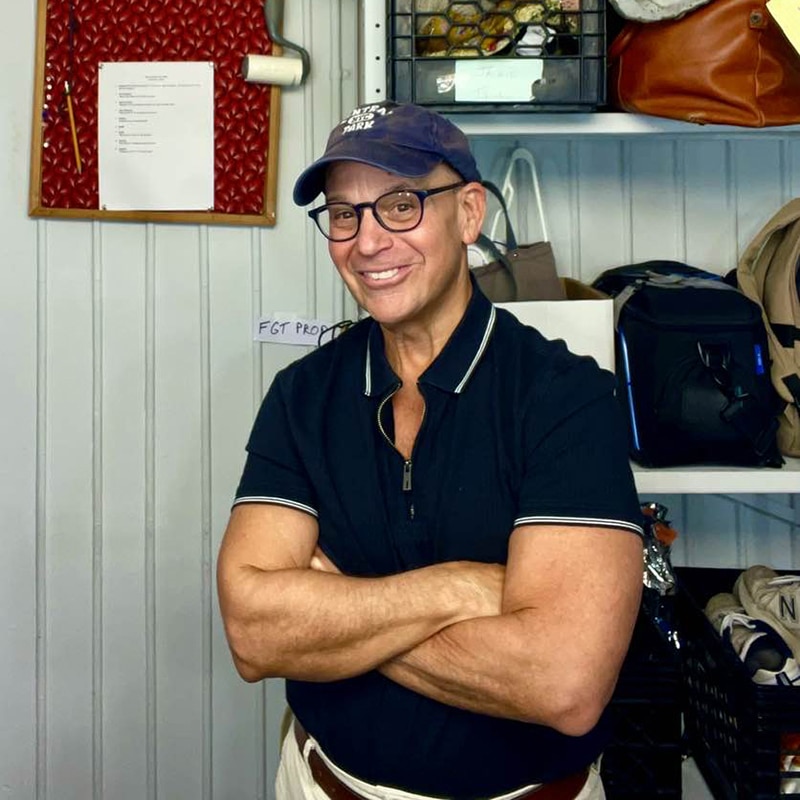
“I got this advice from Marlo Thomas, who got it from her father, Danny Thomas. And that is put on your blinders and run your own race because it is so easy to go see a lot of shows and oh, no, oh, how did they get their show on Broadway? And why can’t I write like that? And no, you’ve got to have your own vision and you’ve run your own race. And even if it’s against the grain, don’t look on the sides and don’t worry about what the other people are doing. I can’t worry what Lin Manuel Miranda is writing. I can’t write that. I wish, you know, I wish him well, but I could never write Hamilton. I could write Camelton.”
~Stephen Cole
Stephen Cole is returning to StoryBeat for the third time. He’s an award-winning musical theatre writer whose musicals have spanned the globe.
Stephen’s first production was Dodsworth, starring Hal Linden. His Off-Broadway musicals include After the Fair, The Road to Qatar, and Inventing Mary Martin. He won the prestigious Kleban Award for The Night of the Hunter. And Saturday Night at Grossinger’s had successful runs in Dallas, LA, Florida, and Sonoma.
Broadway legend Chita Rivera toured in Casper, which was reborn as Casper-The Friendly Musical. Merman’s Apprentice premiered at Birdland in New York and won the San Francisco Drama Critics Circle Award for Best Score. Stephen’s latest musical, Goin’ Hollywood, had its world premiere at WaterTower Theatre in Texas.
His published books include That Book About That Girl, I Could Have Sung All Night, and MARY & ETHEL…and Mikey Who?, which we talked about during Stephen’s last appearance on this show. His current theatrical memoir, Camelton, also doubles as his one-man show, which played to sold-out crowds in New York.
I’ve read Camelton, and can tell you it’s a terrifically entertaining account of Stephen’s extraordinarily challenging time writing a musical celebration for the Emir of Qatar. His reminiscence captures all the crazy sturm und drang of creating a massive musical under commission in a foreign land.
WEBSITES:
STEPHEN COLE BOOKS:
- Mary & Ethel…and Mikey Who?
- That Book About That Girl
- I Could Have Sung All Night: the Marni Nixon Story
- Noel Coward: A Bio-Bilbliography
IF YOU LIKED THIS EPISODE, YOU MAY ALSO ENJOY:
- Richard Skipper, Entertainer-Singer-Episode #295
- Jimmy Roberts, Composer-Lyricist-Poet-Episode #287
- Catherine Filloux, Playwright-Librettist-Activist-Episode #269
- Dr. David Sharp, Writer-Performer-Spiritual Teacher-Episode #268
- Peter Brosius, Artistic Director-Minneapolis Childrens Theatre Company-Episode #266
- Amy Powers, Author-Songwriter-Producer-Coach-Episode #262
- Holly Reed and Kelvin Reed, Musical Theatre Writers Episode #223
- Marcus Stevens, Writer-Actor-Director-Episode #198
- Frank Ferrante, Actor-Director-Producer-Episode #196
- Douglas Levine, Composer-Pianist-Music Director-Educator-Episode #194
- Robert Cuccioli, Actor, Singer, Director-Episode #188
- Karen Mason, Broadway Singer and Actress-Episode #173
- John Davidson, Singer-Actor-Host Extraordinaire-Episode #164
- Bill Nolte, Broadway Actor-Singer-Artist-Episode #158
- Richard Maltby, Jr., Tony Award Winning Writer-Lyricist-Director-Episode #155
- Karen Ziemba, Tony Winning Broadway and TV Actress-Episode #154
- Julie Budd, Legendary Singer-Episode #153
- Jamie deRoy, Tony Award-Winning Broadway Producer-Episode #143
- Jonathan Deans-Renowned Theatre Sound Designer-Episode #141
- Yuval Shrem, Screenwriter-Director, Composer-Episode #98
- Stephen Cole, Musical Theatre Writer-Episode #78
- Bruce E.G. Smith-Nancy Zionts-Leon Zionts, Theatre Producers-Episode #75
- Kelly Ward, Actor-Writer-Director-Choreographer-Episode #66
- Michele Brourman, Singer-Songwriter-Episode #50
- Kevin Hammonds & Kristin Bair, Musical Theatre Writers-Episode #39
Steve Cuden: On today’s StoryBeat…
Stephen Cole: I got this advice from Marlo Thomas, who got it from her father, Danny Thomas. And that is put on your blinders and run your own race because it is so easy to go see a lot of shows and oh, no, oh, how did they get their show on Broadway? And why can’t I write like that? And no, you’ve got to have your own vision and you’ve run your own race. And even if it’s against the grain, don’t look on the sides and don’t worry about what the other people are doing. I can’t worry what Lin Manuel Miranda is writing. I can’t write that. I wish, you know, I wish him well, but I could never write Hamilton. I could write Camelton
Announcer: This is Story Beat with Steve Cuden, a podcast for the creative mind. Story Beat explores how masters of creativity develop and produce brilliant works that people everywhere love and admire. So join us as we discover how talented creators find success in the worlds of imagination and entertainment. Here now is your host, Steve Cuden.
Steve Cuden: Thanks for joining us on Story Beat. We’re coming to you from the Steel City, Pittsburgh, Pennsylvania. Well, my guest today, Stephen Cole, is returning to Story Beat for the third time. He’s an award winning musical theater writer whose musicals have spanned the globe. Stevens first production was Dodsworth, starring Hal Linden. His Off Broadway musicals include after the Fair, the Road to Qatar and Inventing Mary Martin. He won the prestigious Kleebon Award for the Night of the Hunter and Saturday Night at Grossingers had successful runs in Dallas, Louisiana, Florida and Sonoma. Broadway legend Chita Rivera toured in Casper, which was reborn as Casper the Friendly musical. Merman’s Apprentice, premiered at Birdland in New York and won the San Francisco Drama Critics Circle Award for best score. Stevens latest musical, go in Hollywood, had its world premiere at Water Tower Theater in Texas. His published books include that book about that Girl I Could have Sung All Night and Mary and Ethel and Mikey who which we talked about during Stephen’s last appearance on this show. His current theatrical memoir, Camelton, also doubles as his one man show which played to sold out crowds in New York. I’ve read Camelton and can tell you it’s a terrifically entertaining account of Stephen’s extraordinarily challenging time writing a musical celebration for the Emir of Qatar. His reminiscence captures all the crazy sturman drong of creating a massive musical under commission in a foreign land. So for all, all those reasons and many more, it’s a terrific pleasure for me to welcome back to Story Beat for the third time, the brilliant writer and librettist, Stephen Cole. Stephen, so wonderful to see you again.
Stephen Cole: So great to talk to you too. Brilliant. I love that word. Thank you.
Steve Cuden: Well, it applies, so take it. Take it.
Stephen Cole: Thank you. I’ll take it.
Steve Cuden: So remind, uh, the listeners what led you to pursue the life of a writer, especially a librettist. How did you get here?
Stephen Cole: Oh, boy. Well, you see, I was a performer first. So when I was 14 years old. Old. I did summer stock and. Remember summer stock? And. And I was an apprentice, which is what we call an unpaid slave. And I did eight, ah, shows a week. Eight shows of the summer and one a week. And, uh, plays musicals. It was a fantastic experience. And I was only 14. And there were other people there who were a little older, who were apprentices. One of whom was Charles Bush and his friend Andy Halliday. Both of whom have gone on to, uh, great careers. Uh, especially Charles Bush. But Charles was just Chuck then. And they had written a musical. And for some bizarre reason, they let me read it. And it was only the book of a musical, only the libretto. And they said, maybe you could write songs. And I thought, how did they ever dream that? That was my dream. So I went off in a corner and wrote my first song. And I. Music and lyrics. And I memorized it and I sang it for them. And they thought it was pretty good. But nothing happened. But I went back home to go back to, uh, high school 14, going on 15. And I said, well, if they can write a musical, I can write a musical. And I just sat down and started to type. And I loved Cole Porter. And he was my teacher as a lyricist. I really studied those lyrics. And I thought. And I loved the 1930s and that whole idea. So I wrote a 1930s musical called Everything’s Fine. And if you’ve seen Anything Goes, you’ve seen Everything’s Fine. I copied everything. But what I didn’t really know at the time was what a great idea that was. To actually emulate a kind of musical form. And realize it in a way that you were learning at the same time as you were copying style. And so I found myself a composer because I was not a composer. And a, uh, kid in gym class was sitting on the side. Neither of us would climb the ropes. And I said to him, you’re gonna be my composer. And he was. And we became good friends. He went off to Brooklyn College before I did. I was still in high. And he said we could do the show here for three performances as long as we don’t use theater major. I said, what are we gonna use, pharmacy majors? He said, yes. And we did, uh, somehow. And I had done three years of stock by then, so I knew exactly what I was doing. I directed it, I choreographed it, I did the scenery. I wrote a nice fat part for myself, and we did it. And once again, that great learning experience was figuring out, how do you know how long a show is? Oh, my goodness. You know, the first night, after about an hour and 45 minutes, intermission came, and I knew it was too long, and I learned how to cut. So that’s really where it came from. I was just. I was in love with musicals. I wanted to emulate that. I went to the theater as a kid. My mother took me, and I just wanted to create musicals. And it took a while after that first one, probably, uh, like 10 years before I really went back to it. Seriously. Cause I had an acting career in between. And once I. Things started to cook, and so that’s really it.
Steve Cuden: So do you think anything, after all these years and all these experiences, both positive and negative and many negative, uh, experiences as anyone that does what you do goes through, uh, lots of criticism and lots of failure and so on, do you still have the same passion you did when you were a kid?
Stephen Cole: Yes and no. I mean, I think, you know, today’s musicals don’t inspire me as much as yesterday’s musicals. When I was going to the the in the 70s and seeing company Follies, A Little Night Music, Pacific Overtures, Chorus Line, Things Chicago, I would come out of each of those shows wanting to write a show just like that. And if it wasn’t just like that, they still inspired me, especially as a lyricist, because I was seeing Sondheim, I was hearing these incredible words, uh, and music. And so it made me want to do it every single day. Now, I. I still love the art form, but I feel like a little bit of a dinosaur trying to do them as perfectly and well as I could. Uh, and so the passion is still there. But recently I just said to myself, what if you actually wrote something without songs? And I sat down and wrote a comedy called Washing Garbage. And it’s a comedy, uh, and we’re doing it in a comedy festival, where, of course, in Dallas, Texas.
Steve Cuden: Because this is just a play.
Stephen Cole: Not a music, just a play. A new comedy by me and. And no collaborators. It’s kind of. It’s kind of a little vacation for musicals.
Steve Cuden: Uh, is it a relief not to have partners?
Stephen Cole: No, not so much not to have partners. Because it does get lonely. But it’s a relief not to have to teach songs when you’re doing a reading, to actually sit down with a script and, and, and be able to do it with actors. And that’s. So I’m, I’m hoping that will lead to other things. Uh, I just took a chapter of Mary and Ethel and Mikey who and I turned it into a one act play because there’s all these one act play festivals. And I thought, you know what, this is kind of self contained. And it’s just two ladies and it’s called four Bars and Out, which is the name of the chapter as well, where they go to every bar in New York, get drunker and drunker, and Ethel Merman solves Mary Martin’s marital problems and helps bring her back to New York. So I, I thought, you know, there’s. There, I have all this material, I might as well try to use it regurgitated again.
Steve Cuden: Two, two dames going on a bar tour.
Stephen Cole: Yep. In the 1940s, no less, you know, during World War II. And both of them big stars. And, uh, so it’s, it’s kind of fun. And I like, I like being able to not then go, oh, gosh, now I have to go convince the composer that this is a good idea. No, it’s my idea.
Steve Cuden: But you still have the same passion you did as a kid in sense of, uh, correct me if I’m wrong, that you don’t require somebody to say to you, hey, Stephen, sit down and write something. You need to write more. No, you write yourself disciplined in that way.
Stephen Cole: Absolutely. And it has to be that way for me because if I waited, I would just wait forever. I’ve had commissions over the years and those are wonderful things.
Steve Cuden: Well, we’re going to talk about this big commission.
Stephen Cole: Yeah. And the commissions, uh, you know, that means they pay you up front at least something, and it gives you an impetus. I have other, many, my collaborators and I have several composers I work with, they always say, oh, it’s so much better when we know where it’s going to go and what it’s going to do. I said, yeah, but sometimes that just doesn’t happen. And you write it and you rewrite it and you have to be the push. That’s something I’ve learned from all the years. And so I keep doing that.
Steve Cuden: I always say that a writer is a writer. No matter what, they’re still writing in some way. But there is a difference between writing a novel versus a nonfiction book, which you’ve written A number of. And that between writing a play and a musical, they’re all different disciplines. Um, do you have a preference in writing one over the other?
Stephen Cole: I guess I really still always will love writing musicals. There’s something. It is the most theatrical of art forms. Because people don’t really sing and dance in real life. So you’re already heightening everything.
Steve Cuden: What? I didn’t know that.
Stephen Cole: Yes. Did you not know that? But I believe in it so thoroughly. And I believe. And I believe it’s one of the highest of theatrical art forms. And musical theater changes people’s views and lives. I mean, right now, ragtime is running at, uh, the revival at Lincoln Center. And I see it changing how people look at our country today, where it didn’t change it as much in the 90s when it first ran. Now our country’s in a certain place, and they’re watching a show about immigrants and racial problems and all these things that are at the turn of the century, at the beginning of, uh, the 20th century. And so I see that show changing people. I know that Oklahoma changed people’s lives during World War II. Because soldiers and sailors and marines went to see that show and said, we know what we’re fighting. And, you know, whatever you think of that show today, it was about the hardiness of America, the land. You know, people who see Fiddler on the Roof, who absolutely knew nothing about the Russian shtetls, they see, you know, what it is like to have your children break tradition. And also then it’s. His history is right there in front of us. I could. I always say everything I know I learned from musicals. And it’s. It’s really true. When I was growing up, I would listen to cast albums and not know certain words and not know certain references and then go look it up and figure it out.
Steve Cuden: Well, they’re. They’re great. And one of the things that I push, certainly in. In my book, Beating Broadway, is that the one thing that separates a musical from either a concert or a play. The fact that it all comes together in this form called a musical, which requires songs. You can’t have a musical without songs. You can have a dance concert. You can have a concert concert, but you can’t have a musical without songs. And those songs, in fact, must either progress the story or give us a deeper understanding of character. Right. Uh, so that’s what makes musicals brilliant, is that we get this great storytelling, but in this unique form where people sing their emotion.
Stephen Cole: Exactly. And you have two elements working during the song. You have music and lyrics, they don’t necessarily have to agree with each other.
Steve Cuden: What do you mean? Give an example.
Stephen Cole: All right, so, uh, a ballad, a gorgeous long line. We’re hearing this gorgeous melody by Richard Rogers, and Loren’s heart might be having a cynical lyric going on at the same time. For example, the song Bewitched, Bothered and Bewildered, which we all listen to, and you think, oh, well, that’s a great, beautiful, lush melody. But the woman in the song is really singing about sex and her cynicism about it all and how she’s got what she wants now and it may go away. And so I think there’s something wonderful about music and lyrics not necessarily agreeing, but somehow they come together. Because our minds don’t agree about everything all the time. Sometimes we’re being really romantic, but at the same time, in the back of your head, you’re going, this is never gonna last. And to write a song like that, to have an ambivalence and. And I know that people thought Sondheim was like the first ambivalent songwriter, but Rogers and Hart were. When you really go back to it, Rogers would write these gorgeous melodies and Larry Hart would stick a pin in them and.
Steve Cuden: And Hammerstein did not.
Stephen Cole: Correct. But they’re still. But there. He was wonderful.
Steve Cuden: Definitely.
Stephen Cole: You know, just wonderful. But it’s not.
Steve Cuden: But much more upset than hard.
Stephen Cole: Yeah, it’s not the same. He did not have that cynicism. Um, he always said. People said to him, why don’t you write sophisticated New York shows? And he’d say, you mean things that take place in penthouses with people holding cocktails? I’m not interested. Even though he lived that life, he was interested in a different America. And, you know, they had their own. They, uh. Rodgers and Hammerstein, to me, when you really study them, they had their own worldview. Their worldview was community is everything. And if you’re not in the community, you must die. I mean that. It started with Oklahoma, it went to Carousel, and it went to the King. And the community was everything to them. And that some. Sometimes you look back on that now and you go, oh, wow. Those outsiders don’t get a chance. And they don’t. You know, maybe Judd was not such a terrible guy.
Steve Cuden: Oh. The way they present him. He is. That’s for sure.
Stephen Cole: Yeah, he is. He is. He definitely wants to murder.
Steve Cuden: So what for you makes a good song good? What defines a good song to you?
Stephen Cole: Well, both elements being tip top, craft wise, meaning really strong melody, not necessarily something you could hum going out of the theater. Because that’s. That turns out to be not true about most things. But it doesn’t hurt if there’s a strong hook to the melody. And the lyrics for me must be perfect. They must have perfect rhymes. They must be more than just, uh, dialogue set to music. They have to be heightened. The hook has to be strong. We have to go from A to B, at least from the beginning of the song to the end. Uh, in a theater song. A theater song has to take me somewhere. And I really, I really love good, strong melody and as I said, well crafted, perfectly rhymed lyrics. Very important.
Steve Cuden: And so what do you think of, uh, a lot of rock and roll songs that some of which ultimately wind up on Broadway in one show or another, where the lyric does not perfectly rhyme? Does that bother you when you’re listening to it?
Stephen Cole: It bothers me. It bothers me. It really does. Uh, I’m a purist. I think it also. We’ve taken away from the audience certain things. We’ve taken away lots of audiences. And I take a whole bunch of, uh, seniors to see Broadway musicals who are so smart. And when they come out and say, well, I liked it, but I really couldn’t. The lyric, well, that’s a real problem because you’re missing, you’re missing part of, um, not just part of the story, but the emotions, all of that. And the problem is if, if a song is not perfectly rhymed, your ear doesn’t pick it up as quickly. It’s. It’s a subliminal thing. And, and if it’s, or if it’s over rhymed, your ear doesn’t pick it up as quickly. Your ear, your ear and your brain cannot work as fast as, as some people think they can. So it’s a real balancing act to make something simple, direct. But also, there’s nothing wrong with the cleverness of lyrics. Otherwise why are they singing? If it’s not going to be more interesting than saying, pass me the cup of coffee, then don’t sing. Don’t sing. Make it something more interesting, more enlightened.
Steve Cuden: I’ve long said, uh, that one of the challenges of doing musical theater is that most audiences come in unfamiliar with the show. And so, uh, I think it’s a little more challenging for anyone, no matter what a song is, to understand the song the first time they’re hearing it, that they almost need to hear it once, twice, maybe three times before they kind of get what’s there. And so it’s really a great idea if you’re going to go see A musical too. If you can obtain the score, you uh, know a recording of it to listen to the songs before you go, then you at least have an idea of what you’re going to hear sometimes.
Stephen Cole: That’s true. And uh. But I never had that experience when I was seeing the great shows. I sat through a little night music before they recorded it and I got those lyrics and I was dazzled. That was him. That was him.
Steve Cuden: Um, that was Sondheim.
Stephen Cole: But I believe in that. I think, I mean his dictum was always be as clear and simple as possible. They are only going to hear it once. That train is going to go by and they have to get it. But he could be as clear and simple and still complex as possible. And so I’m always. So I’m striving for that, let’s put it that way. I, I grew up on that and I grew up on Cole Porter who did the same. I strive for those. That kind of clarity so that when you hear it once and you know, and you know when, you know when you get a laugh during a song, you know that they have. Are uh, getting it. People will not laugh unless it’s truly funny.
Steve Cuden: That’s true. Well, they also won’t laugh if they don’t understand what you’re saying.
Stephen Cole: Exactly. And, and that, and sometimes the. As we know, there’s setup and punchline. And so that happens. And I like to write funny. So when I write funny and if I get a laugh in the song, that is better than getting a laugh in dialogue. It’s just.
Steve Cuden: So you don’t mean when you write funny that you’re sitting in a chair upside down.
Stephen Cole: I just try to write funny. I’m a funny guy.
Steve Cuden: Let’s talk about some of your writing. Funny. Tell the listeners. Hamilton is all about.
Stephen Cole: Well, first of all, isn’t the title funny?
Steve Cuden: It, it. It is. You didn’t get any kind of feedback or blowback from uh, Mr. Miranda, did you?
Stephen Cole: No, I mean it’s a parody title and you’re. That’s completely covered by totally in the fair use doctrine. But it’s just. But the. But, but obviously I want people to think about the fact that there’s this incredibly big hit successful show and, and I uh, you know, I originally sat down in my files. There are all the chap. Road to the Road to Qatar, which is really what the story was. And that’s not very clever. And one day I literally said, what if I called it Camelton? And then I could sell Thousand Dollar tickets. So it’s luckily going to always be a very successful show. So the title will last. And I, so I came up with the title itself and I wanted to write, because I wrote a musical about the whole Middle east experience of writing the first American musical to premiere in the Middle East. That show was called asp and when we came back, David Crane and I, who experienced the whole thing, I convinced him to write a small musical called the Road to Guitar, which became our calling card about that story. But that became very fictionalized as we went along because I, uh, always say if it was funny, it was true, even if it wasn’t true. So I fictionalized it, made it more of an outrageous comedy. And then over the years I thought, what if I told the whole true story and still then told the story of how the truth became the Road to Guitar? And, and so it became a book about that. And I started with the opening night in Texas of the Road to Qatar and the idea that I can’t even remember half the time what I made up or what really happened. So I did some research on my own. I found all the old emails, I contacted some of the cast members who were in Qatar and I started writing the book. And it became funnier because the truth in reality was even more outrageous than what I condensed into two act musical.
Steve Cuden: Well, I think it would have been very difficult for you to have made up or imagined what you went through because it was so convoluted and so unusual. So how did you get roped into doing Aspire in the first place?
Stephen Cole: Ah, uh, it was an email and it’s almost like the beginning of the.
Steve Cuden: And how often does that happen to you?
Stephen Cole: It happens more than you think. You know what it happens through my website. I’ll give you another great example of that happening. Then I’ll go back. Right before the pandemic, somebody contacted me through my website, www.stephencoler.org and it was a writer, another writer, who asked me if I really was the author of uh, I Could have Sung All Night, the Marni Nixon memoir. And I said yes, I’m the co author of that. And he turned out to be a screenwriter. He turned out to want to write a movie version of the book. He turned out to hu us up with a producer in London who took an option with Amazon Films. And uh, for the last five years he’s been writing draft after draft after draft and, and we’ve been getting some money from Amazon, myself and Marni Nixon’s daughters. So that’s what can happen out of an Email. So, but this one came 21 years ago actually in February. And uh, and it said literally, we want you write musical. How? I thought, oh, sure. I was waiting for the next line, give us your Social Security number. But it wasn’t, it was called this number in Dubai. And I was not gonna call Dubai. I had them call me. And they called immediately and it was the same line. We want you rate musical. How much? But with a thick accent. And I asked a lot of questions. They had no answers for me, so they said, write it in an email. Email. So I, I hooked them up with my agent who told me the whole thing had to be a scam. This is crazy. You know, who asks, how much do you want? I mean, come on. We asked for a ton of money. We asked for so much money that they came back with the answer and it was no. But, uh, but we then said, well, if you won’t pay us what? We asked, what will you pay us? And they came back with a number slightly lower. And, and so we, we took it and I said, yes, let’s do it. And we started to negotiate. And this was February of 05. And uh, by the time we got To April of 05, we were still negotiating. But finally we gave in on certain points and signed the agreement. And I always say now, and I wrote a song about it recently, that this is the power of yes. Sometimes you just have to go, I’ll do it. This is so insane. How could I not do it? And before a couple of days, days were up, we were flying to Dubai and starting this whole nine month adventure.
Steve Cuden: As you were starting this adventure, what were your biggest concerns? What were you most concerned about?
Stephen Cole: That we would not get all the money. Because I was warned that, uh, they said, oh, you know, get as much as you can up front because they don’t always finish paying. And in the end that was true. We got two payments out of three and they were the big payments, but we never did get our final payments.
Steve Cuden: How interesting.
Stephen Cole: And, and that was, that was kind of the, the last kick in the ass because it was a, it was a funny and tough experience writing a, uh, totally original musical that they dictated to me. They gave me the bones that they wanted the show to be about and I had to fill.
Steve Cuden: It would never be done almost anywhere else ever.
Stephen Cole: Uh, correct, Correct. It can be now if you have 20 camels hanging around.
Steve Cuden: You know, it’s, it’s akin to writing, uh, an industrial.
Stephen Cole: A little bit. But we wrote it, you know, because this was my first collaboration With David Crane. And my first meeting with David Crane, they put us together, so that was the m. The greatest gift of all. And I had no idea. He was a great composer. I knew he was a great arranger and a great conductor and, and. And all of that. But it turned out the first song that we wrote was so wonderful that I remember turning to him and saying, is this really supposed to be good? I thought it should be like a cheap, crappy industrial. But no, we sat there and went, if we’re going to do this, why don’t we write the greatest musical they’ve ever seen? And we did, and we just. We wrote way above their heads because I knew a lot of it would not be understood in a foreign language, but it was going to be presented in English. And, uh. And so I wrote fabulously rhymed lyrics that, you know, probably went over everybody’s heads and it didn’t matter. I wrote jokes in the script that landed with a thud because they didn’t really understand it. Uh, but. But the story came through. And the, uh, story of a sultan’s son who’s locked in a palace and only wants a star in the sky. It was kind of an Arabian fairy tale. And I was happy that it took place in some mythical past because I was afraid when they first told me about this, that I would have to write about contempor. Middle Eastern politics or something. They didn’t want to know anything about that either. It’s interesting. It was a celebration to open a sports stadium. And so it was an international event. And, uh, why this story can’t still. Don’t know. But it. It was there, and it. And it entailed, As I said, 20 camels and 14 stallions and falcons and whatever they could put on stage.
Steve Cuden: What I think that I want the listeners to take away from what you’re talking about right now throughout this whole conversation, I think, is that you, as a professional artist with artistic bones and with the desire to write great things, also have the ability to be a, uh, mercenary. That is to say.
Stephen Cole: Oh, absolutely.
Steve Cuden: Your first thought was, where’s the money? I want to make sure I get paid. Which is what a mercenary thinks. And the second thing is, who’s ever going to hear this? So why do I care? So then you go take it to the next step where you, in fact, care at a. A lot, right?
Stephen Cole: Yes. Because I can’t not care. I keep thinking you can just. I. I can’t. I can’t write crap. Uh, because what’s the point? It’s. It’s just as hard to write crap, just as hard to write garbage. But it’s. It. It’s better to just write at the top. At the top of your game. Why not? I’m looking at a poster now for the world premiere. And it says, you know, it says we were in an alien world of camels, deserts, and crazy theatrical producers. And. And that was all true, but it still felt good when we would finish a musical number, and we loved it, and we knew somehow somebody’s gonna love it somewhere and we were gonna have it orchestrated. In fact, it was orchestrated for 70 pieces and played by the Bratislava Symphony Orchestra. So that was so exciting in many ways to. We knew that we were gonna love it, and we wanted to see it on the stage.
Steve Cuden: In the book, you quote Ben in the musical 1776. And I’m quoting from your book, which I assume is a quote. Revolutions come into this world like bastard children, half improvised and half compromised. Old Ben might as well have been talking about how a musical is born. Explain that further.
Stephen Cole: Yeah, because the inspiration is the big thing. But, you know. But compromise is a constant thing. People will always tell you. Producers, directors, even actors will tell you what they think or what they think it should be. And you have to be, uh, the best kind of arbiter and compromise sometimes, but never compromise your art. But there’s always a middle ground somewhere. When people come up to me and tell me what they think, I listen and I nod and I smile and I go away. And then I think about it, because their opinion may not be exactly what I think, but. But there. But there’s gotta be some kind of thought that they had that will lead me to something better, and I don’t want it to lead me to something worse. I don’t want to compromise in that way. But compromise can sometimes lead to more inspiration, and it does.
Steve Cuden: This is a good philosophy. I’ve talked to many people about this, and it’s my philosophy as well, about taking notes, just, uh, general notes from whether it’s a producer, director, from a star, et cetera. When somebody gives you that feedback, it’s better not to fight the feedback, but to take it in and absorb it
Stephen Cole: and take it in and absorb it, and then you turn it into your
Steve Cuden: work and you accept what works and you jettison what doesn’t.
Stephen Cole: I can understand. I don’t even think when a producer tells you, you know, I think it should be this, this, this and that, that they actually think you’re going to just do exactly what they say, because that would be ridiculous. You’re the artist and you were hired or at least commissioned or something like that. That, so that your work will, will work. I know on my first show, Dodsworth, on the opening night, the producer, great guy Van Kaplan said, you need another song here. And I said, oh, I knew we were going to write new things because we were out of town, we were in Fort Worth, Texas, uh, so. But I didn’t agree with what the song should be about. And he literally said to me, I don’t care, go write your own song, but it’s going to be a new song. And we went off and we found, found what that song was. And it turned out he was totally right that the moment in the show needed a song. It had no song and, and it became a wonderful ballad called who will love you now. But it made me go and spend lots of hours actually overnight, uh, to write a brand new song. And it went into the show within three days. D. Hody sang it and it did change the show. So his opinion was not wrong, but he didn’t know how to do it. If he knew how to do it, he would have written the show well.
Steve Cuden: And to speak of van Kaplan, he’s 20 some odd years was the guy who ran the Pittsburgh Civic Light Opera right here where I am, where I
Stephen Cole: did Casper the friendly musical with Chita Rivera. So I was lucky because he came from Fort Worth. I did two shows with him at Casa Manana there. And when he moved over to Pittsburgh, he brought me with him. And that’s how shows get done as well. If anybody ever asked, well, how do you get your show going? Well, who do you know and where are they going?
Steve Cuden: So how important do you think it is for a composer and lyricist in the business to understand the past, to understand the shows of the preceded them?
Stephen Cole: Oh, you know, I think that’s the most important thing history is. I mean, it’s funny, somebody was telling me, an ex teacher recently, this week actually, and she said, they don’t teach history anymore in schools. And I went, what? I was in shock because I learned history and I read and I knew things and I don’t know. I think teaching musical theater history to anyone who wants to be a musical theater practitioner is essential. It’s like a doctor not knowing how to take, uh, out a liver, a surgeon. We have to know everything that went before us so that we can absorb how the greats did it, how great shows were done. We know that Lehman Engel did his first workshops at BMI by teaching the great Musicals by saying, here’s how Brigadoon worked. Here’s how Carousel worked. And this is how those people in the golden age had such great success. And your show is never gonna be Brigadoon or Carousel or Oklahoma. But if you don’t know how those. If you don’t know the rules, how are you gonna ever break them?
Steve Cuden: Do you think there really are rules?
Stephen Cole: There are certain rules on how to construct a musical. I think, as I say, you can break them totally. It used to be the second song of every show was an I Want song. Well, you know, somewhere there’s going to be something like that. But it can be so offbeat and off track. I mean, when you. Look, I teach. I Want songs. I teach lyric writing online. And I’ll play the Surrey with the Fringe on Top. Now, it doesn’t exactly sound like an I Want song. It’s about a. But it is. It’s about a guy who wants to really get this girl to go to a picnic with him. So he invents this incredible scenario, and it’s most delightful scenario that if you don’t like him by the end of the song, you’re a fool. Uh, even though he says he made it all up, same thing in Brigadoon. I go to that show and I go the heather on the hill. All that’s about is, will you just come and take a walk with me and gather flowers? But we know that his real want and his underlying dream is to find love, to find security, to find something to believe in. Uh, so those kind of songs still are helpful. Helpful to us, even if we don’t write them as on the nose as some other shows. Uh, and somewhere, somehow, we have to know what our hero or heroine wants. Why are they there? Why are they telling us this story? Why are they in this story? So I do believe those kind of rules are important. Opening numbers are very important. You know, you got to get that audience in. You got to drag them into your. Into your world. Uh, as they say, people say the greatest opening number was Comedy Tonight, which was written out of town because it tells you you’re gonna laugh tonight. And, boy, do you. Sometimes you need to just tell them that. Tell them exactly.
Steve Cuden: And you need to do that again after an intermission as well.
Stephen Cole: Absolutely. Coming back after intermission is always hard. I think intermissions are hard. That’s why you don’t see that many of them anymore. You know, shows are written in without intermissions, in one act. I know that when I was written, shows with great Curtain lines and intermissions and great. And you hope the curtain is going to come down to huge applause. But if you don’t have a 16 piece orchestra playing at the end of that act and it’s just the piano, when bass and drums, sometimes it comes down with a little bit of a, uh. So I try. I also think in my mind, oh, God, intermission’s coming. Am I going to get a big hand here? Because you want them to come back. You want them to want to come back, so you want to leave them at least with some kind of cliffhanger or at least. Oh my God, that was the greatest. I can’t wait to see the rest. And then you come back and yeah, you slowly get back in.
Steve Cuden: You have to literally drag them back into the theater or they’re going to wander away.
Stephen Cole: I know it’s so easy nowadays. And I feel the same way. I like, I get up at intermission and I go, oh, huh. Do I really want to stay? I don’t know.
Steve Cuden: So I know that you are very much a historian of the theater. I know that’s one of your things. And knowing everything that you knew as you entered into Aspire, uh, had you known what you knew by the end, would you have still gone into it?
Stephen Cole: Yeah, I really would. It was just that the adventure was so extraordinary. And so, as David Crane always says, once in a lifetime, we’ll never get that again. And so I would, absolutely. And, uh, you know, you talk about the I Want song there. I thought immediately after my own opening number, which really set the whole thing up. Which set the set up. It’s called Behind Every Story. Behind every story, there’s a story that’s waiting to be told. And I knew that I wanted to write that kind of, we’re telling a story. It had a narrator. And the second song, I said, okay, what’s my I Want song? Well, I knew the kid wanted a star in the sky, so I literally used that as a title, I want that star. But we wrote a huge mini opera around that that set it all all up. And it was so ambitious and it’s one of my favorite things that we’ve ever written. But we. But it came from the idea of, uh, an I Want song. It wasn’t a 32 bar I want song. It was a huge 6 minute mini opera that told the backstory of everything and why he wanted that star in the sky. And, and it. You utilized the storytelling aspect of it. But yeah, at the end, uh, you know, besides not getting the final payment I knew that I had yet another story. I knew that this lemon still had a lot of squeeze in it, and that’s why I got the road to guitar and Campbellton.
Steve Cuden: Ah, well, that’s right. So you got two projects out of this out of the Blue project that came your way without you even thinking about it.
Stephen Cole: Correct. And I never would have, and I never would have had those stories. And I’m still dining out on that story. In fact, the one man show that I just did in New York that sold out and got some rave reviews, which was really lovely. Uh, which was a mini musical. It’s me telling the story, doing characters, also including everything that went on in that year of 2005, which was three productions of Saturday Night at Gross Singers. So I use the whole Catskill borscht belt thing at the same time as I’m using all of my crazy Middle Eastern friends. And, uh, so I did that. And now my dream of doing it really was to take my one man show to the Edinburgh, the, uh, Fringe Festival. And I’m doing it in August. So, uh, it’s a little scary because I told you, I started out as a performer, I gave it all up for writing, but it’s still somewhere down deep inside me I want to make people laugh. And I was able to do it. So I’m doing it for the listeners who are wondering.
Steve Cuden: He’s talking about, uh, um, Stephen’s talking about August of 2026. So if you happen to be listening to this show beyond that, you won’t be able to see it in Edinburgh. It will already have come and gone.
Stephen Cole: Exactly. But we’re running a whole month, so go to Edinburgh. And if you’re listening beyond that, I’m hoping that they take taking me somewhere else.
Steve Cuden: Well, hopefully it turns into something where you can either go on the road or do a nice sit down production of it somewhere. Whatever. Um, you originally wanted to call the show in Qatar, Dubai Bye Birdie, which is hilarious.
Stephen Cole: Yes, it’s very clever.
Steve Cuden: Now clearly you were not gonna wind up calling it Dubai Bye Birdie, but, uh, it wound up being called Aspire, which I think is not terribly clever and doesn’t really tell you very much. Uh, and, and so I’m curious, you’re very good with titles. So how important are titles to a show’s success, do you think? And to songs and to books?
Stephen Cole: Yeah, I think they are. Titles are very. Ira Gershwin had a great line, a little rhyme. It was. A title is vital. Once you’ve it, prove it. So he did that for songwriting, he would come up with the title first. You know, they can’t take that away from me. Nice work if you can get it. Those are great, great titles. Sometimes they’re cliches. And he didn’t. He didn’t mind that at all. He would say, you can reinvent a cliche. Cliches used to be original at one point by. By singing them. You know, he would. He would do that in his lyrics. And I admired those lyrics because I used to have his book, uh, lyrics on several occasions. But the title is vital, and some titles are better than others. Go in Hollywood is a fabulous title. It’s been used before. Don’t think that it wasn’t. It was a movie with Bing Crosby. It was a title of another musical based on Once on a Lifetime that never got past workshop phase. So I thought, okay, it’s my turn now to take that title, because you can’t copyright a title. But the original show was called. That we wrote was called by the book. And that was clever if you knew the show. But it’s not as. It’s not as, oh, my God, I want to go see Go in Hollywood. That sounds like, oh, that’s going to be a fun show. A. And if it turns out to have more than fun in it, which it does, because it’s about the blacklist period in Hollywood, Uh, and it’s a time travel piece. Uh, it’s. That’s. That’s just gravy, but you gotta get the asses in the seats. And when we announced Go in Hollywood in Texas for the first production a few years ago, it started to sell out people. It sounded like a show that people wanted to see, or maybe it was already on Broadway and they’re seeing it now in Texas. It just sounded right. The Road to Qatar was a perfect title in that way as well. It sounded like a Bob Hope Bing Crosby movie gone wild. And it was by.
Steve Cuden: The book could have been a story about cops or about politicians or something like that.
Stephen Cole: Exactly, exactly. It was about a magic book that took these people back in time. But it was. It. It was. You know, as soon as I rewrote it and I got rid of the magic book altogether, uh, I realized I just had to, oh, no, it’s not that show anymore. It’s this show. And that’s one of the few times I think I’ve changed a title in midstream. I tried to do it for Dodsworth. Dodsworth is obviously based on the Sinclair Lewis novel and the movie and the. And so the Title title was semi famous. But, uh, the producer, the same Van Kaplan, said to me, uh, what is that? Is it a Western? And I said, no, no, it’s his name, Sam Dodsworth. And. But we did it and it worked out. And we had Hal Linden in Dodsworth, so that made a difference in selling tickets. But later on I thought, why is this show not being done all over the place? And I said, it’s the title. And so I retitled it and I called it Continental Dawn Divide, which I thought was such a clever title because it takes place on the continent. It’s about a marriage falling apart. And no one booked the show still. So I went back to Dodsworth.
Steve Cuden: There have been other continental divides in the world shows.
Stephen Cole: Yes, but it just didn’t work for me as a musical. So, uh, it didn’t make any difference at all. And, uh, so I never. It never got produced under that name.
Steve Cuden: So tell the listeners a little bit about the.
Stephen Cole: How to.
Steve Cuden: How do you even describe it? The, uh, extraordinarily odd circumstances and the difficulty of getting this show totally put together. Tell a little bit about that.
Stephen Cole: Which one? Aspire.
Steve Cuden: You mean Aspire? Yes.
Stephen Cole: Oh, yeah, yeah. Aspire in the Middle East. Well, I mean, it was. It was. We. We wrote it in five weeks. It gave us six weeks. We. We got it done in five weeks. I don’t know how the hell we did it. And. And it was almost all original because I had. I had had a list of things that had to be in the show. It had to be about, uh, ancient Greece. It had to be about Pharaonic Egypt. It had to be about pearl diving in the 20th century. It had to have sports figures in it because it was a sports academy that they were opening. It had to have a star in the sky, which I didn’t know what the hell to do with until I came up with the idea that that was a character in a show that took him on journeys through time and space to teach a little sultan son who’s 13 years old, something about his mind and his heart and his courage. David, reminded me that I was writing the wizard of Oz. And I said, isn’t every show the wizard of Oz? It kind of is. And so we wrote it as fast as we could. The inspiration was white hot. We had been paid on signing the contract, and we knew that the second big check would come when we delivered the show. So that really does help you write fast. And we got on the sixth week and they wrote back and they were happy. They said, congratulations, our baby is Born and then we had to sing the songs for them.
Steve Cuden: You’ve already, um, spoken a little bit about David Crane, who was the composer that you wrote the show with. Uh, and so tell the listeners what he’s done in his career and how you work together.
Stephen Cole: Incredible. You know, I did google him as soon as they, they told me, you will write show with David Crane. And so I googled him. But I knew he, his name because he had done 35 Broadway shows at that point as a dance arranger, as, as a conductor, as, as an orchestrator. He did. And he had just done the movie of Chicago. So he wound up doing every single film that Rob Marshall made that was a musical. He did all the dance arrangements and incidental music. And so he’s had a fantastic career, uh, a little bit behind the scenes, but he always wanted to be a composer. And this was the greatest gift because we were a gift to each other. And I just hand him, I’ll hand him lyrics that go on for like six pages. And he will set them and he will he. And they will be so perfectly set and so beautiful. Uh, it’s amazing. And we, you know, we go back and forth with each other, of course. And uh, so he’s had this great career, but I’m so proud and happy that I’ve been able to drag him into being a composer. And he is just primo there and so, and go in Hollywood being our latest thing. So without that email, he wouldn’t have had all these shows and neither would I. But I worked with other composers, I have to say, so I probably would have written other things. But the shows that we’ve written together are so unique to us, uh, that it’s one of them where we’re characters. The Road to Guitar. And I did dedicate the book to him. I don’t know if you noticed that because there’s no story without him. He’s my co star throughout the whole book as, as he is throughout the whole show. So that’s who David Crane is and was and will always will be. Uh, we’re still, we’re waiting for the next, uh, Rob Marshall musical because he’ll go to work again.
Steve Cuden: For the record, Rob Marshall has been a guest on this show and one of my favorites. I mean a really extraordinary human being.
Stephen Cole: And they work together. They go back to, I mean they did Kiss of the Spider Woman on Broadway together. He was always his guy, his go to dance arranger. And if people don’t know what dance arrangements are, it is brand new music that is made up from the themes of the musical. So if you’re seeing Kiss of the Spider Woman and Cheetah Rivera is dancing for six minutes after she sings the song, that’s all David Crane’s inventions and that those arrangements are very important.
Steve Cuden: And so how did you two work together? In the same room together or sending stuff back and forth? How did it work?
Stephen Cole: No, I would. I would give him a lyric, uh, because people ask, you know, which comes first, the music of the lyrics. And in this case, it was the contract. Uh, but it. But for me, it was usually lyrics first. I like to do that. I’ve written the other way as well. And with him, where he’ll give me a gorgeous melody, and it’s hard. It’s hard to sit down with just a melody. But I’m better about handing. I hand him over a perfectly crafted lyric with dialogue going in and out, out of it in the scene, and he will, uh, then call me up and say, I’ve got it, and I’ll go over to his studio and I’ll hear it, and then we’ll futz a little back and forth. You know, that could be better. We could cut that. We can fix that. And that’s usually how it works.
Steve Cuden: But you’re not a composer, right?
Stephen Cole: Nope, but I know music.
Steve Cuden: And so how do you. How do you melodically hear the lyrics in your head that you know there’s going be to. To be a melody there?
Stephen Cole: Sometimes I use a dummy melody. Sometimes, like, uh, many other lyricists, I’ll write to something that exists, or I will make up my own dummy melody. Or it’s only about rhythm, and it. It. And I keep that rhythm going and I keep everything, you know, as. As. As it needs to be. But I will hear music. It may not be the specific note that I’m going to wind up getting. Uh, and I hope, you know, sometimes I will get really fall in love with my own dummy melody, but I have to throw it away and make sure that the composer is doing it. And you want them to outdo what you had in your head. You want it to be a really great surprise or be as exactly wonderful as you imagined it.
Steve Cuden: And so here’s an important distinction. You are not writing poetry, though it could be poetic, and in fact, frequently is poetic, but it’s not poetry. You’re writing lyrics. What do you think in your mind are, uh, the differences between writing a lyric line or a lyric of a song versus a poem?
Stephen Cole: Well, that’s interesting, because I’ve been teaching one man lyric Writing. And he is a famous poet. And I have been trying to bang into his head the difference. And it’s hard. He cannot. Lyric writing is a much more compressed form of that of poetry. It has to be. You have to be clear and concise and short. Certain songs only last two and a half to three minutes and they have to have so much packed into them. A lyric is heard once in the theater, and it has to be understandable and clever. A poem you can. Can reread and reread and reread and get the meaning out of it. And sometimes you get much more out of it as you go over it. Oh, what does that line really mean? And so it’s being much more concise. It’s being more driven towards hooks or titles. Hooks are very important. You get a melodic hook and you get a lyrical hook. And they are important to keep the listener’s ear engaged. Cause it’s always going to come back to, they can’t take that away from. From me. What can’t they take away from you? Here’s the list of those things. But even though some poems are able to do that, I think they are a totally different art form. And I think I’m not a poet, but you’re right, I can write poetically. Uh, but this poet that I’m going to start working with again too. I feel that that is the hardest thing to make clear, that they are not remotely related. And you may be a brilliant poet, but it’s hard to be a lyricist. Well, if.
Steve Cuden: For anyone that’s curious, that’s listening to this, if you want to know what we’re talking about, go read. If you’re a fan of poetry, go and find your favorite poet and read some poetry. And then go online and look up the lyrics to your favorite songs, plural songs, many songs. And read the lyrics because you’ll see that the lyrics frequently will have a poetry to them, but they don’t read like. Like poetry. Correct. Differently.
Stephen Cole: And sometimes it’s even hard to read lyrics. That’s why, you know, great composers who I work with have to, you know, they have to be able to hear. Hear the melody. Sometimes I literally sit there and I underline the stress word and I keep, you know, I. I need to know exactly what my rhythm is. And when you’re writing something funny and fast and rhythmical, it has to really, really scan. And you have to. It has to be good enough to inspire music. Otherwise. The thing is, poetry doesn’t need music. Lyrics need music. Lyrics need to be sung and and that is. That’s a major difference as well.
Steve Cuden: And the. The music itself can shift that rhythm of what you might. You might be reading on a piece of paper.
Stephen Cole: Exactly. Because we read things as if we were speaking. And you know it. Something with an excellent job. Joyfully over offensive. I’m reading a review of the Road to Guitar, but if you sang that, it might be an excellent job. A joyfully. You know, it. It’s. Where does it go up? Where does it go down? What does you know? How do you accentuate or work against the words? As I said, you could do both.
Steve Cuden: As you know, you’ve got to accentuate the positive.
Stephen Cole: Yes, you do. You do. And that’s a great lyric.
Steve Cuden: That is a great lyric. Lyric. So you wrote a word in this book. I rarely anymore get thrown by words. Um, if I really don’t know a word, I’ll go look it up, which I did with this one. But I want you to tell the listeners what a quad libit is.
Stephen Cole: Oh, boy. Yeah, that. So when you hear a song. And I’ll be very specific. There’s, uh, a great song in Call Me Madam called you’d’re Just in Love. Irving Berlin was the, um, master of this. There’ll be one melody. Melody that you’ll hear. And it sounds like a total song and it might be a ballad. And in that version, it’s I hear singing and there’s no one there. And then the second chorus will come along where somebody’s going to answer that and it goes. You don’t need analyzing. It is not so surprising. Each of those melodies are strong enough to stand alone. But miracle of miracles, they can go together and they can be that kind of. It’s also called. Called counterpoint. Uh, but, uh, that’s exactly what it is. And I kind of love. I love working on that. Because if you’re doing it first as a lyric, you have to have your head working in two places and to make that work. And I’ve sometimes given those lyrics to a composer and they look at it, go, what? That’ll never work. I said, let’s go over it together. And we do. And so it’s a lot of fun. Fun to do. And it’s a lot of fun for the audience to get that surprise that, oh, this is one of those songs where two melodies go together and it’s a bunch of fun. And Berlin did it, like, from the teens and on to the end of his career, right?
Steve Cuden: No, he was, um, absolutely a master of that, for sure. Um, I am Curious. In doing Aspire, you had to do a lot of long distance international travel in which you were not only out of your time zone and out of your home, but you are also then dealing with all kinds of different humans with all kinds of different cultures and different, uh, languages, uh, and so on. I am curious when you’re under that kind of pressure, when you’re working on something huge like this show was, uh, and you’re having to do this, how do you get through the exhaustion of it and dealing with the deadlines and the business of travel. What is your advice for staying sharp and staying within your own artistic abilities?
Stephen Cole: You just have, you have your goal in mind. It’s always the goal. There were such crazy things. You know, we went to Dubai, we went to Qatar, we went to London. David got to go to Bratislava. I still regret not being there for the recording session. But, uh, we were all over the place. We also, we had to listen. We definitely had to learn before we got there. Cultural differences were unique. Huge. Uh, I always say I went, I went to Barnes and Noble and bought Middle east for Dummies. And it practically was that I had to know the rules of their culture so as not to offend anyone. So you’re always on your, on your toes. But your goal when we were first there was to find out what they needed, what they wanted and how can I do it? It was very frustrating at first and it was a. How do you, how do you make. Make lists of wants into a real show? Uh, and so, but we kept going and we kept pushing ahead and there were obstacles all along the way. But you also start to realize that any people you’re dealing with, even if the culture is different, they’re just human beings. And they’re human. Human beings in this crazy business there. I mean, when you have a producer who’s Egyptian, who is living in Dubai, who is traveling all over the world, world himself. He’s. And he’s a, he’s entrusted with a huge amount of money, which I always suspect came from the Amir of guitar to produce this show. Uh, I think it was harder for him than it was for me because I could, I could just go home and write a show and, and, and then take their notes, which I, they had a lot of. And I took them and I, and I absorbed them and once again compromised. So it was. I don’t, uh, there’s no advice except to just go and do what it. And, and keep I. As I said in the new song, the power of yes, keep saying yes. I can do that. I can go there, I can make that happen. And. And then as each obstacle hits you in the face and they all did, and people come crying to you. And when we were in London, the producer was crying to me because the director didn’t want to direct the show. And. And what will I do? What will I do? And I thought, why is he asking me? But he, he thought since we had all this experience and doing shows all over, that we were smarter and we were. But we couldn’t tell him exactly what to do and we couldn’t negotiate for him. And then there’s this whole thing of. Most people have their egos and they don’t want their ego to be punctured. So I’m the producer, I’m the director. Those people have their way. Ways. And we can. We had to also, just like, we get notes, we gave them notes. We had to be nice about. Well, what if we cut that and didn’t do that? And so it, it was a great. It was, as I said, great learning experience. But at the same time, I don’t know when I’ll use any of those lessons. I don’t get it, but I do. You use it in other shows, but
Steve Cuden: you’ve already noted in your life and career that some things that you. That are un. Unexpected ultimately lead to something else. And you just didn’t know that that’s where it was going until it happened.
Stephen Cole: Correct.
Steve Cuden: That sort of life itself was one link in the chain leads to the next link.
Stephen Cole: Absolutely.
Steve Cuden: So you write in the book and in this. Correct me if I’m wrong. This may be a quote that you have of someone else. But you write musical comedy is a place where portrayal leads to betrayal.
Stephen Cole: Oh gosh. What. Who am I quoting? I forgot.
Steve Cuden: Yeah, I don’t remember. But what does that mean to you?
Stephen Cole: It’s ah, a great, great. Well, well, because there are moments when you’re doing a show where you are totally betrayed. You could be totally betrayed by a director, which happened to me. I tell a story in there about doing one of the productions of Saturday night at grossing as we did three in one year and a couple of them were really great. And then there, there comes a time and the producer betrayed us as well during that production. Uh, that’s what I mean. Mean. I think there are all these incredible pitfalls that happen. So p. And actors can do it as well. They can. They can just decide, I’m not playing it the way you wanted it. And uh, sometimes that’s just the way it goes. I had to walk away from that third production that was done in Florida and not go to the opening night because I knew it wasn’t what I intended it to be. And it’s. It was so frustrating to have seen it in LA succeed so thoroughly with a different director and different producers, and then to see it being thrown to the wolves. But all that turned out to be part of the story of. Because I was doing the Middle Eastern show at the same time and writing Marnie Nixon’s book at the same time. So it, it all became fodder for all of this, how you go from one to the next and you have to sometimes throw the other stuff over your shoulder. So. And I did. So, yes, I’ll have to. We’ll have to look up whether I didn’t quote it. Okay, good. Maybe I, maybe I made it up,
Steve Cuden: I pulled it out and I think I just maybe neglected to put down who the quote was.
Stephen Cole: That’s okay. Yeah. It doesn’t say. It doesn’t sound like I wrote.
Steve Cuden: Doesn’t sound like you wrote it, but it’s. I’m glad you elaborated on it because I wasn’t exactly sure as how it fit, but now I’m understand.
Stephen Cole: It fits. It really fits and it goes on all the time. I mean, I just did a workshop of going Hollywood in London, which was really successful and wonderful, but I also had trouble there with a director who, uh, was not seeing, Was not seeing the show and was trying to make it a different show. And I had to do something that I don’t usually do because we had such a short time. I kept saying no, and I, I’m a big yes or maybe fan. But I kept going. I went, no, that’s not it. That’s. They know. Let’s not try that. Let’s. That’s absolutely. We’re going to waste time. We had like uh, two weeks to put something up and. No, let’s not, let’s wait. And so, uh, that was, I felt. But we learned a great lesson there too. We did it along together. It worked. The show worked. Yeah, it worked, but we, we didn’t. So you learned that lesson. Who are you going to work with? The older I get, the more I realize it’s who you’re working with and you can’t. I don’t. I can’t be in a room with people who aren’t on the same page or at least don’t love your work. And I’ve learned that over the years I’ve had directors who don’t Necessarily love what you’ve done. And then you go, why are they here? Why don’t they love it? And I can’t make them love it.
Steve Cuden: As the cliche goes, life is short. And so after a period of time where you have some success and you are the person at the. They’re looking toward to make something happen, you don’t want to have to put up with somebody else’s thing.
Stephen Cole: And a lot of it is personalities or the way they are and the way you are and the way you’re not. Uh, and that learning experience keeps coming and it will always. Yeah.
Steve Cuden: Well, I have been having just the most marvelous conversation for the third time with Stephen Cole here on stage, Story beat. And if you want to know more about what Stephen’s talking about, because there’s a great deal more and a lot of fun to read in his book Camelton, I highly urge you to get it. That’s Camel C A M M E L T O N. Camelton, I urge you to check it out. It’s widely available, uh, on the Internet and elsewhere. Um, and we’re going to wind, uh, the show down just a little bit. You’ve clearly been through a lot of wonderful experiences and you’ve given us great stories in the past and throughout this whole show, but are you able to share with us any particular story that you haven’t told us yet? Uh, that’s either weird, quirky, offbeat, strange, or just plain funny.
Stephen Cole: Well, you know, I was thinking about that and we talked about Hal Linden a little bit. He was, he was not the easiest man to work with, but it was on my very first musical and he was a big star fresh off of television. And what I did learn as he was constantly haranguing me to change lines and to change songs, uh, that personalities are important. He was scared. He was as scared as if it was his first show. And he had been in the business for all these years because he hadn’t done a brand new musical in 25 years since he won the Tony for the Rothschilds. And so once I figured that out, and I’m not sure I figured it out at the time, but I just kept giving him what he needed. I kept, I would just once again compromise. There are times where I look back at videos of the show and I’ll see him saying one of my lines incorrectly and, and I will, it’ll always still kill me. And I want to go back and like wring his neck. But then every once in a while I look at and go, well, you know what that came out of his mouth, and it sounded right for the character, and I kind of give him that leeway. So we went on and on and, uh, on. We wrote lots of new songs for him. The show went great, and he still. I never got close to him, but at the end of the run in Fort Worth, Texas, he and his wife invited my collaborator, Jeff Saver, and I, out to dinner. And I didn’t quite know what that was going to be like. He scared me a little bit still. And we went out to dinner, and his wife was, uh, quite the drinker, and so I tried to match her drink. Hal wasn’t drinking, and so I was having a good time. And then he came up with the reason that we were there, and he said, you know, all the trouble I gave you and me changing lines and helping you fix it, and the show came out really great, right, didn’t it? And I said, yeah, it really did, Hal. He said, good, I want to get some credit as writer. I went, oh. And I ordered another martini, and I just went, oh, that’s nice. And we finished the dinner without me saying yes to or no, and we parted, and we didn’t see each other for another 20 years. And needless to say, he got no credit. But the next time I saw him was at Sardi, and there he was, sitting alone at his table, and I was urged to go up and say hello. And I went up and I said hello, because I was scared of him still, and he was already in his 90s. It’s not that long ago. And. And I said, hi, Hal. I’m Stephen Cole. I. I wrote Dodsworth. And he said, oh, that was so wonderful, so great to see you. And I thought, years solved it.
Steve Cuden: All the years do solve it. It’s amazing. You can go through absolute hell on a show or an experience and then see those people 20 years later. And it’s all forgotten.
Stephen Cole: Absolutely. And as it should be. And I did ask about his wife, who seemed to be quite difficult during the show. She was always there, always watching the show with me in the back of the house. And if Hal kissed D Hody a little too long, she would elbow me and say, he’s kissing her too long. And the next night it would be a peck on the cheek. So I asked hal, how’s your wife? And all he said was, dead. And that said the world to me. He did not say, uh, poor friend. So I don’t know. I think that was an interesting show. But he’s still going strong, you know, still acting yeah, he’s 95 or amazing. Amazing. So that’s my. That’s my story of early on.
Steve Cuden: And, uh. And still a beloved star by the.
Stephen Cole: Totally. People adore him. And then when I tell this story, they go, oh, no, he was wonderful. I said, go write a new show for him and see what happens.
Steve Cuden: Well, you know, I don’t. It’s not uncommon for someone who is a star, a known entity, to be very protective of what they’re in, because that means that their whole reputation is on the line.
Stephen Cole: Totally. And I learned that very quickly when he was not singing one of our songs well, because the notes were too high or it just didn’t fit his voice. Uh, I learned that, guess what? The audience is gonna love him and not love our song. And so I said, we have to now become tailors and write a new. A new song that fits his voice. And that’s what we learned how to do. And we cut those songs that were too difficult that people like, you know, Walter Charles could sing or Len Cario, but he could not. And so we wrote for his voice, and that’s important. And when you’re working with a star. I did that for Cheetah Rivera. You know, she had more dancing than that character ever might have had, because she could do it. So that’s. Writing stars is a whole other ball game, and I love doing that. There’s a whole other. Hardly any that I would do it for, but those.
Steve Cuden: When you’re tailoring it for a specific voice and a specific individual, it makes it much easier and also much more challenging.
Stephen Cole: Totally, totally. And. And I like doing it. I really do. Uh, I wish I could sit down and write a show for Ethel Merman and Mary Martin right now, because I would know how to tailor it.
Steve Cuden: Well, you can. They just won’t be able to do it.
Stephen Cole: Exactly, exactly.
Steve Cuden: So, last question for you today, Steven. Um, you’ve given us huge amounts of things to think about and advice throughout this whole show, but I’m wondering, do you have a solid piece of advice or a tip that you like to give to those who are just starting out, or maybe they’re in the business a little bit, trying to get to that next level beyond what you’ve already told us?
Stephen Cole: Yeah, I mean, uh, I got this advice from Marlo Thomas, who got it from her father, Danny Thomas, and that is put on your blinders and run your own race. Because it is so easy to go see a lot of shows and. Oh, no. Oh, they’re. How did they get their show on Broadway. And why can’t I write like that? And why? And no, you’ve got to have your own vision and you run your own race. And even if it’s against the grain, and a lot of the biggest hits have been against the grain, and you. They just. It has to come from you. Sondheim said that. Of course, you know, anything you do, let it come to from you, and it will be new. Uh, but it’s. But it’s also. Just wear those blinders. You are a horse and a race, and. But you’re not against other horses. You will have to go your own track. And I. I tell myself that all the time. When I get upset about seeing a big hit show or something, wins a Tony that I don’t think it should, I said, nope, you’re writing your own world, your own things, and keep those blinders on. And. And Marlon, who I’ve written special material for, for years and years, and actually just wrote my last piece of special material for, uh, three weeks ago. She’s 88 and sang one of my songs, which is great. Uh, and she. That was what she told me when I was working on my book. That book about that girl, run your own race. And God knows she’s done it her whole life. And that’s. I think, the best. People don’t look on the sides and don’t worry about what the other people are doing. I can’t worry what Lin Manuel Miranda is writing. I can’t write that. I wish. You know, I wish him well, but I could never write Hamilton. I could write Hamilton. So that’s. That’s the difference. He couldn’t write my comedy. He didn’t go to the Middle East.
Steve Cuden: That’s absolutely right. Well, I think that that’s, you know, very wise advice. You know, you. You can’t write what somebody else is going to write. You have to write what you know how to do.
Stephen Cole: Right? And you also. But you also have. Have to as. As a. As an artist anyway, not look at what other people are doing all the time, not worry about. Because that can make you crazy. It’s like, oh, well. Oh, God, how did that show get on? I go to see so many plays in New York, and I go, how did those 20 producers choose this play? I hated it. But they did. You can’t. I have to put us. Put it aside.
Steve Cuden: Well, as my father always said to me, there’s no accounting for taste.
Stephen Cole: Correct? Correct. And, uh, yeah. And. And people do do shows for many, many reasons. They produce them, they direct them. There’s a million reasons. And then it’s not always. That’s the greatest thing that’s ever going to happen. I think those. Even in the good old golden age of musical theater, there were, there were shows that just got on because people wanted them to get on.
Steve Cuden: Oh, absolutely. And there, uh, doesn’t matter, uh, who you are or what you done, there’s no guarantee that your next one is going to work or be a hit.
Stephen Cole: Correct. Totally true. Totally true. Or not be a hit. You have to be as positive as possible as well. And it’s hard, I would say that’s the hardest thing, to keep yourself as positive as possible if you’re, if you’re in the theater and, and, and keep, keep going. Just keep going. That’s the other thing. Keep going. There are actors, you know, who don’t get discovered until they’re 70 or 80 or don’t get a really great role. And they’re the ones who were stuck around. It’s hard to do.
Steve Cuden: It is hard to do well. Stephen Cole, this has been a terrific, terrific, uh, show on Story Beat today. And I can’t thank you enough for, again, for your time, your energy and your wisdom. And everyone should go out and get Camelton. I think you’ll be. If you like theater stories, this is a doozy. So I, I thank you so much for being on with me today.
Stephen Cole: Thank you so much and see you soon, I hope, for episode number four.
Steve Cuden: And so we’ve come to the end of today’s Story Beat. If you like this episode, won’t you please take a moment to give us a comment, rating or review on whatever app or platform you’re listening to. Your support helps us bring more great Story Beat episodes to you. Story Beat is available on all major podcast apps and platforms, including Apple Podcasts, YouTube, Spotify, iHeartRadio, TuneIn, and many others. Until next time, I’m Steve Cuden, and may all your stories be unforgettable.










0 Comments