
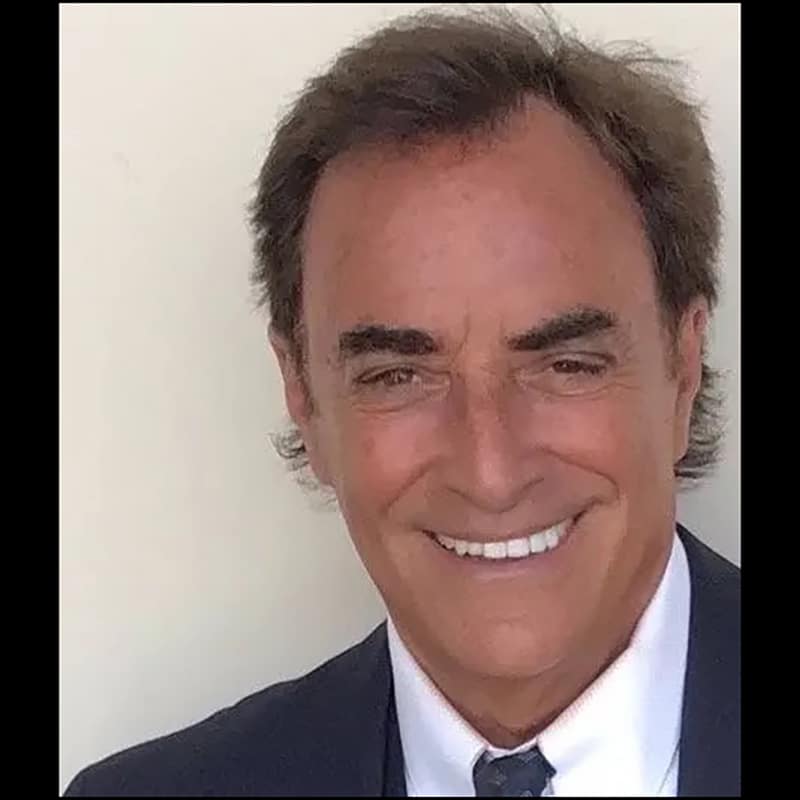
“The thing to know is that when the opportunity comes, you are prepared through your training, through your discoveries of things, through your curiosity, through your Persona. How do you become loose? And when you walk into that room when everybody’s looking at you, because the first thing they do is 75% of the time they already will know in their heads, oh, he’s not right or she’s not right. And so you go in and then you have to convince them that you are. Suddenly you give a different interpretation of what director was looking at and they go, wait a minute, there’s a different interpretation here. Oh, I like that. So to me, it’s about being prepared.”
~Thaao Penghlis
This is Thaao Penghlis’s second time on Storybeat. Among Thaao’s many talents, he’s an actor, writer, director, and podcast creator. If you’re a fan of daytime dramas, then you know Thaao from his more than 40 years of playing Tony DiMera and Andre DiMera on Days of Our Lives and Days of Our Lives: Beyond Salem. For his work, he’s been nominated for three Emmy Awards.
In 1989, he starred as disguise master Nicholas Black on the primetime TV series revival of Mission: Impossible. You may have also seen Thaao in various miniseries and movies like: Sadat, Sydney Sheldon’s Memories of Midnight, Under Siege, Tribe, and in perhaps his most unusual role, Colonel Godowni, the lover of Dame Edna in the cult classic Les Patterson Saves the World. He’s also starred in the films The Story of Esther, Job’s Daughter, Redeemed, and the short film The Secret of Joy that deals with children experiencing cancer.
Thaao published his first book, Places, in 2015 to great reviews. It deals with his journeys to the Middle East and the dangers he encountered in Syria, Lebanon, and Egypt. His second book, Seducing Celebrities One Meal at a Time, was released in November 2016, and many of his short stories have been published as well.
Thaao’s lifelong fascination with Archaeology led him to create the podcast series, The Lost Treasures, which is based on Heinrich Schliemann’s discovery of Troy and ‘Mycenaean’ Greece.
Most recently, Thaao’s been writing, producing and performing his new podcast, The Great Escape. I’ve listened to the first 3 episodes that have been released and found it to be a riveting dramatization of the story of Joseph, Mary, and the baby Jesus fleeing capture and certain death by Herod’s forces.
WEBSITES:
IF YOU LIKE THIS EPISODE, YOU MIGHT ALSO ENJOY:
- Ryan Raddatz, Actor-TV Writer-Producer-Episode #310
- Patrick Oliver Jones, Actor-Singer-Podcaster-Episode #307
- Madolyn Smith Osborne, Actress-Episode #300
- Michelle Danner, Actor-Director-Episode #285
- Thaao Penghlis, Actor-Author-Greek Historian-Episode #283
- Joe Coyle, Actor-Writer-Episode #274
- Ron Destro, Writer-Actor-Director-Teacher-Episode #270
- Skip Lackey, Actor-Writer-Director-Producer-Episode #265
- Callum Woodhouse, Stage and Screen Actor-Episode #255
- John Shepard, Actor-Director-Teacher-Author-Episode #254
- Melanie Zanetti, Actress-Episode #253
- Dakin Matthews, Actor-Playwright-Director-Teacher-Episode #233
- Apollo Dukakis, Actor-Director-Episode #213
- Billy Hartung, Actor-Singer-Dancer-Educator-Episode #205
- Frank Ferrante, Actor-Director-Producer-Episode #196
- Robert Cuccioli, Actor, Singer, Director-Episode #188
- Cary Elwes, Legendary Actor and Best Selling Author-Episode #187
- Jason Graae, Stage and Screen Actor-Episode #147
- Michael Dorn, Actor-Director-Star Trek: The Next Generation-Episode #144
- Bryan Cranston, Legendary Actor-Producer-Writer-Director-Episode #132
- Melody Thomas Scott, Legendary Actress-Nikki Newman on The Young and the Restless-Episode-#126
Steve Cuden: On today’s Story Beat
Thaao Penghlis: The thing to know is that when the opportunity comes, you are prepared through your training, through your discoveries of things, through your curiosity, through your Persona. How do you become loose? And when you walk into that room when everybody’s looking at you, because the first thing they do is 75% of the time they already will know in their heads, oh, he’s not right or she’s not right. And so you go in and then you have to convince them that you are. Suddenly you give a different interpretation of what director was looking at and they go, wait a minute, there’s a different interpretation here. Oh, I like that. So to me, it’s about being prepared.
Announcer: This is Story Beat with Steve Cuden, a podcast for the creative mind. Story Beat explores how masters of creativity develop and produce brilliant works that people everywhere love and admire. So join us as we discover how talented creators find success in the worlds of imagination and entertainment. Here now is your host, Steve Cuden.
Steve Cuden: Thanks for joining us on Story Beat. We’re coming to you from the Steel City, Pittsburgh, Pennsylvania. My guest today, Thaao Penglis, is here for the second time on this podcast. Among Thaao’s many talents, he’s an actor, writer, director and podcast creator. If you’re a fan of daytime dramas, than you know Thaao from his more than 40 years of playing Tony Demara and Andre Demara on Days of Our Lives and Days of Our Lives Beyond Salem. For his work, he’s been nominated for three Emmy Awards. In 1989, he starred as disguise master Nicholas Black on the primetime TV series revival of Mission Impossible. You may have also seen Thaao in various miniseries and movies like Sadat, Sidney Sheldon’s Memories of Midnight Under Siege Tribe, and in perhaps his most unusual role, Colonel Go Downey, the lover of Dame Edna in the cult classic Les Patterson Saves the World. He’s also starred in films like the Story of Esther, Job’s daughter, Redeemed, and the short film the Secret of Joy that deals with childhood cancer. Thaao published his first book, Places, in 2015 to great reviews. It deals with his journeys to the Middle east and the dangers he encountered in Lebanon and Syria and Egypt. His second book, Seducing Celebrities One Meal at a Time, was released in 2016, and many of his short stories have been published as well. Thaao’s lifelong fascination with archaeology led him to create the podcast series the Lost Treasures, which is based on Heinrich Schliemann’s discovery of Troy and Mycenaean Greece. Most recently, Thaao’s been writing, producing and performing his new three part podcast, the Great Escape. I’ve listened to the entire series and found it to be a riveting dramatization of the story of Joseph, Mary and the baby Jesus fleeing capture and certain death by Herod’s forces. So for all those reasons and many more, I’m deeply honored to welcome back to Story Beat today the extraordinary actor, writer, producer and podcast creator, Thaao Panglis. Thaao so great to chat with you again.
Thaao Panglis: Thank you. Thank you. That almost sounds good.
Steve Cuden: Think it sounds really good.
Thaao Panglis: I think to myself, you know, I’m old enough now to look back. You know, when we were younger, it was always going forward. What was next, what was next. Now I’m just thinking, well, you know, I’m at a different place now, a different kind of pace in my life. You don’t. Not everything is so urgent. And that comes out of, I think, perseverance and maturity and also the fact that the business has changed.
Steve Cuden: Well, and you’ve also had so much success that, that, uh, you can sort of sit back a little bit and look lovingly at what you’ve done, I assume.
Thaao Panglis: Yeah. You know, I know a lot of people invested their monies in other homes, you know, my money, uh, that I made in a business that not a lot of actors have a living, uh, I was kind of fortunate that way because everybody laughed at me when I was in my 20s, when I said I was going to become an actor and travel the world. And they said, well, you may travel the world, but who knows what kind of an actor and what success you’ll have because 1% make it, you know. So when I said that, well, I suppose I’ll just have to believe I’m that 1%. And people thought it took it as arrogance, you know, Um, I don’t. I think because the way I looked in the accent in the beginning, it wasn’t, uh, in vogue at the time until Gloria Monti wanted to bring an international cast to General Hospital. Not to rush ahead. When you said about my podcast, the Great Escape, um, a three parter. I just finished a fourth part.
Steve Cuden: Ah. Uh, there’s more parts. That’s great.
Thaao Panglis: Yeah, it’s an interesting story. I bought a book about the journey that the Holy Family did for four years in Egypt, what I found interesting was if they had not been chased by Herod’s military into Egypt, if they had stopped there in Jerusalem, the, the whole thing of, uh, Christianity, because they brought Christianity into Egypt and was called the Coptic religion. So if they had not done that, then Christianity would have Died in its cradle.
Steve Cuden: For those people who don’t know, what is the Coptic religion? What? Copton? Christianity.
Thaao Panglis: Coptic religion is the, uh, religion of Egypt. They’re 10% of the people, uh, uh, are, uh, Christians. So the Coptic religion is Christianity. And that’s what the holy family brought, and that’s what developed out of their experiences and the miracles that they performed while they were there.
Steve Cuden: What drew you to wanting to tell this story in a podcast, in an audio podcast? Why that format?
Thaao Panglis: You know, it’s not a story that’s been told. And when we look at the holy family, ah, it’s always a postcard on a donkey with a child in Mary’s arms, um, and Joseph, you know, pulling the donkey along. Um, when you think about how many miles they traveled into Egypt and how they escaped and how they were smart enough to know when to leave, because part of it was that they were creating all these miracles, helping people see and all different ailments that they cured. And so the reputation really went out into Egypt that these miracle workers, because the statues that were created during the time of the pharaohs gave them, they were just statues that didn’t answer their prayers. And for the first time with Christianity, people were realizing that there were answers to their prayers and they witnessed them. And so that began the religion of faith. And, um, I don’t know why I love visiting monasteries, but, um, I’ve been to a lot of them. And crossing Sinai Desert and climbing Mount Sinai or Mount Moses, going to Mount Athos, which is one of the peninsulas jetting out of the Aegean in northern Greece and where only men are allowed. And I spent time there. I spent time at the monastery of St. Anthony’s in the Egyptian desert, where not many people go or know of it. But the reason why I was fascinated was it began monasticism in the second, third century, uh, and Meteora in Greece, uh, which is a phenomenal, uh, I mean, I don’t know if anybody who loves to travel, they must go to Meteora, uh, in, uh, northern Greece, because you’ve never seen a rock formation like these. And sitting on top of these humongous monolithic rocks are, ah, these monasteries that the monks built. Because it kind of like when the Nazis came, you know, the monks pushed them over the cliff because they heard there were a lot of treasures up there. So when I took the journey and I went to Sinai Desert, um, and went to St. Catherine’s Monastery, I read that in a newspaper about people climbing Sinai, and I thought, oh, that would be an interesting thing to Do. So I went with a friend of mine and we climbed Sinai. It was not easy. It was one o’ clock in the morning. But something changed in me, I think.
Steve Cuden: Wait a minute, you climbed Mount Sinai at 1:00 clock in the morning?
Thaao Panglis: Yes, yes, it was five hours. And I went to the, to the top, I mean, so I went up and, you know, there’s like 360 steps all the way up to the top. And when you get to the top, you see this landscape, this arid landscape. And when that sun hits and the formations of those rocks that are so ancient red is something to behold. And I tell you when, when you do reach the top and that sun rises, that’s the whole purpose of doing it that early in the morning.
Steve Cuden: Thaao what drove you to, um, being fascinated by archaeology in the first place? How old were you? What, what brought you to it?
Thaao Panglis: I was probably 80 years of age. I always thought it would be great to dig something up and find jewels and gold and history and, you know, I thought that would be something to discover. And I remember my father, in front of all his male friends who played cards on a Sunday. The women were in the kitchen and the men were in the living room playing cards and drinking and smoking. And I remember running up the stairs, my father said, hey, what are you going to do when you grow up? I said, I’m going to be an archaeologist. And so, you know, ah, it fitted my father’s, you know, image because he thought, oh, my son’s going to be an archaeologist. Because in those days the Greeks were saying, well, I’m sorry, I think also in the Jewish religion, when they say to the son, oh, my son’s a doctor or my son’s a lawyer, you know, it’s about the prestige you bring to the family. So what better than being an archaeologist?
Steve Cuden: Because certainly, if I may be so bold, I think you’re an archaeologist of the soul through your acting.
Thaao Panglis: Yes. I, uh, mean, I must say, the acting fed my archeology.
Steve Cuden: How so?
Thaao Panglis: But I could afford it then. You know, when you travel.
Steve Cuden: I see.
Thaao Panglis: You know what I mean? Um, and while everybody else was taking four weeks off from work, I was traveling the Middle east because all there was, you know, it’s like when you see those windows in a Middle Eastern country, it’s like you can see from inside out, but you can’t see outside in. It’s the veil society. It’s that fabric that makes, Brings mystery. So that enticed me. So I went to Egypt 14 times. Um, I mean, I loved uh, Morocco. And only because I would have a guide. I never did it in groups. I always paid a man or a woman to show me m. You had a guide? Yes. I mean, I think it’s much more interesting because it’s one on one. And also I read before I went on the country I was going to visit, because, you know, if you’re going to visit another country’s culture, then you better understand and not be ignorant and share what you know about them. They like that. You know, it’s one of the things I realized when you’re with people on overseas, it’s. You’re in somebody else’s land. And so they have different laws, they’re different values, their food is different, everything is different. So you adjust. But what it does for you is it builds a foundation, uh, which you stand on. And all those years I realized because my brother says to me, how do you remember all that? You know, uh, dates and everything? Well, part of that is because I’m interested. Never bores me. You know, people come back and they come back from visiting another country and they come back and nothing changes. They don’t share anything. They just go back to work. For me, it’s about having people over for dinner and talking about what we discovered over there. You know, so there’s. That’s why dinner parties that I’ve had around this watering hole of a table is where a lot of things were shared. And also a lot of my friends had also traveled, so we had many similar values.
Steve Cuden: Well, and you’re now sharing it to the world through, uh, the podcast. I am curious. I mean, you grew up in Australia. How in the world did you get so interested in the Middle East? What was it that drew you to that?
Thaao Panglis: I suppose movies.
Steve Cuden: Oh, the movies.
Thaao Panglis: The movies, yes. When I was young, I always liked elaborate movies, you know, like Khartoum or Land of the Pharaohs or the Ten Commandments. You know, all those had Middle Eastern stories, and I found them much more. I also found, you know, the British stories of the Crusades, I found those interesting. But also the fact that, um, Salahuddin, who was the second most important man in the Islamic world, who came really from Syria, he was also interesting as a character to the British and the Crusaders. And so that really interested me. And I did go visiting castles, especially in Syria. I just loved, you know, the great castle Crack de Chevalier. And it was just incredible to go in and see the way this fortress was built. And that’s why after the 13th century, it stands an incredible monument to the world that existed at that time.
Steve Cuden: And you are also obviously very attracted and drawn to dramatic history. So you’re not just making drama up as you’re doing what you’re doing, you’re actually looking at actual history. But it seems to me it’s of the dramatic, uh, a flavor of it. Not the light hearted cultural flavor, but the dramatic part. Am I being accurate by saying it that way?
Thaao Panglis: Well, it becomes dramatic because history is drama. I mean, I don’t think you get too much history where you have a good laugh. The, you know, comedy is when something that happens in your lifetime. But you know, we don’t really see there was nothing funny about the Crusades.
Steve Cuden: Oh no, no, I didn’t mean, I didn’t mean to imply that it was humorous. What I meant was, is that you seem to really revel in it. You’re really good at it.
Thaao Panglis: You know, there’s just something about, you know, like I’ve developed some good friends, especially in Egypt. We speak to each other at least once every few weeks and we keep that friendship going. You know, it’s so easy to lose track of people. I mean, I live in a business where it doesn’t matter how many years I’ve worked with people and we know each other, but there’s very few friendships, real friendships made from, from daytime like I did, or from the movies or from nighttime television because people are onto their next thing, you know, unless you, I mean like Susan Hayes and some of the actresses, uh, um, I’m friends with and I see them. But in most cases, uh, the depth of things, uh, that I experience and carry with me, that I also put into my writing and into my work is because I took the time to understand something beyond myself about how another culture lived. And maybe it’s different from mine, but it’s not to make fun of or you know, put it down. When you see the kind of poverty I’ve seen in my travels, it’s, it’s, ah, you know, when you’ve come from the beginning, there’s a certain humility that comes out of being poor and struggled. So my beginnings weren’t rich. They weren’t, they were rich in um, where my family came from in Greece. But for me it was, it’s not like my parents ever said to me, sit down, I’ve got a great story to tell you. You know, it’s like you find your own teacher, you find your own friends. That’s not given to you. It’s a discovery you make by what you’re searching for and I find that most cases, uh, I went beyond my family. Um, especially now when I look back where they’ve gone in different but successful arenas. But different to mine. I mean, there’s no one else in my family that took this field and explored it.
Steve Cuden: You’ve gone down what I would call a scholarly path. Um, am I correct that you never went to school to learn archaeology, or did you?
Thaao Panglis: Oh, no, no. Uh, no. I finished high school and wanted to go into college. But instead I used those years to go to New York and study in New York.
Steve Cuden: And you studied with Milton Katsellas, which we talked about quite extensively in our last, uh, uh, time together. And his influence clearly was massive on you. And you were his assistant for a while too.
Thaao Panglis: He was the kind of father I always wanted to have M. But, you know, not, uh, to put down my father. I mean, he came from Greece, and he had to get. The only thing available for him was the labor force. And so it was a bit downtrodden sometimes, especially in the winters. And you didn’t have much money. And you wonder where the next food was going to come from. But Milton gave me, uh, an insight that I never had from anyone before. He made me look at what I hadn’t developed yet. In other words, he made me look at those areas that were not developed. That my insecurities and my. Always make me believe that they were my children. And so I had to let them grow through experience and success and failure.
Steve Cuden: Wait a minute. I was. Make sure I understand this. You’re saying that you saw your insecurities as children?
Thaao Panglis: Yes.
Steve Cuden: That’s very interesting.
Thaao Panglis: Uh, they go through a lot of confusion. That’s why you see teenagers really angry and upset. Because part of that is they don’t know where they’re going.
Steve Cuden: Sure.
Thaao Panglis: You know, the beauty of life, if we can look at it that way, is that life is about building foundations. As every decade comes along, something new sprouts for you through the understanding of what seeds you planted in your early years. But I have to say, if I ever remembered the toughest times was my teenage years. So I understand why teenagers go through drugs and drinking and objecting to their parents and fighting with families. Because they’re trying to understand, who am I, where am I going? What is life about? And nobody’s around to really teach them, because you can’t teach things you’re not ready to see. You know, you have the tools. You just have to sharpen them.
Steve Cuden: Absolutely right. And Milton Katsellas helped you to get to that point? Yes.
Thaao Panglis: Yes. Absolutely. And not just him, but so did Catherine Haywood, my spiritual counselor. I studied with her for 12 years. So all my years of education were in New York. Because, you know, when you are in New York and you are studying, you’re really in the best of the field. The people I met from the Stephen Sondheim’s, I mean, I met some extraordinary people. M in my twenties in the fashion world, in the art world. It wasn’t until I came out to California that I suddenly realized, uh, my spiritual nature, my understanding of self was in trouble.
Steve Cuden: What, what, what gave you that epiphany? How did you discover that?
Thaao Panglis: Um, arguments. Not understanding why I was rejected, say for a job. Uh, why somebody dismissed me because I was just pretty and my brain wasn’t developed as much yet because I was in my 20s. And in those days, you know, a lot of people, uh, who are older would dismiss that you didn’t know, but they didn’t realize is that I didn’t have the vocabulary or the dialogue to put that and make it into something profound. And so I kept quiet and it hurt because, um, I realized that I didn’t know what was going to become. I mean, I went into a field that, you know, there is a certain percentage that don’t make it, and greater percentage. And also they’re ruthless, the people in this industry. I mean, they don’t leave. You don’t leave. And you get compassion, you just get dismissal. And then you find out, you don’t hear it. Henry Winkler was one of the few people that I went and did an audition and he ran after me and said to me, I love your work. Whether this works or not, you’ll be back in again. And so, you know, that I thought, oh, because we don’t get many of those things. Even when I auditioned in my twenties for Columbia Pictures and I went with an actress to do a scene, and then suddenly this head of the casting said to me, what’s it like to have brought in the best scene I’ve seen here in 12 years? And I realized at that moment that, oh, I had a place to go, uh, somebody noticed me and someone realized that all the years of study is now being embraced. And so there are a few times where life sprinkles a little bit of gossamer and makes it look beautiful for you. And that those are the steps you keep going. Even when I met Charlton Heston, I mean, I got to tell you, as an actor, looking at this, this great man who’s had this enormous success and the way he treated me after my audition was extraordinary. I just went, wow. You know, you hear stories of some actors. You know, people say, oh, I couldn’t. I couldn’t see, uh, a movie of them again because that was so rude and. Or dismissive. But Charlton Heston was a guy. He was a real guy who sat there and just said to me, I love your simplicity. Now, uh, to get to that in your acting is what Spencer Tracy said. You know, just go up to your mark and say a line.
Steve Cuden: And don’t bump into the furniture, Right?
Thaao Panglis: And don’t bump into the. But that line is not just as simple as that. You have an extraordinary foundation to be able to be simple.
Steve Cuden: I’ve said to many people over time that I think one of the most difficult things for an actor to do on screen is just walk. Uh, it’s difficult just because you’re self conscious about all that.
Thaao Panglis: Uh, absolutely. I mean, you know, I had one friend of mine who I said, listen, uh, uh, I can get you a job under five. And he went and they said that he froze.
Steve Cuden: Just so the listeners know under five means under five lines.
Thaao Panglis: And he froze. And he didn’t know. It’s like suddenly the camera’s on and you’re thinking, oh, when you arrive in front of a camera, you better have it all together. You know, to me, it’s my outfit in the end and the shoes that I wear that helps me walk the character. That’s why entrances are important. I mean, that’s why Milton, who was such a great teacher for me when I did a play of his in New York, he had me make an entrance 40 times before he believed the character. And I was playing Balanchine, the choreographer for the New York City Ballet, and I had to come in with a cane. And he said, I don’t believe you. Go back. Don’t believe you. Go back. Well, you know, after a while you get, what am I not doing right after? 40 times. But I tell you, that stayed with me. So now when people say to me, God, I love that entrance, well, that always goes back to that part of my life.
Steve Cuden: So you work, uh, uh, correct me if I’m wrong, please. You, uh, work from the outside in. That is to say, the costume and the shoes and so on really helps you to develop the character itself.
Thaao Panglis: It’s the. That’s why they call. You know, everything is a dress rehearsal until the final thing where the makeup outfit and the shoes are put together. That suddenly you have finally arrived. So that when you go on that set, you’re ready when they say 5, 4, 3, 2, 1 or 5432. And then one is you making the entrance, um, or start the scene. And you know, you find after a while, you know, you meet actors who’ve got tricks up their sleeve. They don’t give you everything in the rehearsal. And then suddenly the, the take happens and they do something that you didn’t expect. Like Hal Holbrook when I did, um, Tribe. And, uh, now it was Emma, the miniseries Emma. And. And he said to me, you look so familiar. And I said, I do. And I said, oh, he probably remembers me in Under Siege, which was a three hour movie for NBC where I played the terrorist. And then halfway through the rehearsal, he turned around and goes, I know where the hell I saw you. You’re the one who bloody stole the scenes from us when you played the terrorist. And I went, oh, and what did he do when we went into a scene together? It was a very complicated scene. He did some beautiful business because he was such a pro. And then when it came to my take, he gave me nothing. He wanted to make sure that I didn’t steal the scene from him. And I turned to the director and I said, excuse me. He said, that was good, let’s go. And I said, can I do that scene again? I only did one take. And they said, no, it was fine. Um, but I always remembered that and it really upset me because I thought you’re not a generous actor.
Steve Cuden: Well, that’s for sure.
Thaao Panglis: You didn’t throw the ball back. In other words, you just kept it. But, um, that director got fired that day.
Steve Cuden: Really.
Thaao Panglis: I went up to the producer and I said, why is it that I’m only given one take in a very complicated scene where it’s 110 degrees in that shack that we’re working in? I’ve got a military uniform and a hat and a sword at my side and gloves on and also letters that I’m supposed to give him. So when I climb the stairs and come in, I have to take my hat off, I’ve got to put the sword on the side, I’ve got to take the gloves off, hand him the letters and sit down without screwing things up. And that was not easy. It was a lot of business. He was just sitting in his chair comfortably. So I had all this business. So it’s very important to understand your business because it’s not about just entering, it’s about things you’ve got to do in order to represent the character you’re playing with the Opposite character you are either, uh, working with, or is he someone who is. Who is an antagonist or protagonist, you know, so, um, but, you know, you learn.
Steve Cuden: I assume you got really good at it, doing all, you know, more than 1500 episodes of Days of Our Lives. I’m assuming you got really good at business.
Thaao Panglis: Well, you know, every time a new writer came on board, they saw the carry differently. Some. Some years I had some terrific writers, some a bit over the top. And another one. I’ll never forget what he said when he said, you know, you’re a little too deep, difficult to write for.
Steve Cuden: What does that mean?
Thaao Panglis: Trouble is, what he was saying to me is, I’m a shallow person. I don’t write deep. You know, I have to discover deep. So, you know, not every writer was on, uh, your side, but most of them, I found most of the writers on days were great. The directors don’t direct you. They just, you know, tell you where to move and work with the cameras. Uh, so, you know, you’ve got to bring it all together. The years of a director taking his time to give you information and, you know, you have to come in prepared and know your craft. And I remember when I worked, uh, on a. A miniseries, and Gary Nelson was the director, and it was, uh, with Omar Sharif, actually, in Memories of Midnight. And we were in Prague shooting this, and we had our first scene together, and he was quite arrogant. Uh, he just said to me, uh, you know, when I hit you and you go flying off that table, please don’t break it. And I said, omar, if you and I in the beginning of two characters who are. Who are against each other, and you hit me and I go flying and fall down on the ground, I’ve got nowhere to go, so I’m not flying anywhere. And he goes, what? I love you. And then suddenly that broke the ice. So from then on, it was champagne and caviar, uh, with him, he was just such a delight. You know, we got along for six weeks together, and it was just a very personal. And, um, I wish I had taken his, uh, invitation and visit Paris or Egypt when he was there. But, um, I got on two days back on days, and I didn’t have the time to do it.
Steve Cuden: He was Egyptian. I’m sure he could have shown you a lot of really cool things there.
Thaao Panglis: Oh, he was, you know, he was a very social bird, you know, because of his days of playing cards and that. He liked to tell stories, you know, and who. Who. I mean, the stories he told me about Lawrence of Arabian and uh, these movies that he played over the years. And, you know, he was a real gent, but he was also one where you have to respect him. And he said to me one day, he says, you know why I like you? You just remind me of my son. But he married a hooker. He said to me. And I said, oh, um, so, you know, I just. And then when he died, I knew, because he was struggling with lines at that time. I didn’t realize it was Alzheimer’s coming. So that was. That was sad. But listen, you know, it’s been. The trouble is, when you reach my stage in life, you realize you want more years. You know, I’m not a person, uh, who gets bored and saying, oh, what am I going to do today? I’m going, I didn’t have enough time. I look at the afternoon and I’m going, I haven’t had enough time to create this stuff that I’m writing right now. And. But all in all, I have to be grateful that in many ways, but it came out of, uh, you know, being blessed, I think. I think it came out of perseverance.
Steve Cuden: Let’s talk about the Great Escape, which is what you’re working on. You’ve been working on it for a little while. I said a little tiny bit about it in the opening. But tell the listeners what the Great Escape is all about. What is it really?
Thaao Panglis: What happens, um, in around 6 B.C. when the Christ was born, the three wise men who came from a place called Saba in northern Persia, they were the astronomers, astrologers and soothsayers of, um, the king’s court. And so what they saw in the universe, that in a place far, far away, uh, in the west, they saw a star. Something miraculous was going to happen. And so when they realized that there was going to be a child born that was going to be a king one day. And so I followed that story because all I saw about wise men were postcards. There was no information about them. Even what happened to them after they brought the gifts to the holy family. Nobody hears about it. So I did some studies. And when they left Persia, they actually went to India. And they studied and became really extraordinary players in the spiritual world over there. And also, uh, um, in the fourth century, uh, in Constantinople, the mother of Constantine went to, um, Israel, and she found the cross in this area where he had been crucified. And she had people dig up, um, and they found that cross. And she broke the cross up and took it to different places in the world. And then she ended up going uh, to India. And she found where the three, or the holy men, the three magi, where they were buried. And she dug up their bodies, and she took the skeleton remains and took it back. She took them back to, um, Constantinople. And then in the 12th century, during the Crusades, Barbarossa, who was the German leader, ended up in Constantinople and trying to conquer that area. And he saw the bones and everything, and he took the bones with him, the skulls, everything. And he ended up taking them and took them to Milan. And from there, they ended up in Germany, in a place in Cologne. And in the 12th century, they built this enormous cathedral. And inside that cathedral is this incredibly carved golden coffin which has all the bones of the three wise men interred. So the cathedral was built specifically, uh, because of the three wise men. And so it is so amazing to see. And because of that, it made me realize, so where did they go? Where they died in India? What did they do? Well, I found out that Balthazar, one of the magi, became a teacher. So all these pieces came together when I was studying this, just because I was studying it. And then I thought, you know, I did the Schliemann story about finding the Trojan gold. When you think, now the Odyssey is playing. And now you see, there’s this story of the Christ. And by the time the three wise men went to Israel, that child was two years old by the time they got there. They didn’t go to the manger, uh, where Mary was holding him as a child in the arms. So, uh, that fascinated me. And why did they escape? And for what reason did Herod find them such a threat? And so the story really is about that exchange and how they escaped and how, uh, the three wise men helped them.
Steve Cuden: What’s interesting to me is, and you know, the magi are clearly a very big part of Christian storytelling, whatever you want to call it, but they were not Christian themselves. They couldn’t be, because there was no Christianity when they were alive. It was only later.
Thaao Panglis: No, but I’ll tell you one thing. There was, uh, let me inform you on this one, was the religion that, in the fourth century, I think, B.C. was the. See, this is what happens when I got too much information in my head and I can’t remember was there was a cauldron that used to burn and burn for 1500 years nonstop. And that’s in northern Persia, in Sabah. It was called Zoroastrian. There was a man called Zoroastrian, and he created a religion that the Jewish religion, the Christian religion, the Catholic religion, are all part of what he created and that, that Zoroastrian religion is what the three wise men were about. That’s what the Persians were about. This is what they believed in. Even because China’s next door. Even the Chinese today, you can go and find Chinese involved in Sarah Astrian religion. You know, religion goes back a lot earlier in certain areas, certainly in Egypt, you know, there were the gods that they prayed in, but they were created by man. They weren’t created by anything highly spiritual. They were created by man. And so, you know, the whole thing is when in Heliopolis in Egypt, when the holy family arrived, the story was that those statues in their presence started to collapse. And I tell you, when I went to Heliopolis, because I went and visited all these different sites that the holy family hidden, which, uh, are now, uh, in caves, uh, churches are built above them. Mostly what was amazing was I thought if this was supposed to be the place where the palm tree supposedly bowed and did all this, was that just mythology? Did those statues not fall and there were no statues here? Well, a number of weeks ago, I’m looking at National Geographic, and here they are in Heliopolis. And the ground I was walking on, which was nothing but bare, and there was the Nile. They dug up all these statues that had crumbled. So that’s why I thought, oh, my God, that’s really interesting. And then I went to another one, Mazarud, and I went there, and also I went to the Church of the Palm. It was extraordinary to be in that presence of that monk and this big rock that was carved inside into a church. So when you have moments like that and you sit and you take your time, those are things that bring along that you have stories to tell.
Steve Cuden: So could you have possibly done, uh, the storytelling that you do in the Great Escape, having not gone over there and traveled and been there in person, could you have done it just through books?
Thaao Panglis: No. Well, there was, you know, the seed was planted in Egypt. And, um, because I took that route, it wasn’t because I thought I was going to be writing a podcast or writing a story. It just became part of my journey. And so when I look back at things and I think, oh, that could be an interesting podcast. The places I’ve seen, I don’t know why people don’t find history enough. I don’t think people really know enough about history. They don’t even know what happened five years ago. Uh, there’s just an ignorance, uh, of some of the great things that have taken place in this world.
Steve Cuden: So you went to Egypt out of curiosity for Egypt and to travel, not to write or produce a podcast. So what then stimulated you to make the podcast out of this research that you had done, not intending to use it as a podcast?
Thaao Panglis: Well, I just, I thought to myself, well, not many people have taken this route. And that route was rather extraordinary. It remained with me. I mean, this was in 2010, that’s 15 years, 16 years ago. I wrote it in my book Places the Story. So one day I was looking through my book and I came to the Journey of the Great Escape. And that’s what I called it. And I thought, oh, sometimes I will read over some things I’ve written. And I remember, oh my God, you know, what took place during those times. And I thought, you know what I should write? I should do a podcast. I’ll write a story and see how it sounds. So I got a book recently called the Journey of the Holy Family in Egypt. And I didn’t realize there was a witch. I don’t know why we never see those things, hear about those things during those religious days. But you know, the Magi, they were, uh, you know, they were miracle makers in many ways because of what they understood and their intuition, psychic abilities. And I went, there was a witch. And what did that witch do? Well, I just finished part four of the Great Escape and put in a new podcast two weeks ago and wrote the story about the witch. And it’s like two and a half scenes which run for about, I don’t know, 18 minutes. And it’s the description of the story of one of the episodes of the family coming across a witch and who she was and, uh, how she used to wait along the Nile. She knew everybody who came along, but people were afraid of her because of what she was able to.
Steve Cuden: So you obviously, you write these stories and you perform them. There are no other actors, it’s just you, you’re both narrating and performing characters. Uh, did it take all of your training over the years to even understand how to do that?
Thaao Panglis: Well, you know, I did a one man show, uh, on storytelling. And I did it when I was doing a play, Cape May, called Class. And it was about a teacher who was about to train a big movie star to get even more stardom. Um, and I took the teacher as being Milton to me and how he taught. I took that attitude and my, my producer said to me, you know, Monday nights are free here. Why don’t you. Because you, you tell, you’ve told me some wonderful stories. Why don’t you do a one man show and tell the stories. Well, we filled the House on a Monday night. A lot of Republicans, you know, because of the area, and they were a wonderful audience. And I just came out on the stage with a stool and a page of different stories I could tell. So I had to do them from the top of my head. And, uh, I found people were really intrigued with. I mean, they wanted more stories. I mean, this went on for an hour and 15 minutes. They wanted more stories. So I put out the questions and out of that storytelling, I did a one man show here in California. And that really brought the House down. I mean, it was very hard for me to believe that people really love to hear these stories. If you put in some humor, if you put it, make it sound mysterious, something they’ve never heard of, you don’t want to bore an audience. You can always, as an actor, you always know when you’re looking at an audience, you know, if they’re getting bored. But I had them at my fingertips because none of them had traveled like I had. And I told them stories of escapes and, uh, places that were, you know, dangerous and where I got into trouble. Um, all those things. Even how it started in Australia, when you asked me earlier how did I get interested in archaeology, I forgot to tell you. There was an exhibit of a mummy of one of the Ramesses kings that was lost and traveled in a circus for many, many years. And it ended up in Canada. And when somebody found out about this mummy and it reached Egypt, Egypt wanted to do the DNA and find out which missing king was the pharaoh was this. And I remember it being displayed at the museum in Sydney. And so I think I was 11, 12. So like all good boys, you know, with my little uniform and my tie, we went into the museum and what ended up there were partitions and there was the mummy and I couldn’t get over. Look at that nose. It was like a hook. And look at that hair, still there after thousands of years. Red, really red. And then those fingernails were enormous. And I thought, oh, I have to touch it. So when everybody started to go out, I climbed the partition, went in and I touched his nose, opened the casket, I touched his nose, his hair and his nails. And I was taken back to school and reprimanded. But that’s, uh, curiosity.
Steve Cuden: And so you’ve always been curious that then shows up, I believe, extremely well in your performance as well, because your performance shows curiosity as an actor for what you’re doing, that you have depth of character in reciting Whatever lines you’ve written, um, now nobody’s directing you, you’re directing yourself.
Thaao Panglis: Right, right.
Steve Cuden: And so do you think that you could have done that when you were at the beginning of your career?
Thaao Panglis: No, I think it all becomes who you become. You know, life as, um, Mrs. Obama wrote a book called Becoming. And I thought, oh, well, that was something I’ve been telling myself for years, is that life is about becoming until you become. So that’s what it was. Um, I didn’t. It’s like, you know, if I’m cooking, what ingredients do you put in? And then years later, I find out that some woman or man has done this particular dish with this kind of ingredient. And I went, oh, my God, that amazing. I must try that. The same thing in life, you go on thinking, you know, until somebody shows you another reason to expand, to improve, because we’ve always had room for improvement. I don’t care who you are.
Steve Cuden: Well, the old cliche is that life is a journey and you never actually arrive. Um, but some people, I think, do sort of give up and don’t make more of their lives as they age. You seem to be thriving that way, where you’re dealing and digging more information out of the universe and trying to give it back to us.
Thaao Panglis: Yeah, that’s called curiosity. You know, when you don’t have that. Like my brother now and his wife and a couple of other their friends, relatives, are going to Egypt and to Jordan. So I said to my brother, you know, make sure you read up on where you’re going. Oh, now we’ll have a guide there. He’ll tell us. I said, I gotta tell you, there’s a difference in going with a blank than going with something, you know, some knowledge. Well, yes, because, you know, you know, the pyramids, but you know, you know the name of the pyramids, you know why they were built, you know how they were built, uh, what is the mystery behind all these things? You know, so some people have curiosity and some people don’t. I can’t. And you can’t tell somebody, really. Um, they have to discover it on their own.
Steve Cuden: Oh, absolutely. You can’t. You can’t force someone to learn something. They have to want to learn. Well, I’ve been having just the most marvelous conversation with Thaao uh, Panglis about the Great Escape, which is his. Partly from his travels into the Middle east, but about the story of, uh, Joseph, Mary and, uh, the baby Jesus fleeing potential, uh, death. We’re going to wind the show down just a little bit, and I’m just wondering, Thaao throughout all the experiences you had in the Middle east or in your acting career, can you share with us a story that’s either weird, quirky, offbeat, strange, or just plain funny?
Thaao Panglis: Oh, my God, I should have him m at my fingertips. Um, I remember one time on Days of Our Lives, uh, I wrote this in my book. Where Joe Mascolo at. Those days, because there were more actors, we had to share dressing room. And this particular time, Joe and I were sharing a dressing room. And Joe always called me Shorty because he was taller than me. He would say shorty. And I thought, well, I’m not wearing three inch lifts. You know, I’m just. Because that’s so bad to your back and everything. But this one particular day, I decided, um, I forgot something. So I went back to the dressing room 10 minutes later, and I knocked on the door before I opened, and Joe opened it and he saw me and then he got on his toes. And then I realized he was shorter than I was. All these years he’d been sitting and calling me all these names when he was actually the same size as I was. And he had not just boots, but three inch lifts inside. Uh, it was the days of Burt Reynolds. That whole group always wore lifts and everything. And there were other actors on the show that wore lifts, um, or high heels. But, uh, I just went with my normal shoes. And when I saw him do that and he went on his toes and he just walked around the room and to keep his height, you know, it was like part of his image. He suddenly became from 6 foot 1 to 5 foot 10 or 5 foot 9. And I just, I left and I couldn’t stop laughing. All those years, you know, he was, you know, he was a facade.
Steve Cuden: Well, a certain number of actors are just facades.
Thaao Panglis: Yeah. I, uh, mean, he could be bossy, but he was, he was, he was. I love Joe. I mean, he was. He’d probably kill me for telling that story, but he’s gone now and. But it’s not cruel or anything. But that was the times. You know, there are other actors, you know, who came with me and looking down at me while they’re wearing their three inch boots. And I was a real threat at the time because, um, I was European looking and I had a different accent and I wasn’t. You’re all American. So suddenly, you know, I became part of the change. You know, the cobwebs are beginning to fall off the walls as we had new light, you know, a new sense of things. But, yeah, that was One of the things, I mean, I had a terrible time, uh, when I went to the, ah, to see the pyramids for the first time. I was 26. And I remember I had won some money at a casino. And it was one o’ clock in the morning. I said to the. And there was a full moon. And I said to the cab driver, take me to the pyramids, because in those days they weren’t fenced off. And I went to the pyramids and I saw the big pyramid of Cheops with the full moon on top of it, as if it was some blessed piece. And I ran up to it without taking in anything around me. And I just, I wanted to have it at my feet. And I remember looking up and I thought, my God, isn’t this extraordinary? The light that hit on him, so mysterious. And then suddenly these men grabbed me from the arms, five of them, and started to drag me in and saying that they were going to do funny things to me, you know. And here I was, 26 years old, innocent, and I thought, what are they going to do? So I decided. I remember when someone said, how do you kill an idea with another idea? So I said to them, as they were dragging me along, one could speak English. I said, you know, the Greeks built this. Not the Egyptians, the Greeks, they built this. And so one started passing the other and the other one, they stopped with their intention and they start screaming at me that the Egyptians built it. And I said, no. And they. There was about an inch where I could just run through and I ran the cab driver down the other end had saw what was going on and called the police. And the police came with sirens, you can hear them. And these five guys with rifles and everything disappeared. And I went to the front and the police, when they came, they said, don’t you ever come here again at this hour because people have disappeared in the sand. So I remember years later when I took a camel ride behind the pyramids and it was all desert, and I thought, oh, I wonder if there are bodies but buried in the sands here.
Steve Cuden: I bet there are over the many centuries for sure. So. All right, last question for you today. Thaao I love those stories. That was tremendous. You’ve shared this wealth, um, of advice along the way in this episode, but I’m wondering if you have a solid piece of advice that you like to share with those who come up to you and say, Thaao you’ve had all this success. How do I do this? How do I get into the business? How do I act? What kind of Advice do you give people?
Thaao Panglis: You know, I was part of the golden age of Hollywood. You know, the movie stars and the studio system, it was all there. When we went into audition, it wasn’t just one person, it was 10. Our, uh, contracts were offered. What I see now is an industry that is no longer the industry. I knew you don’t go in and audition. You do it on tape, it falls. Everything falls back on the actor. I get tired of it. I think it’s. I don’t like the system the way it is. Part of me was, I can’t be bothered. I don’t mind going in a meeting, but to have to put myself on tape and go to the expense of that and then send it in. Sure. When you go in for an audition, it used to be, you know, that was it. When you’re sending in a tape, you could do five takes for yourself, then pick the best one and send it in. But to me, it’s, um, how serious? What kind of a career do you want? You know, a lot of young kids don’t get the training. I mean, I had one. One person who I knew 15 years who wouldn’t listen at all. I said, you’re not going to succeed because you don’t listen. And he’s really stiff. He was really stiff in the camera and because he was too afraid to reveal who he was. So the vulnerability, uh, and the likability of this person was not being revealed. And m. What you were getting was. So you go in or you put yourself on camera, and then if you don’t have somebody around you to tell you. And I tried to say to them, listen, you need training. Go in a class. It’s different than. He said, well, I’m doing a class on, um, zoom. And I said, that’s not a class. You need to go in and fail. You need to come out and do a scene. And the teacher tells you. Like the teacher told me. I couldn’t tell the difference between you and the chair. That’s how bad you are. You need training. So when you learn that, uh, when you get those rejections, they remain, but what rejections are they getting now? It’s about, you know, how many followers do you have? And, you know, it’s all. It’s all superficial. And what I would say to an actor is, if you really want to be great at your craft, take the classes. I mean, I’ve been to classes, and there’s a. There are a lot of actors who are studying, but, you know, it doesn’t mean success. It Is, you know, it’s. It’s a tricky business. The thing to know is that when the opportunity comes, you are prepared through your training, through your discoveries of things, through your curiosity, through your Persona. How do you become loose when you walk into that room when everybody’s looking at you? Because the first thing they do is 75% of the time they already will know in their heads, oh, he’s not right, or she’s not right. And so you go in, and then you have to convince them that you are. And I’ve had to do that. Suddenly you give a different interpretation of what the director was looking at, and they go, wait a minute. There’s a different interpretation here. Well, like that. So to me, it’s about being prepared. And then when you get the opportunity is turn up on time. It’s very important to be a professional. A, uh, professional is someone who has been trained, who goes to their job, they’re doing on time and listening to what the room is about. Because every performance is going to be different. Every stage is different. The actors you work with through the years are different. Some are nice, some are not nice. Some are tricky. Some will try to upstage you, you know, by making you look not good. They’re not supportive. Like, what’s his name? Um, Holbrook. I’ve never been able to look at him again after that movie. Because I thought to myself, you. You weren’t. You weren’t supporting an actor who came into the scene so you both can do something great together. You just want to make sure that you came off the best. And I don’t like that kind of actor. I like the Charlton Heston actors who come in and share what they feel about you and enjoy what you’re doing. In other words, you throw the ball, they catch it, and they throw it back at you. And that’s the kind of thing you work with. But, you know, it’s very important because you must develop a technique, because you never know what the director’s gonna pull out of you and want you to do. I mean, Ken Russell, when I did Altered States, boy, he came at me with a wine bottle that he just finished. I mean, he was not. I mean, it was great for a while, but then, you know, he started to get drunk, and he was a bit on the impossible side. But, oh, my God, I. I almost lost it. What kept me going was it certainly wasn’t Bill Hurt. What kept me going was I couldn’t afford to get fired or be embarrassed or not do well, you know, all those Values, you know, you have to be your best.
Steve Cuden: And when you’re being directed, you kind of sometimes have to acquiesce to what’s going on with the director, the scene, and so on. And that may not be perfectly what you had in mind. And you have to be able to adapt, don’t you?
Thaao Panglis: Right. Absolutely. Know your dialogue. You know, a lot of actors will go in and they’ll phrase it well. You don’t do that because you will reinterpret something that the storyteller was not intending to have. And so you change it. You can’t. It’s very important that you understand the overall picture. It’s like a cake. You look at the cake, and you’re a piece of it. And out of that piece is that. How do you fit into that. That frame? And, you know, I’ve worked with some terrific actors, and I’ve learned a lot on, um, Days of Our Lives. I mean, I learned how. How to be mischievous and play with other actors once I got comfortable who I was and the fact that they accepted me. You know, with Deidre hall, you know, I love playing with Deidre because I like thinking that I’ve got this subtext going on. And so I’m feeling really cheeky, and I want to. I want to stir her up. And, you know, sometimes she’ll say, what were you thinking? And I just. I said, I can’t tell you. Um, but, you know, that’s part of the beauty and the enjoyment of being a performer, is that every time you go in, you want to be your best. That’s what I always do. This is going to be the best day I’ve had on the show. And I went with that intention, especially
Steve Cuden: on camera, because it’s recorded forever. It doesn’t go away.
Thaao Panglis: Yes. And then thousands and thousands of people are watching you. I mean.
Steve Cuden: Yes, yes.
Thaao Panglis: And how do you build. Build, uh, uh, a fan base? You know, that’s also very important, Thaao
Steve Cuden: that you’ve just given us just a ton more advice than you already gave us, and all of it very effective and very, um, useful. And I hope people who are listening to this take it to heart what you’re saying, because you’ve been doing it quite a while, and you know what you’re talking about. So I cannot thank you enough for being with me again on Story Beat for the second time. And I can’t thank you for your time, your energy, and all your wisdom. Uh, where can folks find, uh, the Great Escape? Is it on YouTube and elsewhere?
Thaao Panglis: Yes, it’s on Spotify, Amazon, all the
Steve Cuden: same places that they can find Story beat.
Thaao Panglis: Yeah. Yeah. So, you know, and now that I’m. We’re putting up, I just received this. I’m going to listen to it after we finish, um, and hear how it sounded because my, my publicist put in the special effects. She did a wonderful job as usual. So I want to hear it. But it’s the story I wrote and it’s going to be part of the screenplay. And, um, so it’s not about just, you know, prayers and miracles and all that. There’s a witch, and she really stirs things up. So it’s a wonderful story.
Steve Cuden: Well, what I heard in the three episodes of the Great Escape that I listened to, it felt like I was listening to, um, a live action movie of some kind. It was full of action and intensity, and it was very interesting to listen to. It wasn’t just some dry, musty, uh, old, uh, uh, history lesson. It was a very interestingly told tale that had lots of action in it. So I, I think what you did was great stuff. Thaao thank you so much for being on the show with me today. I’m just delighted to speak with you for a second time.
Thaao Panglis: I appreciate it. Thank you very much.
Steve Cuden: And so we’ve come to the end of today’s Story Beat. If you like this episode, won’t you please take a moment to give us a comment, rating, or review on whatever app or platform you’re listening to. Your support helps us bring more great Story Beat episodes to you. Story, uh, Beat is available on all major podcast apps and platforms, including Apple Podcasts, YouTube, Spotify, iHeartRadio, TuneIn, and many others. Until next time, I’m Steve Cuden, and may all your stories be unforgettable.











0 Comments